A proper Berlin coffee and a bakery run
Point guests to the third-wave coffee the city is known for and a neighborhood Bäckerei for a fresh Brötchen. Name the specific spot near your flat — that local detail is what reads as real.
Expert short-term rental marketing to grow your bookings and nightly rate in Berlin, Germany, Europe.
Sixteen services, one team. Everything below is built in-house and scoped to your property and market. Most owners start with the 12-Step System.
Every engagement is quoted to your portfolio. These are the ready-made scopes owners pick most — Low-season pricing shown (through September 15), discount already applied. A clear proposal within 48 hours.
The work is public. Selected engagements and what changed — and reviews from the owners and managers behind them.
* Market averages, shown in USD for comparison across markets. Properties marketed by Cavmir typically exceed these figures by 25–45%. Data sourced from AirDNA, STR market reports, and Cavmir internal analytics.
Three views of how demand and nightly rates actually move across a Berlin year — the seasonal curve, the events that spike it, and how the money changes by neighborhood. Indexed figures are directional market signals (baseline = 100), not guarantees.
Summer, June through August, is the sustained peak on demand and rate. February and March punch above their weather on Berlinale, Fashion Week and ITB, and December breaks the winter trend on the Christmas markets and New Year's Eve.
Mitte's walk-to-the-sights address anchors the top of the market; the value-with-character Kieze trade lower on rate but win on demand and repeat stays. Presentation, not postcode, is what closes the gap.
The events below are the dates that reprice the calendar. Load them at event pricing the moment they are confirmed — the demand is known, not hoped for. (Oktoberfest, worth saying plainly, is a Munich event, not a Berlin one; Berlin's autumn spikes are IFA, the marathon and the Festival of Lights.)
* Indexed figures are directional market signals (baseline = 100), drawn from AirDNA ranges, published event calendars and Cavmir internal analytics — not guaranteed returns. Confirm event dates and local rules before pricing.
Berlin is the capital of Germany and, by population, the largest city in the European Union — a reunified metropolis that trades on culture, memory, design and a nightlife reputation few cities can match. It is also one of the most affordable major-capital short-term rental markets in Western Europe, which changes the whole marketing calculus: a Berlin guest is rarely paying a Paris or London rate, so the property that wins is the one that reads as authentic, well-located and honestly presented rather than simply expensive. Mitte's monument-lined core, the leafy restored Altbau of Prenzlauer Berg, bohemian Kreuzberg, club-culture Friedrichshain, multicultural Neukölln and the elegant West-Berlin calm of Charlottenburg each book a different guest.
Berlin's STR market is also one of the most tightly regulated in Germany, governed by the Zweckentfremdungsverbot — the prohibition on converting housing to holiday-rental use without a permit. That is not a reason to avoid the market; it is a reason to be the compliant, professionally-marketed listing in a field where a great deal of inventory is neither. International visitors from the UK, the Netherlands, Italy, Spain and the United States lead demand, alongside a steady flow of trade-fair, culture and nightlife travelers who reward a listing that knows its Kiez.
Cavmir builds Berlin properties that tell a genuinely local story — the specific Kiez, the nearest U-Bahn or S-Bahn stop, the café on the corner and the character of the street, not just the rooms. Editorial photography and neighborhood-first copy are the levers in a market where guests shop hard on location and value, and where a compliant, well-run listing stands out from the crowd.
Few cities carry as much history into a listing as Berlin. The Prussian capital that industrialised in the nineteenth century became, in the 1920s, one of the great cultural laboratories of Europe — the Weimar-era Berlin of cabaret, cinema and Bauhaus. The city was then divided for twenty-eight years, the Wall standing from 1961 until it fell in November 1989, and West and East reunified in 1990. Berlin became the capital of a reunified Germany again in 1999, and the layered story of division, memory and reinvention — nowhere more vivid than along the East Side Gallery, the longest surviving stretch of the Wall — is precisely what a large share of visitors come to walk through. Much of the housing stock guests actually book is Altbau — the pre-1949 apartment buildings with high ceilings, tall windows and parquet or plank floors — and that architecture is an asset when it is photographed and described properly.
The platform-era short-term rental market grew quickly through the 2010s, concentrating in Mitte, Prenzlauer Berg, Kreuzberg, Friedrichshain and Neukölln. Berlin's regulatory response has been among the firmest in Germany. The Zweckentfremdungsverbot — the law against the "misuse" of residential space — was enacted in 2014 and strengthened repeatedly since; a mandatory registration number for listings arrived on 1 August 2018; and from 20 May 2026 the EU-wide short-term-rental data-exchange regulation, implemented in Germany through new federal legislation, connects platforms and district offices far more tightly than the old manual enforcement ever could. The through-line is simple: Berlin is steadily formalising, and the operators who plan around that will inherit a cleaner, less crowded field.
Berlin pricing is Kiez-specific, and the spread between neighborhoods — charted above — is the whole game. Mitte anchors the top of the market on sheer proximity to Brandenburg Gate, Museum Island and the government quarter; the first-time visitor who wants to walk to the sights will pay for the address. Prenzlauer Berg trades as the leafy, restored, family-and-couples premium; Charlottenburg as the calmer, more upscale West-Berlin option around the Ku'damm and the palace. Kreuzberg, Friedrichshain and Neukölln sit at the value-with-character middle, carried by nightlife, food and the sense of a real neighborhood rather than a monument district. Because Berlin's baseline nightly rates run well below Paris or London, the winning move is rarely to be the most expensive listing on the block — it is to be the best-presented one at a fair rate, with photography and copy that justify a confident number rather than a discount.
Moderate seasonality, and the month-by-month chart above shows exactly how it behaves. The clear peak is summer, June through August, when long days, warm weather and a packed festival calendar fill the city. Spring and autumn — April–May and September–October — are genuinely strong shoulders and the best-value windows for guests, which makes them the easiest months to keep a calendar full without discounting. The true low is deep winter, November and January–February, cold and quiet — with December a real exception, lifted by Christmas markets and one of the largest open-air New Year's Eve celebrations in Europe at the Brandenburg Gate. Trade fairs and marquee events punch above the baseline in otherwise soft months.
Berlin is one of the most tightly regulated short-term rental markets in Germany. The governing law is the Zweckentfremdungsverbot-Gesetz (ZwVbG) — the prohibition on "misuse" of housing, which includes converting a home to full-time holiday-rental use without a permit. Since 1 August 2018, any listing advertised on a platform must display an official registration number (Registriernummer), issued by the district office (Bezirksamt) for the borough the property sits in. Renting out individual rooms inside the home you actually live in is generally treated more lightly — commonly reported as permit-exempt provided the let rooms do not exceed 49% of the flat's floor area — while short-letting your whole primary residence while you are away, or operating a separate apartment as a dedicated holiday flat, is where permits, day limits and scrutiny come in. A dedicated whole-apartment holiday let requires a special permit (Genehmigung) that is difficult to obtain, and secondary-use guides widely cite an annual cap in the region of 90 days.
The big change is enforcement. From 20 May 2026 the EU short-term-rental data-exchange regulation — implemented in Germany through new federal legislation with the Bundesnetzagentur as the central data hub — ties platforms and district offices together, so listings without a valid registration number are far easier to flag than under the old manual searches. Penalties for operating without the required permit are steep, commonly reported at up to €500,000. Because the technical rollout is still bedding in through 2026, some districts have temporarily paused issuing new registration numbers while existing hosts continue on their current one — a moving picture worth confirming directly with your Bezirksamt. Cavmir handles the marketing; verify the current rules and your own status with the district office or a local advisor before you list.
Berlin's defining tip: get compliant first, then market hard. The single biggest competitive advantage in this city is being a properly registered, permit-correct listing in a field where a large share of inventory is neither — and as the 2026 data-exchange rules bite, that advantage grows. Display your registration number, keep your paperwork clean, and let it become a trust signal in the copy rather than a footnote.
Second, sell the Kiez, not just the flat. Berlin guests shop on neighborhood as much as on the apartment, and the listing that names its Kiez, its nearest U-Bahn or S-Bahn stop, the bakery on the corner and the Sunday flea market reads as insider knowledge and converts accordingly. Third, be honest about the building. Altbau charm comes with real trade-offs — upper-floor walk-ups where the lift (Aufzug) is often absent, a front-building versus courtyard (Vorderhaus versus Hinterhaus) distinction, and winter heating that guests will ask about. Stating the floor number, the stairs and the heating up front prevents the review that tanks your ranking. Fourth, price the calendar deliberately: the events chart above is a to-do list — load Berlinale, ITB, Pride, IFA and New Year's Eve at event rates the moment the dates confirm, and market in English and German to reach both the international and the domestic guest.
The regulatory ceiling is real and enforcement is tightening. Whole-apartment holiday-let permits are hard to secure, day caps apply, and the new EU data-exchange makes non-compliant listings far easier to catch. Building factors — walk-ups, courtyard flats, older heating — need honest handling. Germany's registration culture (Anmeldung) and rental-income tax obligations add admin. Nightlife proximity cuts both ways on reviews. And Berlin's baseline rates sit below the top Western-European capitals, so margin comes from presentation, direct bookings and reduced platform dependence rather than from simply charging more.
Standard German home contents insurance (Hausratversicherung) rarely covers short-let use. Specialist holiday-rental and liability (Haftpflicht) products exist and are worth arranging before you host, and building-level cover held by the owners' association (WEG) is separate from your own policy. Talk to a German insurer or broker about the right short-let rider for your specific setup.
Rental income in Germany is taxable and must be declared; regular short-letting can be treated as a commercial activity with its own registration and, above thresholds, VAT (Umsatzsteuer) implications. There is also a local accommodation levy (City Tax) collected from guests. The rules interact with the Zweckentfremdung permit status, so a German tax adviser (Steuerberater) is the right call before you scale.
Germany has a deep, historically low-rate mortgage market, though 2022–2024 rate rises changed the maths. Foreign buyers can borrow but usually face larger deposits and more paperwork; the major banks (Deutsche Bank, Commerzbank, the Sparkassen) and specialist brokers handle non-resident lending. Purchase costs — transfer tax, notary and agent fees — are significant and should be modelled up front.
Berlin doesn't sell luxury — it sells the real thing. Market the Kiez, be honest about the building, and price the calendar, and the listing fills itself.
Berlin through 2027 and beyond points in one direction: formalisation. The EU data-exchange regime and the tightening of the Zweckentfremdungsverbot make casual, unregistered operation progressively harder, and as non-compliant inventory exits, the compliant, professionally-marketed listing gains share and pricing power. Underlying demand is structurally strong — Berlin is the largest city in the EU, a permanent fixture on the European culture, business and nightlife circuits, and a comparatively affordable capital that keeps pulling first-time and repeat visitors. The durable model here is a registered, honestly-presented apartment with a real direct-booking channel that reduces platform dependence and protects margin in a lower-rate market. Owners who treat compliance as the entry ticket and marketing as the edge will do well.
Berlin's permit regime and day caps make dedicated whole-apartment investing demanding. Comparable Central-European city markets with their own dynamics include Prague and Lisbon, both worth weighing alongside Berlin if you are choosing where to place a European listing.
Berlin is a market where honesty and specificity win, and that is exactly the kind of marketing we like doing. The city is not sold on gloss and price the way some capitals are — it is sold on character, on the sense that a guest has landed somewhere real. That plays to a listing that knows its Kiez cold: the specific café, the specific U-Bahn line, the specific Sunday market, the specific stretch of canal. Generic "central Berlin" framing leaves money on the table because it ignores the thing guests are actually choosing between, which is one neighborhood's feel against another's.
What we love most is that Berlin rewards the compliant, well-run operator instead of punishing them. In a market this heavily regulated, being the properly registered, straight-talking listing is a genuine marketing asset, not a burden — and it will only become more so as the 2026 enforcement rules take hold. Pair that with editorial photography that respects the Altbau light, copy that is upfront about the walk-up and the heating, and a direct-booking channel that keeps repeat guests off the platforms, and you have a Berlin property that quietly outperforms flashier, less honest competitors.
The picks Cavmir recommends for Berlin welcome books — Kiez-specific, locally-credible, and written at the register Berlin guests actually expect.
Point guests to the third-wave coffee the city is known for and a neighborhood Bäckerei for a fresh Brötchen. Name the specific spot near your flat — that local detail is what reads as real.
A Neukölln rooftop for the sunset-over-the-city shot, or the Oberbaumbrücke between Kreuzberg and Friedrichshain for the classic brick-bridge-and-Spree view. Both are specific and both photograph.
The Landwehrkanal towpath for the easy, leafy Kreuzberg walk; Mauerpark on a Sunday for the flea market and open-air karaoke. Two completely different Berlins, both worth a line in the book.
Berlin runs the full range — the legendary late-night döner, a Vietnamese spot in Prenzlauer Berg, or a book-ahead tasting menu for the special night. Give guests one honest pick at each end.
Weekend flea-market culture is the real Berlin ritual. A host who names the specific market and the best time to arrive shows genuine local literacy.
Post-summer, with IFA, the Berlin Marathon and the Festival of Lights giving the city a lift while the weather still holds and rates have eased. The Berlin many residents consider the best of the year.
Potsdam and Sanssouci Palace via the S-Bahn for the half-day palace-and-gardens trip; Wannsee or Müggelsee for the summer-lake afternoon. Both are legitimate, easy additions.
How the U-Bahn and S-Bahn tickets work, that most shops close on Sundays, the bottle-deposit (Pfand) system, and that plenty of places still prefer cash. A short printed cheat-sheet saves real friction.
Representative Cavmir engagements in Berlin. Property identifiers redacted; numbers composited from internal analytics and AirDNA ranges.
A beautiful restored Altbau whose marketing read generic-European and whose photos were shot flat and midday, hiding the high ceilings and the light. ADR tracking below comparable Prenzlauer Berg inventory.
Rebuilt around the specific Kiez identity. Re-shot the interior for the Altbau light, rewrote copy naming the café, the market and the U-Bahn line, and made the registration number a visible trust signal. Added English and German listing versions and a direct-booking site to cut platform dependence.
ADR climbed meaningfully, review scores rose on clearer expectations, and direct bookings grew into a real share of revenue — protecting margin in a lower-rate market.
A club-adjacent flat marketed vaguely, drawing the wrong guests and mismatched reviews. The nightlife location was being hidden rather than positioned.
Repositioned honestly for the music-and-nightlife traveler, made the location a headline instead of a footnote, and set clear expectations on noise and floor. Photography matched the neighborhood's energy; copy named the venues and the late-night food.
Guest fit improved sharply, reviews stabilised, and the listing's ranking recovered as the right travelers found and rated it.
A central studio competing on price alone against a crowded Mitte field, with thin copy and no compliance story despite being properly registered.
Leaned into walk-to-the-sights positioning, put the registration and professional operation front and center as a trust signal, and rebuilt the gallery to sell the address. Local SEO and a Google Business Profile captured map searches by neighborhood.
The listing moved off pure price competition, lifted its nightly rate, and picked up the compliance-conscious guest who wanted a listing they could trust.
Yes. Cavmir works with short-term rental owners and boutique hotels in Berlin and across Germany — property branding, listing optimization, photography direction, direct-booking websites, SEO, and paid campaigns. Properties near Brandenburg Gate, Museum Island and the East Side Gallery are exactly the kind of stays we market.
The market snapshot on this page shows average nightly rates around $165 with occupancy near 68% for Berlin. Treat those as directional market averages, not guarantees — the spread between a well-marketed property and a poorly marketed one in the same market is wide.
Summer, June through August, is the sustained peak, with strong spring and autumn shoulders and a December lift from Christmas markets and New Year's Eve. Trade fairs and festivals add spikes in otherwise quiet months — see the month-by-month and events charts above.
Yes — Berlin is a heavily regulated short-term rental market under the Zweckentfremdungsverbot. Expect a mandatory registration number, permit requirements for whole-apartment holiday lets, and tightening EU data-exchange enforcement from 2026. Confirm the current rules with your district office (Bezirksamt) before you list. Cavmir handles the marketing side; we don't provide legal or permitting advice.
Give guests a way to book you without a platform in the middle: a fast direct-booking website, a complete Google Business Profile, and follow-up that brings past guests back. Cavmir builds that stack — see vacation rental SEO — so your repeat Berlin guests stop paying platform fees to find you.
It depends on scope. Current plans and one-time project pricing are on the pricing page — most owners start with a listing overhaul or the 12-step system. A conversation about your property costs nothing: contact Cavmir.
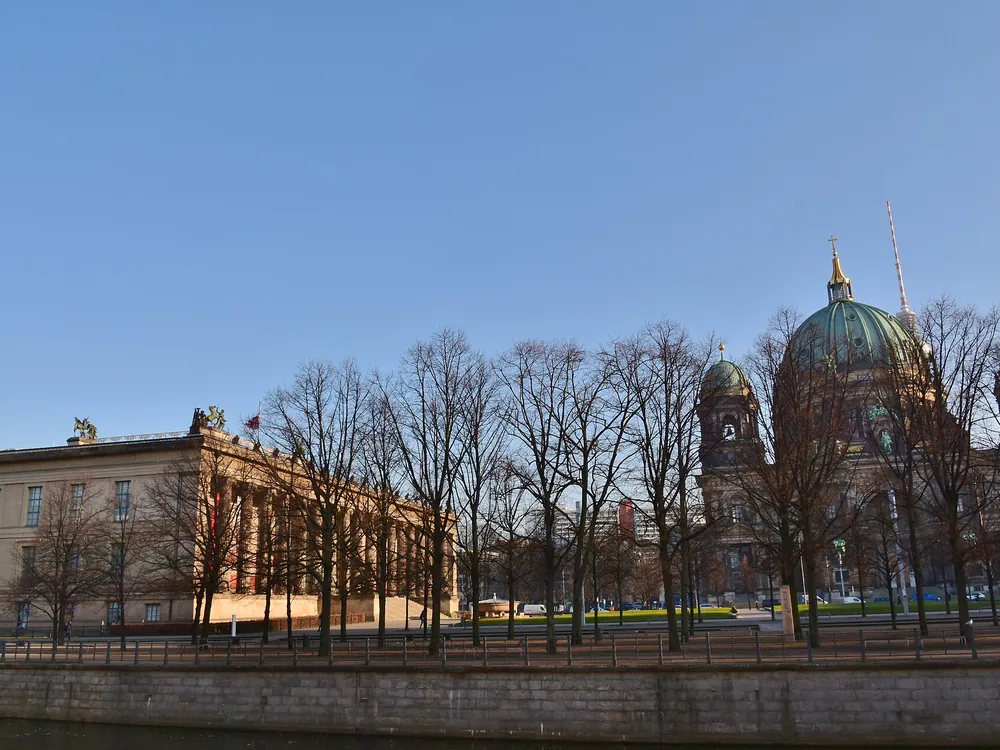
Photography: Brandenburg Gate (A.Savin), Museum Island & the Berliner Dom, and the Alexanderplatz TV Tower via Wikimedia Commons (CC BY / CC BY-SA); East Side Gallery by Ank Kumar (CC BY-SA 4.0); Oberbaumbrücke and Gendarmenmarkt (CC0). Full attribution on each file's Wikimedia Commons page.
Send us the listing and we'll tell you what we'd change. Not a pitch deck — a straight read on your photos, your title, your rates against the Berlin comp set, and whether a direct-booking site would pay for itself.
You'll hear back from a person, usually inside one business day. If we don't think we can move your numbers, we'll say so. Cavmir is a short-term rental marketing agency — we position and market properties, we don't manage them.
Demand in Berlin peaks around June through August and runs quietest around January and November. Here is how the year actually books — and what to do about each stretch of the calendar.
Summer is the sustained peak, June through August, when long days, warm weather and a packed festival calendar keep the city full. Hold firm pricing across the whole stretch, tighten minimum stays around the big weekends, and have the listing fully dialed by late spring. This is the window that carries the year, so it is worth photographing the flat at its summer best and leaning into terraces, courtyards and canal-side walks.
Spring and autumn are genuinely strong shoulders and the best-value windows for guests, so they are the easiest months to keep a Berlin calendar full without discounting. April and May build toward summer, while September and October stay busy on IFA, the Berlin Marathon and the Festival of Lights while the weather still holds. Lean on mid-week culture and business stays and a clean, professional listing.
November and the deep winter of January and February are the honest low, cold and quiet after the year's events wind down. Demand never disappears in a city this size, but rates soften, so this is the window for longer relocation and project stays, for winter city-breakers, and for the maintenance and photography refresh you cannot fit in when the calendar is packed. December is the exception, lifted by Christmas markets and New Year's Eve.
The summer peak and marquee weekends like Pride and the big trade fairs book the furthest out, often well in advance. Ordinary city breaks fill inside a few weeks, and the shoulder months carry plenty of short-notice demand. Lock the event dates early, then keep everyday pricing responsive to how the calendar is filling.
Berlin runs on a mix of short city breaks of two to four nights, weighted to weekends but strong midweek on business and culture travel, plus a longer-stay layer of week-plus apartment bookings through the shoulder and winter months. It is a deep, year-round market that rewards hosts who market to both the short break and the longer stay.
The apartment that wins in Berlin is a central, well-heated flat with real character in a Kiez guests recognize, honestly presented right down to the floor number and whether there is a lift. Renovated Altbau with high ceilings and good light, close to a U-Bahn or S-Bahn stop, is the sweet spot. Location and the sense of a genuine neighborhood are the first filters guests apply.
Sell the Kiez as hard as the apartment, with photography that captures the neighborhood, the nearest U-Bahn or S-Bahn stop and the character of the street, not just the rooms. Get compliant first and make your registration number a visible trust signal, because in Berlin that sets you apart from a crowded field. Add a Google Business Profile so you surface in map searches by neighborhood, and stand up a direct-booking site for the culture and business regulars who come back to the city often. That is the marketing layer Cavmir builds for Berlin hosts.
Summer, June through August, is the sustained peak on warm weather, long days and a full festival calendar. Spring and autumn are strong shoulders and the best-value windows, while November and deep winter are the quiet stretch. December is the exception, lifted by Christmas markets and New Year's Eve.
The summer peak and marquee weekends like Pride and the big trade fairs book the furthest out, often well ahead. Ordinary city breaks fill inside a few weeks, and the shoulder months carry real short-notice demand. Lock the event dates early, then keep everyday pricing responsive to how the calendar fills.
Berlin pulls a genuinely international fly-in audience led by the UK, the Netherlands, Italy, Spain and the United States, which is where paid marketing scales best. Nearer German and Polish cities like Hamburg, Leipzig, Dresden, Poznań and Szczecin feed weekend trips, worth naming in your listing and local SEO.
Fast wifi and a proper equipped kitchen lead, followed by reliable heating for the colder months and a workspace for the longer and business stays. A washer and easy self check-in help, and being upfront about the floor and whether there is an elevator matters in the city's older Altbau buildings.
Talk to Cavmir today. We'll show you exactly what your Berlin property is leaving on the table — and how fast we can change that.
Book a Free Strategy Call