The Market
Why Bucharest is One of the World's Premier STR Markets
Bucharest is where a heavy European requirement has just landed on a light national framework, and the gap between the two is this market's defining feature in 2026. Romania has no uniform national short-term rental statute — the framework is the tourism classification system plus whatever each municipality chooses to add, which means the rules genuinely differ between Bucharest and a mountain town four hours away. Registration with the local authority is the norm in the big cities and Bucharest enforcement has tightened, but the specifics are thin enough that any owner should confirm the current requirement with the city rather than trusting a guide. What is not ambiguous is that the answer is local rather than national: Bucharest expects owners letting short-term to hold a registration certificate from the local authority, with identification and proof of ownership, and the city has been enforcing more actively than the rest of the country. That is a substantial obligation arriving on a domestic framework that was never built to receive it, and the operators who get it right early will have a visible advantage while others sort themselves out. The market itself runs around 4,442 active listings at roughly 40% occupancy and €76 a night — a large capital with soft occupancy, which makes positioning the whole game.
Bucharest is a big, working capital that most visitors underestimate and then argue about. It has the second-largest administrative building in the world and the heaviest building on earth, built as Ceaușescu's Casa Poporului and still not entirely finished; it has an interwar centre of genuinely French-influenced architecture along Calea Victoriei that earned the city its Little Paris reputation; and it has the scars of the 1980s Civic Centre project, which demolished a great deal of that older city to build the first thing. Those three layers sit within a few streets of each other and the contrast is the honest story. Underneath the architecture is an economy: Romania's technology and outsourcing sector is one of the largest in the region, concentrated heavily in Bucharest, and it produces year-round midweek travel plus a substantial relocation and long-stay market. Demand also comes from European city breaks drawn by prices well below the EU average, a large diaspora, and mountain traffic passing through toward Brașov and the Prahova Valley. Around 4,442 listings run at roughly 40% occupancy and €76 a night. Small hotels and guest houses in restored interwar buildings compete for the same guest and often present the architecture better than the apartments do.
Top Attractions & Landmarks
- The Palace of the Parliament, the heaviest building in the world
- Calea Victoriei and the interwar architecture along it
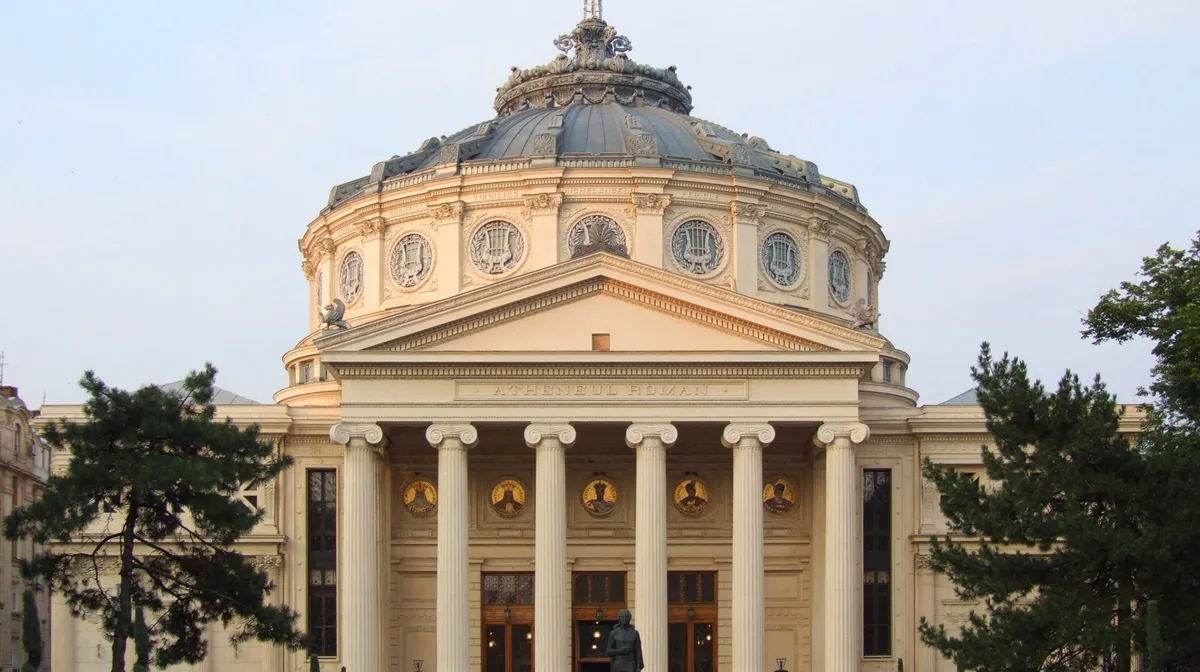
- The Romanian Athenaeum
- The Old Town (Lipscani) and its restored lanes
- The Village Museum, an open-air collection of rural buildings
- King Michael I Park and Herăstrău lake
- Cișmigiu Gardens in the centre
Nearby Markets: Sofia | Belgrade | Budapest