



Coffee & First Light
The Moonstone boardwalk before the fog lifts
Walk the bluff boardwalk early with a coffee. Summer mornings are grey and the sea is loud and it is better that way — the fog usually burns off by late morning.

Expert short-term rental marketing to grow your bookings and nightly rate in Cambria, California, USA.
Sixteen services, one team. Everything below is built in-house and scoped to your property and market. Most owners start with the 12-Step System.
Every engagement is quoted to your portfolio. These are the ready-made scopes owners pick most — our Fall Special (55% off list or more) is already applied to the website, King Broker, Hotels and à la carte scopes. A clear proposal within 48 hours.
The work is public. Selected engagements and what changed — and reviews from the owners and managers behind them.
* Market averages from AirDNA and STR market reports. A single home's numbers depend on its size, its location and how it is marketed.
Cavmir is an Airbnb marketing agency. We build the brand, the direct-booking website and the marketing for short-term rentals in Cambria.
Cambria sits on the San Luis Obispo County coast where the Santa Lucia range comes down to the water, about halfway between Los Angeles and San Francisco and just south of the point where Highway 1 turns into Big Sur. It is a village rather than a resort: a pine forest running down to a bluff, a boardwalk along Moonstone Beach, two small commercial districts and a preserve of several hundred acres of open bluff that the community bought outright to keep it from being built on. Hearst Castle is ten minutes north. The elephant seal rookery at Piedras Blancas, where thousands of animals haul out on the beach within a few feet of a viewing boardwalk, is fifteen. The rental stock is coastal cottages, pine-forest houses and bluff-view properties, and permits here are governed by a coastal zone ordinance with real teeth — including a limit on how many separate bookings a property may take in a month.
Cambria has one of the steadier demand curves on the California coast, which is why occupancy here runs higher than in more seasonal markets. Summer is the peak, driven by Highway 1 road trips, Hearst Castle and families. Autumn is arguably better — September and October are the warmest, clearest months on this coast after the summer fog and they are strong. Spring is solid. Winter is the quiet season but never empty: the elephant seals are at their most active on the beach in the winter months, whale migration passes offshore, and the village runs holiday events that draw from both metros. The two things that shape this market are both constraints. The first is water: Cambria's community water system has been under long-term pressure and the county requires evidence that the provider has confirmed adequate capacity before it will issue a vacation rental clearance. The second is the tenancy limit — county coastal rules cap the number of separate tenancies a vacation rental may take in a calendar month, which effectively pushes this market toward longer stays and makes rapid weekend turnover impossible. Both limit supply and both reward owners who plan around them.
Nearby Markets: Monterey & Carmel | Santa Barbara | Mendocino
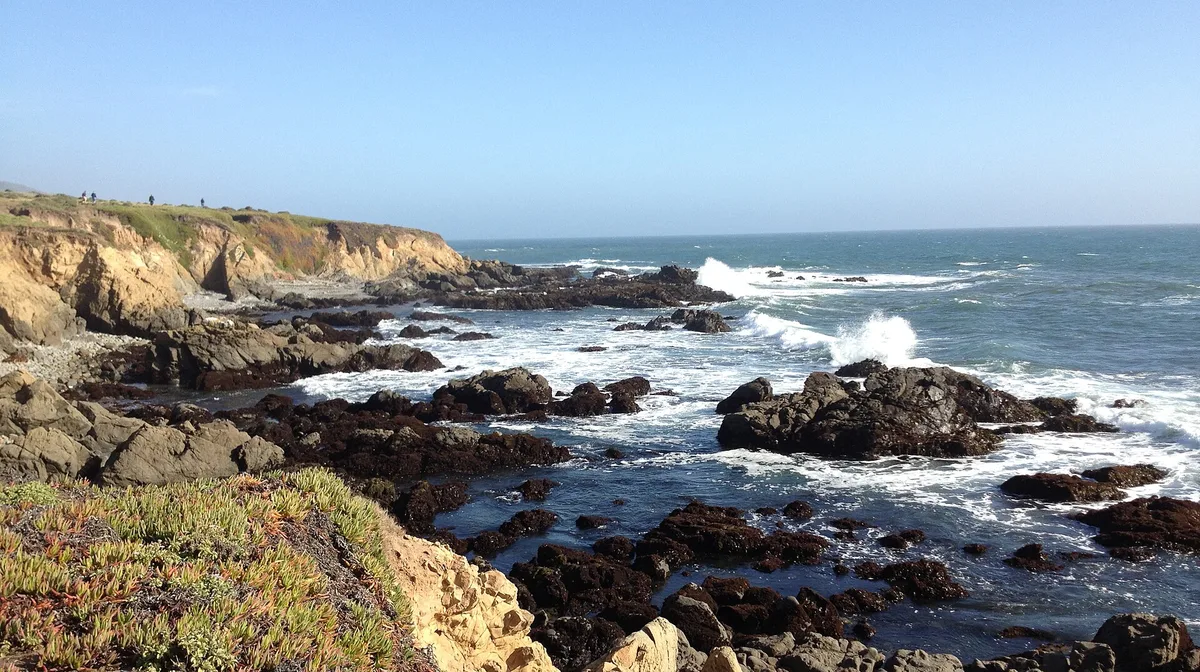
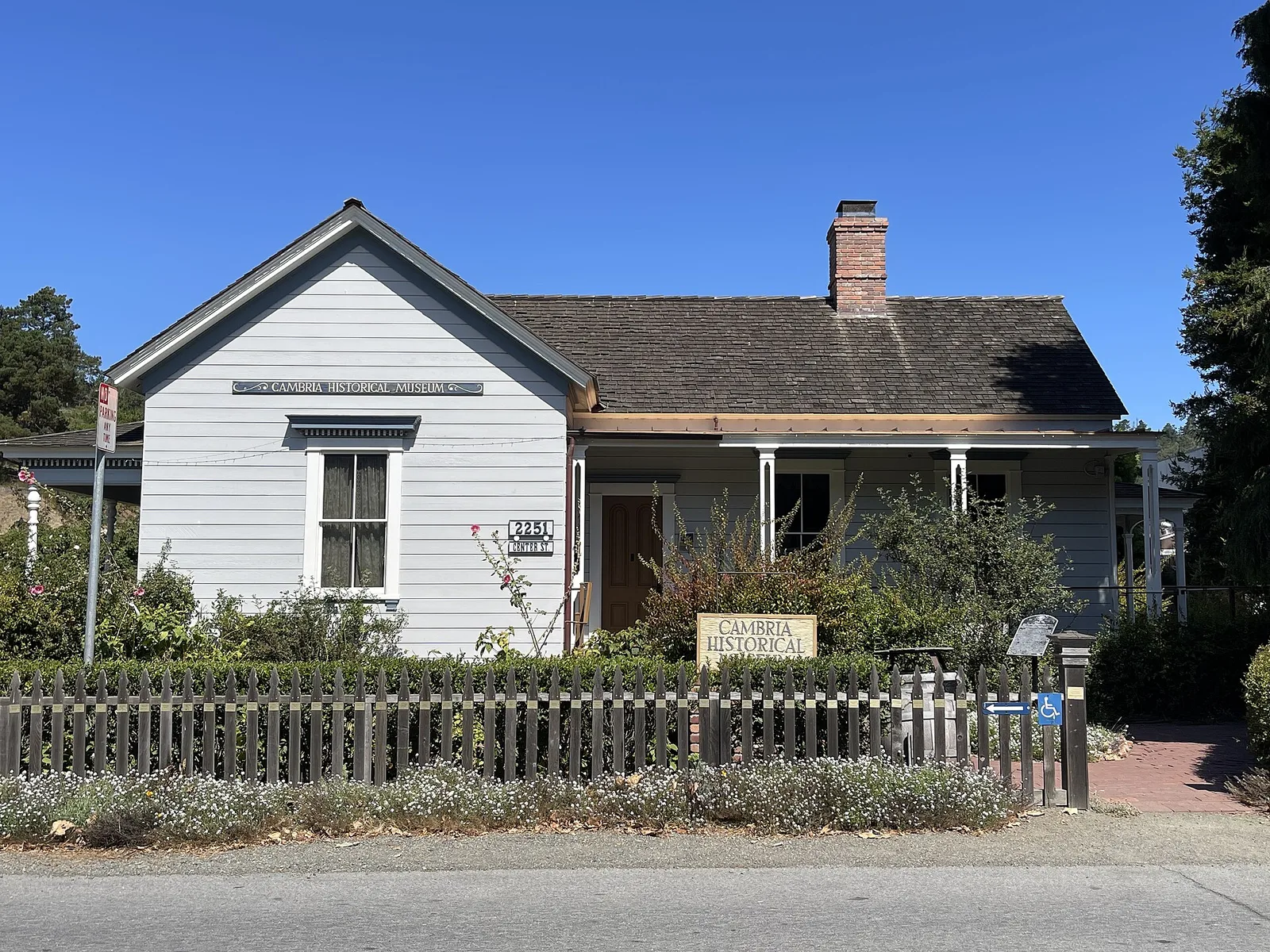
A few of the visual fingerprints we lean into when we shoot, brand and market a Cambria property — courtesy of the open Wikimedia Commons archive.
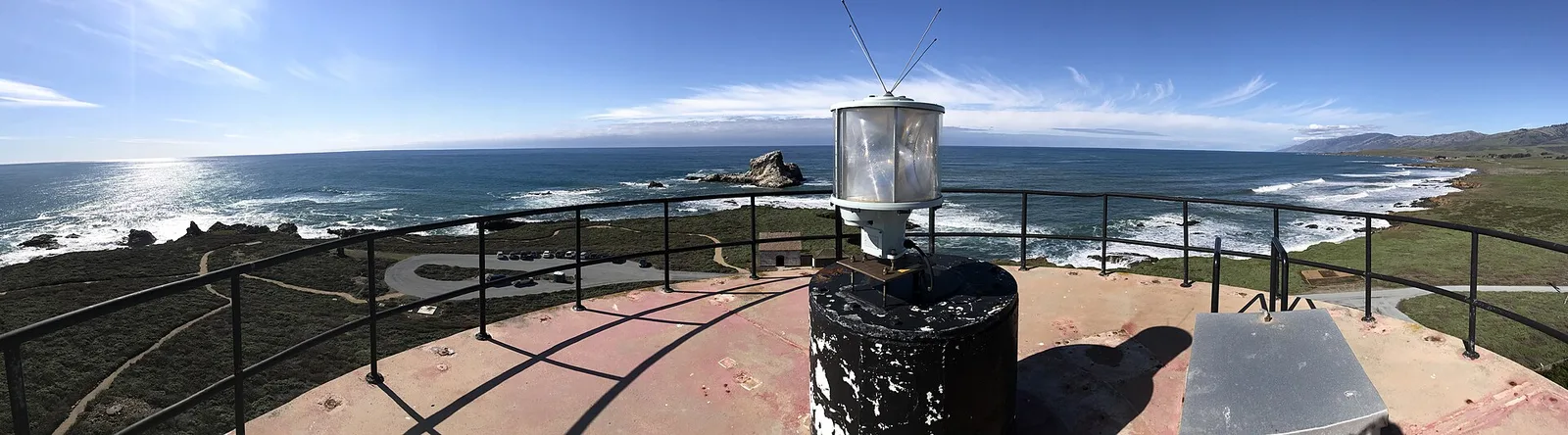

Cavmir markets Cambria properties for what the rules here actually permit, which is longer, better stays rather than maximum turnover. We build the rate and minimum-stay structure around the county's tenancy limit instead of fighting it, and we position the property to the guest who wants four or five nights on this coast rather than a Saturday. We photograph the property, the pines and the water in the light this coast gets at the end of the day, and we shoot the season we are selling. We write copy with the real distances — Hearst Castle, the seal rookery, the start of Big Sur, the bluff trail — and we tell guests plainly about Highway 1 conditions north of here, because that is the single most common thing that disrupts a trip. We build the direct-booking site, get it visible for the Highway 1, Hearst Castle and Moonstone Beach searches, and build the email list that brings a summer guest back in October. We help position and market your property. We never manage it or touch your keys.
Cambria began as a mining and dairy town, then the Hearsts turned the hills above it into the most famous private estate in California. The village has sold proximity to that showplace ever since, and Cavmir writes the modern chapter.


Cambria began as a mining and ranching settlement in the 1860s, working quicksilver in the hills and shipping goods off a pier at San Simeon. It was remote — the coast road north was barely passable, and the town's connection to the rest of California ran through Cayucos and San Luis Obispo. What changed the area's trajectory was the Hearst family. George Hearst assembled an enormous ranch along this coast in the nineteenth century, and his son William Randolph Hearst built the estate at San Simeon over three decades from 1919 onward. When the family gave the estate to the state in the 1950s and it opened for tours, this stretch of coast acquired a permanent, year-round attraction bringing a steady stream of visitors past Cambria's door.
The town itself grew slowly and then, in the second half of the twentieth century, hit a wall that still defines it: water. Cambria sits on a small coastal watershed with no imported supply, and its community services district has spent decades managing a genuine shortage — moratoria on new connections, waiting lists for water service, emergency measures in drought years, and eventually a sustainable water facility built in the 2010s. That constraint is why the village never sprawled and why a coastal town two and a half hours from Los Angeles still has a few thousand residents and a pine forest instead of a subdivision.
The community also chose to protect the bluff. In 2000, after a long campaign, several hundred acres of open coastal ranch land on the ocean side of town were purchased and preserved as the Fiscalini Ranch Preserve rather than developed, giving Cambria a public bluff trail along its own shoreline. Between the water limit, the preserve and the coastal zone ordinance that governs land use here, Cambria is a place where scarcity was chosen deliberately and repeatedly. The vacation rental market operates inside that framework.
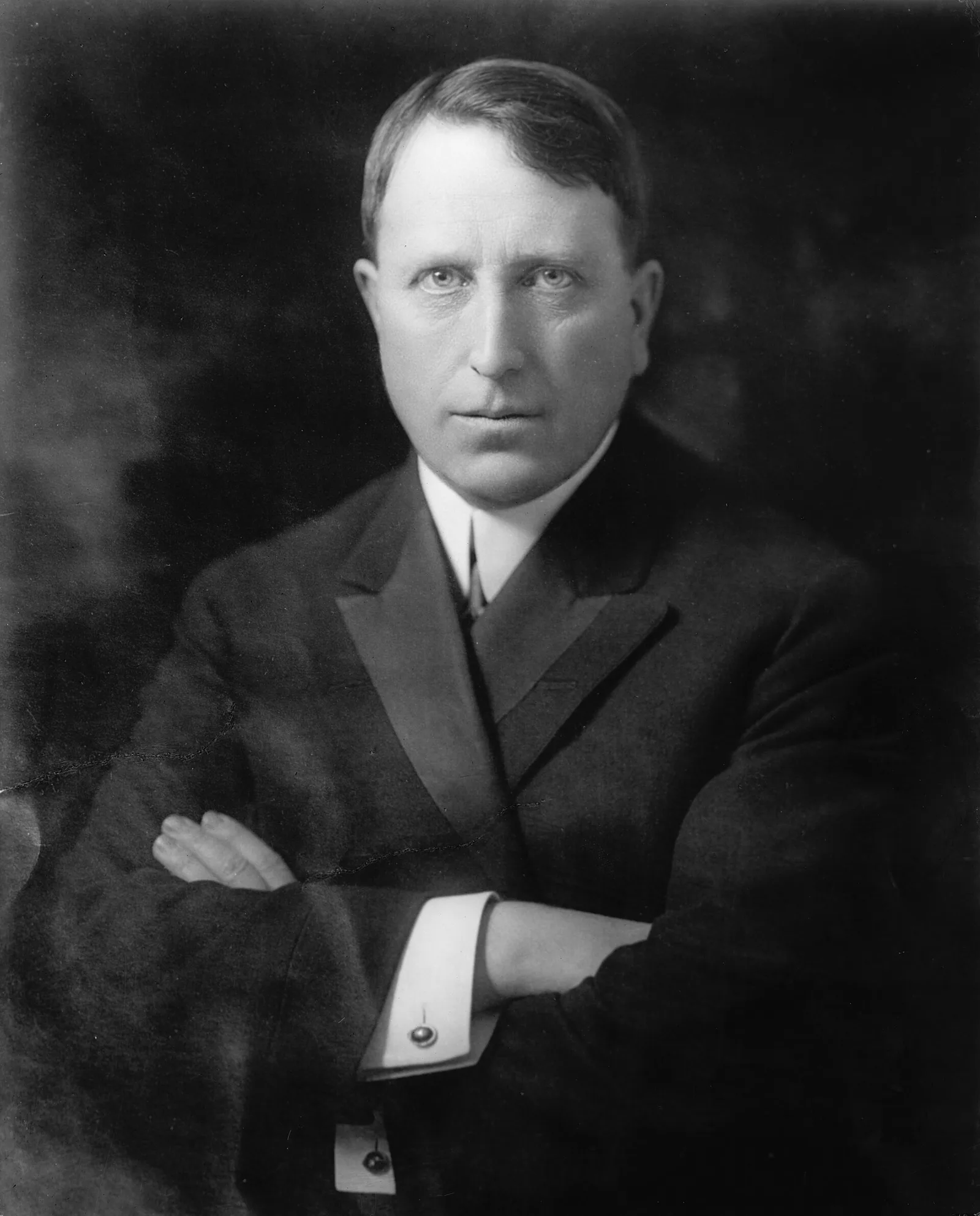
Before the platforms, the owners did the marketing. George Hearst bought the San Simeon ranchos in 1865 and built the wharf that tied the coast to the outside world. His son William Randolph Hearst spent almost thirty years raising a hilltop castle with the architect Julia Morgan, then filled it with movie stars, publishers and heads of state whose names did the advertising for him. When the family gave the estate to California in 1958, the state kept selling the same thing to a new audience — the tour, the view, the glamour of the hill. Cambria has traded on that showplace ever since, and it is the business Cavmir is in today.


Historical images: public domain via Wikimedia Commons.
The county's coastal rules cap the number of separate tenancies a vacation rental may take in a calendar month, which fundamentally changes how you should price. In a market where you cannot simply turn the property over every two nights, revenue comes from longer stays at good rates rather than from maximum turnover — and that is genuinely a better business, with lower cleaning costs, less wear and better guests. Build minimum stays of three to five nights as the default and price accordingly rather than treating them as a restriction. Summer is the peak, driven by Highway 1 road trips and Hearst Castle. September and October are the best weather of the year on this coast, once the summer fog burns off for good, and they are strong. Spring is solid. Winter is the quiet season but supported by the elephant seal rookery, which is at its most dramatic in the winter months when the animals are on the beach in the thousands, and by the village's holiday programme. The occupancy here runs higher than most California coastal markets because demand is steady rather than spiky, so the pricing goal is rate discipline and length of stay rather than chasing every open night.
Steadier than most of the California coast. Summer is the peak on volume, though the coastal fog in June and July is real and guests should be told. September and October are the warmest, clearest and arguably best months and they book well. Spring is solid, with wildflowers on the bluff and whale migration offshore. Winter is the quiet season without being dead: the elephant seals at Piedras Blancas peak in December and January when the pups are born, whale watching runs offshore, and the village holds holiday events. The one recurring disruption is Highway 1 north of here — landslides in the Big Sur section close the road with some regularity, and that changes the trip a guest planned and occasionally their willingness to come at all.
Cambria sits in the California coastal zone and the rules are correspondingly detailed. Vacation rentals here are governed by the San Luis Obispo County Coastal Zone Land Use Ordinance, which addresses residential vacation rentals — the use of an existing residence for transient rental of fewer than thirty days — as a specific permitted use with conditions. Three approvals are required for each property: a Zoning Clearance, a Business Licence and Transient Occupancy Tax registration. None of them is optional and the county administers them.
Two conditions in that ordinance shape the economics of every rental in Cambria. The first is water. Where water or sewage service is provided by a community system — which it is here — an applicant must submit evidence with the Zoning Clearance application that the service provider has been informed of the proposed vacation rental use and has confirmed that adequate service capacity exists to accommodate it. In a town with Cambria's water history, that is a substantive gate rather than a formality, and it should be established before you buy rather than after. The second is the tenancy limit: rental of a residence may not exceed four individual tenancies per calendar month. That single provision rules out the high-turnover two-night model entirely and pushes the whole market toward longer stays. There is also an occupancy standard, with maximum occupants set at two persons per bedroom plus two additional persons.
Practical guidance for a buyer: before contract, confirm with the county whether the property holds a current Zoning Clearance for vacation rental use, whether the water service provider will confirm capacity for that use, and what occupancy the property's bedroom count actually supports under the standard. Get all three in writing. On tax, San Luis Obispo County levies transient occupancy tax on short-term stays in the unincorporated area, with tourism assessments applied on top; confirm the current combined rate with the county tax collector.
Design the business around longer stays instead of resisting the tenancy limit. Four bookings a month means your average stay needs to be five to seven nights for the calendar to work, and that is a better product anyway — set the minimum stay, price the week properly, and market to people who want to slow down on this coast rather than to weekenders. Second, photograph the fog honestly and the sun generously. Summer mornings here are grey and the marketing that pretends otherwise generates disappointed guests; a line explaining that the fog burns off by midday and that September is the clear month is worth more than a filtered photograph. Third, sell the seals. Piedras Blancas is fifteen minutes north, it is free, it is genuinely extraordinary, and winter is when it is at its best — which is exactly the season you need to fill. Fourth, own the bluff. The Fiscalini Ranch Preserve trail along the ocean is the town's best asset and half the listings do not mention it. Fifth, tell guests about Highway 1 north. Closures in the Big Sur section are common enough that a guest planning to drive to Monterey needs current information, and giving it to them is a genuine service. Sixth, use the pine forest — the Monterey pines above the village are one of only a few native stands anywhere and they make the town feel unlike any other coastal village in California.
The regulatory conditions are the defining constraints: the water capacity confirmation is a real gate on new entry, and the four-tenancy monthly limit rules out the turnover model that works elsewhere. Both are good for existing permitted owners and hard for new ones. Beyond that, this is an expensive coastal market where insurance, property tax and maintenance in salt air are significant costs against a rate that, while strong, is not Carmel's. Highway 1 closures north of here disrupt trips with some regularity. Summer fog is a genuine feature of the climate that guests underestimate. And wildfire risk in the coastal range has affected insurance availability across California.
California coastal insurance is a serious constraint and it should be priced before you buy, not after. Get a dedicated short-term rental policy with real liability limits, and expect wildfire underwriting to dominate the conversation — carriers have withdrawn from parts of California, premiums have risen substantially, and some properties end up on the state's insurer of last resort with a supplementary policy for liability. Get quotes on the specific address early. Coastal exposure adds salt-air corrosion, wind and, for bluff-adjacent property, erosion questions. If your property is in or near the pine forest above the village, the wildfire rating matters more, not less. Ask specifically how loss of rental income is treated during a wildfire evacuation or a road closure that prevents guests reaching you, since Highway 1 closures are a recurring local reality. Hot tubs, decks and bluff-trail access should be declared. Ask for guest injury and guest property damage to be confirmed in the policy language.
San Luis Obispo County levies transient occupancy tax on short-term stays in the unincorporated area, and tourism business improvement assessments are applied on top, so the figure a guest sees at checkout is higher than the base rate alone. Transient Occupancy Tax registration with the county is one of the three approvals required to operate a vacation rental here, alongside the Zoning Clearance and the Business Licence — it is not a separate afterthought, it is part of the permission to operate. Booking platforms collect and remit portions of the tax on the reservations they process; direct bookings are your responsibility. Because the tenancy limit pushes this market toward longer, higher-value bookings and because direct booking is where a marketing programme creates the most value, get the registration and the filing calendar in place first. Confirm the current combined rate with the county tax collector, and have your accountant review how California treats rental income and personal use for your ownership structure.
This is a high-value California coastal market and the financing conversation reflects it. Two local items matter more than the loan structure. The first is insurance: California wildfire and coastal premiums can be high enough to reshape a lender's debt-to-income calculation, and in some cases availability rather than price is the problem — get real quotes on the address before you go far into a purchase. The second is the entitlement. If the value of the property as an investment depends on it being permitted for vacation rental use, that depends on a current Zoning Clearance and on the water provider confirming service capacity for the use, and neither an appraisal nor a title report will establish it. Confirm both in writing before closing. Beyond that, older village houses bring the usual inspection items, and properties in the pine forest can carry defensible-space requirements. Second-home financing is cheaper than investment lending. Model the four-tenancy limit into your revenue assumptions from the start, because a pro forma built on weekend turnover will be wrong by a wide margin.
Water remains the central long-term question in Cambria and it governs everything downstream of it — new connections, development, and by extension the supply of vacation rentals. A town that has spent decades managing a genuine shortage is unlikely to loosen that constraint, which means existing permitted properties keep their scarcity value. The second thread is the coastal regulatory environment. California's coastal zone rules are administered actively, and the tenancy and occupancy conditions in the county ordinance are the kind of provisions that get revisited rather than removed. Assume more specificity over time, not less. The third is Highway 1 itself. The Big Sur section north of here has closed repeatedly from landslides and the maintenance burden is ongoing; a long closure changes the shape of the road-trip market that feeds this coast. The counterweight is that Cambria's fundamentals are unusually durable: a permanent attraction ten minutes north, a wildlife spectacle fifteen minutes north, a protected bluff in the town itself, and a supply of rentals that cannot easily grow.
Cambria is a pine forest that runs down to the sea, which is not a sentence you get to write about many places in California. The Monterey pines above the village are one of only a handful of native stands left anywhere, and they give the town a smell and a light that is completely different from the coast north or south of it. Below them, Moonstone Beach has a boardwalk along the bluff where you can walk for a mile with the water on one side and the wind in the cypress on the other. On the ocean side of town there are several hundred acres of open bluff that the community bought outright in 2000 rather than let it be built on, with a trail along the whole edge of it. Ten minutes north is Hearst Castle. Fifteen minutes north is a beach where several thousand elephant seals lie within a few feet of a public boardwalk, at their most dramatic in December and January. What we like about marketing here is the shape the rules impose. The county limits a vacation rental to four tenancies a month and requires the water provider to confirm capacity before you can operate at all — which means this is a market of scarce permits and longer stays. That is a better business than a high-turnover weekend market and almost nobody presents it that way. The owners who build around the constraint instead of resenting it end up with better guests, lower costs and a calendar that actually works.
A great property in Cambria doesn't just want a listing — it wants a point of view, an audience, and a brand the city itself would recognise.
Eight things for the guest guide. Real names, real distances and honest weather — this coast rewards guests who plan and punishes those who do not.
Walk the bluff boardwalk early with a coffee. Summer mornings are grey and the sea is loud and it is better that way — the fog usually burns off by late morning.
The good restaurants in the East and West villages are small and fill from spring through autumn. Tell guests to reserve when they book, especially in September and October.
Several hundred acres of open bluff the community bought in 2000 to stop it being developed, with a trail along the ocean edge. It is free, it is the best thing here, and half the listings never mention it.
Ten minutes north, and the tours run in any weather. Book the tickets in advance — walk-up availability on a wet weekend is unreliable.
The summer fog has gone, the light is clear, the water is at its warmest and the road-trip crowds have thinned. It is the best month here by some distance.
Fifteen minutes north, thousands of animals on the beach with a boardwalk right above them, free and unfenced. Winter is when it is most extraordinary, which is also when your calendar needs it most.
Drive twenty minutes up Highway 1 past the seals and the coast turns into Big Sur. Check the road status first — landslide closures in that section are common.
Answer both honestly and in advance. Summer mornings are grey and clear by midday, and the road north closes more often than visitors expect. Guests who were told plan better trips.
Guests who find a Cambria rental on Airbnb search its name afterwards, and the page they should land on is the owner’s own site. Cavmir builds vacation rental websites of 40 to 125 pages in the owner’s brand. For a home that only lists on Airbnb, that is a website for your Airbnb: your name and domain, your photos, your area guides and your reviews, with a button that sends guests to the listing. For homes on Hostaway, Guesty or Hospitable it is a direct booking website: live availability and prices from the PMS, the whole stay priced before checkout, and the booking completed in the PMS. Both start from the same vacation rental website design, run the TrollBuster™ compliance scan before launch, and are yours at launch: domain, code, content and photos.
The guide pages of a Cambria site can start with the picks on this page: The Moonstone boardwalk before the fog lifts, Dinner in the village on a weekend and The Fiscalini Ranch Preserve. Each one is a search a guest makes before choosing a home, and each becomes a page that leads to the booking button.
Packages start at $1,475 for the Starter Website (40 pages, two to three weeks) and run to $3,732 for Full with Direct Booking (125 pages, booking synced with your PMS); the current prices are on the pricing page.
A few composite engagements, drawn from how Cavmir typically works with owners in a permit-limited coastal market with a monthly tenancy cap. Illustrative rather than any one client's file.
Trying to run a weekend-turnover model against a county rule limiting the property to four tenancies a calendar month, producing a half-empty calendar and constant friction.
Rebuilt the model around five- to seven-night stays with pricing and minimums to match, repositioned the property to guests who want to slow down on this coast, and reshot in October light.
The calendar filled more completely within the tenancy limit, cleaning and turnover costs fell, and average booking value rose against the previous weekend pattern.
Strong from May to October and near-empty from December to February, with no winter story at all despite the seal rookery peaking in exactly those months.
Built a winter position around the elephant seal pupping season, whale migration and the village's holiday programme, with photography from those months and a targeted email to past guests.
December and January began producing bookings from guests specifically coming for the wildlife, converting the market's quietest months into a real if smaller season.
About to buy on the assumption that vacation rental permission would follow, without confirming the Zoning Clearance or whether the water provider would confirm service capacity for the use.
Established both positions in writing with the county and the service provider before contract, and built the financial model around the tenancy limit rather than a turnover assumption.
The purchase proceeded on verified permissions and a revenue model that matched the actual rules, rather than a pro forma the ordinance would never have allowed.
Demand in Cambria peaks around June through October and runs quietest around January, February and November. Here is how the year actually books — and what to do about each stretch of the calendar.
Summer is the volume peak on Highway 1 road-trip traffic and Hearst Castle, and September and October are the best weather of the year on this coast once the fog clears for good. Because county rules cap the number of separate tenancies a rental may take in a month, the goal is longer, higher-value stays rather than maximum turnover.
Spring is solid on wildflowers and whale migration. The genuinely under-used shoulder here is winter, when the elephant seal rookery north of town is at its most dramatic — thousands of animals on the beach, at exactly the time your calendar needs help. Market it deliberately rather than treating December through February as dead.
December through February is the quiet stretch, though it never empties. Build the winter around the seals, the whale migration and the village's holiday programme, price longer stays, and use the window for maintenance and a reshoot in autumn light.
Summer weeks and autumn weekends fill on a four to eight week window, longer for holiday periods. Winter runs shorter. Because the tenancy cap limits how many bookings you can take, filling the right ones early matters more than filling every gap.
Longer than most California coastal markets, and deliberately so — county rules limit the number of separate tenancies per calendar month, which pushes the whole market toward four to seven-night stays. Design for that rather than resisting it.
Houses and cottages with an ocean or bluff view, or a genuine walk to Moonstone Beach and the boardwalk, are the strongest product. Because the tenancy limit rewards longer stays, properties that work for four to seven nights — a proper kitchen, a fire, comfortable indoor space for a foggy morning — outperform those set up for quick weekend turnover.
Start with photography that shows what a guest actually gets here, then write the listing around a real itinerary rather than a feature list. Build a direct-booking site so returning guests can come back without going through a platform, and keep an email list segmented by season so you can reach last year's visitors before the calendar opens. Local search matters more than people expect in a market this size, because guests search the destination and the attraction rather than the word rental. A marketing agency layer handles the photography, the listing copy, the direct-booking site and the local SEO as one system instead of four disconnected jobs.
Summer is the volume peak on Highway 1 road-trip traffic, but September and October are the best weather of the year once the summer fog clears, and they book well. Spring is solid on wildflowers and whale migration. Winter is the quiet season but has a genuine draw in the elephant seal pupping at Piedras Blancas.
Summer weeks and autumn weekends fill on a four to eight week window, longer around holidays. Winter is shorter notice. The more important point here is that county rules cap how many separate tenancies a rental can take in a calendar month, so securing the right longer bookings early matters far more than filling every individual gap.
Los Angeles and the Bay Area supply most of the demand, with Bakersfield, Fresno and Santa Barbara behind them. Nearly everyone drives, since this coast is a road-trip destination rather than a fly-in one. Highway 1 conditions north toward Big Sur genuinely affect how and whether guests plan a trip, so keeping that current for them is a real service.
An ocean or bluff view, or a genuine walk to Moonstone Beach and the boardwalk. Because the tenancy limit pushes this market toward longer stays, a fireplace, a proper kitchen and comfortable indoor space for a foggy morning matter more than they would in a weekend market. Being dog friendly opens up a segment this coast attracts naturally.
Run your Airbnb, Vrbo, or website through Cavmir's free grader. It checks the things that decide whether guests book in Cambria — photos, listing copy, page speed, local search — and shows you where bookings leak. Takes about a minute, and there's no sales call attached.
If the report says your booking engine is the weak link, that's fixable: a direct-booking website of your own means repeat guests stop paying platform fees to come back to you. That's the work Cavmir does — see Airbnb website design in Cambria.
Send us the listing and we'll tell you what we'd change. Not a pitch deck — a straight read on your photos, your title, your rates against the Cambria comp set, and whether a direct-booking site would pay for itself.
You'll hear back from a person, usually inside one business day. If we don't think we can move your numbers, we'll say so. Cavmir is a short-term rental marketing agency — we position and market properties, we don't manage them.
Talk to Cavmir today. We'll show you exactly what your Cambria property is leaving on the table — and how fast we can change that.
Book a Free Strategy CallPhotography via Wikimedia Commons (images resized and cropped): Bluffs and shoreline by Peter D. Tillman (CC BY-SA 3.0) · Cambria Historical Museum - September 2023 - Sarah Stierch by Missvain (CC BY 4.0) · California Ground Squirrel on rock Pebble Beach dllu by Dllu (CC BY-SA 4.0).
