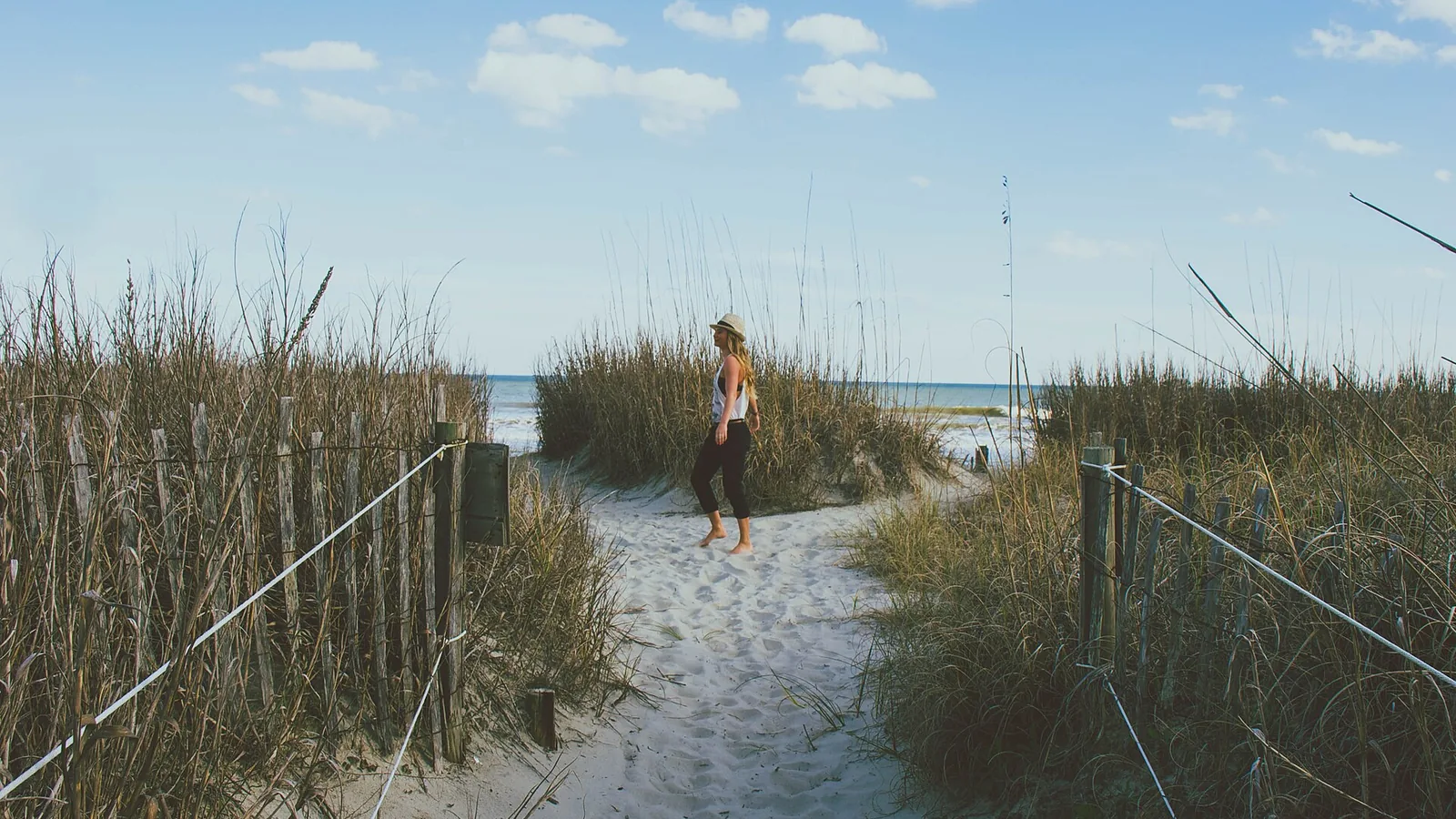
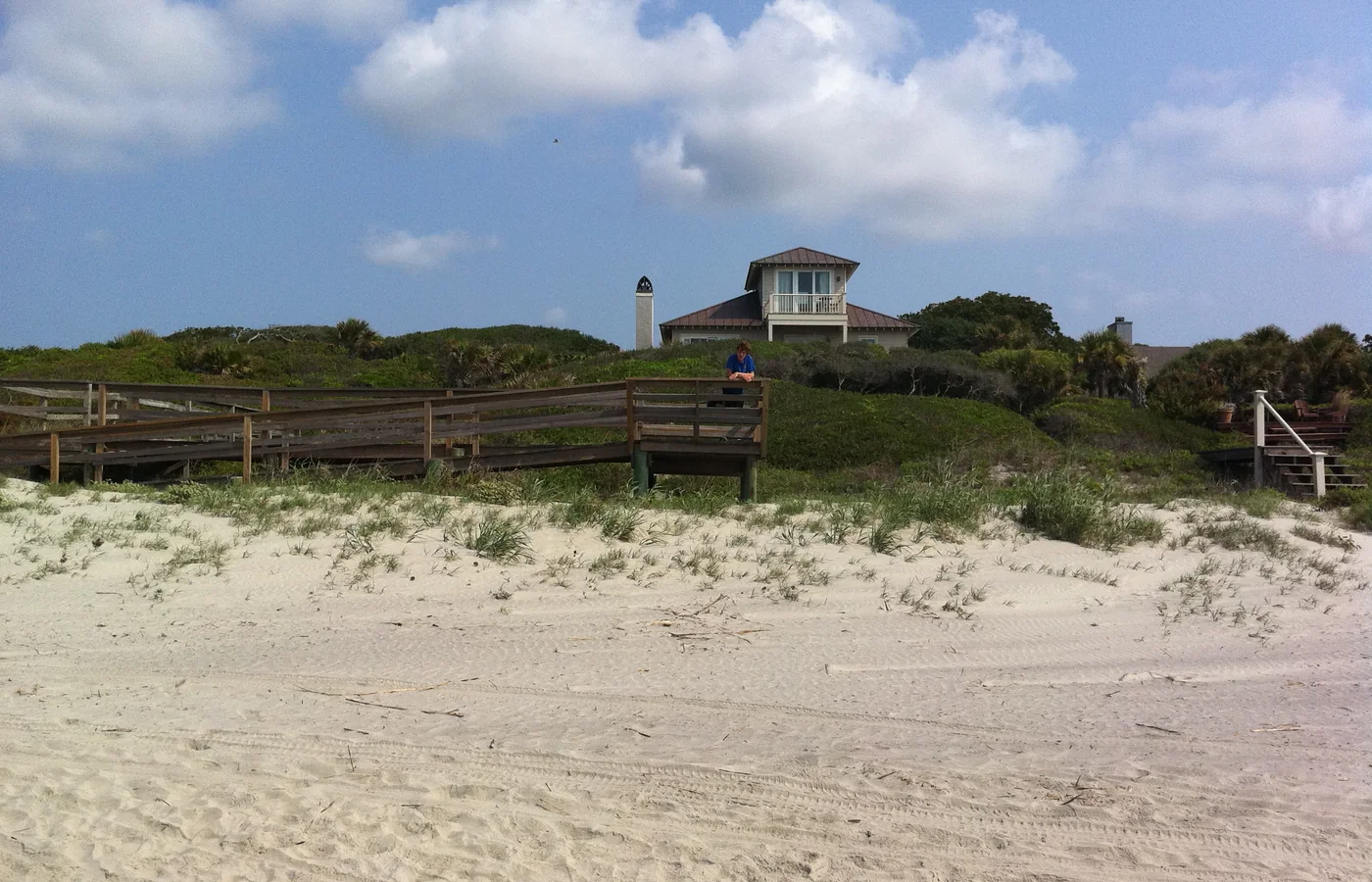
Bike the beach at low tide
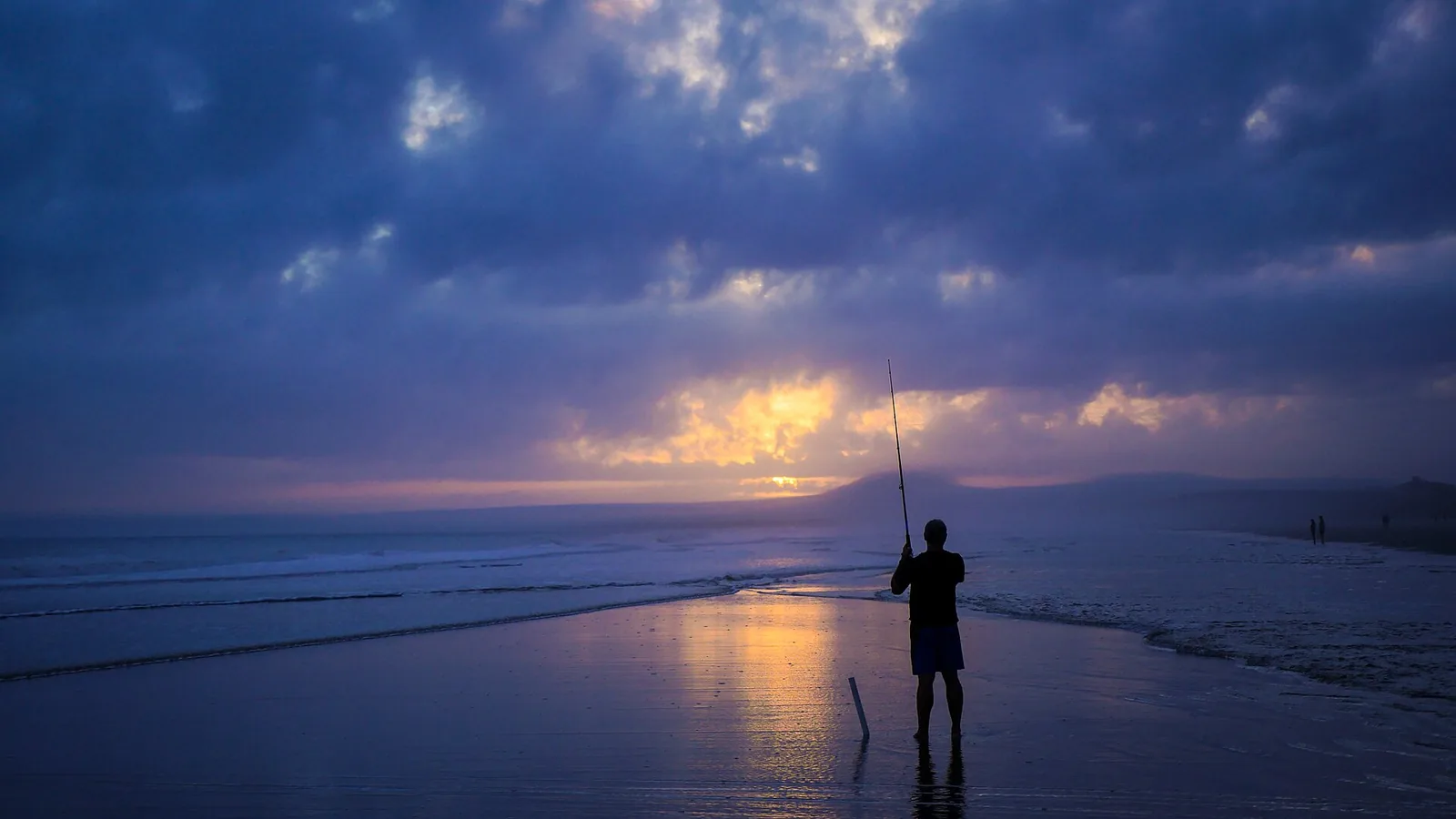
The sand on Kiawah packs hard enough to ride for miles. Send guests out at dawn from the nearest boardwalk. They get the island's signature experience, and the photograph that goes on to sell your next booking.
Expert short-term rental marketing to grow your bookings and nightly rate on Kiawah and Seabrook — from West Beach villas to oceanfront estates behind the gate.
Sixteen services, one team. Everything below is built in-house and scoped to your property and market. Most owners start with the 12-Step System.
Every engagement is quoted to your portfolio. These are the ready-made scopes owners pick most — our Fall Special (55% off list or more) is already applied to the website, King Broker, Hotels and à la carte scopes. A clear proposal within 48 hours.
The work is public. Selected engagements and what changed — and reviews from the owners and managers behind them.
* Market averages from AirDNA and STR market reports. A single home's numbers depend on its size, its location and how it is marketed.
Cavmir, an Airbnb marketing agency, does three jobs for Kiawah Island short-term rentals: brand, direct-booking website, marketing.
Kiawah Island is what happens when a barrier island is developed deliberately instead of opportunistically. Twenty-one miles south of Charleston, behind a security gate that most of the island sits behind, Kiawah runs ten miles of hard-packed beach along maritime forest, marsh and world-ranked golf — with no high-rises, no boardwalk amusements and no neon anywhere. Together that puts Kiawah among the highest-rate beach rental markets on the US East Coast, and its guests are families and golf groups that come back for the same weeks each year and think of the island as theirs. If you own a villa, cottage or oceanfront home here, you are not competing in a beach-town commodity market; you are operating a small hospitality brand inside a private resort community, and the marketing should behave accordingly.
The island breaks into separate rental micro-markets with their own pricing and booking patterns. West Beach and East Beach hold the villa stock — the condos and townhomes closest to the Sanctuary hotel, Night Heron Park and the beach boardwalks, where golf groups and smaller families dominate. The single-family streets running east toward Ocean Course Drive carry the whole-house family market, from marsh-view cottages to true oceanfront estates that clear five figures a week in summer. Next door, Seabrook Island — a separate gated town with its own club, its own rental rules and its own loyal guest base — offers a quieter, slightly better-value version of the same product, with Bohicket Marina and Freshfields Village in between serving both islands. In every season the specific beats the generic: a listing built around its micro-market and its guest outperforms a generic 'Kiawah rental', whether that guest is the Ryder Cup pilgrim, the multigenerational June family or the fall wedding party.
The island’s guests have one thing in common: they decided to come. Nobody stumbles onto Kiawah, because the gate, the distance from the interstate and the rate structure screen for travelers who picked it deliberately. They include affluent families from the Northeast and Midwest, Atlanta and Charlotte weekenders, and golfers working through a bucket list. They plan early, stay a full week in season because most rentals require it, spend heavily on golf, tennis, bikes and dining, and keep returning once a house has earned their trust. Search, past-guest marketing and a direct-booking presence as considered as the island itself all reach that guest, and the margin sits in reaching them directly instead of paying the platforms for visibility season after season.
Getting here is a quiet strength. Charleston International is about forty-five minutes away, with nonstops from most of the country’s eastern half, and Kiawah draws a meaningful drive-market from Atlanta, Charlotte, Columbia and Charleston itself. Guests from the Northeast can fly and guests from the Southeast can drive, so the season runs longer and holds up better than a fly-only resort market’s. Your marketing can therefore address two planners at once: the family booking February for July, and a couple who decide on Wednesday to come for the weekend at shoulder rates.
Nearby Markets: Charleston | Hilton Head | Beaufort

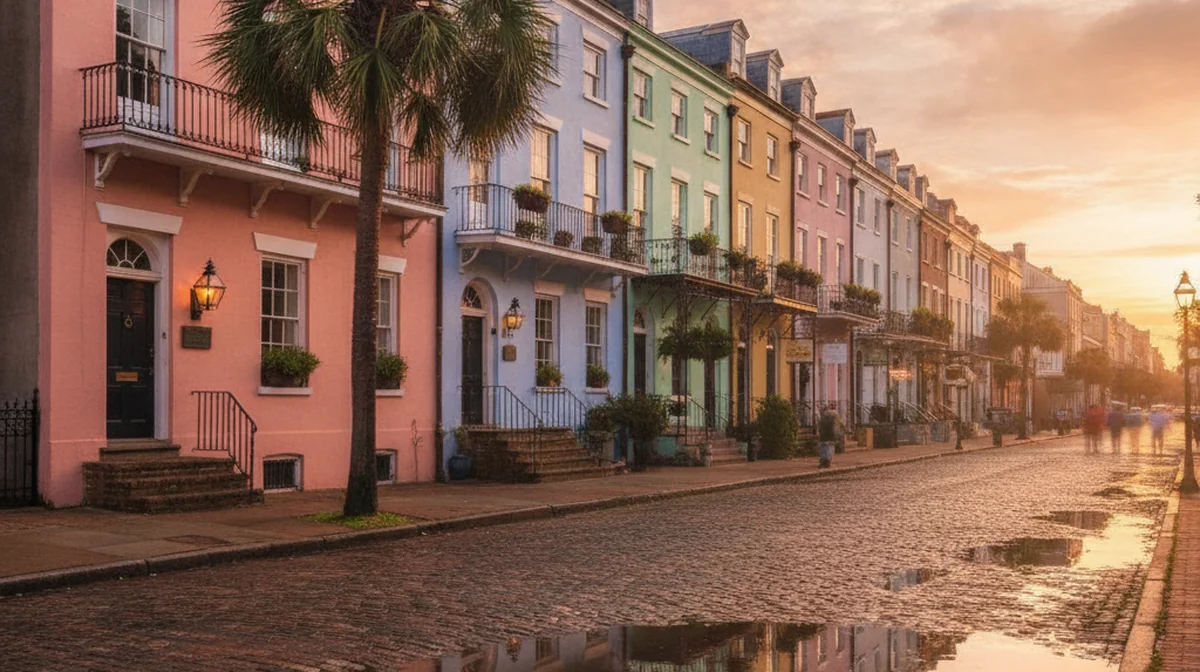
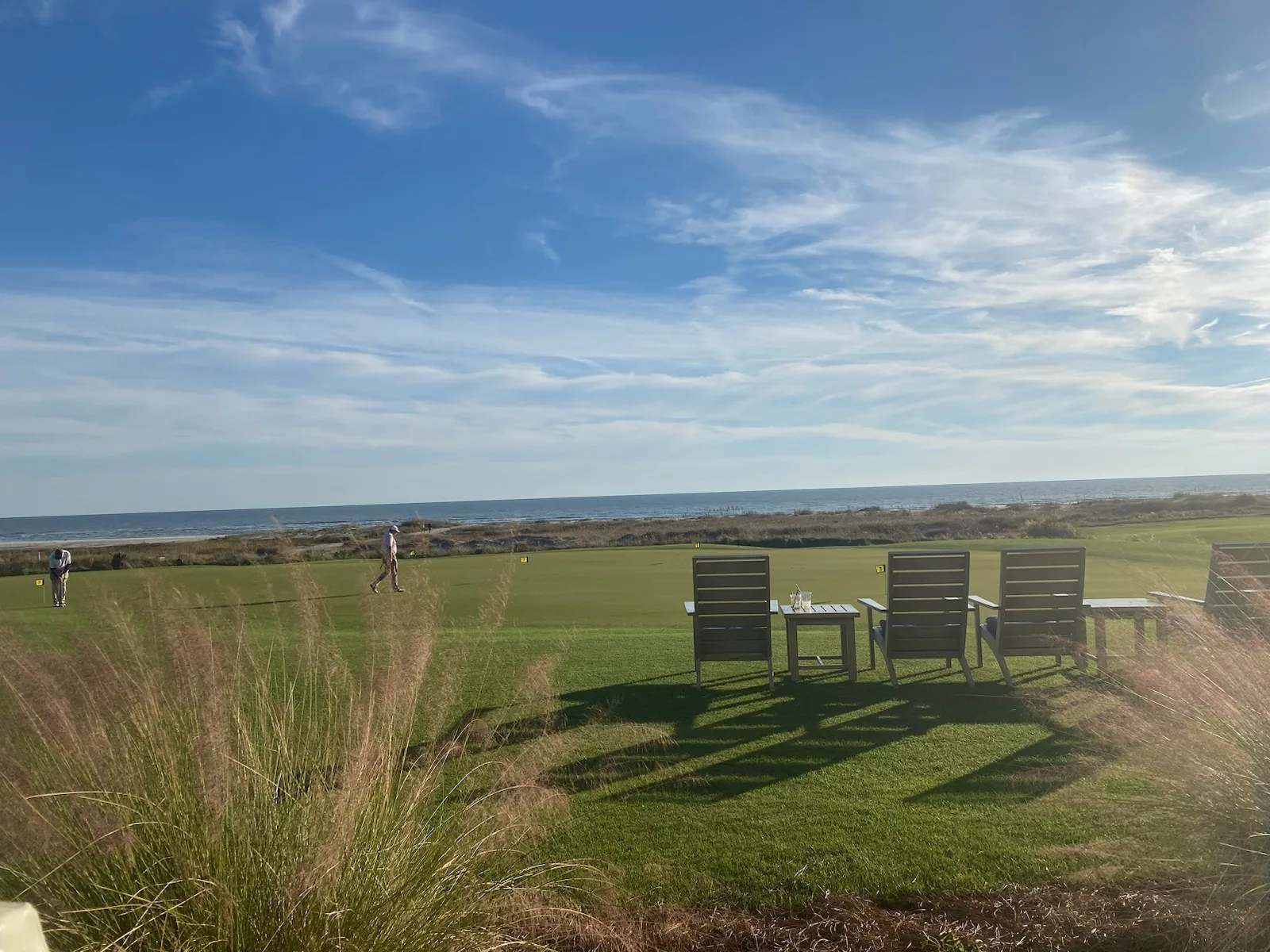
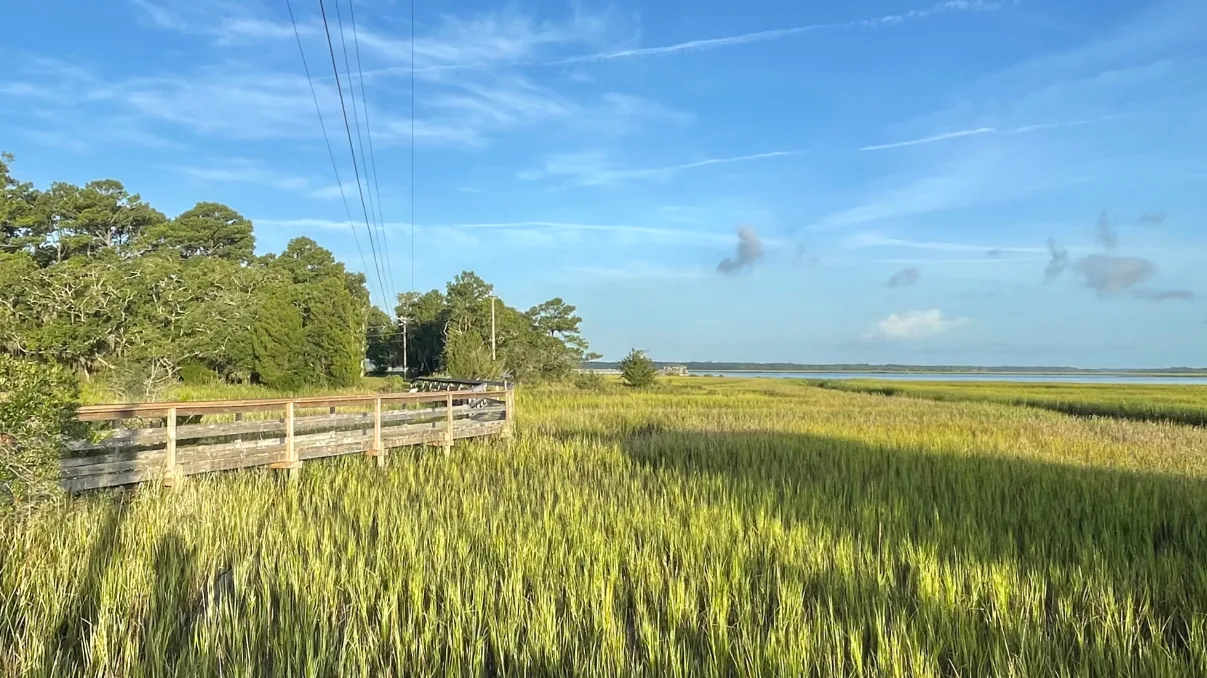
The visual fingerprints below, sourced through the open Wikimedia Commons archive, are a few we lean into as Cavmir shoots, brands and markets Kiawah Island properties.
Each Kiawah or Seabrook villa or home is a small luxury brand to us, and the marketing shows it as one. It is aimed at the people who book these islands: the family planning early, the golf group building a pilgrimage, and the guest who returns and wants their week held. Those travelers look in different places, Google and Instagram among them, and last summer’s family comes back through the email list.
A plan that put the dunes first took Kiawah from a private sea island to a world golf address in a single generation. Cavmir takes over the story at that point.
Kiawah's modern story starts in 1974, when the island — until then a privately held hunting and timber property — was purchased for resort development and master-planned with an environmental survey that was radical for its time. The developers built around the dunes and the live oaks instead of over them, set architectural rules that kept buildings low and colors muted, and sold a vision of a beach resort that looked like maritime forest. The Kiawah Island Golf Resort grew alongside the residential community, and the 1991 Ryder Cup — the 'War by the Shore' on the brand-new Ocean Course — put the island on the world golf map almost overnight.
The rental market matured on the back of that reputation. Villas built in the 1970s and 80s near West Beach became the entry tier; the resort ran (and still runs) a large official rental program; independent property managers grew up around it; and the eastern half of the island filled with second homes whose owners rent selectively. The 2012 and 2021 PGA Championships each produced a visible step-change in demand — Phil Mickelson's 2021 win, the oldest major champion in history, played out on television in front of exactly the demographic that books Kiawah houses. Seabrook, quieter and more residential, developed its own parallel rental economy with a distinct, fiercely loyal repeat base.
Scarcity and professionalization define the market today. The island is largely built out, the architectural review process keeps supply growth slow, and an increasing share of the housing stock has migrated from casual owner-rented to professionally managed. Rates have climbed accordingly — peak-summer oceanfront weeks now transact at levels that would have seemed absurd a decade ago — and so has guest expectation. A Kiawah guest paying resort-tier rates expects resort-tier photography, communication and reliability from an independent rental, and the listings that deliver that presentation are the ones compounding while the tired ones discount.
The marketing side has not fully professionalized. Many Kiawah and Seabrook properties still run on a photo set a decade old and a title naming the street instead of the experience, and they rely wholly on one or two platforms plus a management company’s brochure site. Guests here are loyal and valuable over a lifetime, so the gap between the asset’s quality and its presentation is an opening an owner can use.
Before platforms existed, the island’s developers sent scientists into the field ahead of the architects. They published their environmental inventory in 1975, and a year later the Inn opened to guests who had been promised a different kind of beach resort. The Ryder Cup finished the positioning in 1991. The channel changed while the work stayed constant: presenting the place, positioning it, and keeping a promise about what the island would never become. Today Cavmir works in that very business.
Images: Creative Commons and public domain via Wikimedia Commons — N75746, Scott Long, Cliff N, and others.
Kiawah pricing is tiered by product type before anything else. Villas and townhomes near West and East Beach anchor the accessible tier; interior and marsh-view single-family homes carry the broad middle; and oceanfront and near-ocean houses form a genuine luxury tier where peak-summer weeks clear five figures and the best homes set their own market. Seabrook runs a notch below Kiawah on headline rate for comparable product, which makes it the smart value play for families — and a positioning angle worth stating out loud in a listing rather than hiding.
The shape of the calendar does much of the work here. Summer, the super-peak, is sold in weeks that run Saturday to Saturday, beginning at Memorial Day and running through early August, and the best oceanfront homes often book a year ahead. Spring golf season covers March through May, with a spike around the Masters and the RBC Heritage down the coast. Fall golf-and-wedding season covers September through November. Both shoulders hold a sustained premium, with couples and groups in place of families. Owners go wrong by discounting them against summer: each shoulder sells to a different guest at its own strong rate.
Winter is the underused lever. December through February brings mild weather, empty beaches and a small but real market of monthly guests — snowbirds, remote workers, Charleston-adjacent professionals — willing to pay well for a heated pool, a fireplace and a fast connection. A house that switches to a monthly product, with photography and copy made for winter, can lift annual revenue by a meaningful percentage from weeks that most owners write off entirely.
The market is highly seasonal, and families lead the peak, which begins at Memorial Day and runs into early August. Spring and fall golf shoulders are strong and getting longer. December, January and February make up the soft window, and a monthly-stay product suits it best. Most summer turnovers fall on Saturdays. In the shoulders, flexible check-in days are a competitive weapon.
Most owners leave late August and September revenue untouched. The ocean is warmest then and the light is spectacular. Rates have softened, but couples, retirees and off-peak families still want to come, and few people market to them. Worry about hurricane season holds back bookings more than the storms do. A transparent, flexible cancellation posture in those weeks wins over the hesitant guest who never hears from your neighbors.
Kiawah Island, an incorporated town, licenses short-term rentals: operating one requires an annual town rental license and a business license, with life-safety requirements and occupancy standards attached. South Carolina layers on state sales tax and accommodations tax, plus county and local accommodations taxes. Depending on configuration, platforms collect these only partially, so owners are responsible for making sure the full stack is remitted. The town licenses and sets standards, and under its 2022 ordinance text it caps short-term rental licenses at 20 percent across the R-1 zone as well as identified R-2 areas, with a waiting list at the cap; enforcement of licensing is real.
The private layer matters as much as the public one. Most of the island sits behind the gate, governed by the Kiawah Island Community Association — guest access passes, amenity rules and community standards all flow through it, and some regimes and neighborhoods carry their own rental restrictions or minimum-stay rules. Seabrook Island, a separate town, has its own rental license requirement, its own business license and its own community association rules; do not assume the two islands work identically, because they do not.
This section gives orientation and is not legal advice. Have a local accountant, the community associations, and either the Town of Kiawah Island or the Town of Seabrook Island confirm the current requirements before you list. Compliance with licensing and tax falls to you and your local professionals, while Cavmir covers the marketing side. By luxury-market standards this is not onerous: it is paperwork rather than prohibition, though it is layered and the layers change.
First, decide your relationship to the resort deliberately. Guests in a resort rental program get amenity access packaged for them; independent rentals need to spell out exactly what guests can and cannot access — which pools, which courses, how gate passes work — because vague amenity wording causes more disappointed reviews on the island than anything else. A listing that plainly answers which pools, which courses and how gate passes work converts better than one that gestures at 'resort living.'
Second, sell the specific island, not a generic beach. Kiawah's beach is hard-packed enough to bike for miles at low tide; bobcats and loggerhead turtles are part of the experience; the live-oak canopy and the marsh light are unlike anything at a commodity beach town. Photography that captures bikes on the sand at dawn, the boardwalk through the dunes and the marsh at golden hour beats yet one more drone shot of a pool. Golf-adjacent homes should name their courses and drive times precisely — the Ocean Course pilgrim plans around them.
Third, engineer the repeat. When a house earns a Kiawah family’s loyalty, that family keeps coming back to one week for a decade. Over a lifetime, they bring in more than a full season of stranger bookings do. That makes the case for a real channel of your own, with three parts. The first is a fast direct-booking site. The second is a rebooking incentive that undercuts the platform fee. The third is a list of returning guests who can claim their week ahead of everyone else each January. Most of the island has yet to do any of this, which is why it works.
Fourth, operations are part of the marketing. At these rates, what lifts search rank and protects the rate is a long, recent string of five-star reviews that praise cleanliness, accuracy and communication. Earning them takes hotel-grade turnovers inside tight Saturday windows, a smooth check-in when a flight is late, bikes and beach gear that work, and photos matching the house exactly. Those reviews accumulate slowly and a neighbor cannot copy them quickly, so work on them deliberately.
Hurricanes are the structural risk. Insurance, guest nerves and cancellation terms all follow the June-to-November season, even in years when nothing makes landfall. Every owner’s plan needs proper named-storm cover, a clear plan for communicating evacuations, and a cancellation stance that turns worry into bookings rather than bounces. Summer turnovers happen only on Saturdays, which compresses operations badly: a cleaning crew that fails on a July Saturday creates a five-figure problem, so a backup vendor is not optional.
Cost and competition compress margins at the same time. Insurance on coastal South Carolina has climbed steeply; regime fees, club dues and gate-community overhead are real; and the professionalization of the island means your competitive set increasingly runs revenue management and professional photography as table stakes. Staying a casual owner-operator worked in 2015, and now it quietly loses share every year.
Distance is a problem because most Kiawah and Seabrook owners live in Atlanta, Charlotte, the Northeast or the Midwest. Left to run from afar, a house drifts: photos age, replies slow, and the calendar never opens winter. Guests paying these rates feel that right away. The winning owners pair a real on-island operations partner with marketing kept up to date, so in February the house still looks like its photographs.
Insurance on the South Carolina coast is expensive and hardening. Expect wind/hail cover through standard or surplus-lines carriers, a separate flood policy through NFIP with excess cover on top for higher-value homes, and a named-storm deductible quoted as a percentage of the dwelling value. Elevation certificates, storm shutters and newer roofs all materially move premiums. For larger oceanfront homes, budget a five-figure line each year, and shop through a broker who specializes in the coast.
South Carolina levies state sales and accommodations taxes on short stays, plus county/local accommodations taxes — platforms collect part of the stack depending on setup, and the rest falls to owners to remit. Out-of-state owners also face SC nonresident income-tax filing on rental income, and the 4% owner-occupied vs 6% investment assessment-ratio distinction matters enormously for property tax. Coordinate with a South Carolina accountant.
Jumbo loans dominate. Financing stays conventional but is sized to the market, and the pricing is what lenders set for investment properties and second homes. Lenders want revenue that is realistic and shaped by season, instead of a flat average. With oceanfront product, insurance costs increasingly drive the debt-service math, so model the full carry, note included.
Structural reasons make Kiawah’s outlook stable-to-strong. The island is essentially built out, and the architectural and environmental regime prevents supply shocks. Charleston’s air service keeps expanding, and every televised event lets the golf brand regenerate demand. Scarcity plus loyalty makes a durable pairing, and neither is under threat from anything on the horizon.
There are two pressures to watch: insurance and expectation. Coastal insurance alone, of all the line items, is climbing faster than rates are, and it will keep pushing casual owners to choose between operating professionally and selling, which thins the field for committed owners. Guest expectation rises each year too. Resort-program polish and independent-listing presentation are getting closer, and independents who put money into brand, photography and direct channels are the ones keeping the difference as margin.
Another change is in how travelers find Kiawah. Travelers also plan trips by asking an AI assistant or searching on their own, alongside the platforms. Properties show up in those answers by publishing useful information, clearly and in structure: real micro-market detail, plain seasonality and a quick-loading site an assistant can read. Kiawah’s guest is first to make the move. The old way of marketing still prevails across most of the island, so positioning now gives an owner the edge that lasts longest.
On Kiawah the product is restraint, and few beach markets sell it. Look for a strip, a ferris wheel or beach bar din and you will find none; what is there is a ten-mile beach to bike at low tide, an ocean framed by live oaks, and a guest who picked all of it deliberately. Listings that lean into that quiet, and skip generic beach-vacation copy, attract the traveler actually shopping for Kiawah. That traveler complains less, stays longer and pays more.
What I enjoy about marketing here is how the loyalty adds up. When a family has found the right house it returns for a decade, with the same week, the same porch and children taller in each year’s photos. A house that is well marketed and has a solid repeat base beats a competitor who depends on new strangers every season, with more revenue and less stress, and winning that loyalty costs far less than the chase. Owners who turn the house into a small brand, giving it a look, a name and a welcome book rich in real island knowledge, win disproportionately here.
The photographs are easy on evenings when the marsh turns gold at seven. The stories come from bobcats in the dunes and a Ryder Cup course where the road ends. An angle seldom needs inventing. What takes work is catching a true angle that an owner no longer notices, framing it accurately and showing it to the family already looking for that.
These picks go into a Kiawah welcome book from Cavmir. Each one sounds like a resident talking, the way no printed concierge script does, and that quietly brings in five-star reviews.
The sand on Kiawah packs hard enough to ride for miles. Send guests out at dawn from the nearest boardwalk. They get the island's signature experience, and the photograph that goes on to sell your next booking.
The marsh-and-marina sunset between Kiawah and Seabrook is the one locals actually go to. A drink on the boardwalk at Bohicket beats fighting for a west-facing table anywhere else.
The county park at Kiawah's west end ranks routinely among America's best beaches, yet most guests never learn it connects to Captain Sam's Spit. Send them at low tide.
Jasmine Porch at the Sanctuary does Lowcountry classics with ocean light; the Atlantic Room above the Ocean Course does the special-occasion dinner. Both book out in season, and a host who reserves ahead looks heroic.
The fifteen-minute drive to Johns Island is where Charleston chefs actually cook. The Royal Tern for seafood, Wild Olive for Italian: pass this on and guests head home feeling like insiders.
Pool, playground, nature center and summer events in one place: the answer to 'what do we do with the kids at 3pm', and it earns the review line about how easy the week felt.
Try a marsh paddle at Mingo Point with dolphins working the banks, or a Bohicket charter to the sandbars. Book either in advance and the week turns into one they retell afterward.
Say up front which pools and which courses are open to guests, how gate passes work and where day passes fall short. Amenity confusion is the only common Kiawah disappointment, and clarity prevents it.
Loggerheads nest on the beach all summer. Explain the lights-out rule and the morning nest-marker walks — guests love being trusted with the island's care, and it reads as authenticity.
Warmest ocean of the year, golf weather, soft rates, no crowds. This window rewards the guest willing to travel off-calendar, and whoever markets patiently enough to fill it.
A provisioning note that points guests to Freshfields' grocery on the way in for the big shop, then the farmers market in season, saves a family two gate trips and shows care.
Say a guest sees your Kiawah Island rental on Airbnb. It might be a West Beach villa, it might be an oceanfront estate. Either way, they next search that name, and you want that search to end on a site you own. Cavmir builds those sites at 40 to 125 pages, in your branding. Which kind depends on the listing. A rental listed only on Airbnb takes a website for your Airbnb, built on your name and a domain you own, with reviews, area guides and photos that are yours, plus a button linking guests to the listing. The direct booking website is for rentals already running on Hostaway, Guesty or Hospitable. There, the PMS feeds live prices and availability to the site, guests see a full-stay price ahead of checkout, with the reservation completed inside the PMS. The vacation rental website design is the common base. Our compliance scan, TrollBuster™, checks both ahead of launch, and all of it is yours as of launch day: domain, code, content, photos.
A Kiawah Island site could build guide pages straight from the picks on this page: Bike the beach at low tide, Bohicket Marina sunsets and Beachwalker Park. Guests search for each one ahead of choosing a house, and every page funnels toward the booking button.
Prices begin at $1,475 for a site of 40 pages, with delivery in two or three weeks. At $3,732 the site grows to 125 pages and its bookings sync to your PMS. Today’s prices are always listed here.
Property identifiers are redacted in these representative Cavmir engagements in Kiawah Island, with composite figures built from internal analytics plus market benchmarks.
A well-kept villa stood steps from the boardwalk and went unseen among dozens of look-alike units. It rented on price alone, its photos dated and its title only a unit number.
We rebuilt this unit’s listing on its strengths: sleeping arrangements for golf groups, top-floor light, and an exact walking time to sand and Night Heron Park. It also got a proper brand name, fresh photography and a direct-booking page offering past guests a chance to rebook.
Occupancy rose from the high-50s to the mid-70s, ADR climbed by double digits, and the shoulder months that used to sit empty now rest on repeat and direct bookings.
A true oceanfront house earned well in summer and then sat dark from November to March. Its only positioning was 'oceanfront' and its only channels were two platforms.
The product was split in two: family weeks for peak season, and a winter monthly-stay offer featuring work-from-home and fireplace-season photography. We also built a media kit ready for advisors and reached out to golf-travel planners for spring groups.
Winter months went from zero to consistently occupied at monthly rates, spring golf groups now book the formerly soft March–April midweeks, and annual revenue is up by roughly a third.
A marsh-view Seabrook house lost every comparison to Kiawah listings despite better value, since nothing in its marketing made the case.
We positioned the house explicitly as the smart-value alternative: same beach latitude, a quieter island, club access spelled out. New photography, search-optimized content aimed at Seabrook-specific queries and accurate comparative copy supported it.
Direct traffic on Seabrook queries tripled and, in season, occupancy stabilized above 70%. Within a year the owner raised rates twice. The house had stopped competing on Kiawah terms and begun winning on its own terms.
Yes. Cavmir works with villa, cottage and home owners across Kiawah and Seabrook, whether the home is a West Beach or East Beach villa, a marsh-view or oceanfront home, or part of Seabrook's own rental market. Cavmir handles SEO, paid campaigns, direct-booking websites, branding, photography direction and listing optimization. A rental near the Ocean Course, Night Heron Park or Beachwalker Park is just the sort of property we market.
Kiawah is really several markets: a West Beach villa and an oceanfront estate are worlds apart, and Seabrook prices a tier below comparable Kiawah product. Average nightly rates around $780 and occupancy near 62% are what this page’s snapshot shows, but read both as directional averages, not guarantees. Even on one street, a house marketed well and a house marketed poorly land far from each other.
Summer is the super-peak, sold Saturday-to-Saturday between Memorial Day and early August, with the best homes booked close to a year ahead. Strong golf-and-wedding shoulders fall in spring, March–May, and in fall, September–November. Family waves arrive at Thanksgiving and Christmas, and a monthly-stay product suits winter, though most owners never switch one on.
Yes. An annual rental license and a business license are required by the Town of Kiawah Island. South Carolina layers sales and accommodations taxes on top, and the community association governs gate access and amenities. Seabrook Island is a separate town with licensing of its own. All of this is paperwork rather than prohibition, but confirm current requirements with the towns and a local accountant. Cavmir sticks to the marketing here, and we do not provide advice on legal or permitting questions.
It depends on your product and goals. The resort program packages amenity access and internal visibility but takes a significant share and limits your brand; independent operation keeps margin and control but requires real marketing and crystal-clear amenity communication. Cavmir helps with both paths — and the amenity-access question is the first thing we make sure your listing answers plainly.
Two assets cut the platform out. A past-guest list lets returning families claim their week before anyone else each January. For booking, they need a fast direct-booking website. Kiawah guests stay loyal to an exceptional degree (see vacation rental SEO). Even so, most owners still leave all of it to the platforms.
Yes, with a different strategy. Seabrook is quieter, more residential and better value for comparable product, which is a positioning strength when the marketing says so explicitly instead of imitating Kiawah listings. We build Seabrook-specific search visibility, and accurate comparative copy that wins over the traveler choosing between the two gates.
Scope drives the price. Owners mostly begin at one of two points: overhauling the listing, or going through the 12-step system. One-time project pricing and the current plans both sit on our pricing page, while a conversation about your Kiawah property costs you nothing: contact Cavmir.
Send the listing over. Your rates go up against the Kiawah Island comp set, your photos and title get a close read, and you get the edits we would make, plus our opinion on whether adding a direct-booking site on Kiawah would pay. You will not sit through a pitch deck.
We are a short-term rental marketing agency. Properties come to us for positioning and marketing, and we leave the managing to others. A real person usually replies inside one business day, and we tell you if we see no way to improve your numbers.
Kiawah Island is busiest around April, May and June, and January through February is about the quietest it gets. Advice for every stretch follows, along with a look at how the calendar fills month to month.
Peak here means the temperate shoulders, both of them. April through June and again September into October bring the mild weather that golfers and beach couples want, and that's when the calendar tightens fastest. Have the listing dialed and your rates firm through both stretches, and hold minimum stays over holiday weekends and any tournament dates on the resort courses.
Summer is a family beach season too. It is warm and busy, if a notch under the spring and fall crescendos. July and August reward weekly minimums and favor pool, bikes and beach access over golf. For mid-week dates in these months, a sharp mid-week rate and a remote-work angle stop the calendar from going soft.
Things go quiet between November and February, and slow once the leaves turn and the courses empty. December's Kiawah Island Marathon is the bright spot, filling rooms for its weekend. Spend the remaining lull on longer stays and snowbird golfers, and get the maintenance and photography refresh done ahead of April.
Serious golfers plan around tee times, so the temperate shoulders and any tournament weekends book earliest, often months out. Family weeks in summer fill through the spring. Charleston-adjacent and short-notice couples decide inside a couple of weeks. Pin down the spring, fall and event dates early, and leave summer mid-week prices nimble.
Long weekends and golf trips of a few nights fill spring and fall, while summer brings week-long family bookings. Snowbird golfers supply a real long-stay layer in winter. The hosts this market rewards speak to several kinds of guest all year round.
A comfortable house that sleeps a golf group or a family is the winner. It sits close to a beach boardwalk or a short cart ride from the courses, and a pool and screened porch are part of the package. Space matters more than trophy square footage; groups want beds and a real kitchen. A porch for the long Lowcountry evenings is close to mandatory, because guests actually spend their nights there.
Open with where the house sits, whether that means a short stroll to the beach or a quick cart ride to the courses, and photograph the pool, the porch and the evening light as guests experience the island. Any resort tournament weekends and the temperate shoulders need prices set on purpose, because they follow a different pattern from the quiet winter. Give the golf groups and families who return every year a direct-booking site. Island hosts get this marketing layer from Cavmir, and it compounds because guests here repeat.
Summer, from late May to early August, is the peak, and the mild spring, March through May, and the fall, September through November, are strong golf shoulders; the quiet stretch runs December through February, broken only by the December marathon weekend.
Players plan around tee times, so golf-season and tournament dates book furthest ahead, often by months. In the spring, summer family weeks fill up. Short-notice couples and Charleston-area event guests commit within a couple of weeks. Settle the shoulder and event weeks early; the rest of the calendar needs you to stay responsive.
Charleston, Columbia, Charlotte, Atlanta and Savannah supply the drive market that carries the volume, especially for golf weekends and school breaks. Guests flying in from New York, Boston, Washington, Chicago and Toronto come easily through Charleston's airport, most often for the spring and fall golf season.
A golf cart comes first, since guests use it to reach the beach and the courses. A pool follows, or a short beach walk, along with a screened porch for the evenings. Bikes and beach gear cover the last mile, and golfers who tack a few remote-work days onto a trip want fast wifi.
Tell us about your Kiawah Island property and we'll show you what it leaves on the table, and how soon we could change that.
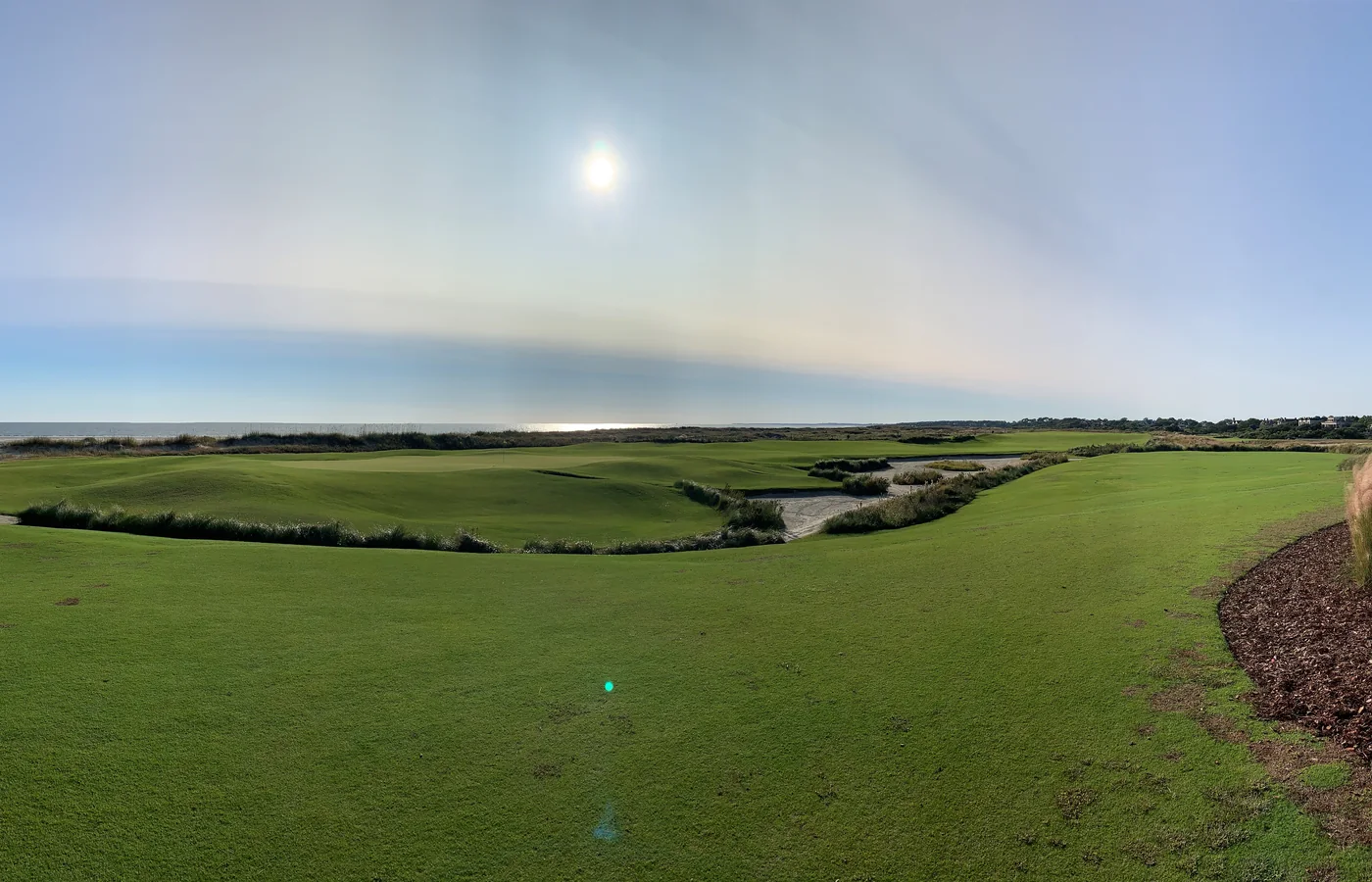
Book a Free Strategy CallPhotography via Wikimedia Commons (images resized and cropped): Ocean course 18th green by N75746 (CC BY-SA 4.0) · Beach, Near Eugenia Ave, Kaiwah Island, SC - panoramio by Scott Long (CC BY 3.0).