




Arrival
One bridge, and Saturday is the worst day
The Route 72 causeway is the only road on and off the island, and changeover Saturdays in July produce real queues. Tell guests to arrive outside the middle of the day or accept the wait.

Expert short-term rental marketing to grow your bookings and nightly rate in Long Beach Island, New Jersey, USA.
Sixteen services, one team. Everything below is built in-house and scoped to your property and market. Most owners start with the 12-Step System.
Every engagement is quoted to your portfolio. These are the ready-made scopes owners pick most — the AI Efficiency Discount is already applied. A clear proposal within 48 hours.
The work is public. Selected engagements and what changed — and reviews from the owners and managers behind them.
* Market averages. Properties marketed by Cavmir typically exceed these figures by 25–45%. Data sourced from AirDNA, STR market reports, and Cavmir internal analytics.
Long Beach Island is eighteen miles of barrier island running north to south off Ocean County, one bridge to the mainland, ocean on one side and Barnegat Bay on the other. At Barnegat Light the 1859 lighthouse locals call Old Barney marks the inlet at the northern tip. At the southern end, Holgate runs out into a federal wildlife refuge where the island simply stops. In between are Loveladies, North Beach, Harvey Cedars, Surf City, Ship Bottom, Brant Beach, Beach Haven and a dozen other names that mean something specific to anyone who has spent a summer here and nothing at all to anyone who has not. LBI has been a weekly rental market for generations. Families come back to the same block, often to the same house, often in the same week of July, and they have been doing it long enough that the grandchildren of the original renters are now booking it. That tradition is the most valuable thing about this market and the thing that most modern listing strategies fail to use. The other defining fact is administrative: the island is not one town. It is six.
Six municipalities share this sandbar — Barnegat Light, Harvey Cedars, Surf City, Ship Bottom, Long Beach Township and Beach Haven — and each writes its own rental rules, sets its own registration requirements, runs its own inspection schedule and charges its own fees. Long Beach Township, the largest and the one that includes Loveladies, Brant Beach and Holgate among others, requires rental property registration with applications due by 1 April each year. Beach Haven runs its own Mercantile and Licensing department. The island as a whole leans on registration rather than the minimum-stay bans that some Jersey Shore towns have adopted, which is why the classic Saturday-to-Saturday week is still the dominant product here. Then there is the tax question, which on LBI is unusually consequential. New Jersey applies 6.625% sales tax and a 5% State Occupancy Fee to transient accommodations, and municipalities may add an occupancy tax of up to 3%. But rentals obtained directly from an owner who offers fewer than three units in New Jersey, without going through a marketplace, are exempt from the state sales tax and the State Occupancy Fee. On an island built on direct, repeat, word-of-mouth weekly rentals, that exemption is worth understanding precisely.
Nearby Markets: Cape May | Rehoboth Beach | The Hamptons
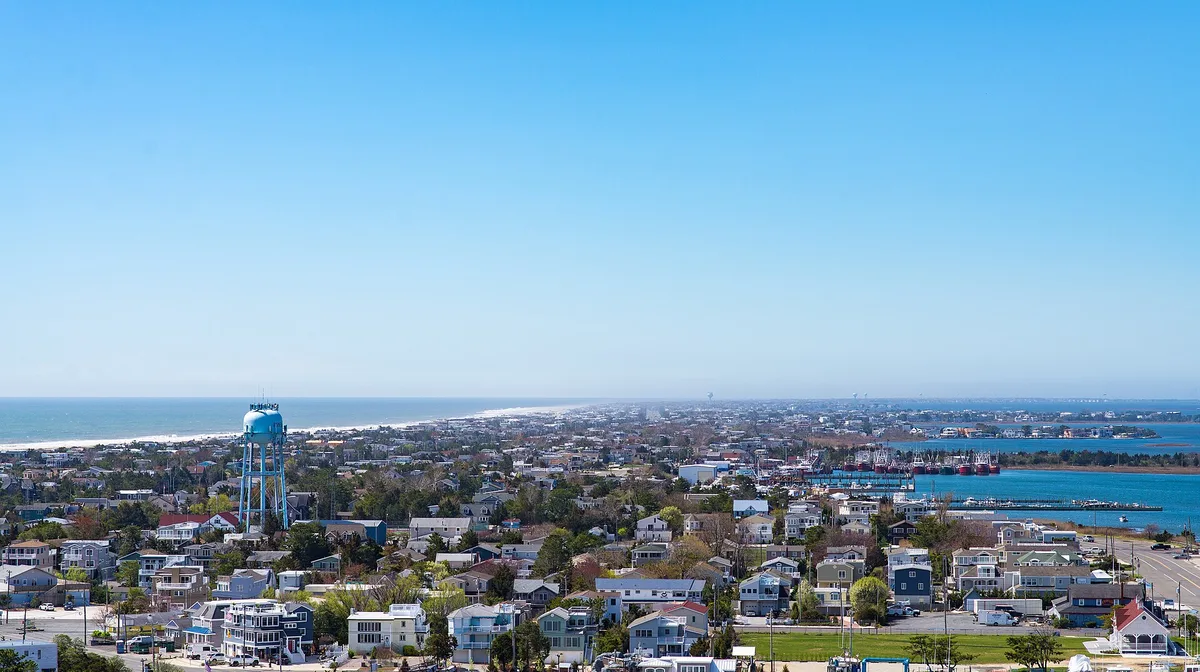
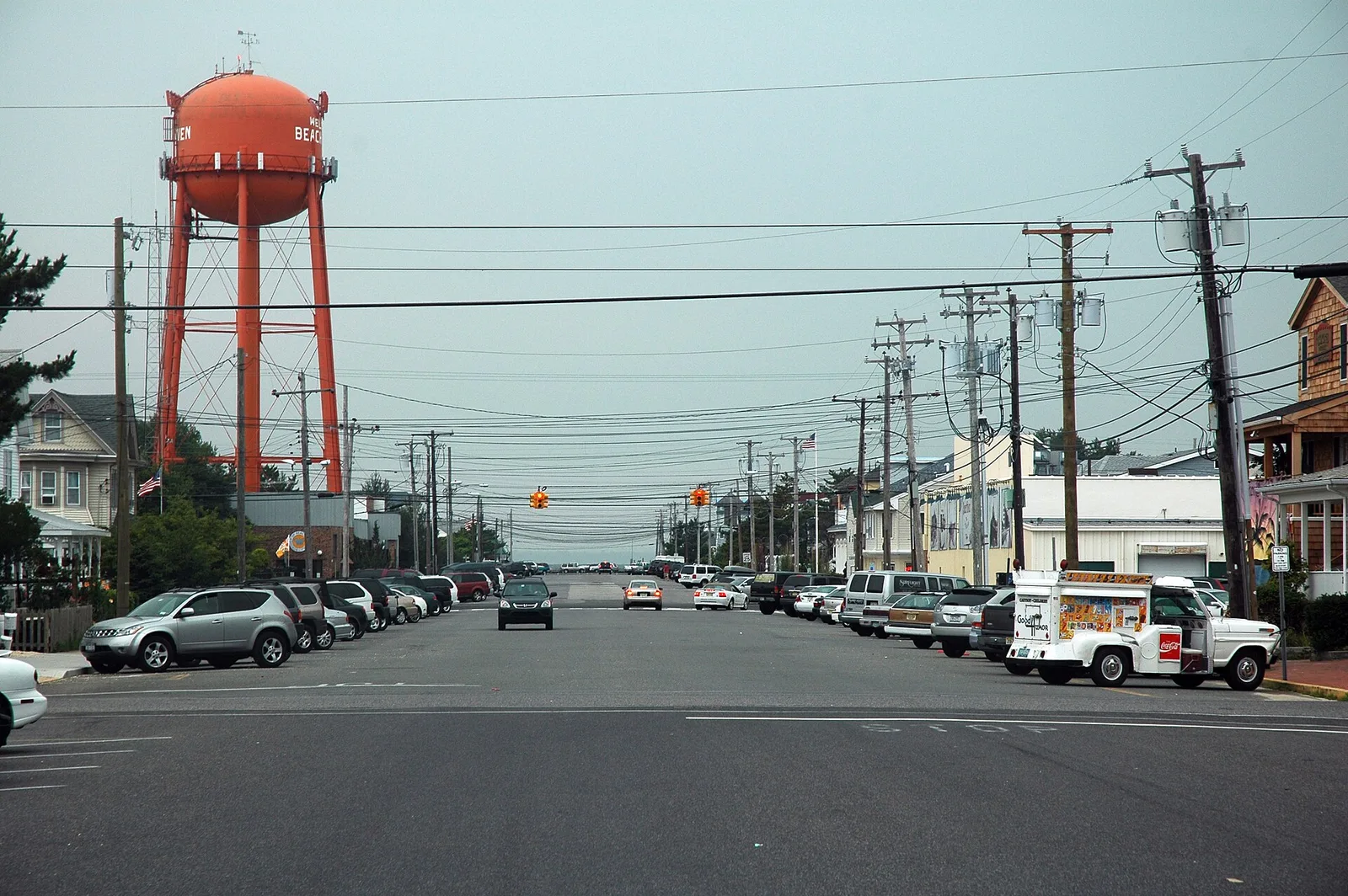
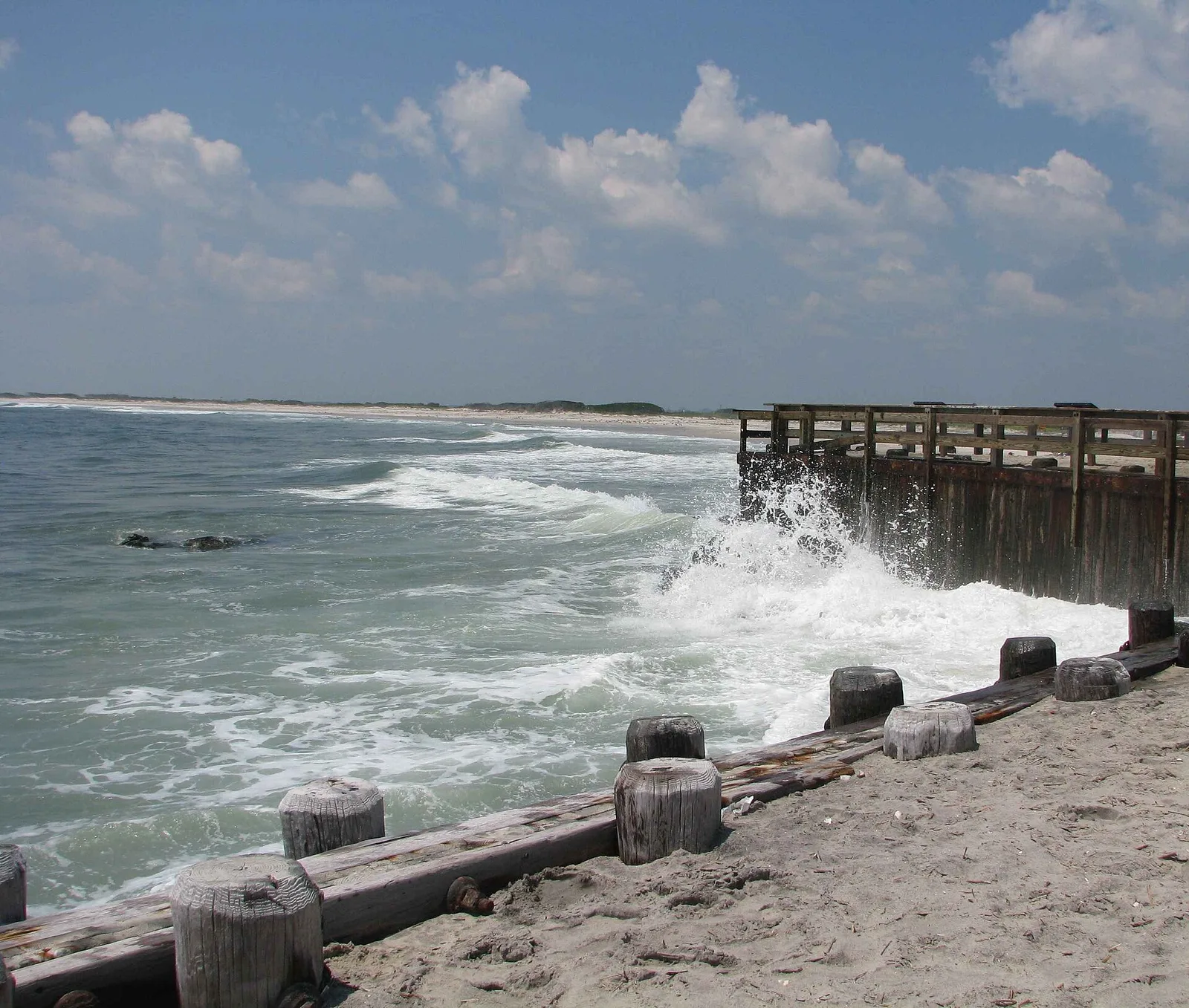
A few of the visual fingerprints we lean into when we shoot, brand and market a Long Beach Island property — courtesy of the open Wikimedia Commons archive.
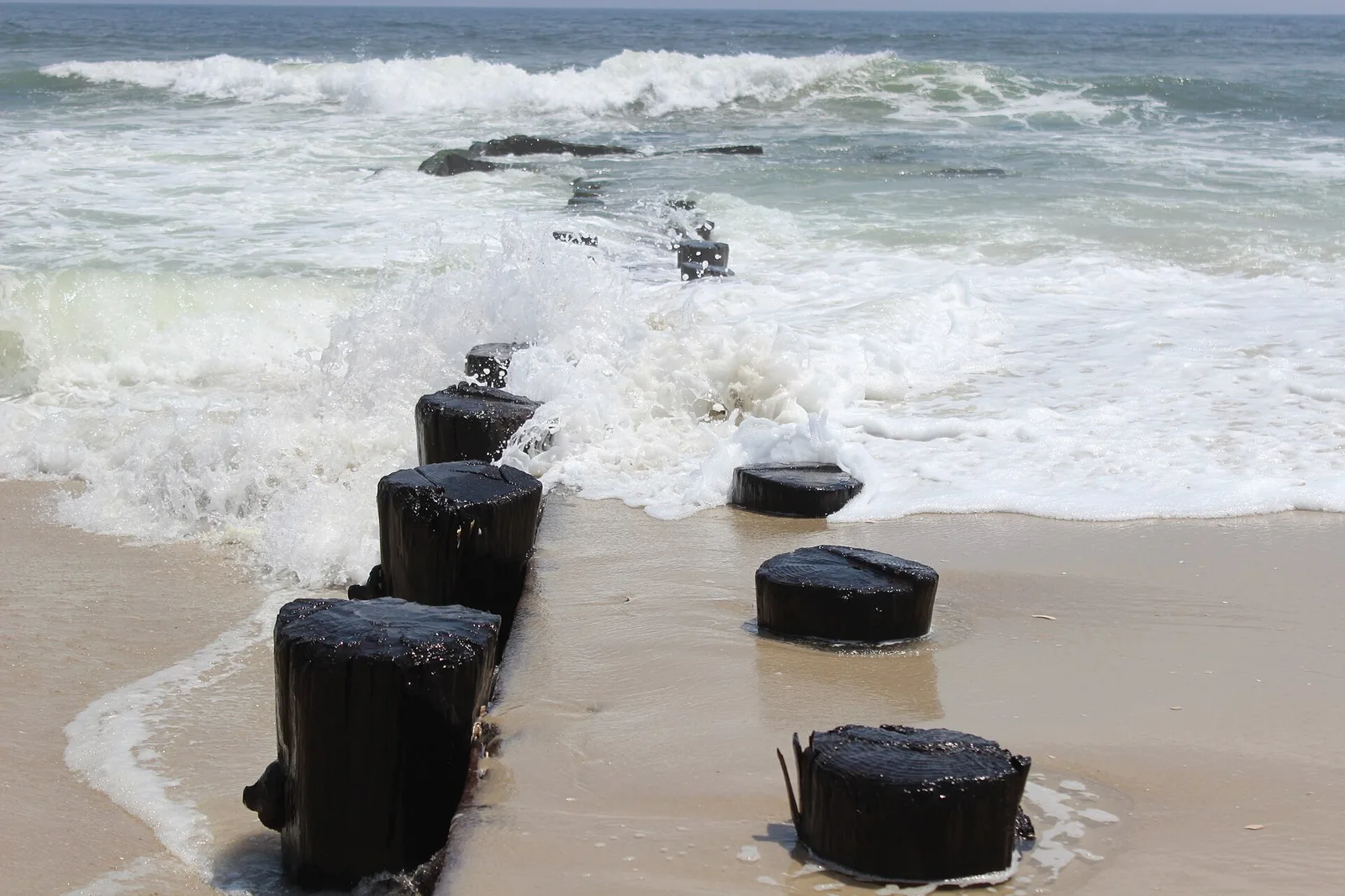
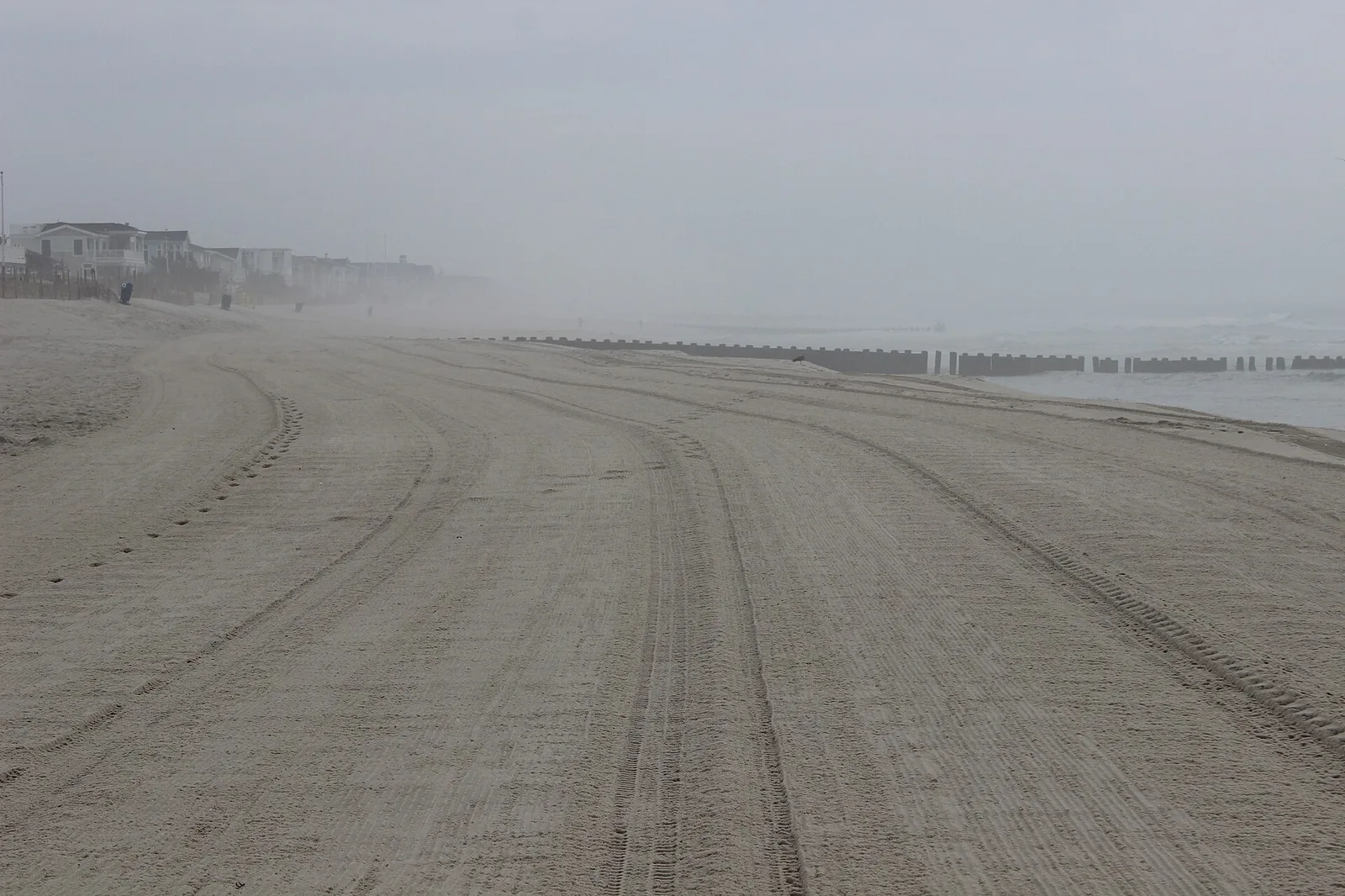
Cavmir markets Long Beach Island properties around the week and the block, because that is how this island actually works. A house in Loveladies and a house in Beach Haven are selling different summers to different families, and copy that says 'Long Beach Island' without saying which end of it is copy that means nothing to someone who has been coming here for thirty years. We photograph properly — including the bay side, which most listings ignore entirely despite the sunsets being the best thing about it — and we write the walk to the beach as a number of houses, not a vague adjective, because that is the unit of measurement people here use. Above all we build the direct booking channel, because on LBI a repeat family that books the same week every year should not be re-introduced to you through a marketplace each time, and because for many owners a direct booking carries a materially different tax position than a marketplace one. Then we run local search that distinguishes the six towns, keep an email list warm through the winter when next summer gets decided, and make sure the week that has been booked by the same family since 2003 renews before it goes on the open market. We help position and market your property. We never manage it or touch your keys.
A lighthouse, a railroad and a row of grand hotels turned Long Beach Island into a resort in the nineteenth century, and the Saturday-to-Saturday week they created has never stopped. Cavmir handles the promotion now.
Long Beach Island has been a summer destination for longer than most American beach towns have existed. The Tucker's Island lighthouse and the early boarding houses at the southern end date to the eighteenth and early nineteenth centuries, and by the 1820s people were coming down from Philadelphia to a hotel on the island for the sea air. That Philadelphia connection has never really broken; LBI is still, culturally and demographically, more a Philadelphia beach than a New York one, and that shapes who your guests are.
Barnegat Lighthouse — Old Barney — was designed by George Meade, later the Union general at Gettysburg, and lit in 1859 at the northern tip to mark the treacherous inlet. It replaced an earlier tower that the sea took. That is a recurring theme here.
The railroad reached the island in the 1880s and the resort era began in earnest, with Beach Haven developing as a genuine Victorian seaside town. Then in September 1944 an unnamed hurricane, still known locally as the Great Atlantic Hurricane, destroyed the causeway and much of the island's infrastructure. The island rebuilt.
The event that still defines LBI in living memory is Hurricane Sandy in October 2012. The storm cut through the island, destroyed or damaged an enormous number of houses, and reshaped both the dune system and the building code. A great deal of the housing stock you see today is post-Sandy construction, built higher, on pilings, to a standard the old cottages never met. That has consequences for what you are renting and for what it costs to insure.
Through all of it, one thing has been constant: the Saturday-to-Saturday week. LBI has been rented by the week to returning families for generations, often through the same local agencies, often to the same names. It is one of the last big American beach markets where that tradition is genuinely intact, and it is the most commercially valuable thing about the island.
Before the platforms, the Engleside and the Baldwin filled Beach Haven with Philadelphia families every June, the railroad carried them across the bay from Manahawkin, and Barnegat Light gave the island a landmark every guidebook printed. The channel changed; the work is identical: presentation, positioning, and a week at the shore that families rebook for decades. It is the same business Cavmir is in today.
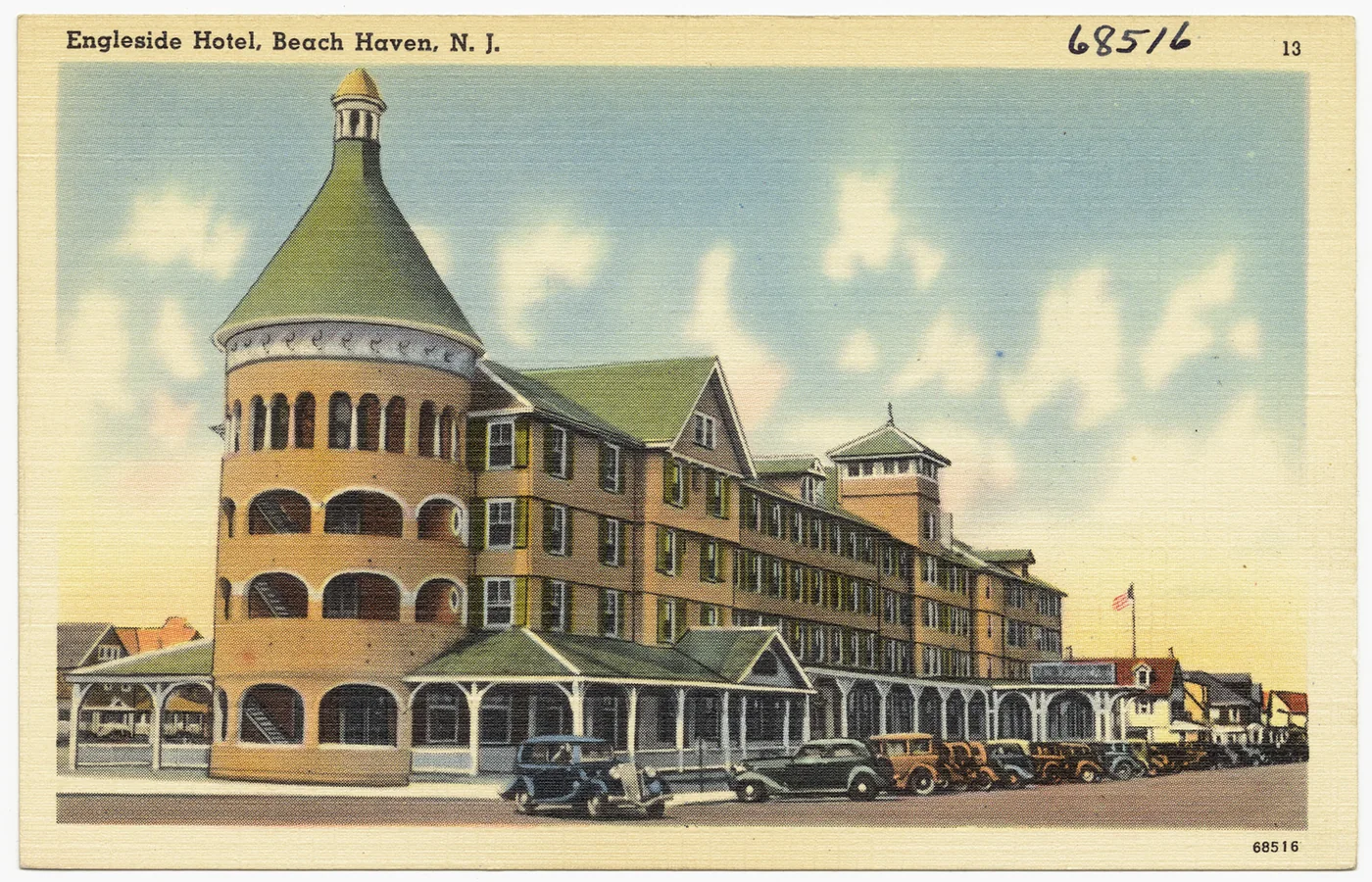
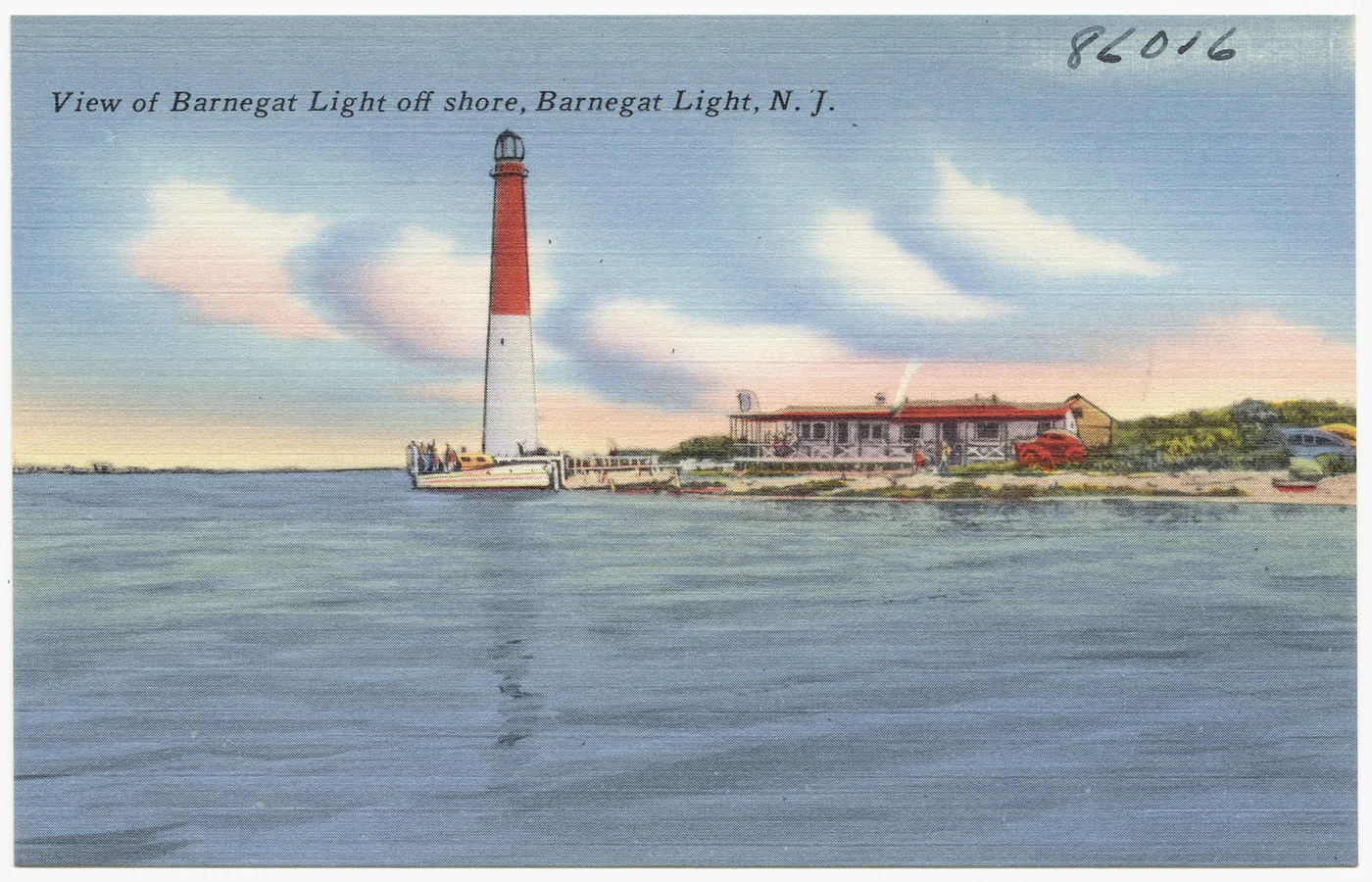
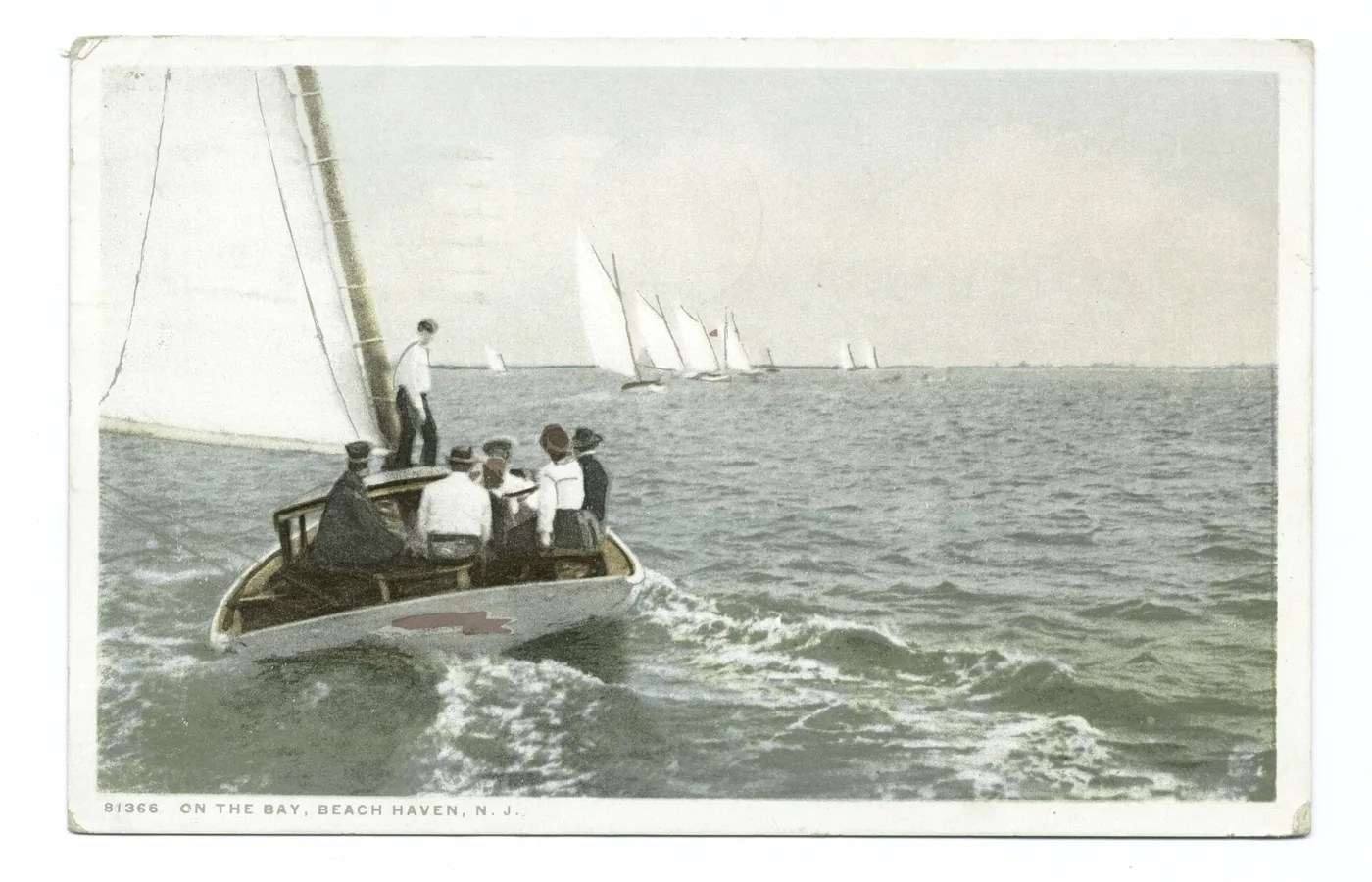
Historical images: Creative Commons via Wikimedia Commons — Boston Public Library Tichnor Brothers collection.
LBI prices in weeks, and any strategy that ignores that is fighting the market rather than using it. The dominant product is a Saturday-to-Saturday summer week, and the peak runs from roughly the last week of June through the third week of August, with the weeks around Independence Day and the first two weeks of August the strongest.
The rate curve either side of that peak drops faster than owners expect. Late June and the last week of August are noticeably softer, and September — which has the best weather of the year on this coast — is dramatically underpriced across most of the island. A property that positions September as its own product, aimed at couples and retirees rather than families tied to school calendars, can materially extend its earning year.
Location within the island drives rate as much as the house does. The bay side and the ocean side price differently. So does the distance to the beach, measured in houses rather than miles, and so does the town — Loveladies and North Beach at one end of the spectrum, Ship Bottom and Beach Haven at another. A four-bedroom in Loveladies and a four-bedroom in Surf City are not comparables.
The tax position affects your effective price in a way that is unique to New Jersey. Marketplace bookings carry 6.625% sales tax and a 5% State Occupancy Fee. A direct booking from an owner with fewer than three New Jersey units does not. That is a difference of over eleven percentage points in what the guest pays for the same week — which is worth understanding carefully, and worth talking to an accountant about, before you decide how to sell your calendar.
Memorial Day opens the season. Late June through the third week of August is the peak, with Independence Day week and early August the strongest. The last week of August softens as school calendars pull families home. September is the best-weather month of the year and the most underpriced, with warm ocean, empty beaches and a couples-and-retirees market that most listings never address. October is a real shoulder with fishing and quiet weekends. November through April is genuinely off-season — a barrier island with a year-round population that is a fraction of its summer one, and many businesses closed.
There is no single Long Beach Island rulebook, and that is the most important regulatory fact about the island. Six separate municipalities share these eighteen miles — Barnegat Light, Harvey Cedars, Surf City, Ship Bottom, Long Beach Township and Beach Haven — and each one sets its own rental registration requirements, inspection schedule, fees and local ordinances. Two houses a mile apart can be governed by different towns with different paperwork and different deadlines.
Long Beach Township is the largest of the six and covers a string of non-contiguous communities including Loveladies, North Beach, Brant Beach, Haven Beach, Beach Haven Terrace and Holgate. It requires registration for rental properties, with applications due no later than 1 April annually. Beach Haven, an independent borough at the southern end, administers its requirements through its own Mercantile and Licensing department.
Across New Jersey, many municipalities require a mercantile licence or equivalent registration for rental operation, along with a certificate of occupancy or inspection on turnover. The Division of Local Government Services has issued guidance to municipalities on short-term transient accommodations, and the framework at both state and local level has been revised more than once.
Compared with parts of the Jersey Shore that have adopted minimum-stay restrictions or outright bans on short-term letting, LBI has generally taken the registration route rather than the prohibition route, which is why the traditional weekly rental remains the island's core product.
Because there are six sets of rules and they change, confirm the current requirements, fee schedule and deadlines with the specific municipality your property sits in. Do not rely on advice about 'LBI' generally, and do not assume that what applies in Beach Haven applies in Barnegat Light.
Say which town and which block. 'Long Beach Island' is not a location to anyone who knows the island, and the people who rent here every summer know it very well. Loveladies, Harvey Cedars, Surf City, Ship Bottom, Brant Beach, Beach Haven and Holgate mean specific things. Lead with yours.
Measure the beach walk in houses. This is genuinely how people here describe location — 'third house from the beach', 'two off the ocean'. It is more precise than a distance and it is the vocabulary your guests already use. Then photograph the actual walk.
Shoot the bay side. LBI listings are overwhelmingly ocean-facing photography, and the bay is where the sunsets are. If your property has any bay exposure, a dock, a deck facing west or even a five-minute walk to a bayside sunset spot, that is a genuine differentiator that almost nobody is using.
Renew your returning families before the calendar opens. The most valuable thing on LBI is a family that has taken the same week for years. Contact them in the autumn, offer them the week, and get it confirmed before anything goes on the open market. Losing a twenty-year renter to inattention is the most expensive mistake available here.
Understand the direct-versus-marketplace tax position properly. For an owner with fewer than three New Jersey units, a direct rental that does not go through a marketplace sits differently for state sales tax and the State Occupancy Fee than a platform booking does. This is worth an hour with an accountant, and it may change how you want to sell your season.
Write September as its own season. Warm water, empty beach, no traffic on the boulevard, restaurants still open. It is a different guest with a different reason to come, and most of the island simply discounts it instead of selling it.
The six-town structure is a genuine administrative burden, particularly for owners who assume island-wide rules exist. Deadlines, fees and inspection requirements differ, and missing a 1 April registration deadline is an avoidable and irritating problem.
Storm and flood exposure is the structural challenge. This is a barrier island that has been cut through by hurricanes more than once, most recently and most severely by Sandy in 2012. Flood insurance costs, elevation requirements and post-storm rebuilding standards are permanent features of ownership here, not occasional events.
The season is short and family-shaped. Roughly eight strong weeks carry the year, and they are tied to school calendars that do not move. There is no equivalent to a ski market's second peak.
Finally, the one-bridge access means summer Saturday traffic on the causeway is a real and predictable problem, and guests arriving on a changeover day will sit in it. Managing that expectation is part of the job.
LBI insurance is dominated by flood and wind, and both are more complicated here than in almost any market in this wave.
Flood insurance is a separate policy, and your flood zone designation and the elevation of the structure drive the cost. Post-Sandy rebuilding raised many houses onto pilings specifically to improve that position, and the difference between an elevated post-2012 house and an older slab-level cottage can be substantial. If you are buying, get the elevation certificate and the flood zone before you get attached to the property.
Windstorm coverage may be written separately or carry a specific deductible expressed as a percentage of the insured value rather than a flat sum, which surprises owners at claim time. Read that clause.
Short-term rental use needs to be disclosed. A standard homeowner policy on a seasonal beach house will not necessarily respond to a commercial letting activity, and liability for a house full of guests with a pool, an outdoor shower and a set of beach stairs needs proper limits.
Off-season vacancy and freeze exposure are real on a barrier island from November to April. Ask how the policy treats a property closed for the winter.
Use a broker who writes on the Jersey Shore specifically and understands the post-Sandy flood picture.
New Jersey's treatment of short-term rentals has a genuinely important wrinkle, and LBI is exactly the market where it bites.
The baseline: transient accommodations in New Jersey are subject to 6.625% state sales tax and a 5% State Occupancy Fee. Municipalities are permitted to impose a municipal occupancy tax of up to 3% on top.
The exception: a rental obtained directly from the owner, where the owner offers fewer than three units for rent in New Jersey and the booking is not arranged through a transient space marketplace, is exempt from the sales tax and the State Occupancy Fee. Direct advertising by classified, website listing, personal referral or signage falls into this category. Rentals arranged through a marketplace are taxable regardless of how many units you own. An owner controlling three or more units is treated as professionally managed and is taxable on direct rentals as well.
Note also that booking platforms generally do not collect municipal occupancy taxes where a town has enacted one, so that portion can fall to the owner to collect and remit.
This is a genuinely consequential distinction and it interacts with how you choose to fill your calendar. Confirm your own position with the New Jersey Division of Taxation and with your accountant before making assumptions, and confirm any municipal occupancy tax with your specific town.
Financing on Long Beach Island is shaped by flood risk more than by rental rules.
A lender will require flood insurance where the property sits in a designated flood zone, and the cost of that cover is part of the affordability calculation rather than an afterthought. Elevation matters: post-Sandy elevated construction generally insures more favourably than older slab-level stock, and that difference flows through to what you can carry.
Appraisals on LBI are location-sensitive to a degree that surprises buyers from inland markets. Ocean block versus bay block, distance to the beach, which of the six towns, and whether the house is post-2012 construction all move the number materially, and a comparable a mile away may not be a comparable at all.
Second-home and investment-property loans differ in rate, down payment and occupancy expectation. Many LBI owners use the house themselves for part of the summer and rent the rest, and being straightforward about that mixed use at application is better than discovering a mismatch later.
If your income model depends on the tax treatment of direct rentals, be aware that is a tax question rather than a lending one, and do not let a projection blur the two.
This is general information and not financial advice — confirm the specifics with your mortgage broker, insurance broker and accountant.
The most important long-term factor on Long Beach Island is physical rather than regulatory. This is a barrier island, sea level and storm intensity are live questions, and the beach replenishment and dune programmes that protect it are ongoing public works rather than completed ones. Owners here should follow those programmes the way owners in mountain markets follow snowfall. They affect insurance, they affect values, and they affect whether the beach in front of a given block is wide or narrow in a given summer.
The regulatory trend across New Jersey has been toward more formal registration and clearer state guidance rather than toward the restrictive caps seen in other states. Nothing on LBI currently resembles the licence scarcity of a Crested Butte or a Petoskey, and the six-town structure makes island-wide restriction unlikely in any case.
The commercial trend worth acting on is the slow erosion of the traditional agency-and-weekly-renter model as platforms take a larger share of first-time bookings. That is not inherently bad, but it puts the direct relationship — the family that has had the second week of July since the nineties — under quiet pressure. Owners who deliberately maintain that channel keep both the margin and the reliability. Owners who let it drift find themselves re-acquiring the same guests through a marketplace every year.
September is the growth opportunity nobody is contesting. As remote work loosens the school-calendar grip on beach demand, the best-weather month on this coast has room to become a real second season.
LBI is a family market in the oldest sense of the phrase. There are houses on this island where the same family has taken the same week since before the current owner was born, where the changeover on a Saturday in July is a small ritual, and where the kids who learned to swim here bring their own kids back. Very few American beach markets still work that way. Most have been flattened into interchangeable inventory. LBI has not.
We like the shape of the place. Eighteen miles long and in places only a couple of blocks wide, so you are never far from either the ocean or the bay, and you can watch the sun come up over one and go down over the other on the same day. The bayside sunsets are genuinely the best thing about the island and something close to nobody photographs them for their listing.
Old Barney at the north end is a proper lighthouse with a proper history — designed by the man who later commanded the Union army at Gettysburg, lit in 1859 to mark an inlet that had already taken the tower before it. At the other end, Holgate simply runs out into a wildlife refuge where the island stops being a town and starts being a sandbar with birds on it. That range, in eighteen miles, is a lot.
And we like that this is a market where the marketing job is clear. The guests are loyal, the product is a week, the towns are distinct, and the direct channel genuinely matters both commercially and, in New Jersey, for reasons of tax treatment. There is nothing vague about the work here, and that suits us.
A great property in Long Beach Island doesn't just want a listing — it wants a point of view, an audience, and a brand the city itself would recognise.
Eight things worth telling an LBI guest — the causeway, the badges, the bay side, and which of the six towns they are actually in.
The Route 72 causeway is the only road on and off the island, and changeover Saturdays in July produce real queues. Tell guests to arrive outside the middle of the day or accept the wait.
Each municipality runs its own beach badge system, with its own prices and its own rules on where to buy them. Tell guests which town they are in and how badges work there before they arrive.
Old Barney at the northern tip, lit in 1859, with a climb to the top and a view down the whole island. Next to it, Viking Village is a working commercial fishing dock — the real thing, not a display.
Beach Haven has the Victorian streets, the amusement park and most of the island's nightlife. South of it, Holgate runs out into the Forsythe refuge and the island simply ends.
Barnegat Bay is on the west side and it is where the evening happens. Paddleboards, small boats, back-bay fishing and the best light of the day. Most visitors spend a week facing the wrong way.
Fantasy Island in Beach Haven for the children, and the Long Beach Island Foundation of the Arts and Sciences in Loveladies for something quieter. Both save a bad-weather afternoon.
Many restaurants on the island are bring-your-own, which surprises visitors from elsewhere. Tell guests to stop at a liquor store on the mainland before they cross the bridge.
Warm ocean, empty beach, no traffic on the boulevard and most places still open. It is the best month on LBI and the cheapest, and guests who try it once tend to come back to it.
The following are composite, illustrative examples based on patterns common in traditional weekly beach rental markets. They are not descriptions of specific clients or properties.
A property with a base of families who had rented the same weeks for years, none of whom had been contacted directly in the autumn, several of whom had drifted to other houses when their week appeared on an open calendar.
Built a returning-guest renewal process that went out well before the season opened, created a direct booking route so those families could confirm without a marketplace, and started an email list for the wider past-guest base.
A substantial share of the peak weeks was renewed before the calendar went public, and the property stopped competing for its own established guests.
A property with a west-facing deck, a small dock and the best sunset on its block, marketed with a photo set that showed only the interior and a walk to the ocean.
Reshot the property in the evening with the bay and the dock in frame, rewrote the listing around the bay side as a distinct experience, and targeted paddlers, small-boat families and couples rather than ocean-only beach demand.
The property developed an identity distinct from the dozens of similar ocean-block listings around it and started attracting guests specifically looking for the bay.
Strong July and August occupancy followed by an almost entirely empty September, with the month sold as a discounted leftover rather than as its own product.
Repositioned September for couples, retirees and remote workers, with different photography, different copy, a different minimum stay and a small email campaign to past guests without school-age children.
September moved from near-empty to meaningfully booked at rates well above what a leftover discount would have achieved.
Demand in Long Beach Island peaks around July through August and runs quietest around January, February and March. Here is how the year actually books — and what to do about each stretch of the calendar.
Late June through the third week of August, sold as Saturday-to-Saturday weeks. Independence Day week and the first two weeks of August are the strongest. This is a weekly market and pricing by the week rather than the night is how the guests here actually compare properties.
September has the best weather of the year on this coast and is dramatically under-priced across most of the island. Late June and the last week of August also soften. September deserves its own positioning for couples and retirees rather than being sold as leftover summer.
November through April is a genuine off-season on a barrier island whose year-round population is a fraction of its summer one. Many businesses close. Longer stays where they come, and the rest of the window for maintenance and getting next season's renewals confirmed.
Peak weeks book very early, and much of the best inventory is renewed directly by returning families before the calendar opens publicly. That autumn renewal cycle is the single most important commercial habit on this island. Shoulder weeks are much shorter notice.
Overwhelmingly full weeks in summer with Saturday changeovers, which is the island's tradition and its strength. Shoulder months support shorter stays and long weekends, and September in particular works well for four and five night bookings.
Whole houses that sleep a family group, with outdoor shower, parking for several cars and a short walk to the beach measured in houses rather than miles. Bay-side properties with a dock or a west-facing deck have a distinct and under-used advantage.
Start with photography that shows what a guest actually gets here, then write the listing around a real itinerary rather than a feature list. Build a direct-booking site so returning guests can come back without going through a platform, and keep an email list segmented by season so you can reach last year's visitors before the calendar opens. Local search matters more than people expect in a market this size, because guests search the destination and the attraction rather than the word rental. A marketing agency layer handles the photography, the listing copy, the direct-booking site and the local SEO as one system instead of four disconnected jobs.
Late June through the third week of August, sold as Saturday-to-Saturday weeks, with Independence Day week and early August strongest. September has the best weather of the year and is the most under-priced month on the island. November through April is a genuine off-season with much of the island closed.
Peak weeks book very early, and a large share of the best inventory is renewed directly by returning families in the autumn before anything goes public. That renewal cycle matters more than any pricing tool here. Shoulder weeks and September are much shorter notice.
Predominantly a drive market, and culturally a Philadelphia beach rather than a New York one. Philadelphia, Trenton, Allentown and central New Jersey are the core feeders, and targeting those suburbs specifically converts far better than a broad north-east campaign.
An outdoor shower and parking for several cars are close to essential for a family week. Beach chairs and gear save guests a trip. Air conditioning and a washer and dryer are expected. If you have any bay-side exposure, a dock or a west-facing deck is a genuine differentiator almost nobody photographs.
Run your Airbnb, Vrbo, or website through Cavmir's free grader. It checks the things that decide whether guests book in Long Beach Island — photos, listing copy, page speed, local search — and shows you where bookings leak. Takes about a minute, and there's no sales call attached.
If the report says your booking engine is the weak link, that's fixable: a direct-booking website of your own means repeat guests stop paying platform fees to come back to you. That's the work Cavmir does — see Airbnb website design in Long Beach Island.
Send us the listing and we'll tell you what we'd change. Not a pitch deck — a straight read on your photos, your title, your rates against the Long Beach Island comp set, and whether a direct-booking site would pay for itself.
You'll hear back from a person, usually inside one business day. If we don't think we can move your numbers, we'll say so. Cavmir is a short-term rental marketing agency — we position and market properties, we don't manage them.
Talk to Cavmir today. We'll show you exactly what your Long Beach Island property is leaving on the table — and how fast we can change that.
Book a Free Strategy CallPhotography via Wikimedia Commons (images resized and cropped): Long Beach Island from Barnegat Lighthouse by Fletcher (CC BY 4.0) · Beach Haven NJ from Engleside Ave toward the bay 2007-07-29 by Leifern, Leif Knutsen (CC BY-SA 3.0) · Afternoon Surf by Pstark1 (CC BY-SA 3.0) · Dawn on the beach by Pstark1 (CC BY-SA 3.0) · Engleside Hotel, Beach Haven, N. J. (8424156449) by Boston Public Library (CC BY 2.0) · View of Barnegat Light off shore, Barnegat Light, N. J. (8425243236) by Boston Public Library (CC BY 2.0).
