Up the Hurricane Ridge road early
The road climbs a mile in seventeen miles and the light at the top in the first hour is the best thing in the park. Tell guests to check the road status the night before, because it closes for weather.
Expert short-term rental marketing to grow your bookings and nightly rate in Port Angeles, Washington, USA.
* Market averages. Properties marketed by Cavmir typically exceed these figures by 25–45%. Data sourced from AirDNA, STR market reports, and Cavmir internal analytics.
Port Angeles is a working port on the Strait of Juan de Fuca with a national park behind it and Canada in front of it, and that geography is the entire business case. Olympic National Park has its headquarters in town, and the road up to Hurricane Ridge climbs from sea level to a mile high in seventeen miles — you can be on a beach in the morning and in subalpine meadows with the Olympic range in front of you by lunch. The ferry across to Victoria, British Columbia leaves from downtown and takes about ninety minutes, which makes this the only market on this site where a meaningful share of guests are using your property as a base for a different country. Lake Crescent, Sol Duc, the Elwha valley, the rain forests and the Pacific beaches at La Push and Rialto all sit within reach on the same peninsula. Rates here are modest by west coast standards and that is the opportunity rather than the problem, because acquisition cost is modest too.
Port Angeles has the most varied demand of any Olympic Peninsula town and the least focused marketing. Guests arrive for at least five distinct reasons: the national park, the Victoria ferry, the rain forests and coast further west, the fishing and boating on the strait, and a steady flow of business and medical travel that keeps a floor under midweek occupancy. Almost no listing distinguishes between them. The seasonal shape is real but not extreme — summer is the peak, with the park at capacity and the ferry busy, while the shoulder months hold up better than most park gateways because the town has its own economy and because Hurricane Ridge draws winter snow traffic when the road is open. On regulation, the city has moved from an unregulated market to a structured one: Port Angeles now licenses short-term rentals and operates a citywide cap on non-owner-occupied units, with limits on how many licences one owner or one parcel may hold. Unincorporated Clallam County runs its own vacation rental chapter. Which side of the city line your property sits on decides which rulebook applies.
Nearby Markets: Seattle | Friday Harbor | San Juan Islands

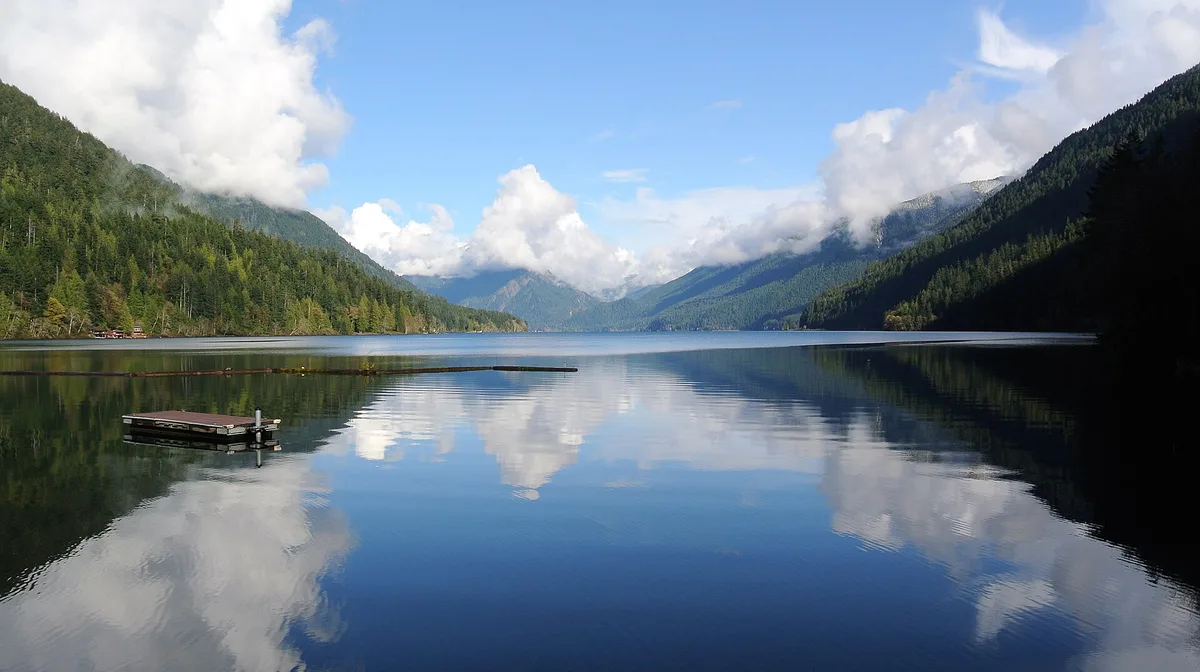
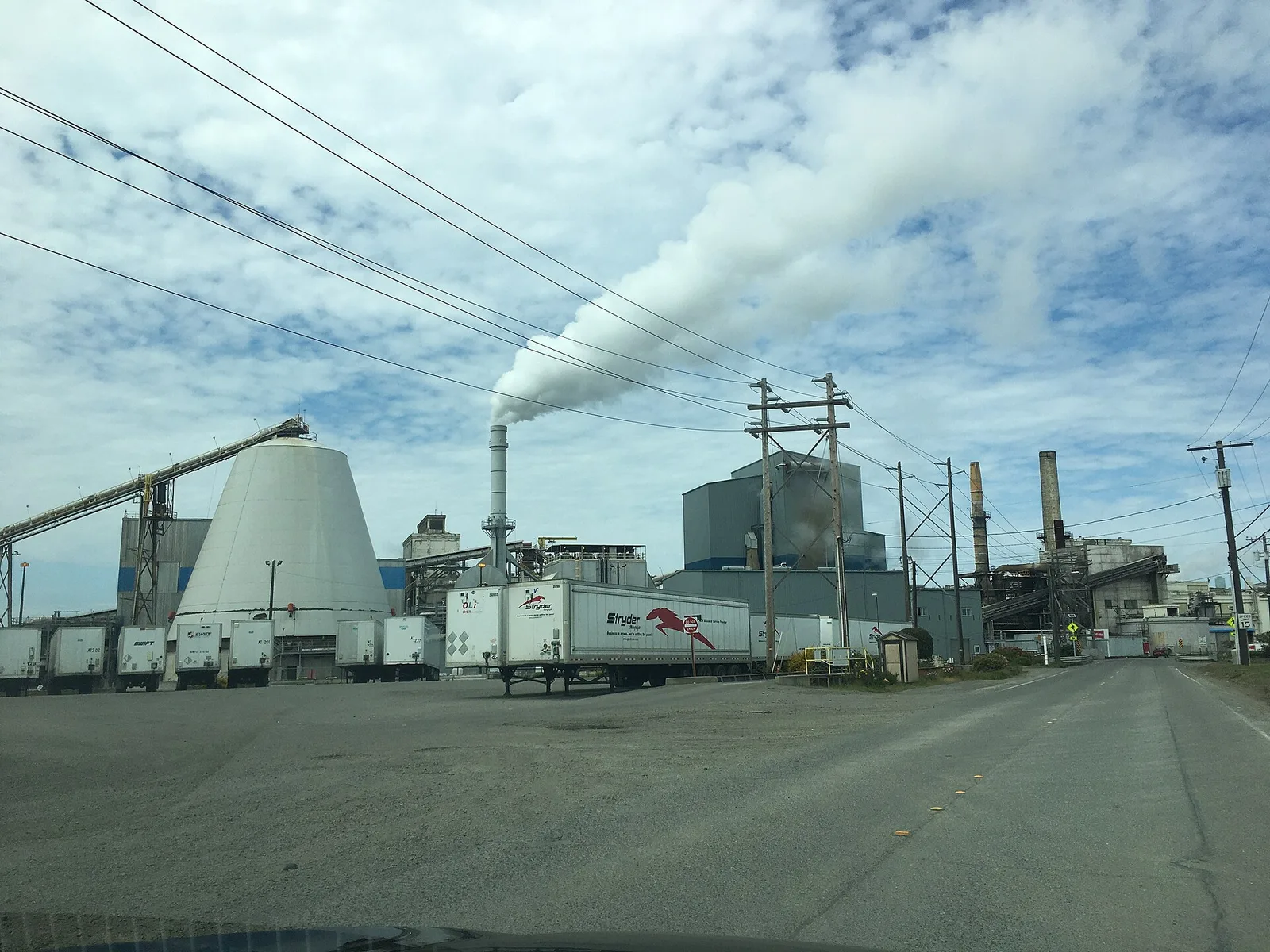
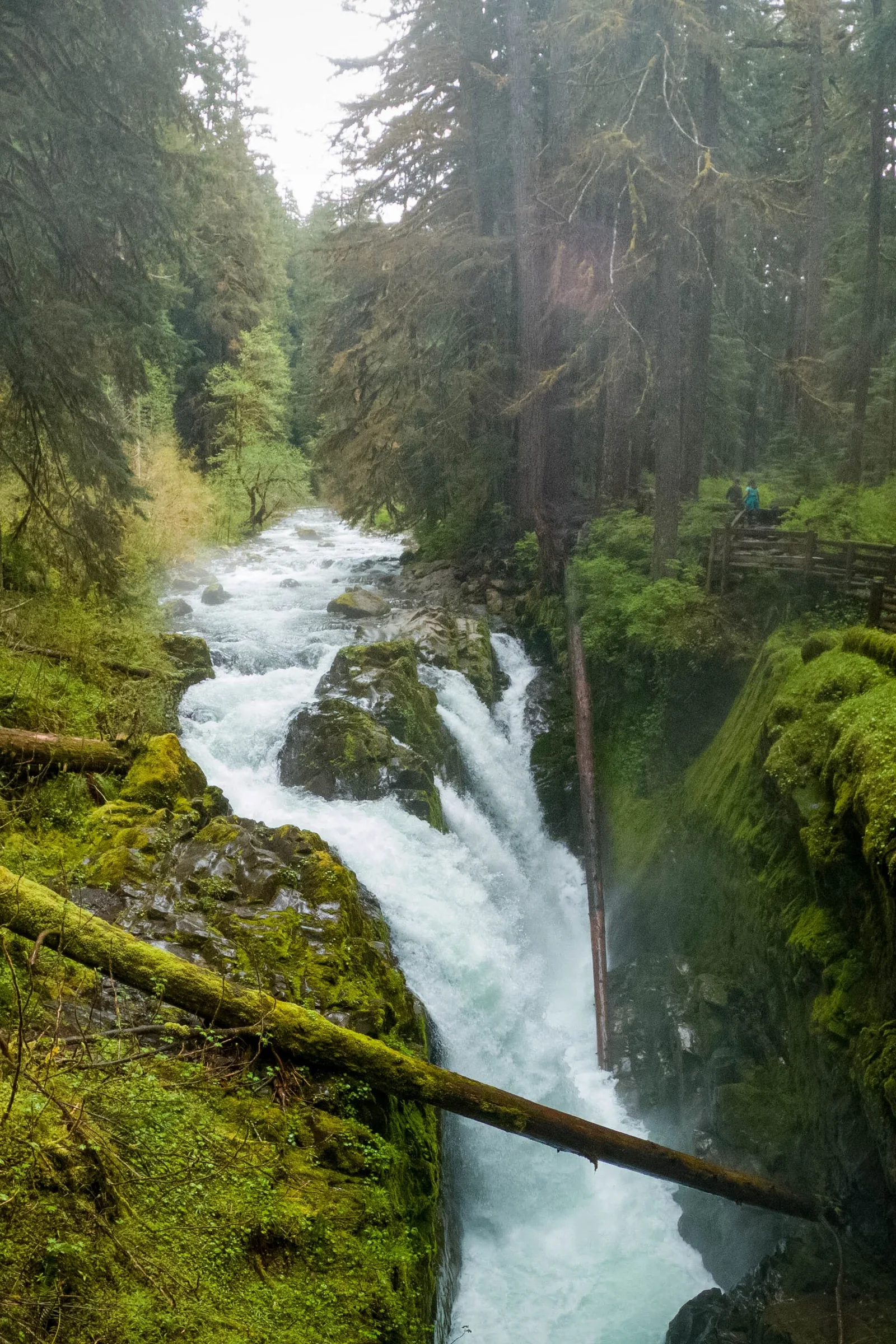
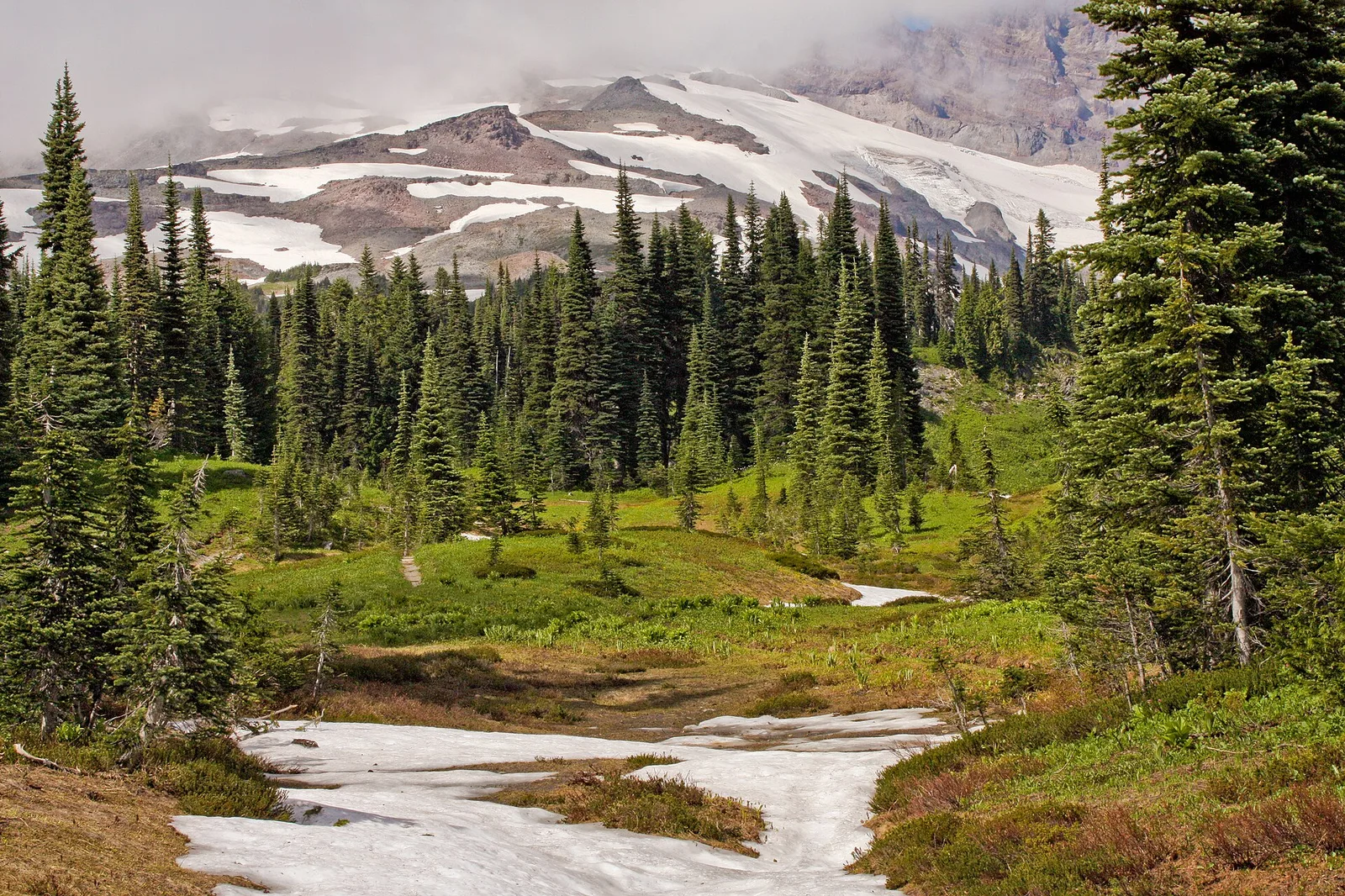
A few of the visual fingerprints we lean into when we shoot, brand and market a Port Angeles property — courtesy of the open Wikimedia Commons archive.
Cavmir markets Port Angeles properties around the trip rather than the town. We photograph the house in the light this coast gives — the strait, the mountains, and the long summer evenings that most listings here never bother to shoot — and we build the image order around what actually closes a booking: the view, the parking, the drying space, the proximity to the ferry terminal or the park road. We write the listing and the site for a specific guest: the family doing Hurricane Ridge and the Hoh, the couple taking the ferry to Victoria, the anglers, the road-trippers heading out to the coast. We build your direct-booking site and rank it for the Olympic National Park, Hurricane Ridge and Victoria ferry searches that bring people onto this peninsula, and we set up the email flow that turns a summer park guest into a shoulder-season one. We will confirm whether you are inside the city or in the county, and which licence you need, before we write a word. We help position and market your property. We never manage it or touch your keys.
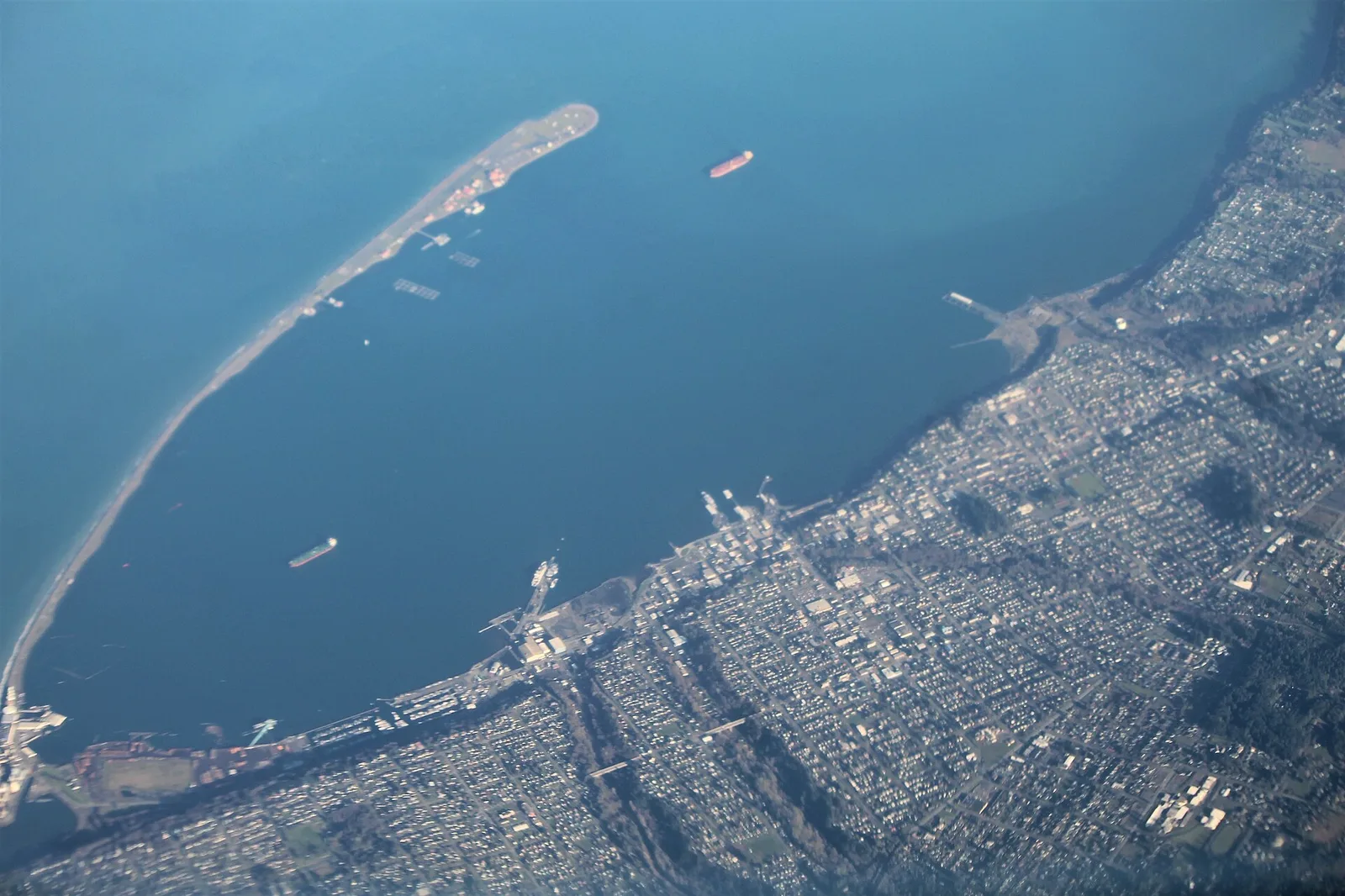
Port Angeles sits on a natural deepwater harbour protected by Ediz Hook, a three-mile sand spit that curls out into the Strait of Juan de Fuca, and that harbour is why there is a town here. Spanish navigators charted it in the 1790s and gave it a long name about the port of Our Lady of the Angels, which English speakers shortened. The Klallam people had been on this shoreline for a very long time before any of that, and the tribes remain a substantial presence on the peninsula today.
The nineteenth-century town was built on customs, timber and fish. The twentieth century was mills — pulp and paper on the waterfront, log booms in the harbour, a working port economy that shaped the town's layout and its self-image. Much of that has receded, and Port Angeles has spent the last few decades becoming something else: the front door to a national park.
Olympic National Park was established in 1938 by Franklin Roosevelt, protecting close to a million acres of glaciated peaks, temperate rain forest and wild Pacific coastline in one of the more unusual park boundaries in the country. Its headquarters are in Port Angeles, and the road from town up to Hurricane Ridge climbs about a mile in seventeen miles, which is why you can start the day at sea level and be looking across at the Bailey Range by lunch.
Then, beginning in September 2011, the town became the staging point for the largest dam removal project in United States history. Two dams on the Elwha River — one built in 1910, the other in 1927 — had blocked salmon from more than seventy miles of habitat for a century. Both came out in stages over three years, finishing in August 2014, releasing something like twenty million tons of accumulated sediment down the valley and rebuilding a beach at the river mouth that had been starved for decades. Salmon returned to water they had not reached since before the First World War. It is the most significant thing that has happened on this peninsula in a lifetime, most visitors have never heard of it, and you can drive to it in twenty minutes.
Port Angeles is the least seasonal of the park gateway markets on this wave, and the pricing job is to exploit that rather than to copy a mountain town's rate card. Summer, June through mid-September, is the clear peak: the park is at capacity, the Victoria ferry is busy and the coast further west is full. But the town has a real economy of its own — a hospital, a port, government offices, and a steady flow of business and medical travel — which puts a floor under midweek occupancy that pure gateway towns simply do not have. Autumn holds up on shoulder-season park travel and is genuinely lovely. Winter is quiet but not empty, particularly when the Hurricane Ridge road is open for snow days, which brings Puget Sound traffic across on the ferry from Seattle. The most common pricing error here is treating the whole property as a single product for a single guest. A midweek business traveler, a summer family doing the park, and a couple taking the ferry to Victoria are three different guests with three different price sensitivities, and a rate card and minimum-stay policy that recognise this will substantially outperform one that does not. The second error is failing to price the ferry proximity, which is worth real money to the guests who need it.
Peak is June through mid-September, driven by Olympic National Park, the Victoria ferry and the coastal drive further west. Late September and October are excellent shoulder weeks — the park is quieter, the weather is often better than August, and rates come off. Winter is the soft stretch, but less soft than most park gateways, because the town's own economy keeps midweek occupancy alive and because the Hurricane Ridge road brings snow traffic across from Seattle when conditions allow. Spring builds from April into May. The overall curve is flatter than Seward, West Yellowstone or Springdale, which makes Port Angeles a more forgiving market to operate and a better fit for an owner who wants year-round income rather than a hundred-day sprint.
Port Angeles has moved from an unregulated market to a structured one, and the structure matters more than the paperwork. The city licenses short-term rentals and distinguishes between rentals in an owner's principal residence and rentals in properties that are not — and it is the second category, the investor category, that carries the constraint.
The city operates a citywide numerical cap on licences for non-principal-residence short-term rentals, set at two hundred, with additional limits designed to prevent concentration: one unit per licence, one licence per owner or marital community, and one licence per parcel. Read those three limits carefully if you were planning to build a portfolio here, because they are specifically intended to stop that. The council has continued to adjust the framework since it was adopted, including changes to inspection requirements, which means the version you should be working from is the current one rather than any summary.
Outside the city limits, unincorporated Clallam County runs its own vacation rental provisions in its county code, with different requirements. A property a mile outside the city boundary is governed by a different rulebook than one inside it, and the first question to answer about any Port Angeles-area property is which jurisdiction it actually sits in. Get that in writing before you make an offer.
On tax, Washington has no state income tax but does levy state and local retail sales tax on lodging, and Clallam County adds a lodging tax on top, currently four percent. You will need a Washington state business licence and registration with the Department of Revenue. Booking platforms collect and remit a good deal of this on the reservations they process; they do not cover direct bookings, so register before you build a direct channel. Verify current caps, fees and rates with the City of Port Angeles and Clallam County directly.
Write for the itinerary, because Port Angeles guests are almost always executing a plan. Say how long it really takes to drive to Hurricane Ridge, to Lake Crescent, to Sol Duc, to the Hoh Rain Forest and out to Rialto — those drives are longer than people expect and a guest who plans badly blames the base. Second, own the ferry. If you are within walking distance of the Victoria terminal, that is a headline feature, not a footnote, and it should be in your first three lines with the walk stated in minutes and the sailing times explained. Third, photograph the strait and the mountains at the right hour. Long summer evenings here give you light on the water with Vancouver Island behind it, and almost every listing in town shoots at midday. Fourth, market the shoulder deliberately — October on this peninsula is frequently better than August and hardly anyone sells it. Fifth, do not neglect midweek business and medical travel; a clean, well-equipped unit with reliable internet and a desk is a genuinely different product to that guest and can carry your winter. Sixth, mention the Elwha. Almost no visitor knows the largest dam removal in American history happened twenty minutes from town, and being the person who tells them makes you the source of the trip rather than the bed.
The licence cap is the barrier to entry for an investor, and the one-per-owner rule means this is not a market where you can scale. Rates are modest by west coast standards, so margin depends on cost control rather than on premium pricing. The peninsula is remote enough that trades, materials and deliveries cost more and take longer than in Puget Sound. Weather is wet for a large part of the year, with the maintenance implications that carries. Park access itself is a variable — the Hurricane Ridge road closes for weather and the visitor infrastructure has had well-publicised setbacks — and guests treat those as your problem even when they are not. Cross-border ferry travel is subject to conditions outside anyone's control. And a two-jurisdiction market means it is genuinely easy for a buyer to misidentify which rules apply to a specific parcel.
Insurance in Port Angeles is a Pacific Northwest property conversation. A standard homeowner's policy will not follow you into short-term rental use, so you need a short-term rental or commercial policy with real liability limits, and decks, exterior stairs, hot tubs, wood stoves and any bluff or waterfront access should be named specifically. The claims that occur here are wet-climate claims: water intrusion, roof failure, rot, gutter and drainage problems, and wind damage off the strait. Ask directly how wind and water are treated in the policy rather than assuming. Wildfire has become a live underwriting question on the peninsula in dry summers even in a place people think of as rain forest, and carriers have tightened accordingly. Earthquake is excluded from standard policies and deserves an explicit conversation here, because the Cascadia subduction zone runs along this coast and this is one of the more seismically exposed places in the country. If your property is near the shoreline, ask about flood and tsunami exposure separately. Get quotes during diligence rather than after closing, and have guest injury, guest property damage, loss of rental income and business interruption written into the policy in terms you can read.
Washington has no state income tax, which is a genuine part of the ownership case, but lodging is taxed through the sales tax system rather than exempted from it. Short-term rental stays are subject to state and local retail sales tax, and Clallam County levies a lodging tax on top, currently four percent. You will need a Washington state business licence and registration with the Department of Revenue, and depending on your structure you may also be subject to the state's business and occupation tax on gross receipts, which is unusual enough that out-of-state owners routinely miss it — ask your accountant about it specifically. Booking platforms collect and remit a good deal of the sales and lodging tax on reservations they process, which works fine until you start taking direct bookings, and direct bookings are what effective marketing produces. Register before you turn that channel on and keep platform and direct revenue separated from the first reservation. Confirm current rates and filing frequency with the Washington Department of Revenue and Clallam County directly, and have your accountant look at how personal use days, depreciation and the higher maintenance costs of a wet-climate property interact for your structure.
Financing in Port Angeles is conventional, with the licence cap as the local complication. If your pro forma depends on operating a non-principal-residence short-term rental, confirm before you go under contract that a licence is available or that the property holds one — a capped city means you cannot assume you will be able to obtain one after closing, and the one-per-owner limit means a second purchase may not be possible at all. Beyond that, expect underwriting to focus on wet-climate property condition: roof age, evidence of water intrusion or rot, deck and stair condition, drainage, and the state of any wood heat installation. Insurability is a gate as everywhere; get quotes during diligence and ask about earthquake and, near the shoreline, flood and tsunami exposure. Appraisal comparables are reasonable in a town this size but can be thin for view properties. Second-home and investment loans carry higher rates and larger down payments than owner-occupied loans, and debt-service-coverage products underwritten on rental income are available in Washington and are often the practical route for an investor. Model a flatter, more year-round calendar than a pure gateway town would support — that is this market's advantage — but do not model summer rates across twelve months.
Port Angeles is in the middle of a long transition from a mill town to a park-and-gateway economy, and the direction is set. Olympic National Park visitation is strong, the ferry link to Victoria is a structural advantage no other Washington town has, and the Elwha restoration is quietly becoming a destination in its own right as the valley recovers. The near-term regulatory question is the cap: two hundred licences with one per owner and one per parcel is a deliberate anti-concentration policy, and the council has continued adjusting the framework, so an owner should expect refinement rather than stability. That protects existing licence holders. The medium-term questions are park infrastructure — road access to Hurricane Ridge and the state of visitor facilities have both been in the news, and they affect demand directly — and the cost and availability of insurance across a seismically exposed, wet coastline. The longer-term picture is a peninsula that is genuinely hard to add supply to, adjacent to a million-acre national park that cannot be developed, ninety minutes from a foreign city by boat. That is a durable position for an owner who holds a licence, prices for a year-round calendar rather than a summer sprint, and owns the relationship with the guests who come back.
Port Angeles is a real town, which is rarer than it sounds in a national park gateway. It has a hospital, a port, a working waterfront and people who live there all year and are not in the tourism business, and that gives it a solidity that resort villages do not have. It also has the best geography of any town on this site. In front of you is the Strait of Juan de Fuca with Vancouver Island on the other side, close enough to see the lights, and a ferry that leaves downtown and lands you in a different country in ninety minutes. Behind you is a road that climbs a mile straight up into Olympic National Park, so you can be on subalpine meadow with the Bailey Range in front of you before lunch. West of town is Lake Crescent, which is a deep, cold, absurdly blue glacial lake, and the Sol Duc valley, and eventually a rain forest that gets twelve feet of rain a year and a coastline of sea stacks and driftwood. And twenty minutes away is the Elwha valley, where the largest dam removal in American history put a river back. What we like about it commercially is the flatness of the calendar. This is the only park gateway on this wave with a genuine year-round economy underneath it, which makes it forgiving to operate — and almost nobody markets that midweek base at all.
A great property in Port Angeles doesn't just want a listing — it wants a point of view, an audience, and a brand the city itself would recognise.
Eight answers to put in your guest guide. These are the questions guests ask anyway, and getting them right in advance is the cheapest review insurance there is.
The road climbs a mile in seventeen miles and the light at the top in the first hour is the best thing in the park. Tell guests to check the road status the night before, because it closes for weather.
Port Angeles is small enough that summer evenings fill. Name two places and tell guests to book, especially on a night when the Coho has come in.
Ninety minutes across the strait to a different country, walk-on or with a car. Tell guests about the sailing times, the passport requirement and that walking on is usually the better idea.
A short walk through old growth to a waterfall, which is arguably better in rain than in sun. Then the lake, which is a colour that does not photograph properly.
Frequently better weather than August, the park quiet, the light low and the rates off. The best-value weeks here and hardly anyone sells them.
The restored river twenty minutes west, and eventually sea stacks and driftwood on the open Pacific. Tell guests the real drive times, because they are longer than they look.
Light on the water with Vancouver Island behind it, well after dinner. Say where to stand — the waterfront trail or Ediz Hook — and roughly when.
This is the number one issue on the peninsula. The Hoh Rain Forest is not a quick trip from Port Angeles. Give honest drive times for Hurricane Ridge, Lake Crescent, Sol Duc, the Hoh and the coast, and guests will plan a trip that works.
A few composite engagements, drawn from how Cavmir typically works with owners in a licensed park-gateway market with a year-round base. Illustrative rather than any single client's file.
The property's single best feature — a short walk to the Victoria ferry — appeared in one sentence near the bottom of the listing, so the guests who most needed it never found it.
Rebuilt the listing and site around the ferry: the walk in minutes, the sailing times, the passport reminder, and a page targeting Victoria day-trip searches, plus photography that put the water and the terminal in frame.
The property started being found by cross-border travelers specifically, and picked up bookings on the shoulder nights either side of a sailing that it had never seen before.
A calendar that emptied in October and stayed empty until May, in a town with a hospital, a port and a steady flow of midweek professional travel that the listing spoke to in no way at all.
Added a second positioning for extended and midweek stays — desk, reliable internet, laundry, parking, weekly rate — kept the family park copy intact for summer, and separated the two on the site so each guest found the right page.
Winter and midweek occupancy lifted from a genuine base rather than from discounting, and the property stopped depending entirely on twelve summer weeks.
Reviews about drive times and a park itinerary that did not work, from guests who had assumed the Hoh Rain Forest and the coast were short hops from town.
Built an honest drive-time guide into the listing, the confirmation email and the property's site — Hurricane Ridge, Lake Crescent, Sol Duc, the Hoh, Rialto — with realistic day plans and a note on road closures.
Guests arrived with a workable plan, complaints about the peninsula's geography stopped appearing in reviews, and the property gained a reputation for being the useful one.
Demand in Port Angeles peaks around June through August and runs quietest around January, February and November. Here is how the year actually books — and what to do about each stretch of the calendar.
June through mid-September, driven by Olympic National Park, the Victoria ferry and the coastal drive further west. What separates this town from other park gateways is that it has a real economy of its own — a hospital, a port, government offices — which puts a floor under midweek occupancy that pure gateway towns do not have.
Late September and October are frequently better weather than August, with the park quiet and rates off, and they are badly under-marketed. April and May build steadily. Winter weekends when the Hurricane Ridge road is open draw snow traffic across from Seattle and are worth pricing deliberately.
November through February is the soft stretch, but less soft than most park gateways because of the town's own economy. The realistic play is midweek business and medical travel plus longer stays, rather than trying to sell a park trip in the dark.
Summer weeks fill through the spring, with the peak July and August dates going earliest. Autumn shoulder and midweek business travel book on a much shorter window, frequently inside two weeks. Ferry-linked stays follow sailing schedules and can be very late.
Three to six nights in summer for park visitors, one to two nights around ferry sailings, and short midweek stays year-round from the town's own economy. That mix produces the flattest calendar of any park gateway on this site.
Properties within walking distance of the ferry terminal are a distinct and underserved product and should be marketed as such. For park visitors, parking, drying space and a real kitchen matter more than styling. A view over the strait with Vancouver Island behind it is a genuine premium and is almost always photographed at the wrong hour.
Start with photography that shows what a guest actually gets here, then write the listing around a real itinerary rather than a feature list. Build a direct-booking site so returning guests can come back without going through a platform, and keep an email list segmented by season so you can reach last year's visitors before the calendar opens. Local search matters more than people expect in a market this size, because guests search the destination and the attraction rather than the word rental. A marketing agency layer handles the photography, the listing copy, the direct-booking site and the local SEO as one system instead of four disconnected jobs.
June through mid-September on Olympic National Park, the Victoria ferry and the drive out to the coast. Late September and October are frequently better weather than August and much quieter. Winter is the soft stretch but less soft than most park gateways, because the town has a hospital, a port and government offices keeping midweek occupancy alive year-round.
Summer weeks fill through the spring, with July and August going earliest. Autumn shoulder weeks and midweek business travel book on a much shorter window, often inside two weeks. Ferry-linked stays follow sailing schedules and can be booked very late, which rewards flexible minimum stays.
Mostly Puget Sound — Seattle, Tacoma, Bremerton, Olympia and Bellevue — arriving by ferry and road. A destination layer flies into Seattle for the park, and there is a genuine cross-border segment coming through Victoria. Ad spend belongs mostly in the Seattle metro.
Walking distance to the ferry terminal is a headline feature for a whole segment of guests and is usually buried. For park visitors: parking, gear drying space, a real kitchen and good heating. A desk and reliable internet serve the midweek business travel that carries the winter. Honest drive times to the park are worth more than any amenity.
Run your Airbnb, Vrbo, or website through Cavmir's free grader. It checks the things that decide whether guests book in Port Angeles — photos, listing copy, page speed, local search — and shows you where bookings leak. Takes about a minute, and there's no sales call attached.
If the report says your booking engine is the weak link, that's fixable: a direct-booking website of your own means repeat guests stop paying platform fees to come back to you. That's the work Cavmir does — see Airbnb website design in Port Angeles.
Talk to Cavmir today. We'll show you exactly what your Port Angeles property is leaving on the table — and how fast we can change that.
Book a Free Strategy Call