





The split
City or township
Two governments, two rulebooks. Establish which one your address is in before you do anything else.

Expert short-term rental marketing to grow your bookings and nightly rate in South Haven, Michigan, USA.
Sixteen services, one team. Everything below is built in-house and scoped to your property and market. Most owners start with the 12-Step System.
Every engagement is quoted to your portfolio. These are the ready-made scopes owners pick most — the AI Efficiency Discount is already applied. A clear proposal within 48 hours.
The work is public. Selected engagements and what changed — and reviews from the owners and managers behind them.
* Market averages. Properties marketed by Cavmir typically exceed these figures by 25–45%. Data sourced from AirDNA, STR market reports, and Cavmir internal analytics.
South Haven sits where the Black River meets Lake Michigan, about two and a half hours around the bottom of the lake from Chicago, and it is one of the classic Michigan beach towns that Chicagoans have been escaping to for well over a century. The red pierhead light at the end of the south pier is the image everyone has of the place, and on a July evening the walk out to it is a slow procession. There are two good public beaches either side of the river mouth, a drawbridge into a small downtown, a working harbour full of sailboats, and a maritime museum with a replica of an 1810 merchant sloop tied up outside it. Inland, this is blueberry country, seriously so: the fields start almost immediately behind the town and the National Blueberry Festival has run every August since the 1960s. The Kal-Haven Trail leaves from the edge of town and runs thirty-four miles east to Kalamazoo on an old rail bed. What makes South Haven interesting as a rental market rather than just a nice place is that the city has capped short-term rentals using a mechanism almost nobody else uses, and the township next door has a rule that changes how you can run a house entirely.
There are two governments here and they regulate differently. The City of South Haven runs its programme under Article V, Chapter 14: zoning compliance review, registration renewed before expiry, and inspection every two years. Its cap is the unusual part. Rather than a fixed number of permits, the city limits short-term rentals to a ratio of one for every four housing units, recalculated annually as the housing stock changes. That means the permitted total is not a number you can look up once; it moves each year with construction and demolition, and an owner planning around it needs to check the current figure rather than a figure someone quoted them two years ago. South Haven Charter Township, in Van Buren County, runs an entirely separate ordinance with a rule that reshapes the whole business: stays must be between three and twenty-seven nights, and only one rental term is permitted per week. You cannot turn the house twice in seven days. In practice that converts a township property into a Saturday-to-Saturday weekly rental, which is a completely different operation from a city property doing two-night weekends. The township also requires a street number marker installed by South Haven Area Emergency Services and an owner-paid septic inspection by the Van Buren County Health Department, certified and renewed every three years.
Nearby Markets: Saugatuck | Chicago | Traverse City
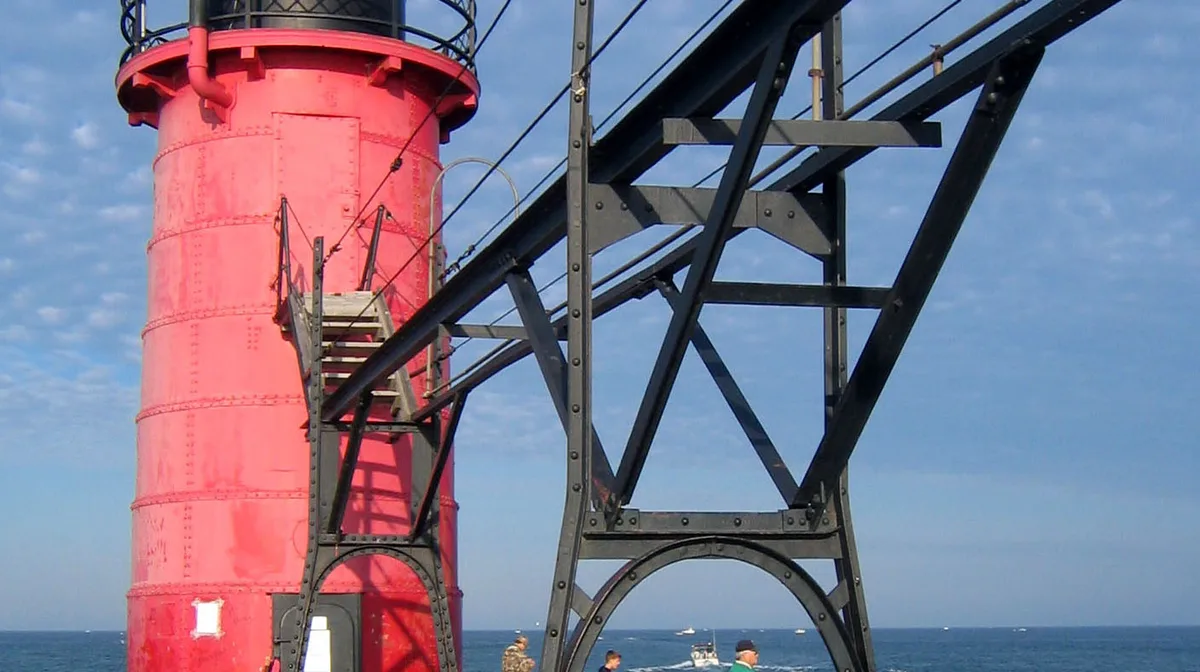
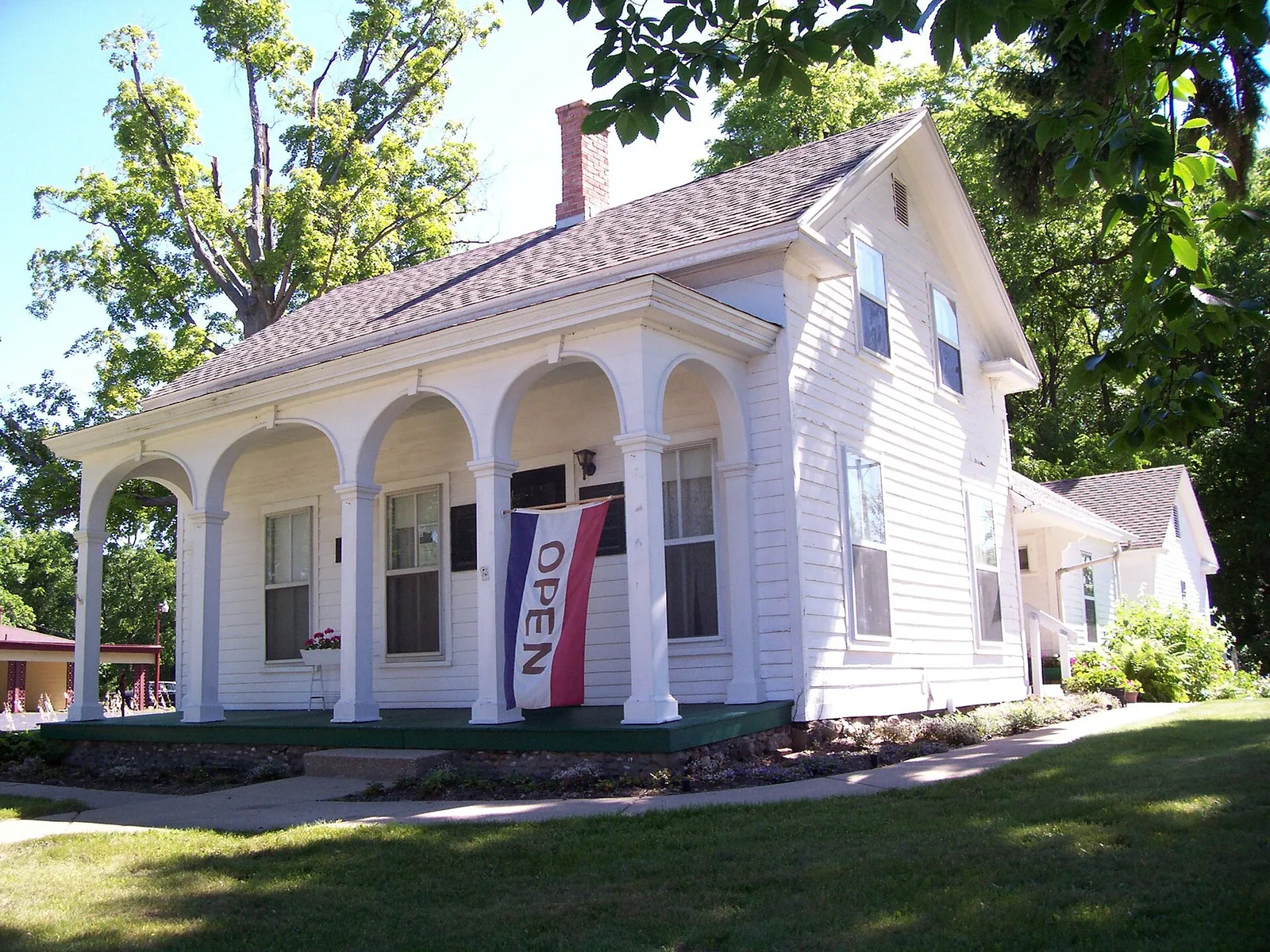
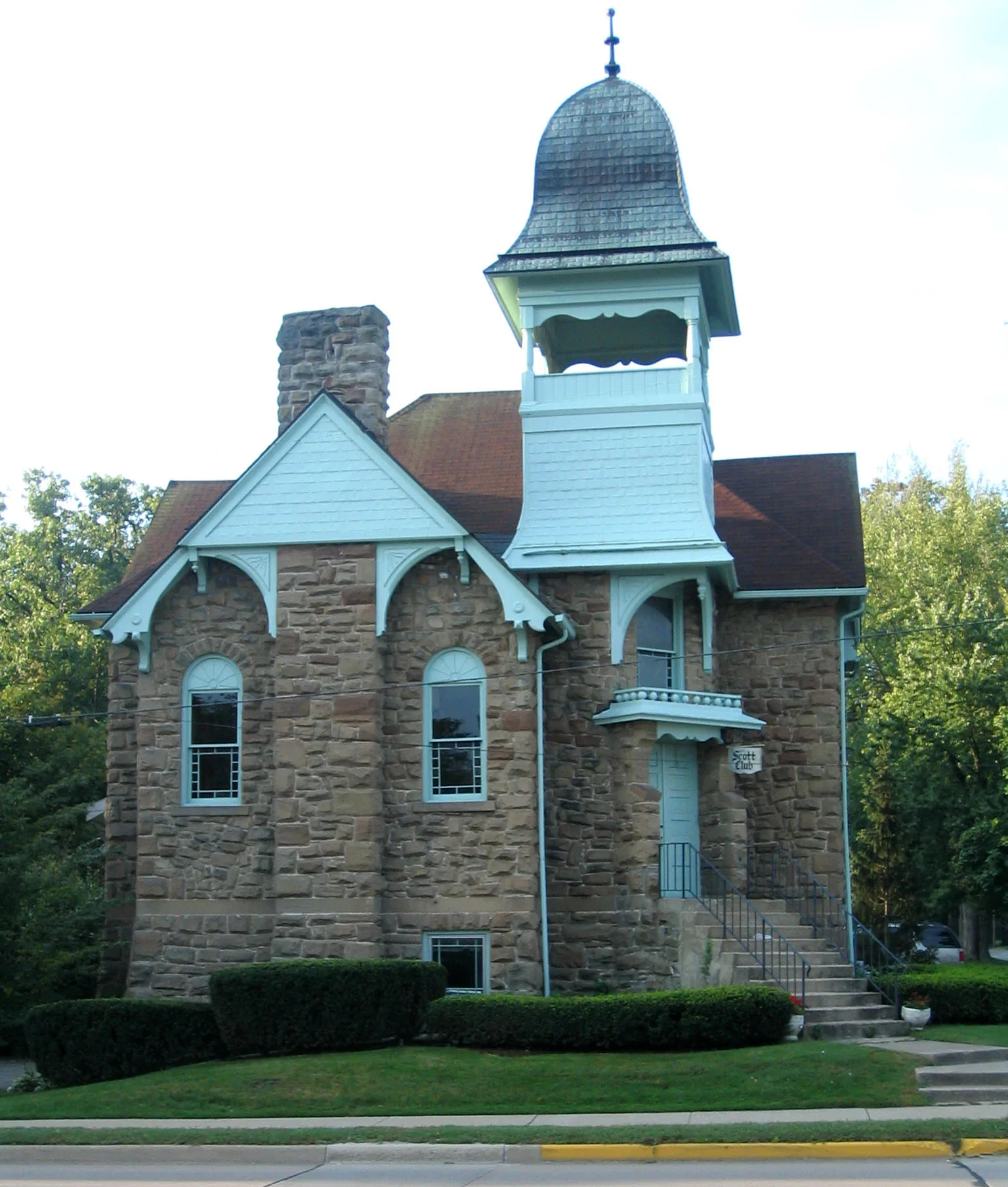
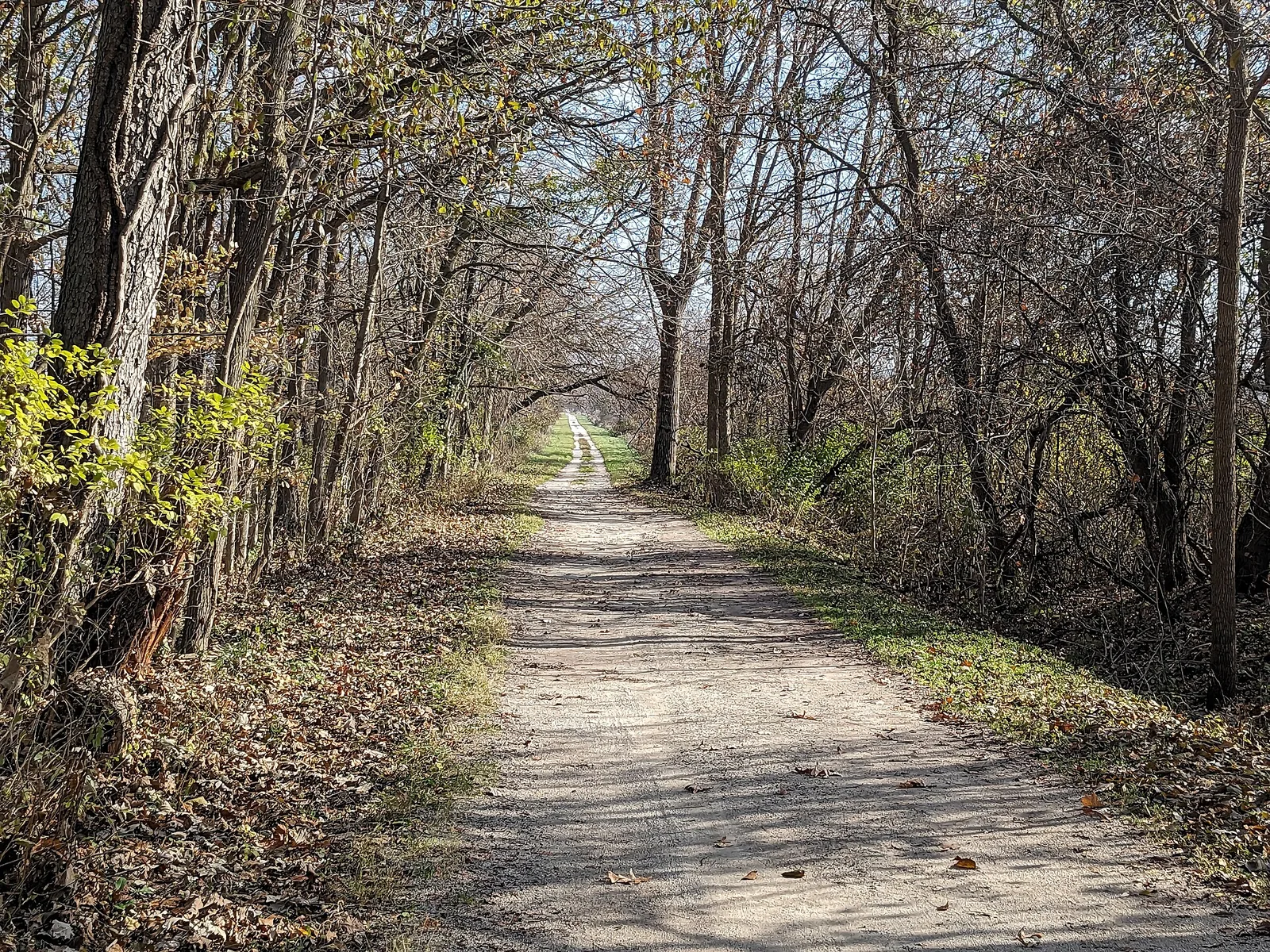
A few of the visual fingerprints we lean into when we shoot, brand and market a South Haven property — courtesy of the open Wikimedia Commons archive.

Cavmir markets South Haven properties according to which rulebook they sit under, because the two produce different products and most listings here are written as though the difference does not exist. A township house restricted to one rental term a week is a weekly vacation home and should be sold as one: photographed for a family settling in for seven days, priced Saturday to Saturday, marketed to Chicago and Grand Rapids families planning a summer well in advance. A city property that can take shorter stays is a different business entirely, working weekends, the Blueberry Festival, autumn colour and the shoulder months. We write each accordingly. Beyond that, the work here is the same work every Lake Michigan beach town needs and few get: honest distance to the water stated in minutes rather than adjectives, real photography of the beach and the pier walk rather than the kitchen, a listing that explains parking downtown in July, and a direct booking site that keeps the Chicago family who comes back every year out of a marketplace. We run local search against the terms that pull people to this stretch of shoreline instead of to Saugatuck, and we work the festival and harvest calendar. We help position and market your property. We never manage it or touch your keys.
South Haven grew up at the mouth of the Black River as a lumber port, shipping Michigan timber across the lake to rebuild Chicago and everywhere else that needed it. When the timber ran out the town turned to fruit, which the sandy soil and the lake's moderating effect suited perfectly, and to tourism, which arrived by steamer. From the 1890s through the 1920s passenger boats ran from Chicago across the lake, and South Haven became one of a string of Michigan shore towns that Chicagoans used as a summer escape. A distinctive chapter followed: from the early twentieth century South Haven became a major destination for Jewish families from Chicago, with dozens of resorts and kosher hotels operating through the middle of the century, to the point that the area was known as the Catskills of the Midwest. Most of those resorts are gone, replaced by cottages and condominiums, but the pattern of Chicago families summering here never broke. The fruit industry stayed too, and blueberries in particular became the region's signature: the sandy acidic soil suits them, the fields start immediately behind the town, and the National Blueberry Festival has run every August since the 1960s. The pierhead light, painted red and standing at the end of the south pier, went up in its current form in the early twentieth century and is now the image on every postcard, magnet and coffee mug in town.
South Haven is a summer market and the shape of your pricing depends entirely on which jurisdiction your property sits in. A South Haven Charter Township property is limited to one rental term per week with stays of three to twenty-seven nights, which means the sensible operation is a Saturday-to-Saturday weekly rental priced as a full week. That is a completely different pricing exercise from a nightly one: you are selling roughly ten to twelve weeks a year, each as a single transaction, to families booking months ahead, and the weeks around the Fourth of July and the Blueberry Festival are the ones that set your year. A city property that can take shorter stays runs a nightly business with weekend peaks, shoulder-season potential and far more turnover work. In both cases, distance to the water is the dominant rate variable and it should be measured in walking minutes rather than described in adjectives, because guests coming from Chicago have compared four listings that all claim to be near the beach. Autumn is the underused season: the water stays warm into September, the fruit is still coming in, the crowds have gone and rates typically fall faster than demand. Winter is quiet, and the honest strategy there is longer stays rather than discounted weekends.
Concentrated in summer. Late June through Labor Day is the season, with July the peak and the Fourth of July week and the August Blueberry Festival the strongest single stretches. June and September are genuine shoulders and September is under-sold. October brings some colour traffic. November through April is quiet and cold on this shore, with lake-effect snow a regular feature. Because the great majority of guests drive from Chicago, Grand Rapids or Detroit, weather forecasts move bookings noticeably at short notice in the shoulder months.
Two separate governments regulate short-term rentals in the South Haven area and the difference between them changes what kind of business you can run. The City of South Haven administers its programme under Article V, Chapter 14. Operators must submit to zoning compliance review, register before their existing registration expires, and have the property inspected every two years. The cap is the distinctive feature: rather than a fixed number of permits, the city limits short-term rentals to a ratio of one for every four housing units in the city, and the permitted total is recalculated annually as the housing stock changes. A number that was accurate two years ago may not be accurate now, in either direction. South Haven Charter Township, in Van Buren County, runs a wholly separate ordinance. All short-term rentals must be registered with the township, and no single-family dwelling may be used or advertised as a short-term rental unless registered. Stays are limited to a window of three to twenty-seven nights, and there is a one-rental-term-per-week rule, which prevents a property from being turned more than once in seven days. The township also requires a street number marker installed by South Haven Area Emergency Services, and the owner must consent to and pay for a septic inspection by the Van Buren County Health Department, obtaining a certificate confirming adequate septic pumping which is renewed every three years. Michigan has no statewide preemption law and no adopted registry; House Bill 6026 remains a bill.
Work out which rulebook applies before anything else, and then build the business the rules actually allow. A township property is a weekly rental and should be photographed, priced and marketed as a family's summer week, not as a weekend break. A city property is a nightly business with different economics. Second, measure the beach in minutes. Every listing on this shore claims to be near the water, so the ones that state a walking time, name which beach, and photograph the actual route win. Third, sell the pier walk. The red light at the end of the south pier on a summer evening is the single most photographed thing in this town and it belongs in your gallery. Fourth, own the blueberry season properly. It is a genuine agricultural event, the fields start behind the town, and a listing that tells a Chicago family where to pick and when they ripen is offering something a hotel cannot. Fifth, market September deliberately, because the water is still warm, the town is quiet and rates usually drop before demand does. Sixth, be honest about downtown parking in July, which is difficult, and tell guests where to leave a car. Seventh, keep the Chicago family list. This shore has multi-generational repeat visitors who have been coming for decades, and that relationship should live on your own site rather than inside a marketplace.
The season is short and the annual return depends on executing perhaps twelve weeks properly. The township's one-term-per-week rule caps how many bookings a property can take, which is a hard ceiling on revenue that no pricing strategy overcomes. The city's ratio cap means permit availability moves year to year and cannot be relied on. Septic requirements in the township add cost and constrain occupancy. Competition along this shore is strong, with Saugatuck an easy alternative for the same Chicago guest. And lake-effect winters are long, cold and genuinely quiet.
A Lake Michigan beach rental needs short-term rental use named on the policy and liability limits set with the realities of the shore in mind. Lake Michigan produces genuine rip currents and drownings occur along this coast every summer; while a beach is not your premises, guest safety messaging and any water equipment you supply are worth discussing with your broker. Bluff and shoreline erosion is a live issue along this shore and has damaged properties in high-water years, so if your parcel is near the edge, ask about it directly rather than assuming. Winter brings the standard cold-climate exposures: frozen pipes in a property that sits empty from October, ice dams and roof loads. If the property is in the township and on a septic system, keep the county certificate current, because a failure there is both a compliance and an insurance problem. Any dock, boat, kayak or bicycle supplied with the house should be scheduled explicitly. Use a broker who writes Michigan lakeshore vacation rentals rather than a general agent.
Michigan levies its 6% state use tax on accommodations rented for periods under thirty days, and that applies here. Local accommodation taxes are the complication. They are not universal in Michigan: some counties impose them and some do not, and cities within a county sometimes impose them independently. Van Buren County applies a local accommodation assessment, and you should confirm the current rate and filing arrangements with the county rather than relying on a general guide. The important operational point is that these local accommodation taxes are typically not collected by booking platforms, so an owner who assumes the platform has handled everything will accumulate a liability quietly. Check exactly what is being collected on your behalf and what you must file yourself. House Bill 6026, introduced in May 2026, would add a statewide 6% excise tax on short-term rentals split between the municipality and Pure Michigan, plus a state registry, but it has not been enacted. Michigan's principal residence exemption affects property tax treatment and a non-homestead property is taxed differently, which materially changes operating numbers; ask your accountant.
Financing on this shore turns on distance to the water and on which jurisdiction the property sits in. Lakefront and near-lakefront properties command a premium and appraisals are generally well supported because the market is active, but bluff-top parcels can raise questions about erosion and setback that lenders will want addressed. In the township, septic capacity and the county certificate are practical underwriting items, and septic capacity limits bedroom count, which limits revenue. The one-rental-term-per-week rule matters to any lender assessing projected income and should be disclosed rather than glossed over, because a property that can take twelve bookings a summer is a different asset from one that can take forty. Seasonal income concentration is the other underwriting wrinkle: this is a market that earns most of its money in three months, and lenders vary in how comfortable they are with that. Michigan's homestead versus non-homestead property tax difference feeds directly into affordability. Use a broker who works the Lake Michigan shore and understands the city and township split.
South Haven's fundamentals are strong and its constraints are deliberate. Chicago is not moving, the beach is not getting longer, and the fruit country behind the town is productive agricultural land rather than development inventory. The city's ratio cap is a thoughtful mechanism: it ties short-term rental supply to the size of the housing stock, so the permitted number grows only as the town grows, which suggests a settled long-term policy rather than a temporary restriction. The township's one-term-per-week rule looks likely to persist because it addresses precisely the complaint that drives residential opposition elsewhere, which is constant turnover. Neither is likely to loosen. The state-level variable is House Bill 6026, which if enacted would add a registry and a 6% excise tax and, in earlier iterations of similar legislation, would have limited local control; Michigan preemption efforts have repeatedly failed and this should be watched rather than assumed. Shoreline erosion during high-water cycles is the physical risk worth monitoring for anyone buying near the bluff. For an owner, the durable strategy is the one this shore has always rewarded: a direct relationship with families who book the same week every summer, sometimes for generations.
South Haven is what a Great Lakes beach town is supposed to be, and it has stayed that way largely by accident of geography: it is close enough to Chicago for a family to drive on a Friday evening and far enough that it never became a suburb. The red pierhead light at the end of the south pier is the postcard, and it earns it, particularly around nine on a July evening when half the town walks out to the end and back with ice cream. There are two proper public beaches either side of the river mouth, a small downtown across a drawbridge, a harbour full of masts, and a maritime museum with a replica of an 1810 sloop tied up in front of it. Behind the town, almost immediately, the blueberry fields start. This is genuinely serious fruit country, the sandy acidic soil suiting blueberries the way it suits nothing else, and in August the National Blueberry Festival has been running since the 1960s. There is a thirty-four mile rail trail running east to Kalamazoo. And under all of it is a long, layered summer history: lumber schooners, then steamers from Chicago, then decades in which this shore was one of the most important Jewish resort destinations in America outside the Catskills. Those families kept coming even after the resorts closed. Some of them still come. That is the guest an owner here should be trying to keep.
A great property in South Haven doesn't just want a listing — it wants a point of view, an audience, and a brand the city itself would recognise.
Eight things worth settling before you write a listing in a town where the city and the township regulate short-term rentals in entirely different ways.
Two governments, two rulebooks. Establish which one your address is in before you do anything else.
The city limits STRs to a ratio of one per four housing units, recalculated annually. The number moves every year.
Stays of 3 to 27 nights and only one rental term per week. You cannot turn the house twice in seven days.
The township requires an owner-paid Van Buren County Health Department septic inspection and certificate, renewed every three years.
The red light at the end of the south pier is the image of this town. The evening walk out to it is the ritual.
Fields start immediately behind town. The National Blueberry Festival has run every August since the 1960s.
Thirty-four miles of rail trail east to Kalamazoo, leaving from the edge of town. A genuine rainy-day and shoulder-season answer.
Around two and a half hours around the bottom of the lake. Most guests drive, which means forecasts move short-notice bookings.
The three examples below are composite and illustrative. They describe patterns common across Lake Michigan beach markets rather than any single South Haven client, and no real business is described.
An owner in the charter township was trying to run two and three night stays and repeatedly running into the one-rental-term-per-week rule, producing cancelled bookings and an unhappy calendar.
We rebuilt the property as a Saturday-to-Saturday weekly rental, repriced it as a full week rather than a nightly rate, and rewrote the listing for a family settling in rather than a couple passing through.
The calendar filled cleanly with weekly bookings made months ahead, turnover work dropped sharply, and the compliance friction disappeared entirely.
A property described itself as steps from the sand when the walk was closer to fifteen minutes with a hill, and competed against four listings on the same street all making similar claims.
We measured and stated the walk in minutes, photographed the actual route including the crossing and the beach entrance, and repositioned the property on space and parking rather than proximity.
Reviews stopped mentioning the distance, because guests knew it before they arrived, and the property began attracting larger groups who valued what it actually had.
The owner treated Labor Day as the end of the season and dropped to winter rates immediately, in a month when the lake is still warm and the town is at its most pleasant.
We built September its own positioning around warm water, the fruit harvest, the empty beach and the trail, gave it a page, and emailed it to July guests in advance.
September moved from a discounted tail to a properly priced shoulder season, filled largely by guests who had already stayed once that summer.
Demand in South Haven peaks around July through August and runs quietest around January through February. Here is how the year actually books — and what to do about each stretch of the calendar.
Late June through Labor Day is the season, with July the peak and the Fourth of July week and the August Blueberry Festival the strongest single stretches. If your property is in the charter township, the one-rental-term-per-week rule means you are selling roughly ten to twelve weeks a year as single transactions, and each one should be priced as a full week rather than as nights.
June and September are genuine shoulders and September is consistently under-sold: the lake stays warm, the fruit is still coming in and the beaches empty out. October adds some colour traffic. Both reward email to summer guests rather than a rate cut.
November through April is quiet and cold on this shore, with lake-effect snow a regular feature. The realistic strategy is longer stays and a completely different pitch, rather than discounted weekends aimed at beach guests who are not travelling.
Summer weeks book a long way ahead, particularly the Fourth of July and Blueberry Festival periods, and returning families frequently rebook before leaving. Shoulder-season and city weekend demand moves much later and is sensitive to the forecast, since almost everyone drives.
In the township, weekly Saturday-to-Saturday stays are effectively mandated by the one-term-per-week rule and are the natural pattern anyway. In the city, shorter stays are possible and weekends dominate. Both markets skew heavily to summer.
Whole houses that sleep a family group win, and the single largest rate variable is the walk to the beach measured honestly. Properties in the township should be configured for a week-long stay with the storage, laundry and kitchen that implies, since that is what the rules produce.
Start with photography that shows what a guest actually gets here, then write the listing around a real itinerary rather than a feature list. Build a direct-booking site so returning guests can come back without going through a platform, and keep an email list segmented by season so you can reach last year's visitors before the calendar opens. Local search matters more than people expect in a market this size, because guests search the destination and the attraction rather than the word rental. A marketing agency layer handles the photography, the listing copy, the direct-booking site and the local SEO as one system instead of four disconnected jobs.
Late June through Labor Day is the season, with July the peak and the Fourth of July week and the August Blueberry Festival strongest. June and September are genuine shoulders and September is under-sold, with warm water and empty beaches. November through April is quiet and snowy on this shore.
Summer weeks book a long way ahead, especially the Fourth of July and Blueberry Festival periods, and many families rebook the same week before they leave. Shoulder and weekend demand moves much later and is sensitive to the forecast, because almost everybody drives here rather than flying.
Chicago dominates, at roughly two and a half hours around the bottom of the lake, and has done for more than a century. Grand Rapids, Detroit, Indianapolis and Milwaukee fill in the rest. Targeting Chicago specifically outperforms broad midwest advertising by a wide margin in this market.
The walk to the beach, stated in minutes and proven with photographs, does more than any interior feature. Beyond that, outdoor dining and a fire pit, laundry for a week-long family stay, beach chairs and gear, parking for several cars and air conditioning in July all convert reliably.
Run your Airbnb, Vrbo, or website through Cavmir's free grader. It checks the things that decide whether guests book in South Haven — photos, listing copy, page speed, local search — and shows you where bookings leak. Takes about a minute, and there's no sales call attached.
If the report says your booking engine is the weak link, that's fixable: a direct-booking website of your own means repeat guests stop paying platform fees to come back to you. That's the work Cavmir does — see Airbnb website design in South Haven.
Send us the listing and we'll tell you what we'd change. Not a pitch deck — a straight read on your photos, your title, your rates against the South Haven comp set, and whether a direct-booking site would pay for itself.
You'll hear back from a person, usually inside one business day. If we don't think we can move your numbers, we'll say so. Cavmir is a short-term rental marketing agency — we position and market properties, we don't manage them.
Talk to Cavmir today. We'll show you exactly what your South Haven property is leaving on the table — and how fast we can change that.
Book a Free Strategy CallPhotography via Wikimedia Commons (images resized and cropped): South Haven South Pier Lighthouse from NE by D. R. J. Stiennon, Rabbet at English Wikipedia (CC BY 2.5) · Liberty Hyde Bailey Museum by JHiddema (CC BY-SA 4.0) · Scott Club from Phoenix Street by Rabbet at English Wikipedia (CC BY 2.5) · South Haven Center for the Arts by Rabbet at English Wikipedia (CC BY 2.5) · Kal-Haven Trail facing east towards Alamo, MI by Mtn-graphic (CC BY-SA 4.0).
