



The cap
Sixteen
Current ordinances permit only a limited number of short-term rentals city-wide, reported at sixteen homeowners. Verify the figure with the city.

Expert short-term rental marketing to grow your bookings and nightly rate in Frankenmuth, Michigan, USA.
Sixteen services, one team. Everything below is built in-house and scoped to your property and market. Most owners start with the 12-Step System.
Every engagement is quoted to your portfolio. These are the ready-made scopes owners pick most — the AI Efficiency Discount is already applied. A clear proposal within 48 hours.
The work is public. Selected engagements and what changed — and reviews from the owners and managers behind them.
* Market averages. Properties marketed by Cavmir typically exceed these figures by 25–45%. Data sourced from AirDNA, STR market reports, and Cavmir internal analytics.
Frankenmuth was founded in 1845 by fifteen Lutheran missionaries from Franconia, in Bavaria, who had been sent across the Atlantic to evangelise among the Chippewa. The name means the courage of the Franconians. They settled on the Cass River, farmed, brewed beer, and spoke German in the schools well into the twentieth century. What turned an ordinary German farming town into one of the most visited places in Michigan was food and then Christmas. Two enormous family-style chicken dinner restaurants face each other across Main Street, both descended from local family businesses, and between them they serve an extraordinary number of people every year. Then in 1945 Wally Bronner started a sign-painting business that grew into Bronner's CHRISTmas Wonderland, now the largest Christmas store in the world, sitting on a site of tens of acres and open 361 days a year. From the 1950s the town leaned into the Bavarian theme deliberately, adopting design guidelines that gave Main Street the timbered frontages, the covered wooden bridge and the glockenspiel tower it has today. It is unapologetically a themed town, and it works: millions of people come, most of them on day trips from within a few hours' drive, and almost nobody stays the night because there is nowhere much to stay.
That last sentence is the whole opportunity and the whole problem. Frankenmuth generates enormous visitor volume and licenses very few short-term rentals: the city's ordinance permits only a limited number, reported at sixteen homeowners across the entire city. Rentals of longer than thirty consecutive days need no city permit at all, which is a distinction worth understanding before you plan anything. The more interesting rules concern bed and breakfasts, and they reveal what the city actually wants. A bed and breakfast is permitted in all residential zoning districts, and in residences that are non-conforming uses within commercial districts. But no bed and breakfast may sit on the same block face as another, and each must be at least three hundred feet from any other bed and breakfast or short-term rental. There are four named exceptions where that spacing rule is relaxed: South Franklin Street, Genesee Street between Parker Street and Churchgrove Road, East Jefferson Street between South Main Street and the city limits, and Main Street. In other words the city has drawn a map of where it wants innkeepers and spread everyone else out. At the state level, Michigan has no short-term rental preemption law. House Bill 6026 was introduced in May 2026 and would create a Short-Term Rental Act with a state registry and a 6% excise tax split between the municipality and Pure Michigan, but it is a bill and not law. Verify the sixteen-permit figure with the city.
Nearby Markets: Saugatuck | Traverse City | Petoskey
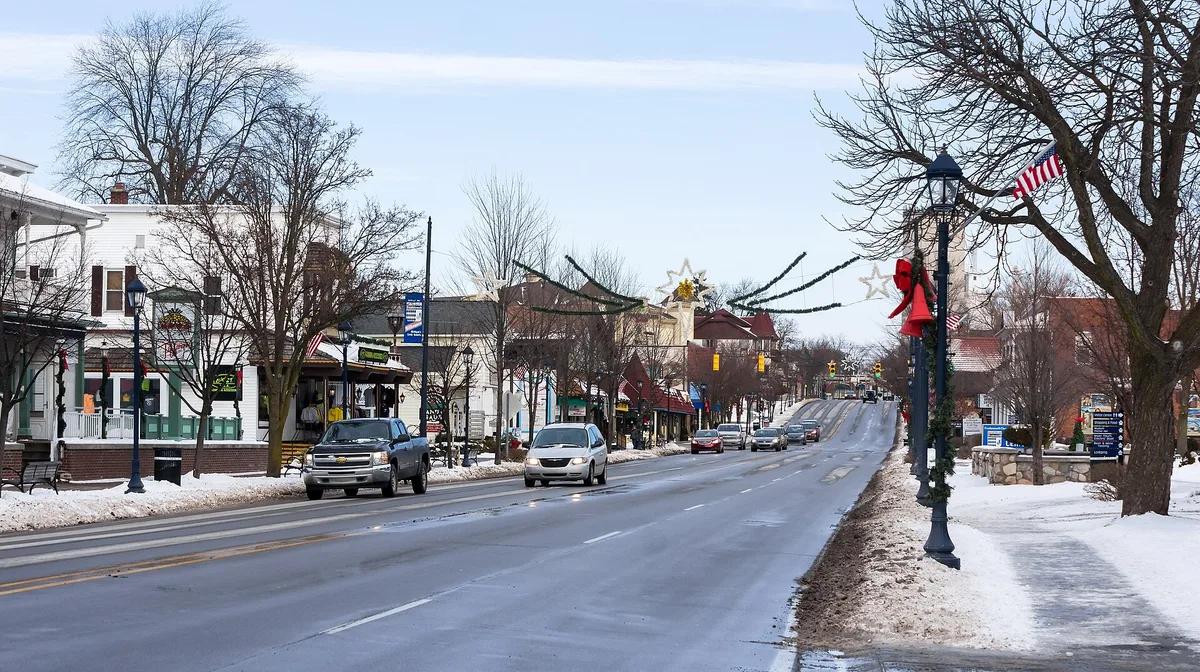
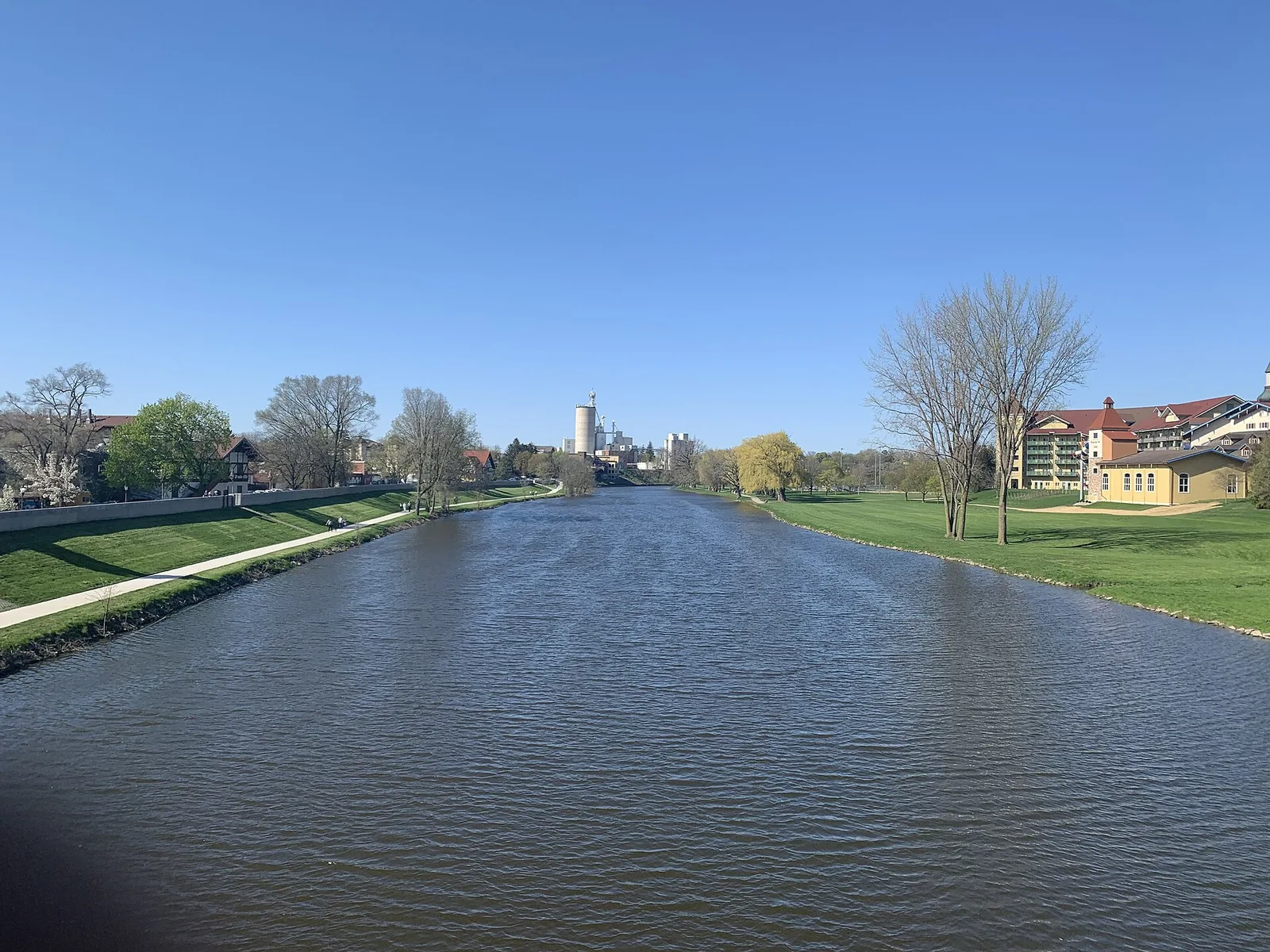
A few of the visual fingerprints we lean into when we shoot, brand and market a Frankenmuth property — courtesy of the open Wikimedia Commons archive.
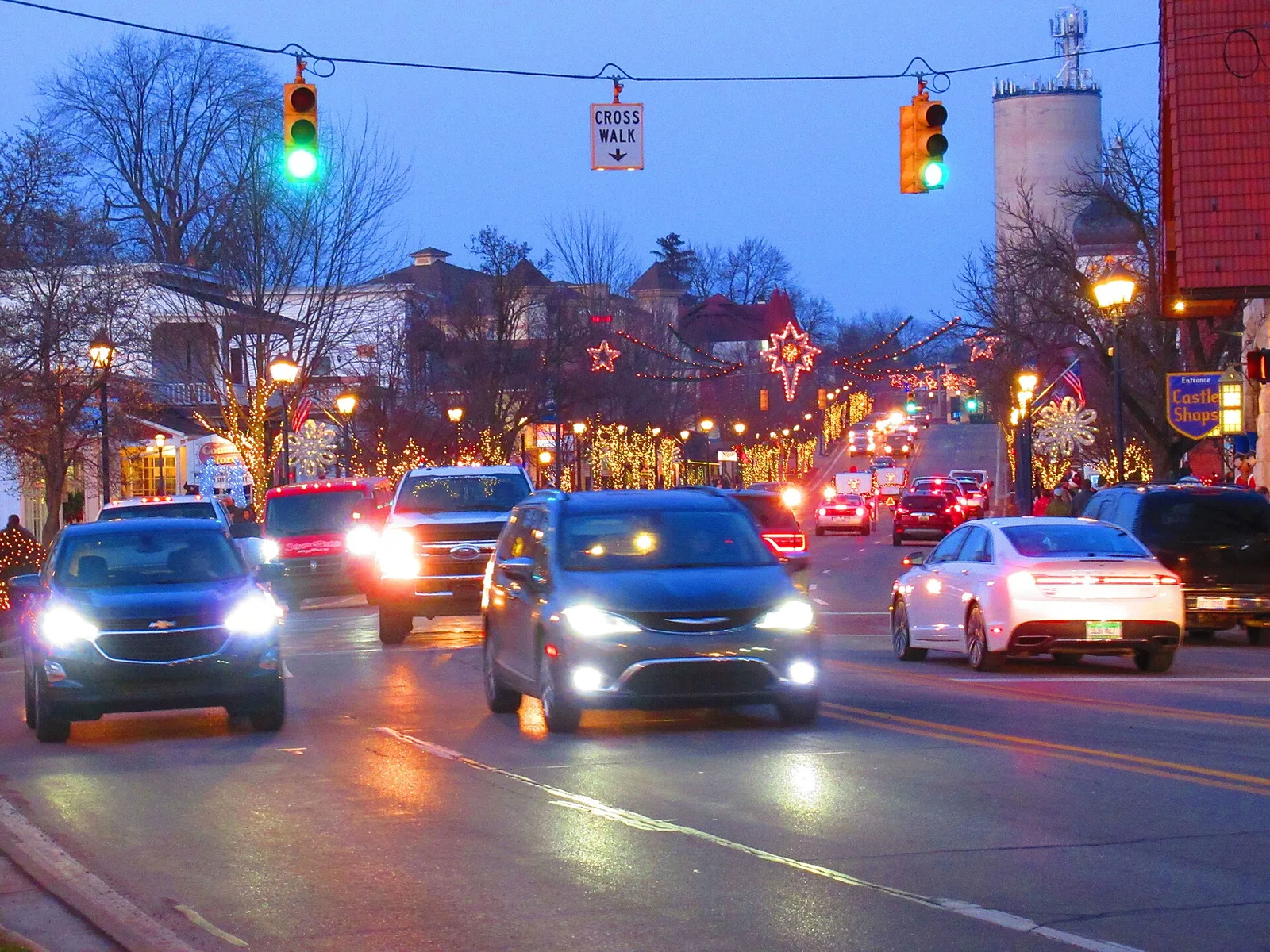
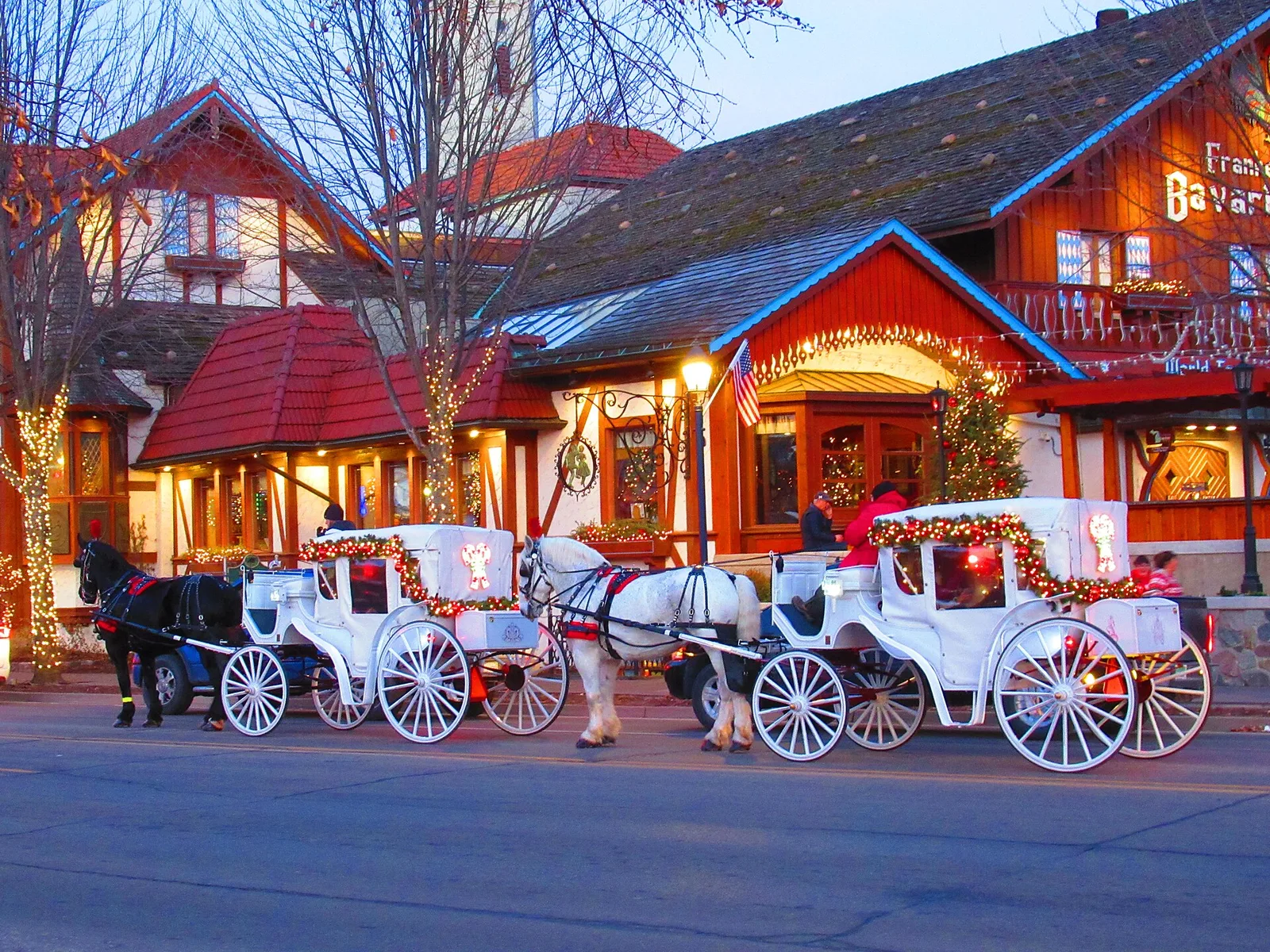
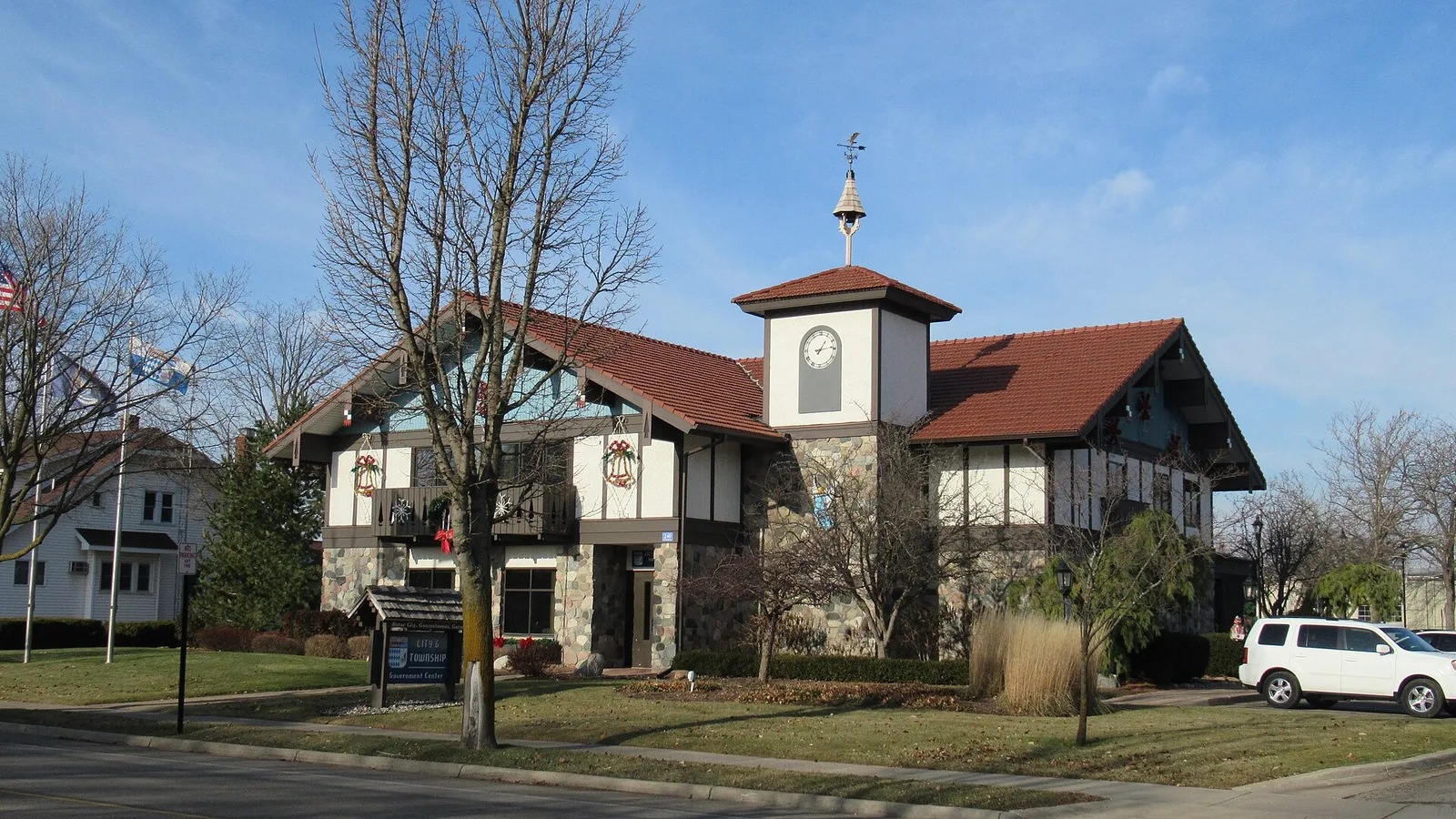
Cavmir markets Frankenmuth properties against the single biggest gap in this town, which is that a day-trip destination is trying to become an overnight one and the lodging supply has barely noticed. A family driving up from Detroit or across from Grand Rapids for Bronner's will do the store, do a chicken dinner, walk Main Street and drive home tired. The same family, given a reason, will stay two nights and spend three times as much. That reason has to be written down somewhere, and it is our job to write it: the covered bridge in the morning before the crowds, the riverwalk, the brewery, the festivals, the fact that Christmas shopping in July is genuinely a thing here. We photograph the property so that it looks like part of the town rather than a house that happens to be near it, write the listing around an itinerary rather than a feature list, and build a direct booking site that captures the enormous search volume this destination generates without paying a marketplace to introduce a guest who was already looking for Frankenmuth by name. Then we work the festival calendar hard, because Bavarian Festival, Oktoberfest and Snowfest are fixed, published and consistently under-priced by the few operators here. We help position and market your property. We never manage it or touch your keys.
In 1845 fifteen young Lutherans from Franconia landed in Michigan with a mission from a pastor in Neuendettelsau to bring their faith to the Chippewa. They bought land on the Cass River and named the settlement Frankenmuth, which combines the name of their home region with the German word for courage. The mission itself achieved little, but the colony took root, and more Franconians followed. For a century this was a German-speaking farm town: the church services, the schools and the newspapers were in German, and the isolation was deliberate enough that the town retained the language well into the twentieth century, through two wars in which that was not a comfortable thing to be. The commercial story starts with food. Two hotels on Main Street began serving family-style chicken dinners, and by the middle of the century both had grown into enormous operations facing each other across the street, drawing people from across Michigan for a meal rather than a destination. Then came Christmas. Wally Bronner started painting signs in 1945, moved into Christmas decorations, and kept expanding until Bronner's CHRISTmas Wonderland became the largest Christmas store in the world, occupying a site of tens of acres south of town and opening 361 days a year. From the 1950s onward the town made a collective decision to look the part, adopting Bavarian design guidelines, building a covered wooden bridge across the Cass in 1979 and installing a glockenspiel that plays the story of the Pied Piper. The theming is real, it is deliberate, and it drew millions.
Frankenmuth is a day-trip market trying to become an overnight one, and the pricing consequence is that your competition is not other rentals, it is the guest's decision to drive home. That means the value proposition has to be built around a reason to stay a second night, and rates should be set against the cost of the whole trip rather than against the nightly rate of the property down the street. The festival calendar drives the peaks. Bavarian Festival in June, Oktoberfest in September and Snowfest in January are fixed, published far in advance and consistently under-priced by the handful of operators licensed here. November and December are the other peak, because Bronner's turns the town into a Christmas destination for the entire season and the weekends between Thanksgiving and Christmas are the strongest stretch of the year. Summer weekends are solid on general tourism. The genuinely quiet stretches are late winter after Snowfest and the early spring, and the answer there is not a discount but a different guest: this is central Michigan, within easy reach of Saginaw, Flint, Bay City and Midland, and there is business, medical and family travel that has nothing to do with the theme. With only a handful of licensed rentals in the city, an operator who is properly presented has genuine pricing power and should use it rather than benchmarking against a motel on the highway.
Two clear peaks. The Christmas season from November through December is the strongest, driven by Bronner's and the town's decorations. The summer, particularly the June Bavarian Festival and the September Oktoberfest, is the second. January brings Snowfest and its ice sculptures, which is a genuine draw in an otherwise dead month. February and March are quiet, as is the early spring. Because most visitors arrive by car from within a few hours, weather moves this market noticeably: a bad forecast on a Saturday in December can empty the town, and a clear cold weekend fills it.
Frankenmuth regulates lodging tightly and the shape of the rules tells you what the city wanted. Under current local ordinances only a limited number of homeowners may operate short-term rentals in the city, reported at sixteen. Renting a home for longer than thirty consecutive days does not require a city permit, so the restriction is specifically on nightly and weekly letting. Bed and breakfasts are treated separately and more generously: they are permitted in all residential zoning districts and in residences that are non-conforming uses within commercial zoning districts. But two spacing rules apply. A bed and breakfast may not be located on the same block face as another, and it must be three hundred feet or more from any other bed and breakfast or short-term rental unit. Four locations are exempted from that spacing requirement: South Franklin Street, Genesee Street between Parker Street and Churchgrove Road, East Jefferson Street between South Main Street and the city limits, and Main Street. Read together, the city has effectively drawn a corridor where innkeeping is encouraged and dispersed everything else. At state level, Michigan has no short-term rental preemption statute and no adopted statewide registry. House Bill 6026, introduced in May 2026 by Representatives Andrews and Bierlein, would establish a Short-Term Rental Act creating a registry and database and a six per cent excise tax split evenly between the municipality where the rental sits and Pure Michigan. It has not passed. Several online guides describe that registry and tax as though they already exist; they do not. Verify the sixteen-permit figure and the current ordinance text with the city before acting.
Sell the second night. Almost every visitor to Frankenmuth is deciding between a long day and a short break, and the listing that gives them a reason to stay over wins a booking that nobody else was competing for. Write the evening: the covered bridge at dusk, the riverwalk, the brewery, Main Street after the coaches have left. Second, own Christmas properly. Bronner's is the largest Christmas store on earth and it is open 361 days a year, which means it is a genuine attraction in July as well as December, and almost nobody markets it that way. Third, treat the festivals as separate products with separate rates. Bavarian Festival, Oktoberfest and Snowfest are published a long way ahead and behave nothing like ordinary weekends. Fourth, lean into the authenticity where it is real. This town was founded by Franconian missionaries in 1845 and spoke German for a century; that is a better story than the timbering, and it gives the theming a foundation guests appreciate. Fifth, remember that with so few licensed operators you are not in a price war, so stop behaving as though you are. Sixth, build for groups and families, because the trip is multi-generational far more often than not and a house that seats ten around a table beats a smart two-bedroom. Seventh, capture the direct search: people search for this town by name in enormous numbers, and a direct booking site lets you meet that demand without paying to be introduced.
Access to the market is the first obstacle: with a reported sixteen short-term rental permits city-wide, this is not somewhere you simply buy a house and start listing, and the bed and breakfast route carries its own spacing constraints. The market is heavily day-trip weighted, so converting visitors into overnight guests is a marketing job that never ends. Weather has an outsized effect because almost everyone drives. Late winter and early spring are genuinely quiet. And the town's appeal is specific: a themed Bavarian destination is not to everyone's taste, and a property here is tied to whether the destination stays popular rather than to any independent attraction.
Because Frankenmuth's licensed lodging skews toward bed and breakfasts and owner-present operations, the insurance conversation here is usually about mixed use. Tell your insurer exactly what the property is and how it operates, and get short-term rental or bed and breakfast use named in the policy rather than assumed. If you serve food of any kind, even a continental breakfast, raise it specifically, because food service changes both the liability profile and, in some cases, the licensing. Many properties in the older parts of town are nineteenth or early twentieth century buildings with the electrical, plumbing and chimney histories that implies, so expect underwriters to ask and be ready with documentation of upgrades. Michigan winters bring the standard cold-climate claims: frozen pipes, ice dams and roof loads, all of which are worth discussing before December rather than after a burst. If the property sits near the Cass River, ask about flood exposure explicitly, since standard policies exclude it. And set liability limits with the actual guest profile in mind, which in this town means families with children and older relatives moving around an unfamiliar building.
Michigan applies its 6% state use tax to accommodations rented for stays under thirty days, and that is the baseline for any short-term rental in Frankenmuth. On top of it, many Michigan counties and municipalities levy their own accommodation taxes or assessments, and these vary considerably: some counties impose them, some do not, and some cities impose them even where the county does not. Critically, these local accommodation taxes are frequently not collected by booking platforms, which means the obligation sits with you and it is a common source of unexpected back-tax bills. Confirm Saginaw County's position and any city assessment directly rather than assuming a platform has handled it. On the state legislative front, House Bill 6026 was introduced in May 2026 and would add a statewide 6% excise tax on short-term rentals split between the host municipality and Pure Michigan, alongside a state registry. That bill has not been enacted, so it is not a cost today, but it is the most likely source of change to this picture and worth following. Ask your accountant about federal and Michigan income treatment, particularly if you are operating a bed and breakfast from a property you also live in.
Financing a lodging property in Frankenmuth depends heavily on which route you are taking. A short-term rental permit, in a city that has reportedly issued only sixteen, is a scarce operating right, and a lender considering rental income will want to see it documented rather than described. A bed and breakfast is often a different kind of file altogether: if it has multiple guest rooms and a trading history, some lenders will treat it as a commercial or mixed-use asset even where the owner lives on site, which changes the deposit, the rate and the documentation required. Older housing stock means the survey matters, particularly around wiring, heating, roofs and any structural work done informally over the decades. Michigan property tax treatment differs between a principal residence and a non-homestead property, and the difference is significant enough to change your operating numbers, so establish it before you model anything. Because the market is small and lodging-specific comparables are thin, appraisals can be slow. Work with a broker who lends in Saginaw County and has financed a bed and breakfast before.
Frankenmuth's demand base is unusually stable because it rests on two permanent private attractions and a themed streetscape the town has maintained deliberately for seventy years. The risk is concentration rather than decline: if the destination's appeal softened, there is no second economy underneath it. On the supply side, the city has shown no appetite for expanding short-term rental permits and its bed and breakfast spacing rules point in the same direction, so an existing licensed operation should expect to keep its scarcity. The variable most worth watching is Lansing. House Bill 6026 would create a statewide registry and a 6% excise tax split between municipalities and Pure Michigan, and previous versions of this legislation have also proposed limiting local authority to restrict short-term rentals. If a preemption element ever passed, the sixteen-permit ceiling that makes this market scarce could be undermined overnight, which would be excellent news for a would-be entrant and poor news for an existing one. Michigan preemption bills have repeatedly failed, so this is a watching brief rather than a forecast. Either way, the strategic answer is the same: build a direct relationship with the families who come back every December, because that asset survives any change to the permit rules.
Frankenmuth is a town that decided what it was going to be and then committed with a thoroughness that is genuinely impressive. The timbered frontages on Main Street, the glockenspiel that plays the Pied Piper, the covered wooden bridge over the Cass, the beer, the chicken dinners: none of it is subtle, and none of it is apologising. What saves it from being a theme park is that the foundation is real. Fifteen Franconian Lutherans did land here in 1845 with a mission from a pastor in Bavaria. The town did speak German in its schools and churches for a century, through two wars where that took a certain nerve. The name really does mean the courage of the Franconians. And then there is Bronner's, which is one of the strangest and most wholeheartedly committed retail operations in the United States: several acres of Christmas under a single roof, hundreds of thousands of ornaments, lit displays running along the road outside, open 361 days a year, so that on a hot Tuesday in July you can walk out of ninety-degree sunshine into a building where it is permanently December. It started in 1945 with a young man painting signs. What we like about this market, though, is simply the arithmetic. Millions of people come here. Sixteen homes are licensed to let them stay the night. That is not a competitive market, that is a queue, and almost nobody in it is marketing properly.
A great property in Frankenmuth doesn't just want a listing — it wants a point of view, an audience, and a brand the city itself would recognise.
Eight things worth knowing about a town with enormous visitor volume, very little licensed lodging, and a spacing rule that names four streets.
Current ordinances permit only a limited number of short-term rentals city-wide, reported at sixteen homeowners. Verify the figure with the city.
Permitted in all residential districts and in non-conforming residences in commercial districts, subject to spacing.
No B&B on the same block face as another, and at least 300 feet from any other B&B or short-term rental.
S. Franklin, Genesee between Parker and Churchgrove, E. Jefferson between S. Main and the city limits, and Main Street.
The world's largest Christmas store, on a site of tens of acres, open 361 days a year. It is the reason most people come.
Fifteen Franconian Lutheran missionaries. The name means the courage of the Franconians. The German was still spoken a century later.
Bavarian Festival, Oktoberfest and Snowfest. Fixed, published far ahead and consistently under-priced here.
Michigan has no STR registry or excise tax in law. The May 2026 bill is proposed, not enacted. Guides that say otherwise are wrong.
The three examples below are composite and illustrative. They reflect patterns we see in high-volume day-trip destinations rather than any single Frankenmuth client, and no real business is described.
A licensed rental was priced and written for a single overnight stop, capturing guests who arrived at six, ate, slept and left by ten the next morning, at the lowest rate the property could command.
We rebuilt the listing around a two-night itinerary, wrote the evening and the early morning into the copy, and priced a second night as the better value rather than as an extra.
Average length of stay moved past one night for the first time, which raised revenue per booking substantially without any increase in the nightly rate.
An owner's summer marketing described the town's festivals and river and left out the single largest attraction entirely, on the assumption that a Christmas store was a December subject.
We put the year-round opening into the summer copy and built content around the oddity of Christmas shopping in high summer, which is exactly what a large share of warm-weather visitors are actually doing.
Summer enquiries rose from an audience the property had never previously spoken to, and the copy started matching the reason people were actually in town.
Bavarian Festival, Oktoberfest and Snowfest were all selling out months ahead at the same rate as an average weekend, because the dates were published long before the owner thought about pricing.
We built the calendar first, set festival rates and minimum stays as soon as the dates were confirmed, and marketed those weekends to a past-guest list rather than waiting for platform demand.
The three festival periods became the strongest revenue blocks of the year rather than the earliest sell-outs at the wrong price.
Demand in Frankenmuth peaks around June, September and November and runs quietest around February through March. Here is how the year actually books — and what to do about each stretch of the calendar.
The Christmas season from November into December is the strongest run of the year, driven by the town's decorations and the Christmas store, with the weekends between Thanksgiving and Christmas the hardest peak. The June Bavarian Festival and the September Oktoberfest are the other two. All three are published far ahead and are consistently under-priced by the small number of licensed operators here.
Summer weekends run steadily on general visitor traffic, and January carries Snowfest and its ice sculptures, which is a real draw in a month that would otherwise be empty. Both reward copy written around a second night rather than a lower rate.
February and March, once Snowfest has passed, and the early spring are genuinely quiet. The honest answer is a different guest entirely: this is central Michigan, within easy reach of several cities, and there is business, medical and family travel that has nothing to do with the theme.
Festival and Christmas weekends book early because the dates are published well in advance and the licensed supply is tiny. Ordinary weekends fill closer in and are weather-sensitive, because almost everyone drives. The quiet months are largely last-minute.
One and two night stays dominate and the whole commercial challenge is moving guests from the first to the second. Festival and Christmas weekends support two and three nights readily. Groups and multi-generational families book the larger properties.
Space for a group beats finish level here. A house that seats ten around a table and sleeps three generations comfortably suits the trip better than a smart two-bedroom, and parking for several cars matters because everyone arrives by car. Walkability to Main Street is a genuine premium.
Start with photography that shows what a guest actually gets here, then write the listing around a real itinerary rather than a feature list. Build a direct-booking site so returning guests can come back without going through a platform, and keep an email list segmented by season so you can reach last year's visitors before the calendar opens. Local search matters more than people expect in a market this size, because guests search the destination and the attraction rather than the word rental. A marketing agency layer handles the photography, the listing copy, the direct-booking site and the local SEO as one system instead of four disconnected jobs.
The Christmas season from November into December is the strongest, with the weekends between Thanksgiving and Christmas hardest of all. The June Bavarian Festival and September Oktoberfest are the other peaks, and January brings Snowfest and its ice sculptures. February, March and the early spring are genuinely quiet.
Festival and Christmas weekends book early, because the dates are published a long way ahead and very few properties in this town are licensed to take the demand. Ordinary weekends fill closer in and are weather-sensitive, since almost every visitor drives. The quiet months are largely last-minute.
Almost entirely a drive market from Michigan and northern Ohio, with Detroit and Grand Rapids doing most of the work, plus Lansing, Toledo and Ann Arbor. That is why a poor forecast on a December Saturday empties the town, and why targeting those specific corridors beats broad regional advertising.
Parking for several cars matters because everyone drives, often as a family convoy. A large dining table and sleeping arrangements that work across three generations suit the trips people actually take here. Being able to walk to Main Street is a genuine premium, and a full kitchen matters for longer festival stays.
Run your Airbnb, Vrbo, or website through Cavmir's free grader. It checks the things that decide whether guests book in Frankenmuth — photos, listing copy, page speed, local search — and shows you where bookings leak. Takes about a minute, and there's no sales call attached.
If the report says your booking engine is the weak link, that's fixable: a direct-booking website of your own means repeat guests stop paying platform fees to come back to you. That's the work Cavmir does — see Airbnb website design in Frankenmuth.
Send us the listing and we'll tell you what we'd change. Not a pitch deck — a straight read on your photos, your title, your rates against the Frankenmuth comp set, and whether a direct-booking site would pay for itself.
You'll hear back from a person, usually inside one business day. If we don't think we can move your numbers, we'll say so. Cavmir is a short-term rental marketing agency — we position and market properties, we don't manage them.
Talk to Cavmir today. We'll show you exactly what your Frankenmuth property is leaving on the table — and how fast we can change that.
Book a Free Strategy CallPhotography via Wikimedia Commons (images resized and cropped): Main Street, Frankenmuth, Michigan, 2014-01-11 by Crisco 1492 (CC BY-SA 4.0) · Cass River in Frankenmuth, May 7th, 2022 by Something2005 (CC BY-SA 4.0).
