





The Beach
Hunting Petoskey stones
Fossil coral, found on these shores and almost nowhere else. Best after a storm, and the hexagonal pattern only shows when the stone is wet. Leave guests a bucket and tell them where to walk.

Expert short-term rental marketing to grow your bookings and nightly rate in Petoskey, Michigan, USA.
Sixteen services, one team. Everything below is built in-house and scoped to your property and market. Most owners start with the 12-Step System.
Every engagement is quoted to your portfolio. These are the ready-made scopes owners pick most — the AI Efficiency Discount is already applied. A clear proposal within 48 hours.
The work is public. Selected engagements and what changed — and reviews from the owners and managers behind them.
* Market averages. Properties marketed by Cavmir typically exceed these figures by 25–45%. Data sourced from AirDNA, STR market reports, and Cavmir internal analytics.
Petoskey sits on the south-east shore of Little Traverse Bay in northern Michigan, at the top of the state where the lake water turns a colour people write about. The Gaslight District downtown is a genuinely handsome nineteenth-century commercial street running down toward the bay, and the sunsets over the water from Bayfront Park are the reason a great many people first come here. Ernest Hemingway spent his boyhood summers on Walloon Lake a few miles south and set the Nick Adams stories in this country, which is a literary connection the area has never stopped mentioning and has every right to. Harbor Springs is across the bay, smaller and wealthier, with Boyne Highlands and Nub's Nob behind it. Bay Harbor's marina village sits between the two. The Petoskey stone — fossilised coral from a Devonian reef, found on these beaches and nowhere much else — is the state stone and a genuine reason people walk the shoreline. This is the top tier of Michigan's summer market, and for an owner it is also one of the tightest.
Petoskey is a capped market, and that is the first thing to establish before anything else. The city ran a moratorium on new short-term rentals and then lifted it in early 2024 with an ordinance framework that set a cap of 40 short-term rentals in the city, with 33 previously licensed rentals grandfathered in and roughly seven slots available, and steered new rentals to commercial rather than residential districts. A 2014 ordinance had already limited new rentals to business districts. The council has continued to amend the short-term rental chapter since, so the specific numbers and mechanics need checking against the current ordinance rather than a news report. What does not change is the shape: the City of Petoskey is not a market you can simply buy into. The inventory that actually serves this area sits outside the city — in Harbor Springs, which administers its own zoning ordinance, in Bay Harbor, and across the Emmet County townships, each with its own rules. Emmet County municipalities commonly cap occupancy at two per bedroom plus two and require fire and life-safety inspection, and Michigan has no statewide preemption, so the local rule is the rule.
Nearby Markets: Traverse City | Mackinac Island | Saugatuck
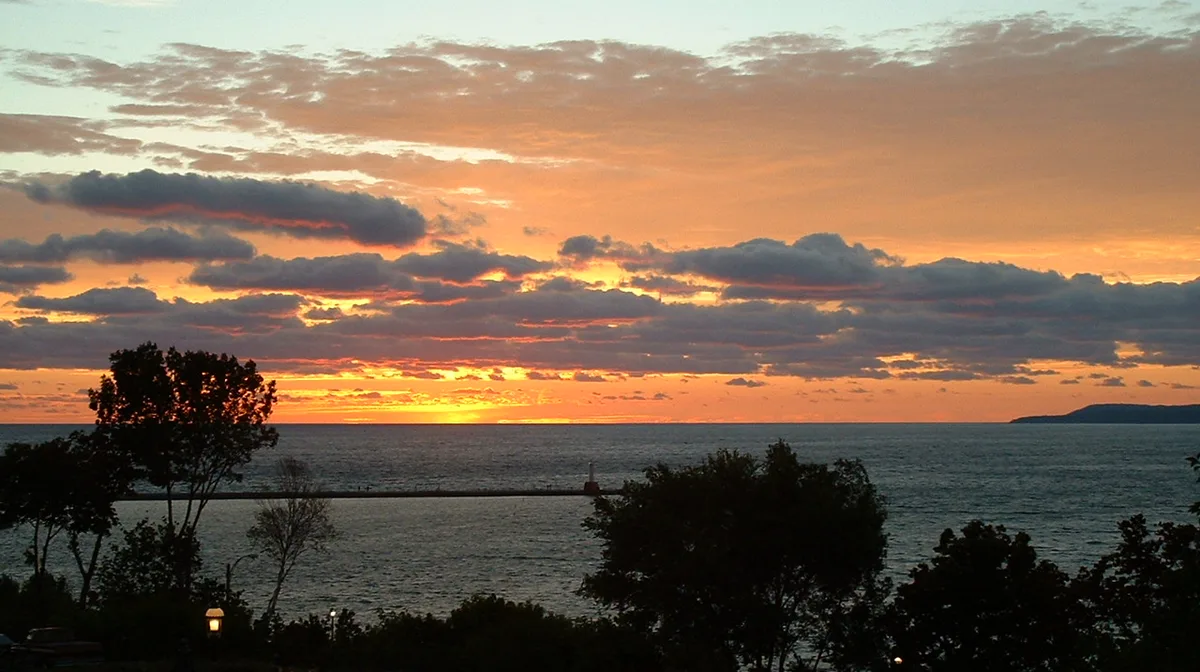
A few of the visual fingerprints we lean into when we shoot, brand and market a Petoskey property — courtesy of the open Wikimedia Commons archive.
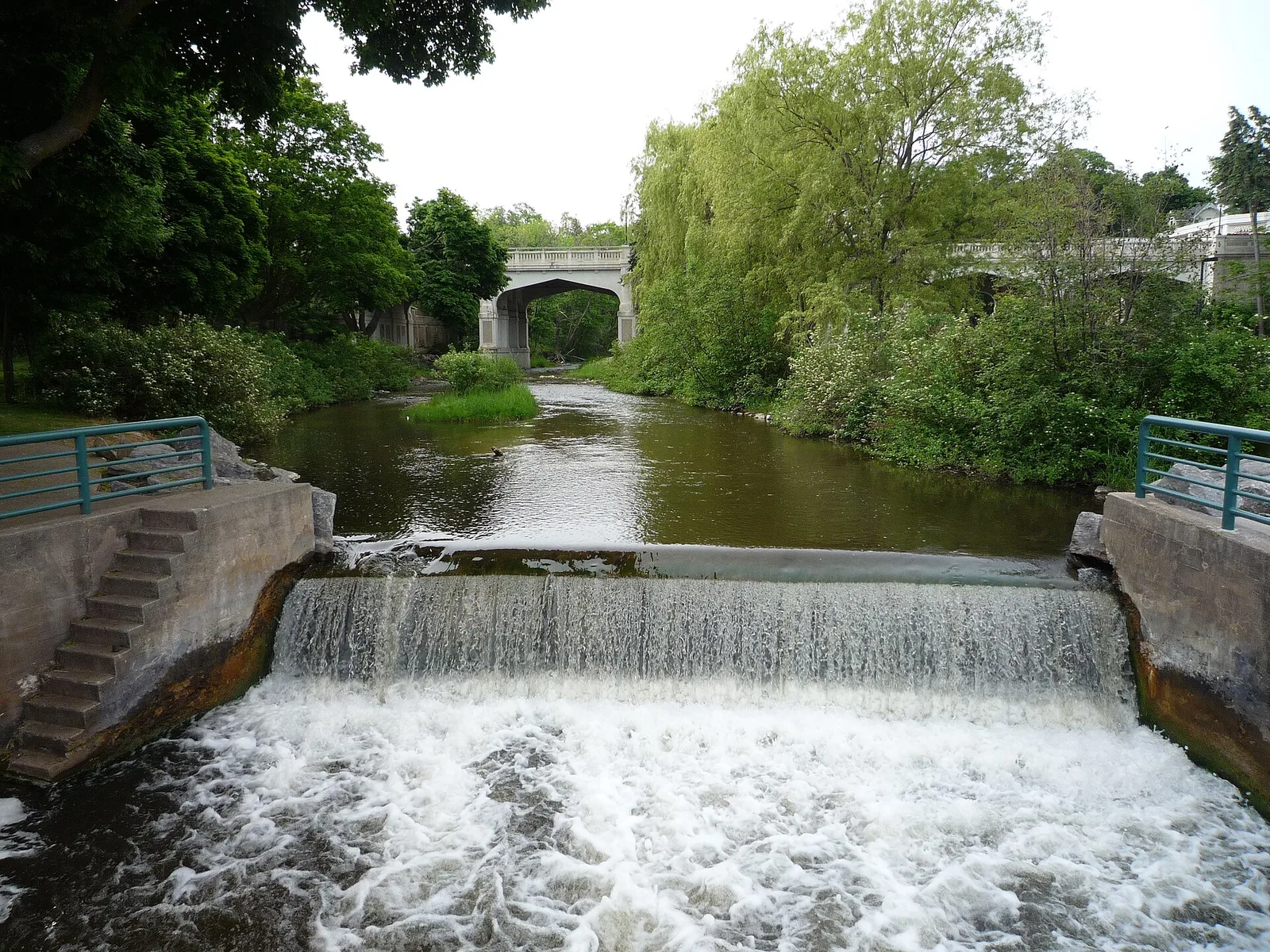
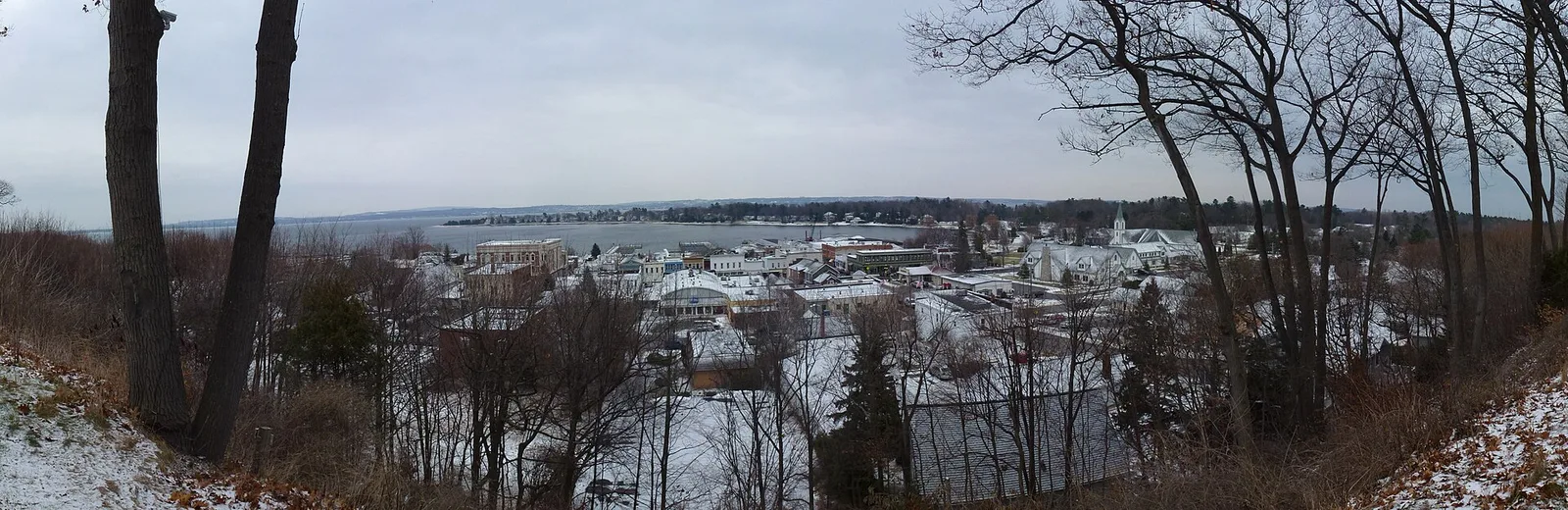
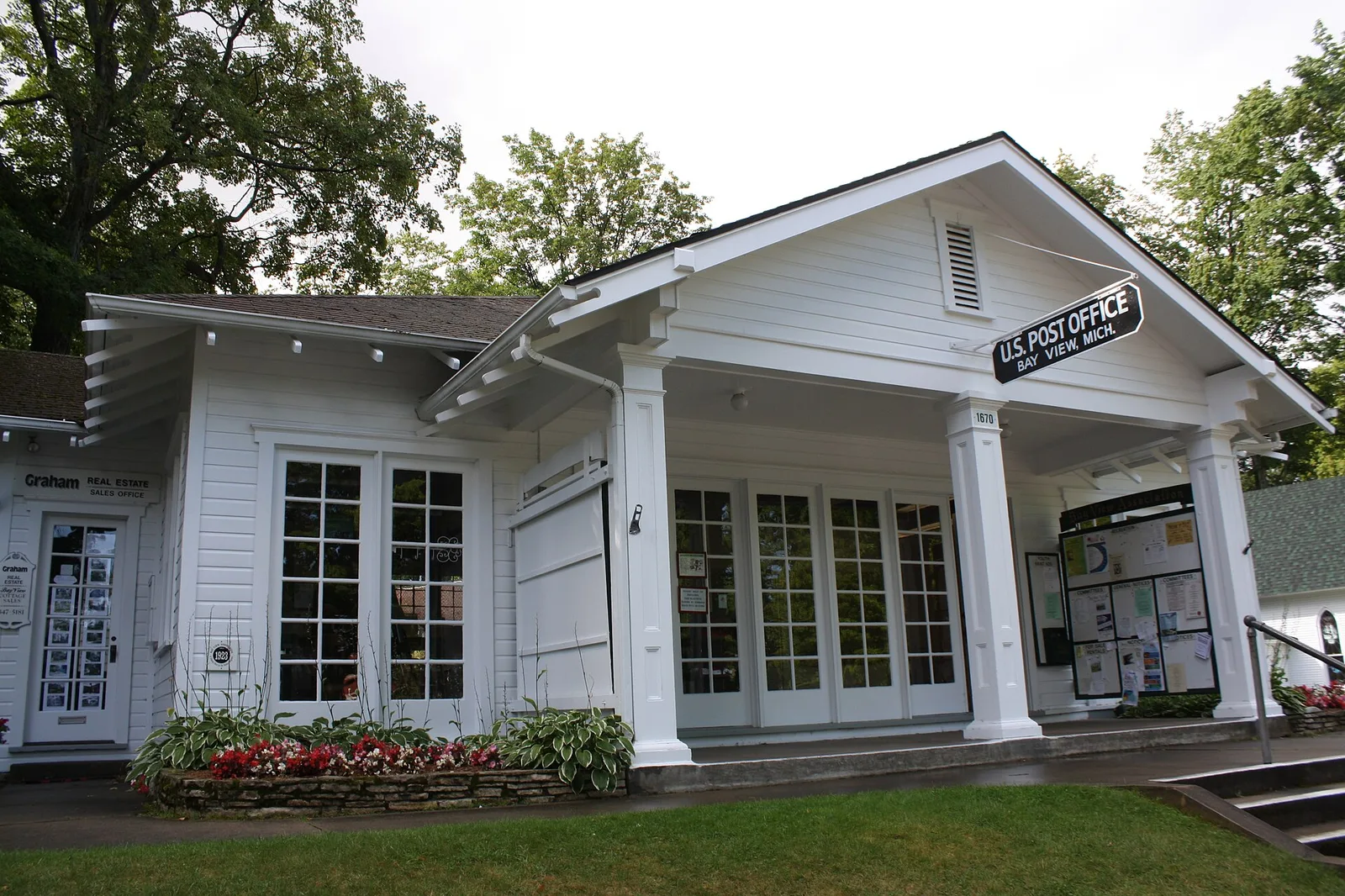
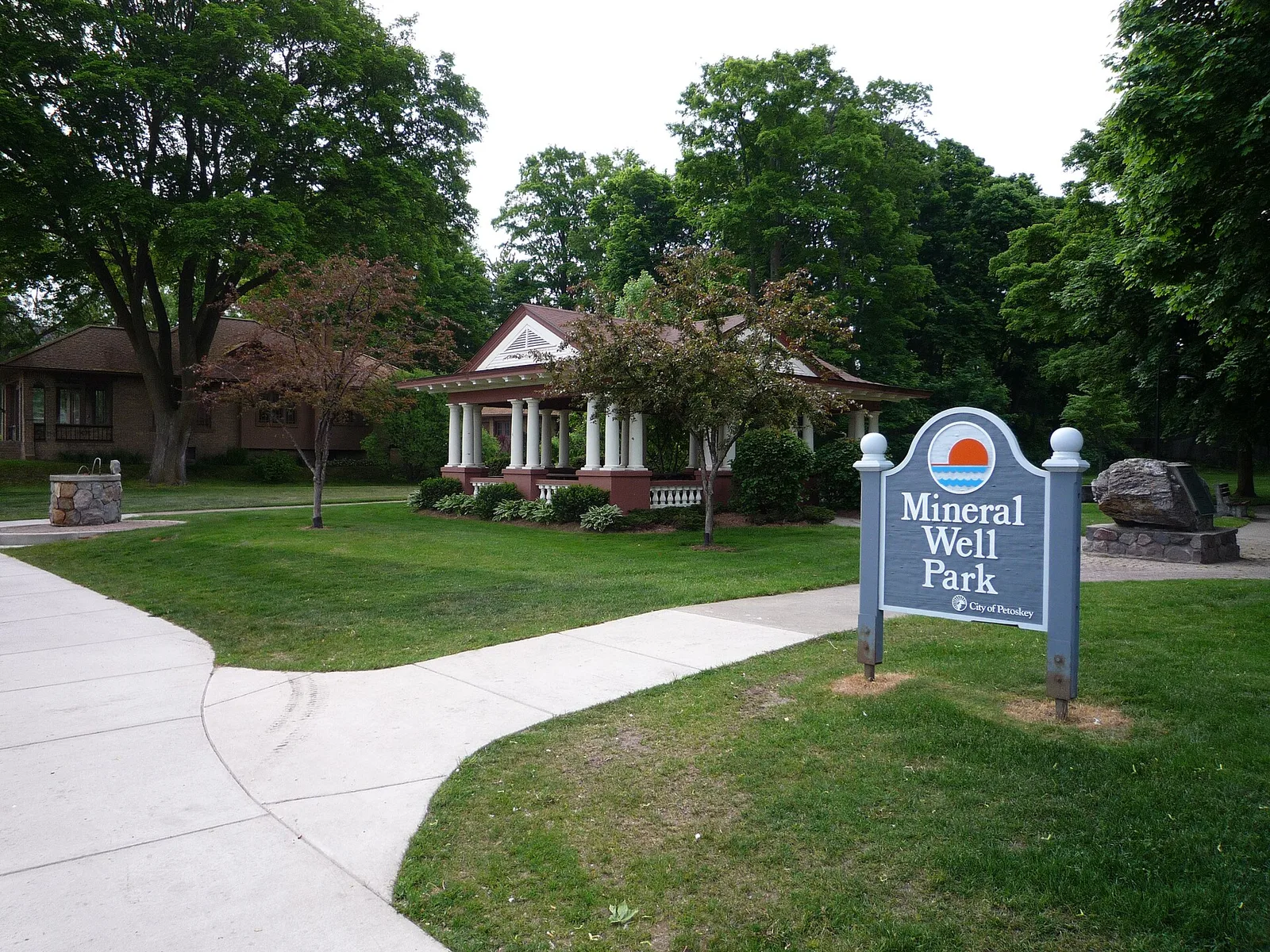
Cavmir markets Little Traverse Bay properties around the bay itself and the fact that this is a two-season market, not one. We photograph in summer for the water and again in winter for the ski traffic to Boyne Highlands and Nub's Nob, because a house shown only in July is invisible to half its potential guests. We are precise about which community you are in — Petoskey, Harbor Springs, Bay Harbor, Walloon Lake, Bay View — because those names carry very different meanings to the Michigan and Chicago families who come here, and nobody who knows the area accepts 'northern Michigan' as an address. Where a property holds a genuine city licence in a capped market, we say so plainly, because scarcity is a selling point and almost nobody uses it. We build a direct booking site so returning families book with you rather than through a marketplace each year, run local search that distinguishes the bay communities from one another, and keep an email list through a long winter. We help position and market your property. We never manage it or touch your keys.
Petoskey takes its name from Ignatius Petosega, an Odawa fur trader whose name is generally rendered as meaning something like rays of dawn or rising sun. The Odawa presence on Little Traverse Bay long predates the town, and the Little Traverse Bay Bands of Odawa Indians remain a federally recognised tribe headquartered nearby.
The town grew in the 1870s and 1880s on lumber and then, decisively, on the railroad and the Great Lakes passenger steamers. Northern Michigan became a summer refuge for people from Chicago, Detroit and St. Louis escaping heat and hay fever, and Petoskey marketed itself explicitly on its clean air. The Gaslight District downtown, with its brick commercial buildings running down toward the bay, is a direct product of that boom.
Bay View, adjacent to Petoskey, was founded in 1875 as a Methodist camp meeting and developed into a Chautauqua community — a summer colony of Victorian cottages with a programme of lectures, music and religious instruction. It is a National Historic Landmark and it still runs a summer season. It is also a reminder that the summer-community model here is a hundred and fifty years old.
Ernest Hemingway spent boyhood summers at the family cottage on Walloon Lake from 1899 onward and set several of the Nick Adams stories in this country. The connection is real rather than manufactured, and the local landscape appears in the work with recognisable specificity.
The Petoskey stone — fossilised colonial coral from a Devonian reef that covered this area some 350 million years ago — was named the state stone of Michigan in 1965 and is found along these shores. People still walk the beaches looking for them, which is a genuinely unusual thing for a beach town to have as an activity.
Skiing came in the twentieth century, with Boyne Highlands and Nub's Nob behind Harbor Springs, giving the area a second season that most Great Lakes summer towns never developed.
Petoskey and Little Traverse Bay run two genuine seasons, and pricing them as one is the most common error here.
Summer is the primary season, from late June through Labor Day, with July and August the peak. Demand is driven by the bay, the beaches, golf, the Tunnel of Trees drive and the general northern Michigan summer migration from Detroit, Chicago and Grand Rapids.
Winter is real. Boyne Highlands and Nub's Nob behind Harbor Springs are serious ski areas by Midwestern standards, and the holiday period, Presidents' weekend and good snow cycles produce genuine demand. A property marketed only in summer photography is invisible to that entire market.
Autumn is the underpriced season. The Tunnel of Trees on M-119 north from Harbor Springs is one of the best colour drives in the Midwest, and early October brings people specifically for it. Most calendars have already stepped down by then.
Community matters to rate as much as the house does. Petoskey, Harbor Springs, Bay Harbor, Bay View and Walloon Lake are distinct markets with different price expectations, and guests who know the area choose between them deliberately.
Where a property holds one of the city's limited licences, that scarcity should inform the rate. A capped market with 40 licensed rentals is a fundamentally different competitive environment from an open one, and pricing as though you are competing with unlimited supply gives away the position.
Late June through Labor Day is the summer peak, with July and August strongest. September is quiet and pleasant. Early October brings the Tunnel of Trees colour season, which is a real and short demand window. Late October and November are the deep shoulder. The holiday period through March is the ski season, driven by Boyne Highlands and Nub's Nob, with Presidents' weekend and good snow cycles the strongest dates. April and May are quiet as the snow goes and before the bay warms. Two seasons, two gaps, and a short colour spike that most owners miss.
Petoskey is a capped market and understanding that is the difference between a viable plan and a wasted purchase.
The City of Petoskey operated a moratorium on new short-term rentals and then lifted it, adopting an ordinance framework that established a cap of 40 short-term rentals within the city. At adoption, 33 previously licensed rentals were grandfathered in, leaving roughly seven available slots, and the ordinance steered rentals toward commercial rather than residential districts. That built on a 2014 ordinance which had already restricted new rentals to business districts. The city council has continued to amend the short-term rental chapter of its code since, so the precise numbers, mechanics and any waiting-list arrangements must be confirmed against the current ordinance rather than a news report or a summary.
Outside the city, different authorities govern. Harbor Springs administers its own zoning ordinance. Bay Harbor is a separate development with its own arrangements. The Emmet County townships each set their own rules, and township-level regulation in northern Michigan has been actively contested in recent years.
Across Emmet County municipalities, occupancy is commonly limited to two persons per bedroom plus two additional guests, and fire and life-safety inspection is a common requirement, with inspectors checking smoke detection, extinguishers and clearly defined egress from every sleeping area.
Michigan has no statewide short-term rental preemption law. Legislation to preempt local regulation has been introduced repeatedly in Lansing over the past several years and has not been enacted, which means local rules govern and can change. Owners should follow that state-level debate, because a preemption law would transform this market overnight.
Confirm current requirements with the City of Petoskey, or with Harbor Springs or the relevant township, for your specific parcel.
If you hold a licence in a capped market, lead with it. Petoskey has 40 slots and most are grandfathered. That is a genuinely scarce position and almost nobody says so in their marketing. It reassures guests, it matters to a future buyer, and it distinguishes you from anyone operating in the grey.
Name your community precisely. Petoskey, Harbor Springs, Bay Harbor, Bay View, Walloon Lake and Boyne all mean specific and different things to the Michigan and Chicago families who come here. 'Northern Michigan' is not an address and it costs you the searches that matter.
Photograph both seasons. This is a two-season market and a listing with only summer photography is invisible to the ski guest, while a listing with only snow is invisible in July. Two shoots, six months apart, is the highest-return work most properties here can commission.
Market the Tunnel of Trees in early October specifically. M-119 north from Harbor Springs is one of the best colour drives in the Midwest and it produces a short, sharp demand window that most calendars have already discounted through.
Write the Petoskey stone properly. It sounds like a small thing and it is a genuine activity that families plan around — fossilised Devonian coral, found on these shores, the state stone since 1965. Tell guests where and when to look, particularly after a storm, and provide a bucket.
Be honest about the bay's temperature. Lake Michigan in June is cold, in August it is pleasant, and guests arriving with a swimming plan should know which they are getting.
Explain the drive and the airport. Pellston Regional is close and has service, and most guests do not know it exists. Drive times from Detroit, Chicago and Grand Rapids are the arithmetic people are doing.
The cap is the fundamental challenge inside the city. With 40 licences and most grandfathered, a buyer cannot assume they can rent a property they purchase in Petoskey, and any purchase thesis needs the licence position confirmed in writing before closing.
The second is fragmentation. Petoskey, Harbor Springs, Bay Harbor and the townships all regulate differently, which makes generic advice about the area close to useless.
The third is the two gaps in the calendar. April, May, late October and November are genuinely quiet, and a two-season market still has four thin months.
The fourth is state-level uncertainty. Preemption legislation has been introduced repeatedly in Michigan and has not passed. If it ever does, the scarcity value of a capped-market licence changes substantially — in the owner's disfavour. That is a risk worth holding consciously rather than assuming away.
Northern Michigan property has a clear seasonal risk profile and one dominant claim type.
Freeze and ice are the main winter exposures. A property left empty through a northern Michigan January is a burst-pipe risk, and ice dams on roofs after heavy lake-effect snow are common and expensive. Carriers will ask about heating, monitoring and winterisation, and the answers change your terms.
Snow load matters structurally in this part of the state, and roof age and condition affect both premium and settlement.
Waterfront properties on Little Traverse Bay have their own considerations. Great Lakes water levels have swung substantially over the past decade, and periods of high water have caused genuine shoreline erosion and damage to seawalls, stairs and structures near the bank. Establish the position for your specific shoreline.
Short-term rental use must be disclosed, and liability should reflect guests using stairs down to a shore, docks, hot tubs and, in winter, ice.
Emmet County municipalities require fire and life-safety inspection, and meeting those standards properly is both a compliance matter and an insurance one.
Work with a broker who writes seasonal property in northern Michigan specifically.
Michigan taxes short-term lodging through use tax rather than a dedicated statewide lodging tax, and counties may add an accommodations tax.
Michigan applies use tax to transient accommodation rentals of less than thirty days. Emmet County levies an accommodations tax that funds local tourism promotion. Together those are the principal charges on a stay, and the combined figure should be confirmed with Emmet County and the Michigan Department of Treasury rather than taken from a summary, because county accommodation tax arrangements are set locally and are revisited periodically.
Booking platforms collect and remit some components in Michigan depending on the arrangement in force, but registration remains your obligation and direct bookings are generally handled entirely by you. Because county accommodations taxes are administered locally, they are more often the owner's responsibility than the state component is — check specifically rather than assuming a platform covers everything.
Where a property sits inside the City of Petoskey and holds one of the limited licences, there may be licence fees and inspection charges on top of the tax position. Those are costs of operating rather than taxes, but they belong in the same budget.
Confirm current rates and obligations with the Michigan Department of Treasury and Emmet County, and speak to your accountant about how the income is treated on your return.
The financing conversation in Petoskey has one question that comes before all the others: can this property legally be rented short-term at all?
Inside the city, with a cap of 40 licences and most of them grandfathered, the answer for a given property may be no. A lender relying on projected rental income is relying on a legal right that must actually exist and must survive the transaction. Get the licence position confirmed in writing by the city before you close, not after.
Outside the city, establish which township or municipality governs and what its rules are, because northern Michigan township regulation has been actively contested and varies substantially over short distances.
Beyond that, the usual northern considerations apply. Seasonality concentrates income into two periods with two quiet gaps. Waterfront parcels raise questions about erosion, shoreline structures and Great Lakes water levels. Older cottage stock raises questions about winterisation, wiring and septic. Condominium and association purchases carry their own rules on letting, which can be tighter than the municipality's.
Second-home and investment-property financing differ in rate, down payment and occupancy expectation, and mixed personal-and-rental use should be described honestly at application.
This is general information rather than financial advice — confirm the specifics with your mortgage broker, your accountant and the relevant municipality.
The single biggest variable for Petoskey owners is not local at all. Michigan has repeatedly considered legislation that would preempt local short-term rental regulation, and it has repeatedly not passed. If such a law were enacted, a capped market like Petoskey would change fundamentally, and the scarcity value that currently attaches to a licence here would erode. Owners should watch Lansing as closely as they watch the city council.
Locally, the direction has been toward restriction and formalisation. The moratorium, the cap, the steering of rentals to commercial districts and the continuing amendments to the ordinance all point one way. Supply inside the city is not going to grow.
The townships and Harbor Springs are where the volume is and where the regulatory action will continue. Owners outside the city should expect their rules to be revisited too.
On demand, the fundamentals are strong. Little Traverse Bay is the premium tier of Michigan's summer market, the ski areas give it a genuine second season that most Great Lakes towns lack, and the drive market from Detroit, Chicago and Grand Rapids is large and loyal. Great Lakes water levels are the physical variable worth following, having swung enough over the past decade to affect shorelines materially.
For an owner, the strategic answer in a capped, fragmented market is the same as in Crested Butte: stop competing on price with unrestricted inventory, lean on the licence and the location, and own the guest relationship directly.
Little Traverse Bay is the good bit of Michigan, and the people who come here every summer have known it for a hundred and fifty years. Bay View was founded as a Methodist camp meeting in 1875 and turned into a Chautauqua community of Victorian cottages that still runs a summer programme. Hemingway spent his boyhood summers on Walloon Lake and put this country into the Nick Adams stories. None of that is invented for tourists.
The Gaslight District in Petoskey is a genuinely handsome downtown — brick, nineteenth-century, walkable, running down to a bayfront park where the sunsets over the water are the reason a lot of people first fall for the place.
The Tunnel of Trees, M-119 running north from Harbor Springs along the bluff, is a narrow road with no centre line and trees closing overhead, and in early October it is one of the best drives in the Midwest. It is a short season and a real one.
We like the Petoskey stones most of all, because they are the sort of detail that turns a beach walk into an activity. Fossil coral from a reef that was here 350 million years ago, broken up by glaciers, washing up on these shores and essentially nowhere else. Michigan made it the state stone in 1965. Guests will spend a happy hour looking, and telling them how — go after a storm, look for the pattern when the stone is wet — costs you nothing and is exactly the kind of local knowledge that makes people come back.
A great property in Petoskey doesn't just want a listing — it wants a point of view, an audience, and a brand the city itself would recognise.
Eight things worth telling a Little Traverse Bay guest — the stones, the tunnel, the two ski hills, and which town they are actually in.
Fossil coral, found on these shores and almost nowhere else. Best after a storm, and the hexagonal pattern only shows when the stone is wet. Leave guests a bucket and tell them where to walk.
A walkable nineteenth-century downtown running down to the bay, with the best sunset in the area from the park. Where to send guests on their first evening.
North from Harbor Springs along the bluff — narrow, no centre line, trees closing overhead, and spectacular in early October. Allow more time than the distance suggests.
Two serious ski areas behind Harbor Springs, close together and different in character. If your property works in winter, give guests the drive times to both.
The family cottage was on Walloon and the Nick Adams stories are set in this country. A short drive south and a genuinely good afternoon for the right guest.
A paved trail running along the bay between Charlevoix, Petoskey and Harbor Springs, mostly separated from traffic and largely flat. The best way to see the shoreline.
A National Historic Landmark next to Petoskey, founded in 1875, still running a summer programme of music and lectures. Worth a walk even outside the season.
Lake Michigan in June is genuinely cold and in August is pleasant. Tell guests which they are getting so nobody arrives with the wrong plan.
The following are composite, illustrative examples drawn from patterns common in capped resort markets. They are not descriptions of specific clients or properties.
A grandfathered licensed rental in a city capped at 40, competing on nightly rate against township inventory with no licence constraint and no mention anywhere of its own position.
Rebuilt the positioning around the licence and the walkable downtown location, reshot the property in both seasons, and launched a direct booking site carrying the full story.
The property moved out of a price comparison it had no reason to be in, and shoulder-season discounting eased.
A property within fifteen minutes of two ski areas whose entire photo set and copy were built around July, leaving the winter calendar effectively unsold.
Commissioned a winter shoot, rewrote the listing to give the ski season equal weight with drive times to Boyne Highlands and Nub's Nob, and marketed the holiday period and Presidents' weekend specifically.
Winter moved from an afterthought to a genuine second season, and the property stopped depending entirely on eight summer weeks.
A property that discounted from Labor Day onward, including the early October week when the Tunnel of Trees draws visitors specifically for the colour.
Identified and priced the colour window separately, wrote the drive properly with route and timing, and marketed it to past summer guests as a distinct autumn trip.
A short, high-demand window began earning at rates that reflected it, rather than being absorbed into a general shoulder discount.
Demand in Petoskey peaks around July through August and runs quietest around April and November. Here is how the year actually books — and what to do about each stretch of the calendar.
Two real seasons. Late June through Labor Day is the summer peak on Little Traverse Bay, with July and August strongest. The holiday period through March is the ski season behind Harbor Springs at Boyne Highlands and Nub's Nob. A listing photographed in only one of them is invisible to half its market.
Early October is the sharp one: the Tunnel of Trees on M-119 is one of the best colour drives in the Midwest and produces a short, high-demand window most calendars have already discounted through. September is quiet and pleasant and also under-used.
April, May, late October and November are genuinely thin, which is the price of a two-season market. Longer stays where they come, and otherwise the right window for maintenance and for shooting the season you do not currently have in your gallery.
Summer books several months ahead and returning families renew earlier. Winter is shorter and partly snow-dependent. The October colour window moves late and is the least contested premium demand in the market.
Full weeks in July and August, shorter ski trips in winter, and long weekends in the shoulder. Because the market has two peaks and two gaps, seasonal minimums work far better here than a single year-round rule.
Whole houses with a bay view or genuine walkability to the Gaslight District do best in summer, and proximity to Boyne Highlands or Nub's Nob does the same in winter. Naming your community precisely matters more here than in most markets.
Start with photography that shows what a guest actually gets here, then write the listing around a real itinerary rather than a feature list. Build a direct-booking site so returning guests can come back without going through a platform, and keep an email list segmented by season so you can reach last year's visitors before the calendar opens. Local search matters more than people expect in a market this size, because guests search the destination and the attraction rather than the word rental. A marketing agency layer handles the photography, the listing copy, the direct-booking site and the local SEO as one system instead of four disconnected jobs.
Two seasons. Late June through Labor Day is the summer peak on Little Traverse Bay, and the holidays through March is the ski season behind Harbor Springs. Early October brings the Tunnel of Trees colour window, which is short and usually under-priced. April, May and November are genuinely quiet.
Summer books several months ahead and returning families renew earlier still. Winter is shorter and partly snow-dependent, with holiday weeks selling first. The October colour window moves late and is the least contested premium demand in the market.
A strong drive market from Detroit, Grand Rapids, Chicago and Lansing. Pellston Regional is close by and largely unknown to first-time visitors, so mentioning it broadens your reachable audience considerably.
A genuine bay or water view, a hot tub and secure ski storage all convert, and plowed parking matters in winter. A fireplace makes the shoulder seasons sellable. Beyond amenities, name your community precisely, because Petoskey, Harbor Springs, Bay Harbor and Bay View mean different things here.
Run your Airbnb, Vrbo, or website through Cavmir's free grader. It checks the things that decide whether guests book in Petoskey — photos, listing copy, page speed, local search — and shows you where bookings leak. Takes about a minute, and there's no sales call attached.
If the report says your booking engine is the weak link, that's fixable: a direct-booking website of your own means repeat guests stop paying platform fees to come back to you. That's the work Cavmir does — see Airbnb website design in Petoskey.
Send us the listing and we'll tell you what we'd change. Not a pitch deck — a straight read on your photos, your title, your rates against the Petoskey comp set, and whether a direct-booking site would pay for itself.
You'll hear back from a person, usually inside one business day. If we don't think we can move your numbers, we'll say so. Cavmir is a short-term rental marketing agency — we position and market properties, we don't manage them.
Talk to Cavmir today. We'll show you exactly what your Petoskey property is leaving on the table — and how fast we can change that.
Book a Free Strategy CallPhotography via Wikimedia Commons (images resized and cropped): Little Traverse Bay at sunset by No machine-readable author provided. Bkonrad (CC BY-SA 3.0) · 2009-0619-Petoskey-BearRiver1 by Bobak Ha'Eri (CC BY 3.0) · Harbor Springs Michigan view from Bluff in Winter by John O'Neill (CC BY-SA 3.0) · Bay View Michigan Post Office by Royalbroil (CC BY-SA 3.0) · 2009-0619-Petoskey-MineralWellPark by Bobak Ha'Eri (CC BY 3.0).
