


Coffee & First Light
Through the gate before seven
Wildlife is out early and the roads are empty. Tell guests where coffee opens, how long the gate queue gets by nine in July, and that leaving at six changes the whole day.

Expert short-term rental marketing to grow your bookings and nightly rate in West Yellowstone, Montana, USA.
Sixteen services, one team. Everything below is built in-house and scoped to your property and market. Most owners start with the 12-Step System.
Every engagement is quoted to your portfolio. These are the ready-made scopes owners pick most — our Fall Special (55% off list or more) is already applied to the website, King Broker, Hotels and à la carte scopes. A clear proposal within 48 hours.
The work is public. Selected engagements and what changed — and reviews from the owners and managers behind them.
* Market averages from AirDNA and STR market reports. A single home's numbers depend on its size, its location and how it is marketed.
Cavmir is an Airbnb marketing agency. We build the brand, the direct-booking website and the marketing for short-term rentals in West Yellowstone.
West Yellowstone is a grid of streets that stops dead at the boundary of the first national park in the world. The west entrance is at the end of the main street, which means a guest staying here is inside Yellowstone in about a minute rather than the forty-five it takes from most gateway towns, and that single fact is worth more in marketing terms than anything else you can say about a property in this town. The place exists because the Union Pacific ran a rail spur up here in 1908 to deliver tourists to the park, and the old depot is a museum now. Summer is what everyone pictures — bison on the road, geysers, the Madison River, traffic. Winter is what almost nobody outside Montana understands: the park road closes to cars and reopens as a groomed snow route, the town becomes one of the country's main snowmobile and snowcoach hubs, and a property here can run a genuine second season while comparable gateway towns sit empty.
The demand here is bimodal and most owners only market half of it. Summer runs hard from June through August, driven by park visitation that has trended up for years and by a west entrance that is the busiest of the five. Winter runs from about mid-December through early March on snowmobiling, snowcoach tours into the park, cross-country skiing on the Rendezvous trails and wildlife viewing when the animals come down. Between those, the shoulder weeks in April-May and October-November are genuinely quiet, because the park's roads are in transition and the town has almost no other economy. That shape rewards owners who price and market three distinct products and punishes owners who assume a single annual occupancy figure. Elevation matters operationally: at over six and a half thousand feet with some of the coldest recorded temperatures in the lower forty-eight, winterization and heating are not afterthoughts. On regulation, the town requires a permit for short-term rentals and applies zoning restrictions that prohibit non-owner-occupied tourist homes in at least one designated area, so the specific parcel decides the business.
Nearby Markets: Big Sky | Island Park | Whitefish
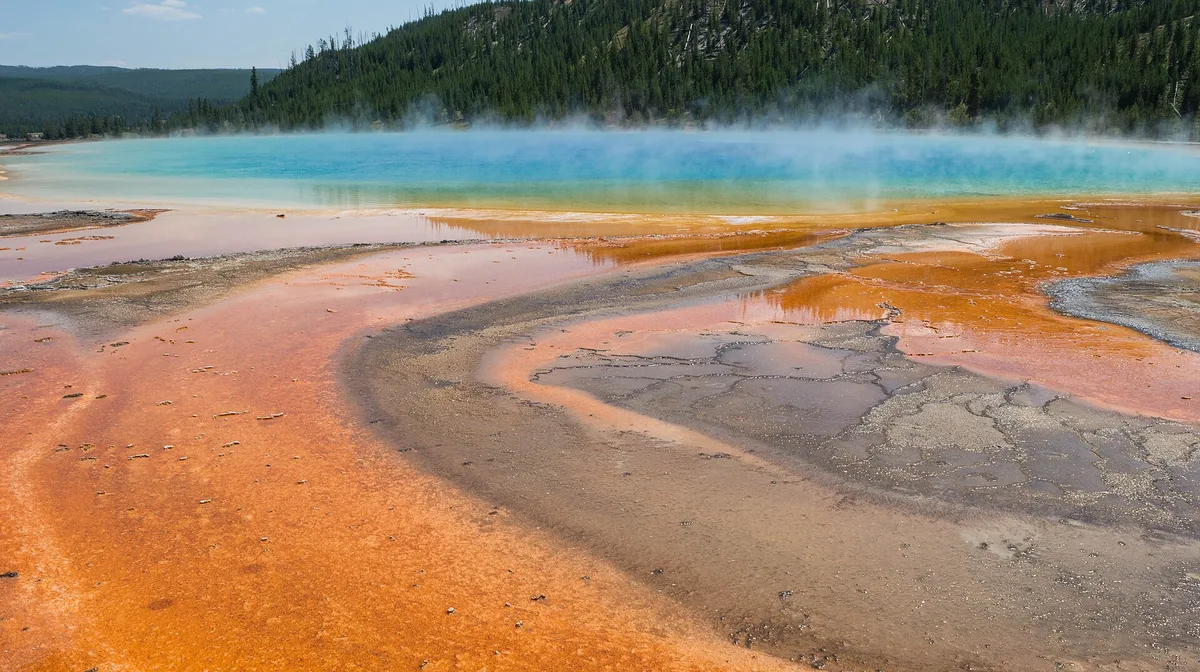
A few of the visual fingerprints we lean into when we shoot, brand and market a West Yellowstone property — courtesy of the open Wikimedia Commons archive.
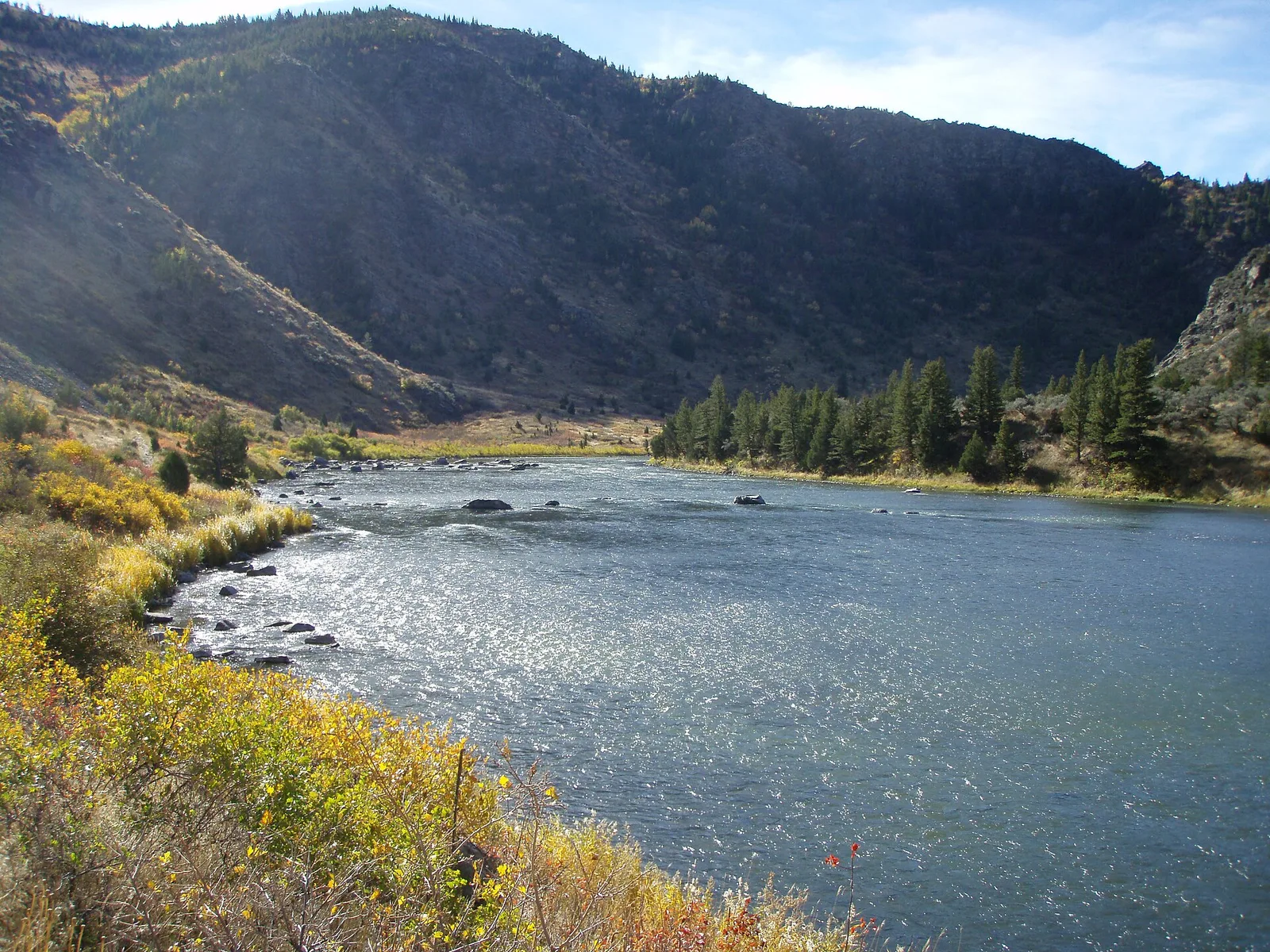
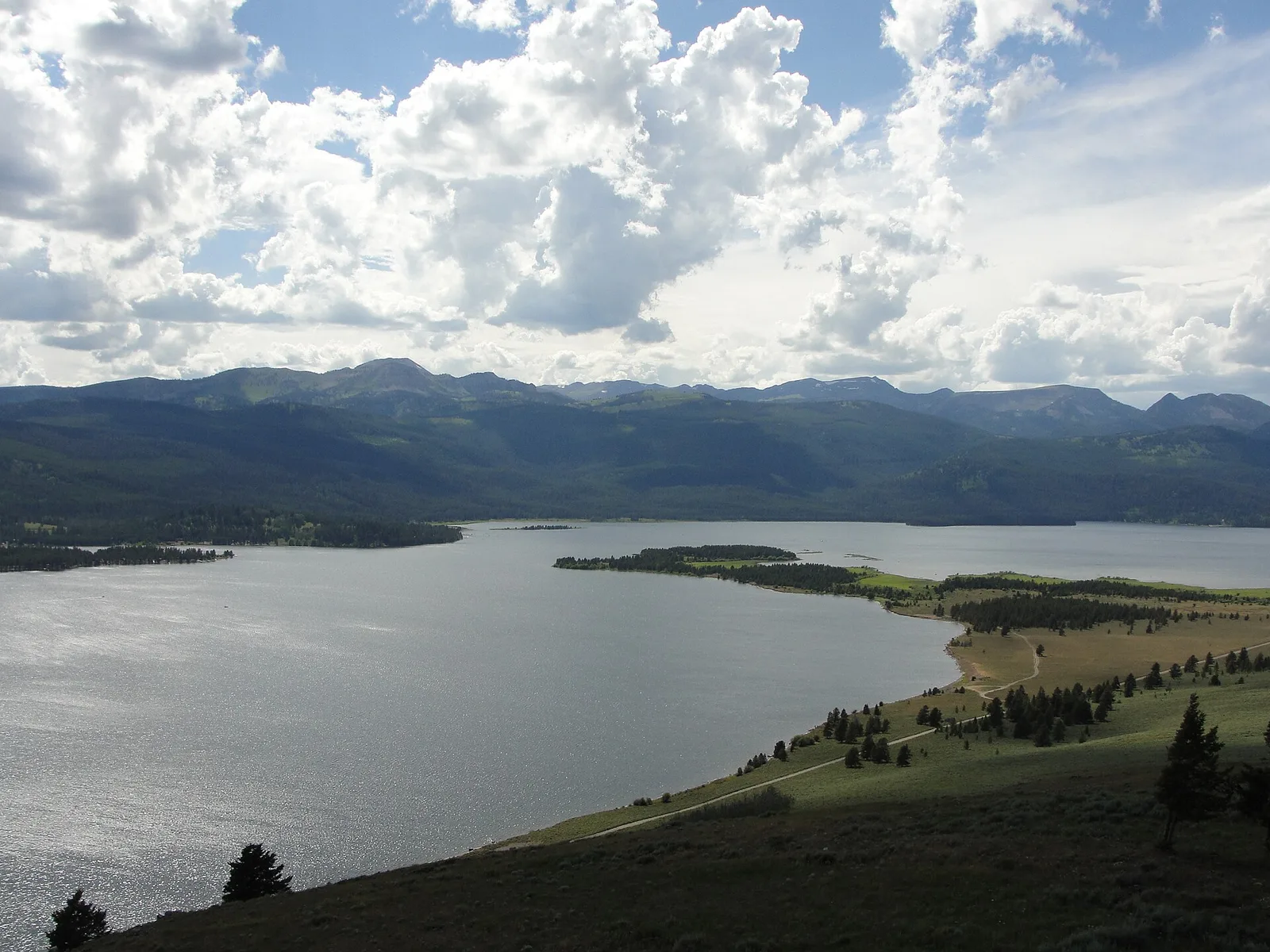
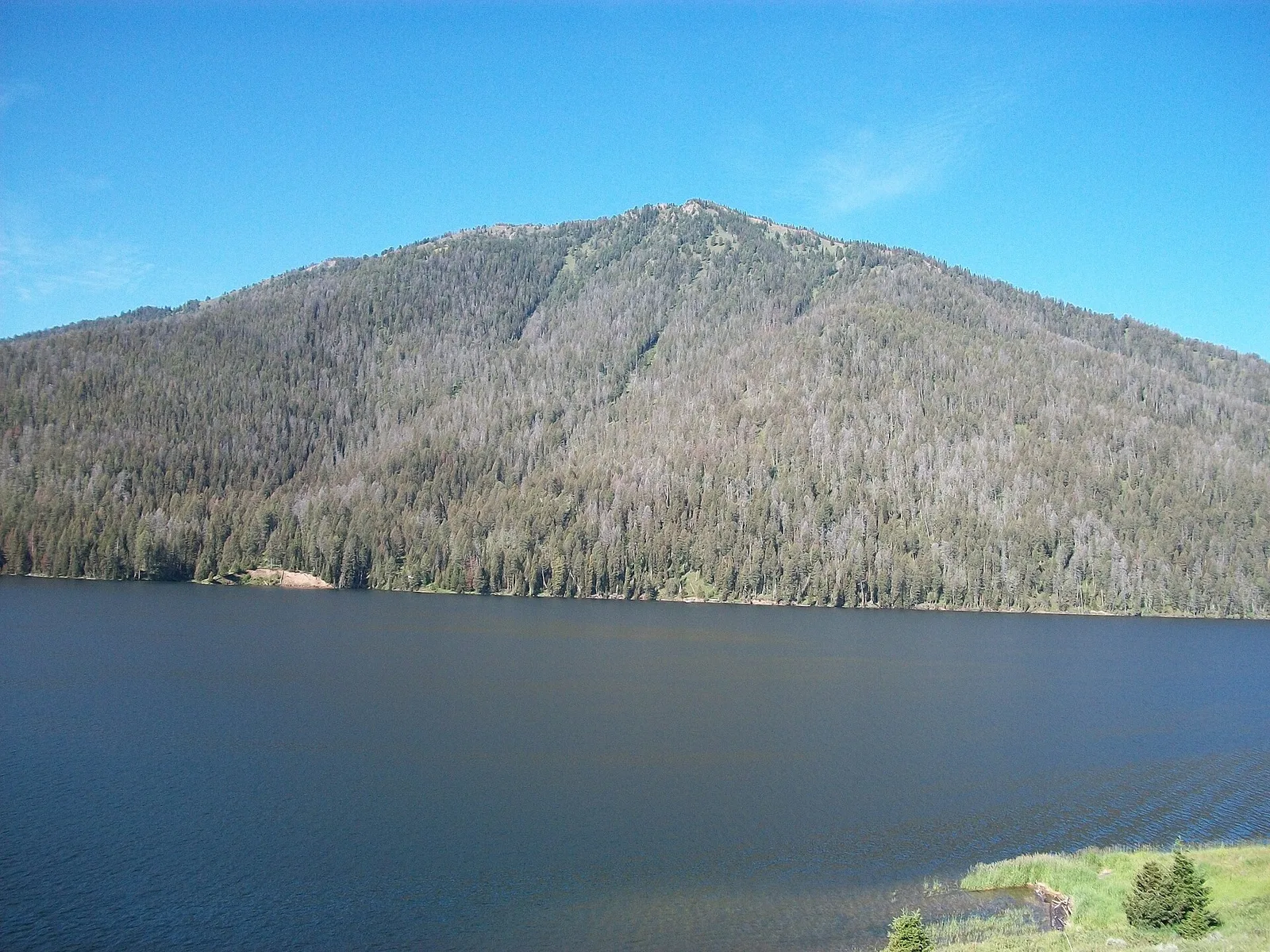
Cavmir markets West Yellowstone properties as two seasons, because that is what they are. We photograph the cabin in both — summer light and deep snow — and we build separate image sets and separate copy so the property is findable by a snowmobiler in December and a family with a park itinerary in July. We lead with the thing that actually converts here, which is the distance to the west entrance stated honestly in minutes. We write the listing and the site around real trips: the geyser basin loop, the Lamar Valley wildlife day, the snowcoach tour, the Madison River, where to eat when everything closes at nine. We build your direct-booking site and rank it for west entrance, snowmobile and park gateway searches, then set up the email flow that a market with this much repeat family traffic rewards heavily. We will confirm your zoning and permit position before we write a word. We help position and market your property. We never manage it or touch your keys.
Yellowstone became the first national park in the world in 1872, and for its first thirty-odd years getting to the western side of it was a serious undertaking. Then the railroad solved it. The Union Pacific pushed a branch line up through Idaho and Montana and reached the park boundary in 1908, and a town appeared at the end of the track more or less immediately, because that is what happened at the end of tracks. The depot that went up in 1909 is still standing on the main street and is now the Museum of the Yellowstone. The settlement went through a couple of names — Riverside, then Yellowstone — before settling on West Yellowstone in 1920.
The town has never had any purpose other than the park. There is no agriculture at six and a half thousand feet on a lava plateau, no mine, no mill. There is a grid of streets that stops at the park boundary and a west entrance at the end of it, and everything in the town exists to move people through that gate. When the rail passenger service ended in the 1960s the automobile had already taken over, and the west entrance became and remains the busiest of Yellowstone's five.
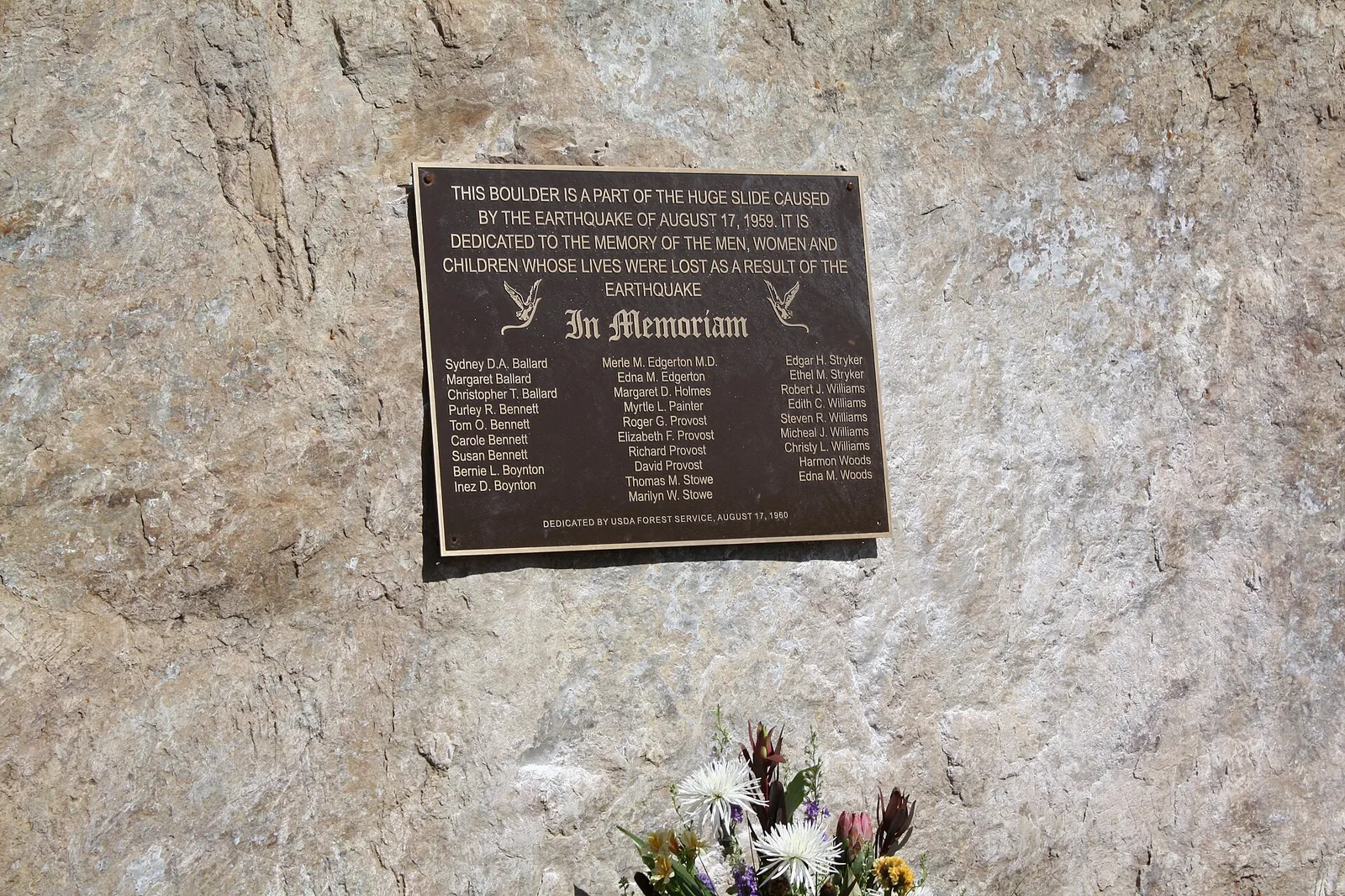
The defining local event of the twentieth century was not in the park at all. Just after eleven at night on 17 August 1959, a magnitude 7.3 earthquake struck at Hebgen Lake, a few miles north-west of town. An entire mountainside came down into the Madison River canyon, burying a campground and killing twenty-eight people, and the slide dammed the river so completely that a new lake formed behind it within weeks. It is still there. Earthquake Lake, with dead trees standing in it, is a twenty-five-minute drive from town and remains one of the more sobering places in the northern Rockies.
The other thing that made modern West Yellowstone was snow. When the park's roads began being groomed for oversnow travel rather than plowed, the town gained a second season that almost no other park gateway has, and it became one of the country's principal snowmobile and snowcoach hubs.
West Yellowstone is a two-season market with two hard closures in between, and pricing has to respect that shape rather than average it. Summer runs June through August with July as the clear peak, and demand at the busiest entrance to the most visited park in the region supports real rates — this is not a discounting market in July. Winter runs from roughly mid-December, when the park's oversnow season opens, through early March, and it is priced far below its value by most owners simply because they have never thought of it as a season. Snowmobilers, snowcoach passengers and cross-country skiers book multi-night stays, spend heavily locally, and are almost entirely un-marketed to by individual rental owners. Between those two seasons, April-May and late October-November are genuinely dead, because the park roads are in transition and there is no other reason to be here. Do not try to fill those weeks by cutting the peak. Price the shoulders for longer stays and locals, and price the two real seasons properly. One more specific: state your distance to the west entrance in minutes in the first line of your listing, because in this town proximity to that gate is the product, and a rate premium for it is defensible in a way that a premium for granite countertops is not.
Summer runs June through August with July at the top, carried by park visitation through the busiest of Yellowstone's five entrances. September is excellent and quieter — the elk are bugling, the crowds thin, the light is better — and is chronically underpriced. The park's oversnow season opens around mid-December and runs to early March, giving the town a genuine second peak on snowmobiling, snowcoach tours and Nordic skiing. The two dead windows are April into May and late October into November, when the park roads are neither driveable nor groomed and the town nearly closes. Plan a business around two seasons and two shutdowns rather than an annual occupancy figure, and price accordingly. An owner who markets only summer is running roughly half of the available business here.
West Yellowstone is an incorporated town and it regulates short-term rentals directly. Expect a permit requirement rather than an open market: the town requires operators to obtain a permit before renting, and applies operating standards covering the ordinary neighbourhood issues — noise, parking and trash — that a small grid town with heavy visitor traffic has to manage.
The provision that decides whether a property is a business is zoning. The town restricts non-owner-occupied tourist homes in at least one designated area, including the district known as the Madison Addition, where they are prohibited outright. That is the sort of rule that does not appear in a listing agent's summary and does appear in the town code, and it means the first question about any West Yellowstone purchase is not what the house is like but which zone it sits in and what that zone permits. Get the answer from the town's planning office in writing before you make an offer.
Montana does not have a statewide short-term rental preemption of the kind Idaho and Arizona have adopted, so the town's authority here is real. Verify current permit requirements, fees, renewal mechanics and any occupancy standards directly with the Town of West Yellowstone rather than relying on a third-party summary, and check again at renewal.
On tax, Montana has no general sales tax but taxes lodging heavily. The state levies a lodging facility use tax and a lodging facility sales tax, each at four percent, for a combined eight percent on stays of under thirty days. On top of that, West Yellowstone is a resort community and levies a local resort tax, which under Montana law is capped for the base rate with an additional increment available for infrastructure if approved by voters — the effective total for a guest here runs into double digits. Register with the Montana Department of Revenue and with the town, understand which platform remits what, and get set up before you open a direct channel.
Lead with the distance to the gate. A guest choosing between West Yellowstone and a town forty-five minutes further out is choosing an extra hour and a half in the car every day of their trip, and the ones who understand that will pay for it. Put it in the first line in minutes. Second, build a winter listing. Separate photographs, separate copy, separate landing page — snowmobile trailer parking, the boot and glove drying situation, the plug for a block heater, how far the rental shops are, what a snowcoach day actually involves. Almost nobody does this and the winter guest is actively looking. Third, be clear about the shutdown weeks so guests do not book in early May expecting the park to be open. Fourth, explain the park itself: the geyser basin loop, the drive time to Lamar Valley for wildlife, when to leave to see anything, and the fact that midday in July is the worst possible time to be anywhere popular. Fifth, name the alternatives to the park — the Madison River, Earthquake Lake, the Grizzly and Wolf Discovery Center — because a guest with a rained-out day is otherwise sitting in a rental staring at a wall. Sixth, build an email list, because family park trips repeat on a multi-year cycle and grandparents book them.
The two dead seasons are the central financial reality: this town nearly closes twice a year and no marketing changes that. Elevation and climate make winterization, heating and snow management substantial costs, and West Yellowstone records some of the coldest temperatures in the lower forty-eight. Labour is scarce in a town this small during exactly the weeks you need it. Trades, materials and deliveries cost more and take longer than in a Montana valley town. Zoning restrictions mean not every attractive property can legally be a non-owner-occupied rental. Park policy is an external variable that directly drives demand — entrance systems, road construction, oversnow rules and any move toward reservation systems all affect your calendar. And the town's small residential stock means housing politics can surface here as it has elsewhere.
Insurance in West Yellowstone is a cold-climate property conversation with a seasonal-vacancy problem attached. A standard homeowner's policy will not follow you into short-term rental use, so you need a short-term rental or commercial policy with real liability limits, and hot tubs, decks, exterior stairs, wood stoves and any snowmobile storage or fuel handling should be named specifically. The claims that happen here are freeze and burst pipes, roof snow load, ice damming and water damage, and the risk is highest precisely in the shoulder weeks when the town empties and properties sit unheated. Read what your policy requires during vacancy — heat maintenance, inspection intervals, water shut-off — because those conditions are exactly where denied claims come from in a town that closes twice a year. Wildfire is a real underwriting factor in the greater Yellowstone area and has affected both availability and price. Earthquake is excluded from standard policies and, in a place where a magnitude 7.3 rearranged the landscape within living memory, it is worth an explicit conversation rather than an assumption. Get quotes during diligence and have guest injury, guest property damage, loss of rental income and business interruption written in.
Montana has no general sales tax, which surprises visitors, but it taxes lodging specifically and at a meaningful rate. The state levies a lodging facility use tax and a lodging facility sales tax, each currently four percent, which combine to eight percent on accommodation stays of less than thirty days, administered by the Montana Department of Revenue. On top of that, West Yellowstone is one of Montana's designated resort communities and levies a local resort tax on lodging and other visitor purchases — the base rate is capped under state law with an additional increment available for infrastructure where voters have approved it, and the town has done so. The practical result is a guest-facing rate in double digits, and you should confirm the current combined figure with the town and the state rather than relying on this page. Register with both before your first booking. Booking platforms collect and remit some of this on the reservations they process, but never on direct bookings, so know precisely who remits what and keep platform and direct revenue separated from day one. Montana has a state income tax, which matters for out-of-state owners: rental income sourced here is generally reportable to Montana, and your accountant should look at how a two-season calendar, personal use days and depreciation interact for your structure.
Financing here is conventional in form and benefits from a Montana lender who has seen a two-season gateway market before. The specific underwriting questions are zoning, seasonality and the building. On zoning, confirm before you go under contract that the parcel permits a non-owner-occupied rental — a house in a district where tourist homes are prohibited will not produce the income you underwrote, and that is not a fixable problem. On seasonality, present a realistic two-season pro forma with the shoulder shutdowns visible, because a smoothed annual occupancy figure will not survive review and an honest one is more persuasive. On the building, expect scrutiny of roof age and snow-load capacity, heating system, insulation, freeze protection and any wood stove installation, all of which matter at six and a half thousand feet in a Montana winter. Insurability is a gate: get quotes during diligence and ask about wildfire posture in the area specifically. Second-home and investment loans carry higher rates and larger down payments; debt-service-coverage products underwritten on rental income are available and are often the practical route for an investor, and those lenders will want the town permit and documented rental history across both seasons.
The demand outlook is tied to the park, and the park is not going anywhere. Yellowstone visitation has trended strongly upward over decades and the west entrance is the busiest of the five, which gives this town a structural position no other gateway can take from it. The medium-term questions are all about how the park manages that volume: entrance and reservation systems, road construction cycles, oversnow travel rules and any change to how winter access works would each land directly on this market's calendar, and they are worth following as business inputs rather than as news. On the town's side, the regulatory posture is a permit-and-zoning regime rather than a cap, and the direction of travel in small gateway towns generally runs toward more structure — an owner should plan for that. The physical questions are the ones that do not change: extreme cold, heavy snow, a short building season, and the cost of doing anything at this elevation. Against all that, West Yellowstone has something almost no gateway town has, which is two genuine seasons. Own the winter as deliberately as the summer, own the guest relationship, and the position is durable.
West Yellowstone is a grid of streets on a lava plateau at six and a half thousand feet that exists for exactly one reason, and it is entirely unembarrassed about it. The park entrance is at the end of the main street. That is the town. In summer it is full of families, rental RVs, bison jams somewhere down the road, and people buying bear spray they will not use. In winter it turns into something almost nobody outside Montana pictures: the road into the park closes to cars, gets groomed, and reopens as a snow route, and the town fills with snowmobiles, snowcoaches and Nordic skiers instead. There is an old Union Pacific depot on the main street from 1909, because this place began as the end of a railway line. There is a river a few miles out that people fly across the world to fish. And twenty-five minutes up the road there is a lake full of standing dead trees, made in a single night in 1959 when a mountain fell into a canyon. What we like about it commercially is the winter. Two real seasons is a rare thing in a park gateway, and the overwhelming majority of owners in this town market one of them and let the other happen by accident.
A great property in West Yellowstone doesn't just want a listing — it wants a point of view, an audience, and a brand the city itself would recognise.
Eight answers to put in your guest guide. These are the questions guests ask anyway, and getting them right in advance is the cheapest review insurance there is.
Wildlife is out early and the roads are empty. Tell guests where coffee opens, how long the gate queue gets by nine in July, and that leaving at six changes the whole day.
This is a small town and the kitchens close earlier than visitors expect. Name two options and tell guests what time the last orders realistically go in.
Blue-ribbon fly water a few minutes from the door, fished by people who plan trips around it for years. Even non-anglers should be sent to watch the river at dusk when the elk come down.
The old Union Pacific station on the main street, plus the Grizzly and Wolf Discovery Center a block away. Two solid indoor hours when the weather closes in.
The elk are bugling, the crowds have gone, the light is low and gold and the rates come off. The best month in the park and the one nobody books.
A lake made in one night in 1959 when a mountainside came down and dammed a river, with the drowned trees still standing. A visitor centre sits on the slide. Almost no guest knows it is there.
Elk, sometimes bison, low light on the water, ten minutes from town and free. Tell guests roughly when and where to pull over.
Two questions decide a Yellowstone trip: leave early, and know that the park's roads are closed to cars in spring and late autumn. Say both plainly before guests book the wrong week.
Guests who find a West Yellowstone rental on Airbnb search its name afterwards, and the page they should land on is the owner’s own site. Cavmir builds vacation rental websites of 40 to 125 pages in the owner’s brand. For a home that only lists on Airbnb, that is a website for your Airbnb: your name and domain, your photos, your area guides and your reviews, with a button that sends guests to the listing. For homes on Hostaway, Guesty or Hospitable it is a direct booking website: live availability and prices from the PMS, the whole stay priced before checkout, and the booking completed in the PMS. Both start from the same vacation rental website design, run the TrollBuster™ compliance scan before launch, and are yours at launch: domain, code, content and photos.
The guide pages of a West Yellowstone site can start with the picks on this page: Through the gate before seven, Dinner in town, early and The Madison River. Each one is a search a guest makes before choosing a home, and each becomes a page that leads to the booking button.
Packages start at $1,475 for the Starter Website (40 pages, two to three weeks) and run to $3,732 for Full with Direct Booking (125 pages, booking synced with your PMS); the current prices are on the pricing page.
A few composite engagements, drawn from how Cavmir typically works with owners in a two-season park gateway. Illustrative rather than any single client's file.
A genuine locational advantage buried in the middle of the listing, so the property competed on price against rentals half an hour further out that offered a materially worse trip.
Rewrote the listing to lead with the distance to the gate in minutes, added a site page built around park itineraries and departure times, and photographed the property in the early light guests would actually be leaving in.
The property stopped being compared with cheaper, more distant inventory and started converting the guests for whom proximity to the entrance was the whole point.
A calendar that ran hard from June to August and then sat empty through a winter in which the town is one of the country's main snowmobile and snowcoach hubs.
Built a full winter identity — snow photography, trailer parking, drying and boot space, block heater plug, snowcoach and rental logistics — on its own page and in its own listing copy, with campaigns aimed at the winter audience.
December through February moved from near-empty to a genuine second season, at rates the winter guest was already paying elsewhere in town.
Guests booking in May and late October expecting to drive into the park, then arriving to find the roads closed to cars and treating it as the owner's fault.
Put the park's seasonal road status into the listing, the booking confirmation and a pre-arrival message, with an accurate description of what those weeks actually offer and what they do not.
Misinformed bookings and the reviews that followed them largely stopped, and the shoulder weeks started selling to guests who wanted quiet rather than to guests who wanted the park.
Demand in West Yellowstone peaks around July through August and runs quietest around April and November. Here is how the year actually books — and what to do about each stretch of the calendar.
Two of them, separated by two shutdowns. Summer runs June through August with July at the top, driven by the busiest of Yellowstone's five entrances. Winter runs from around mid-December, when the park's oversnow season opens, to early March, on snowmobiling, snowcoach tours and Nordic skiing. Owners who market only summer are running about half the available business.
September is excellent and quieter — the elk are bugling, the crowds thin and the light is better — and it is chronically underpriced. Early June and early December build toward the peaks. These weeks should be repositioned rather than discounted.
April into May and late October into November are genuinely dead, because the park roads are neither driveable nor groomed and the town nearly closes. Do not try to fill them by cutting the peak. Use longer-stay rates, local traffic and the window for maintenance and winterisation.
The winter holidays and July book furthest out. Ordinary summer weeks fill through the spring. Winter snowmobile weekends run a shorter window and respond to snow conditions, which argues for staying visible rather than holding rates and waiting.
Two to four nights in summer and three to five in winter, with longer stays from anglers and Nordic groups. The short summer stays mean turnover is high in July, which is worth costing properly.
Distance to the west entrance is the largest single value driver and should be stated in minutes in the first line. Winter-capable properties — trailer parking, drying space, a block heater plug, genuinely warm heating — sit in a much thinner competitive set than summer inventory. Houses that sleep six to eight comfortably outperform smaller units, because both the family and the snowmobile group travel in numbers.
Start with photography that shows what a guest actually gets here, then write the listing around a real itinerary rather than a feature list. Build a direct-booking site so returning guests can come back without going through a platform, and keep an email list segmented by season so you can reach last year's visitors before the calendar opens. Local search matters more than people expect in a market this size, because guests search the destination and the attraction rather than the word rental. A marketing agency layer handles the photography, the listing copy, the direct-booking site and the local SEO as one system instead of four disconnected jobs.
Two peaks with two shutdowns between them. Summer runs June through August with July strongest, through the busiest of Yellowstone's five entrances. Winter runs from about mid-December to early March, when the park road closes to cars and reopens groomed for snowmobiles and snowcoaches. April to May and late October to November are genuinely dead.
The winter holidays and July book furthest out. Ordinary summer weeks fill through the spring. Winter snowmobile weekends run a shorter window and respond to snow conditions, so staying visible matters more than holding out. September, the best month in the park, is usually available late because so few people think to book it.
Summer guests fly into Bozeman, Idaho Falls, Jackson or Salt Lake City and drive in, with a large national road-trip layer on top. Winter traffic is far more regional and drives — Idaho, Utah, central Montana and Wyoming — which makes geo-targeted winter advertising unusually efficient.
Distance to the west entrance, stated in minutes, does more work than anything else. For winter: snowmobile trailer parking, boot and glove drying, a block heater plug and heating that genuinely copes at this elevation. A big kitchen and dining table matter because both the summer family and the winter group travel in numbers.
Run your Airbnb, Vrbo, or website through Cavmir's free grader. It checks the things that decide whether guests book in West Yellowstone — photos, listing copy, page speed, local search — and shows you where bookings leak. Takes about a minute, and there's no sales call attached.
If the report says your booking engine is the weak link, that's fixable: a direct-booking website of your own means repeat guests stop paying platform fees to come back to you. That's the work Cavmir does — see Airbnb website design in West Yellowstone.
Send us the listing and we'll tell you what we'd change. Not a pitch deck — a straight read on your photos, your title, your rates against the West Yellowstone comp set, and whether a direct-booking site would pay for itself.
You'll hear back from a person, usually inside one business day. If we don't think we can move your numbers, we'll say so. Cavmir is a short-term rental marketing agency — we position and market properties, we don't manage them.
Talk to Cavmir today. We'll show you exactly what your West Yellowstone property is leaving on the table — and how fast we can change that.
Book a Free Strategy CallPhotography via Wikimedia Commons (images resized and cropped): Grand Prismatic Spring, Yellowstone NP by Supercarwaar (CC BY-SA 4.0) · Madison Arm by Mwest85 (CC BY 3.0) · JonMontanaTrip09 221 by The Utahraptor (CC BY 3.0).
