



The season
Mid-March to late October
The 2026 programme runs ten productions across three theatres. The season shapes rates, minimum stays and staffing more than the month does.

Expert short-term rental marketing to grow your bookings and nightly rate in Ashland, Oregon, USA.
Sixteen services, one team. Everything below is built in-house and scoped to your property and market. Most owners start with the 12-Step System.
Every engagement is quoted to your portfolio. These are the ready-made scopes owners pick most — the AI Efficiency Discount is already applied. A clear proposal within 48 hours.
The work is public. Selected engagements and what changed — and reviews from the owners and managers behind them.
* Market averages. Properties marketed by Cavmir typically exceed these figures by 25–45%. Data sourced from AirDNA, STR market reports, and Cavmir internal analytics.
Ashland is a town of about twenty thousand people in the Rogue Valley, five miles from the California line, and it supports a professional repertory theatre company that runs from March into late October. The Oregon Shakespeare Festival started in 1935 when Angus Bowmer talked the town into letting him stage two plays in the shell of the old Chautauqua building over the Fourth of July. It now runs three theatres, including an outdoor Elizabethan stage, and the 2026 season carries ten productions opening in mid-March and closing in late October. That single institution shaped everything else. Lithia Park runs ninety-odd acres up the creek canyon from the plaza, laid out with help from John McLaren, the man who built Golden Gate Park. The plaza itself has drinking fountains piped from Lithia Springs, and the water is famously undrinkable, which does not stop anyone trying it. Mount Ashland, a community-owned non-profit ski area, sits above town at the Siskiyou Summit. Southern Oregon University keeps the shoulder seasons alive. And unlike most tourist towns, Ashland never lost its bed-and-breakfast district, because the city wrote an ordinance that protects it.
Ashland's land use ordinance treats visitor lodging as a land use rather than an afterthought, and the rules are specific enough to function as a moat. Travellers' accommodations are prohibited outright in the single-family R-1 zones. They are permitted in the R-2 and R-3 multi-family zones with a conditional use permit. The business owner has to reside on the property. The primary residence on the site must be at least twenty years old, and the property has to sit within two hundred feet of an arterial or collector street. There is a city business licence, transient lodging tax under the municipal code, and a fire department inspection before occupancy. Read those requirements together and you get a picture of what the city actually wanted, which was innkeepers on the main approaches to downtown rather than whole-house rentals scattered through the neighbourhoods. It worked. Ashland still has a genuine inn and bed-and-breakfast district within walking distance of the theatres, and it is one of the few towns of this size in the West where that is true. The city transient lodging tax is 10%, raised from 9% in August 2018, and Oregon adds its 1.5% state transient lodging tax on top.
Nearby Markets: Bend | Portland | Mount Hood
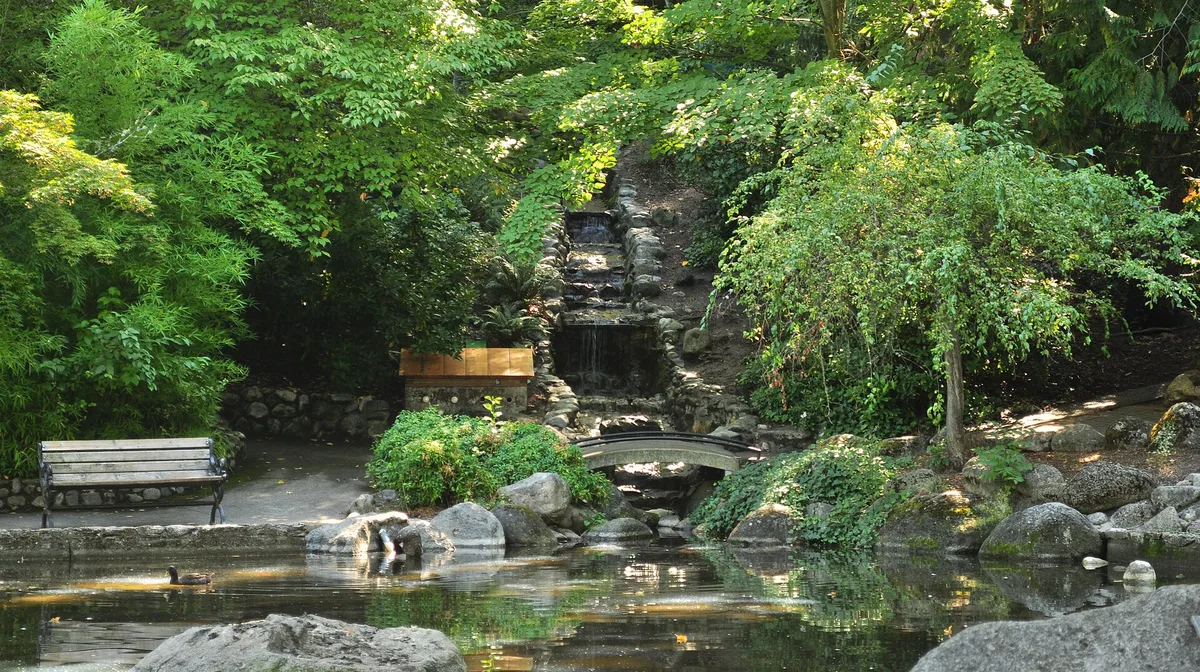
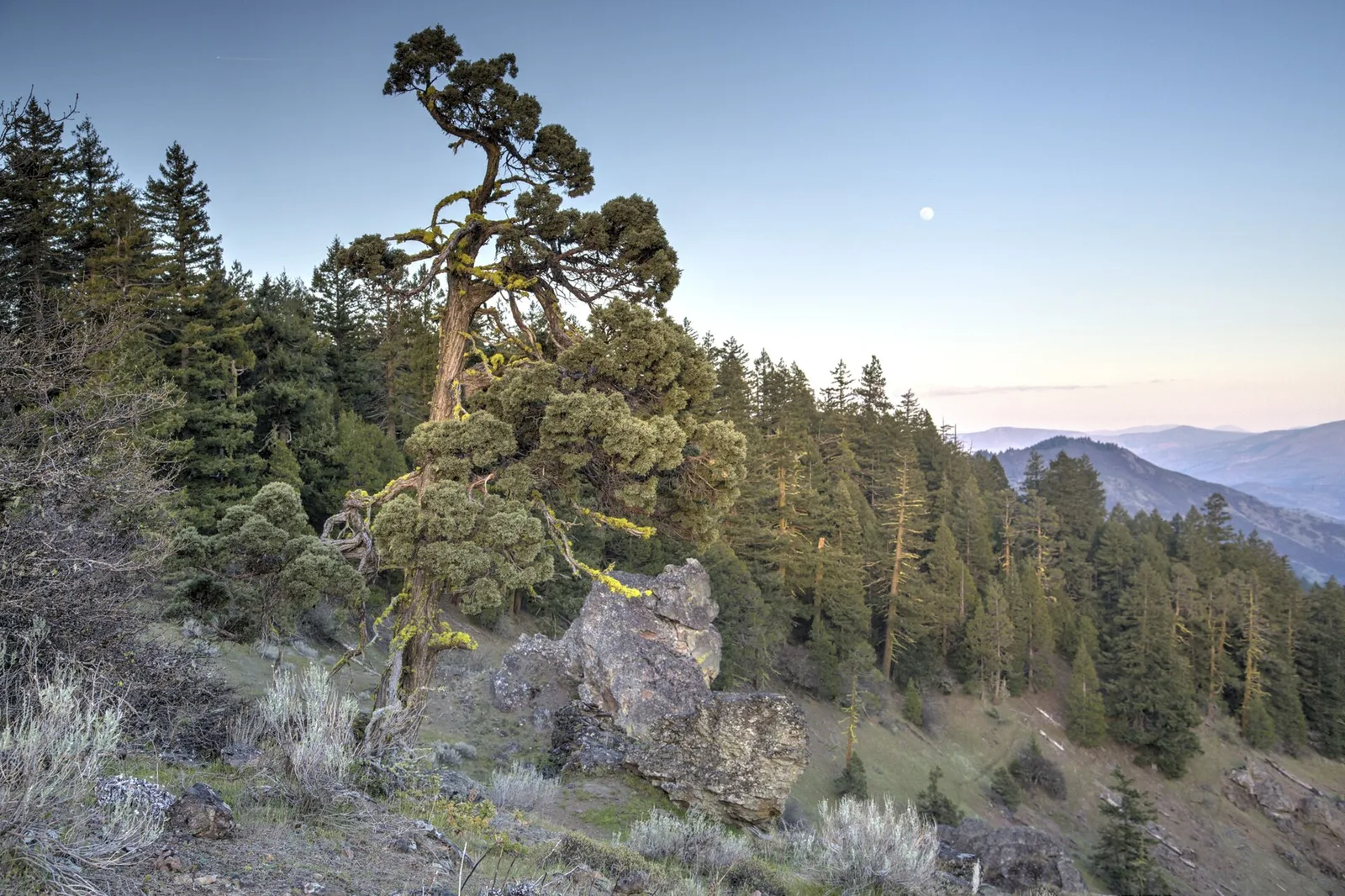
A few of the visual fingerprints we lean into when we shoot, brand and market a Ashland property — courtesy of the open Wikimedia Commons archive.
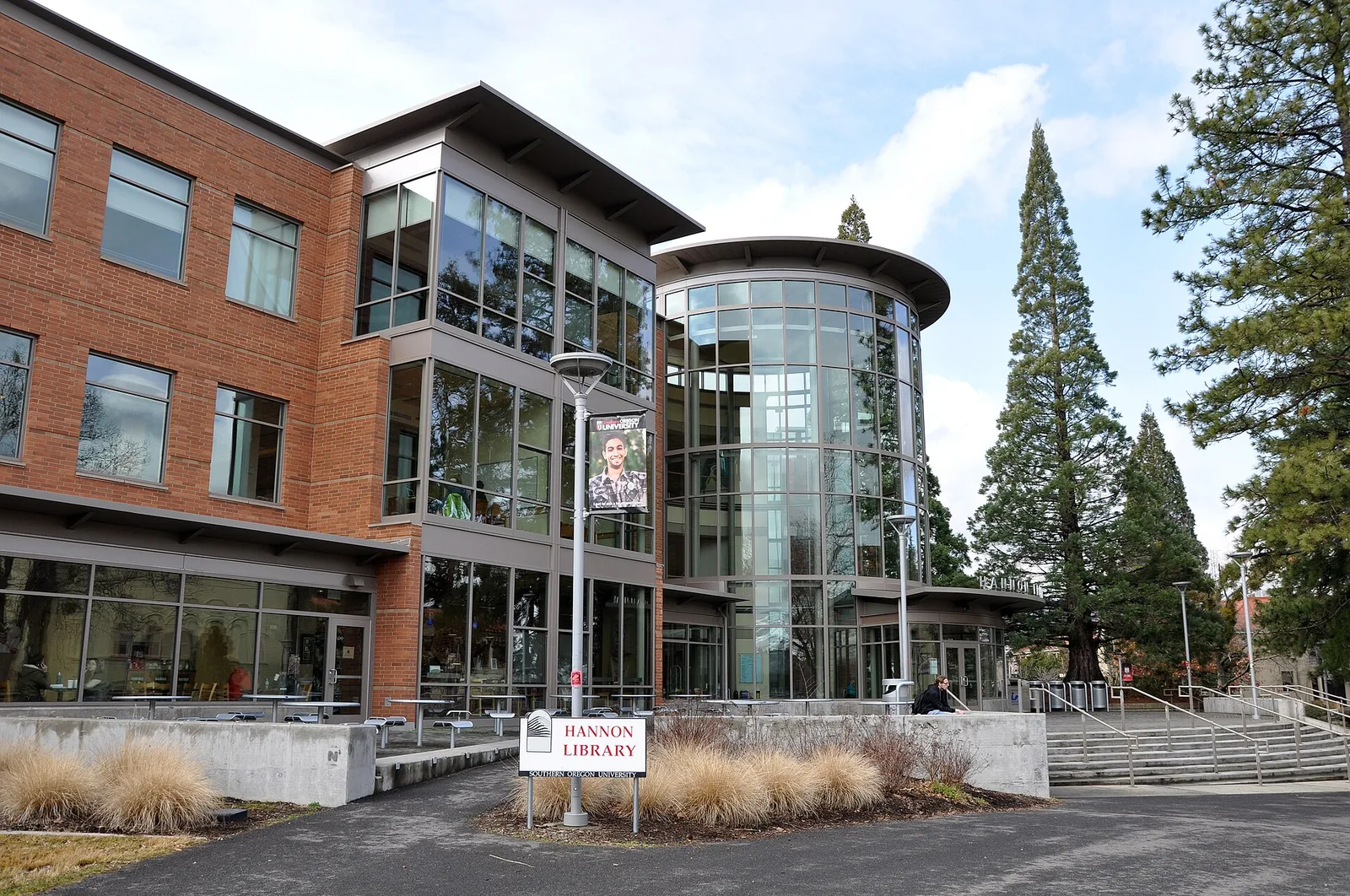
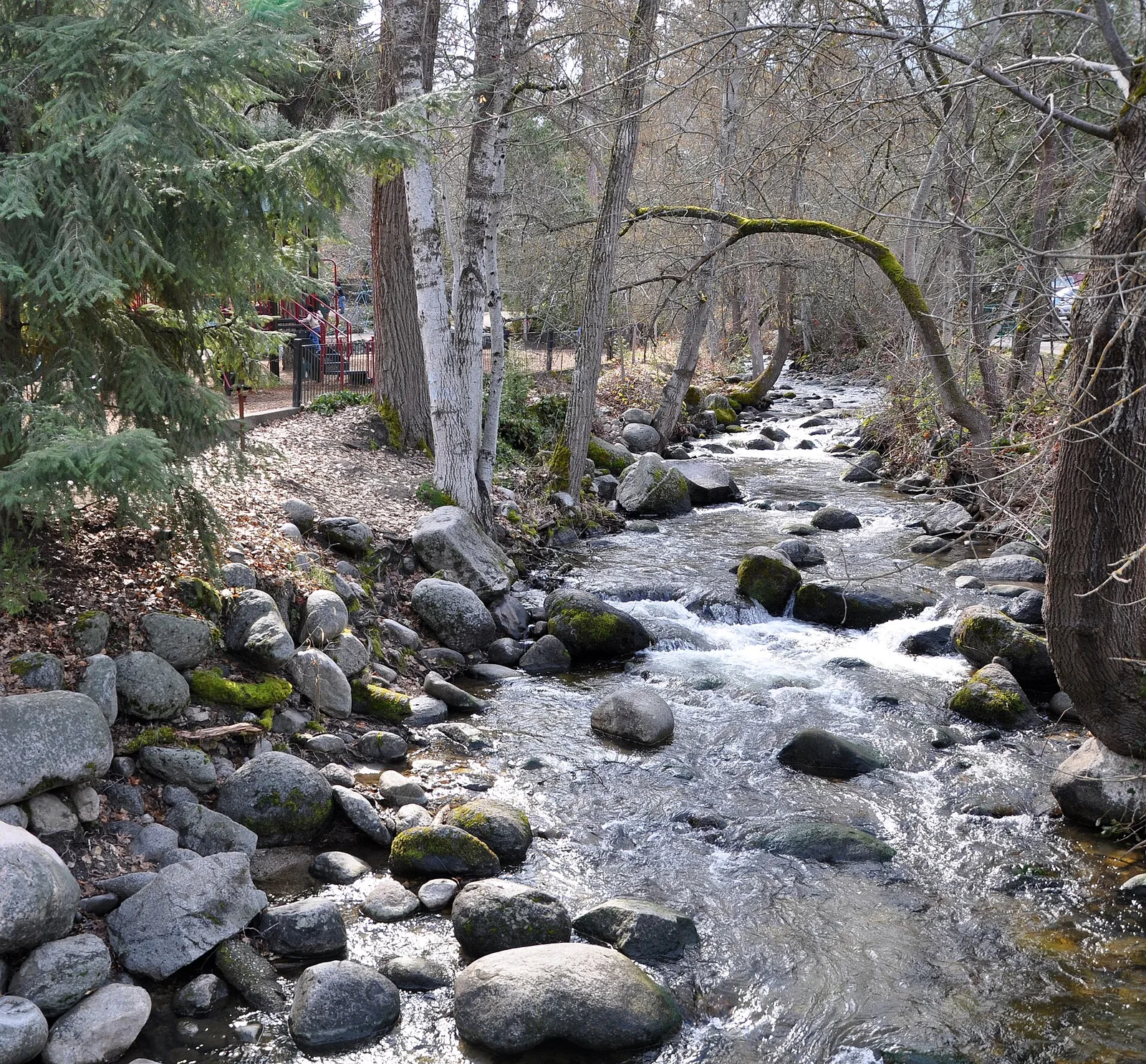
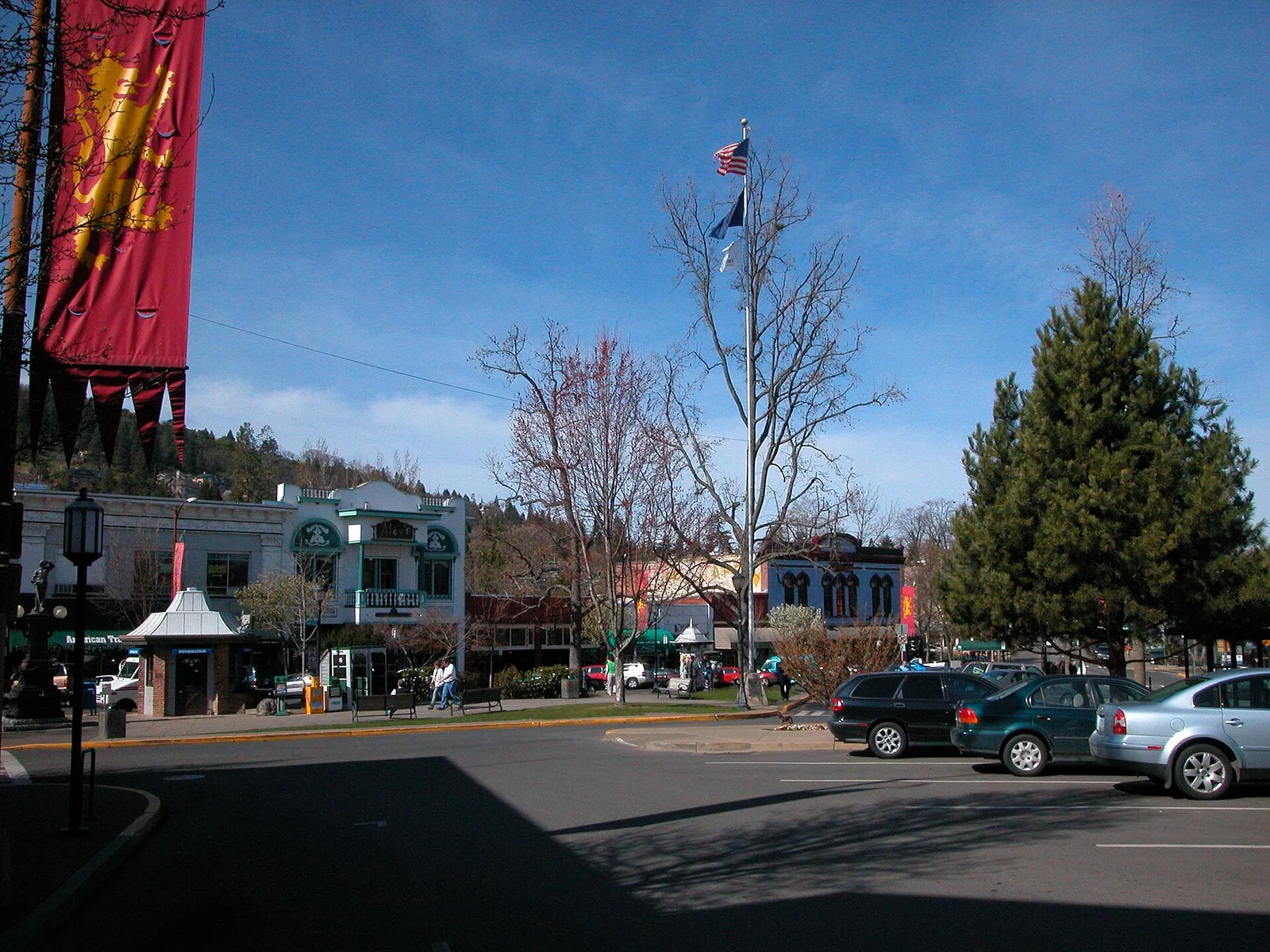
Cavmir markets Ashland properties against a calendar that is published a year ahead, which almost no other market gives you. The festival announces its season in the spring, members buy in November and general tickets go on sale in early December. That means the Ashland booking year has a starting gun, and most owners here sleep through it. We get the property visible and bookable before those tickets move, write the listing around walking distance to the Bowmer and the Elizabethan rather than around square footage, and build the kind of direct booking site an inn or a licensed accommodation can actually use, with a real story, honest room detail and no platform in the middle. We photograph in a way that suits the guest who is coming: a theatre visitor booking three nights and two matinees is not the same person as a September traveller here for the valley, and the gallery should serve both. Then we work local search against the phrases people type when planning a festival trip, run ads against the ticket on-sale window rather than against the summer, and keep an email list of past guests, who in this town return with a reliability that borders on ritual. We help position and market your property. We never manage it or touch your keys.
Ashland was founded in the 1850s around a flour mill on Ashland Creek and named for Ashland County, Ohio, and Ashland, Kentucky, by settlers who had come from both. It might have stayed a mill town. Two things changed it. The first was mineral water: Lithia Springs, a few miles out of town, produced water with unusually high lithium content, and in the 1910s Ashland piped it into the plaza and set out to become a spa resort in the manner of Saratoga Springs. The plan mostly failed, though the fountains are still there and the water is still famously undrinkable. The second thing worked. In 1935 Angus Bowmer, a college instructor, persuaded the city to let him stage two Shakespeare plays over the Fourth of July in the shell of the old Chautauqua building, whose circular walls happened to resemble an Elizabethan theatre. The city agreed on condition that boxing matches were also held to cover the expected losses. The plays made money; the boxing lost it. The Oregon Shakespeare Festival has run more or less continuously ever since, interrupted by the war and later by the pandemic, and it grew into one of the largest repertory theatre companies in the United States, running three venues including an outdoor Elizabethan stage. Around it grew everything Ashland now is: the restaurants, the inns, the bookshops, Southern Oregon University's arts programmes, and a town whose economy runs on an eight-month season set by a rehearsal schedule.
Ashland prices to a published calendar, which is a luxury most markets do not have. The festival announces its season in the spring, members buy in the autumn and general tickets go on sale in early December, so demand for the following year is visible before the year starts. Rates should follow the performance calendar rather than the month: a Saturday in June with three shows running is a different product from a Saturday in January when the theatres are dark. Opening weeks in March, the summer run from June to August, and the closing weeks in October are the strongest stretches. Midweek performs far better here than in a typical resort town because theatre-goers build three and four night trips around matinees, which means minimum stays of two or three nights are accepted without much resistance in season. Winter, once the season closes in late October, is the real off-period, and the honest strategy is longer stays, ski traffic to Mount Ashland when conditions allow, and university-related demand rather than discounted nightly rates. One local factor deserves its own pricing thought: late-summer wildfire smoke has repeatedly affected the Rogue Valley and can move or cancel outdoor performances at the Elizabethan. Owners who build a little flexibility into August and early September policies fare better than those who discover the problem in the middle of it.
The season is the calendar. The festival runs from mid-March to late October, and Ashland is busy for essentially all of it, with the strongest weeks in June through August and around opening and closing. November through February is genuinely quiet in town, softened by Mount Ashland when the snow arrives and by the university. Spring and autumn both hold up well and are pleasanter than mid-summer, when the valley gets hot. Wildfire smoke in August and September is a recurring regional factor rather than an occasional one, and it is best handled openly rather than ignored.
Ashland regulates visitor lodging through its land use ordinance rather than through a separate rental permit scheme, and the effect is a market shaped deliberately rather than by accident. Travellers' accommodations are prohibited in the single-family R-1 zones. They are allowed in the R-2 and R-3 multi-family zones with a conditional use permit. The business owner of the accommodation must reside on the property. The primary residence on the site must be at least twenty years old. The property must be located within two hundred feet of an arterial or collector street. A city business licence is required, transient lodging tax must be paid under the municipal code, and the fire department inspects before occupancy. Taken together those requirements describe an innkeeper on a main road, not an investor with a house in a quiet neighbourhood, and that is exactly what the city intended. The result is that Ashland retained a working bed-and-breakfast and small-inn district within walking distance of the theatres at a time when most comparable towns lost theirs. If you are buying here with lodging in mind, the age of the house and its distance from a collector street are not trivia, they are threshold questions, and they should be checked with the Planning Division before an offer rather than after. Properties outside the city limits in Jackson County fall under county rules, which are separate. As always, confirm the current text with the city, since land use ordinances are amended more often than people expect.
Sell the walk. In Ashland the single strongest amenity is being able to leave the house at seven, walk to the Elizabethan, and walk home after the show without driving or parking. If you have that, it should be the first line of the listing, with the actual walking time stated. If you do not, sell the parking honestly instead and name where guests will leave the car. Second, work the ticket calendar. General tickets go on sale in early December for the following season, and the weeks after that are when serious theatre-goers plan the trip. Be visible, bookable and priced before that window rather than after it. Third, build the itinerary into the copy. A guest doing three shows in four days wants to know about the matinee timing, where to eat between a two o'clock and an eight o'clock, and whether there is somewhere quiet to read in between. That is the trip. A listing that describes it will beat one that lists appliances. Fourth, use Lithia Park properly. It is ninety acres of creek canyon starting at the plaza, and it is what people actually remember about Ashland. Photograph the route to it. Fifth, be straight about smoke. August and September can bring wildfire haze to the Rogue Valley, and guests who have read about it will book the host who addressed it. Sixth, remember that the off-season here has a real audience: Mount Ashland skiers, university families and people who like a theatre town in winter. Give them their own page rather than a discount.
The market is tied to a single institution, and any season that shortens or changes affects every lodging business in town; that concentration is the structural risk and it is worth acknowledging plainly. The land use rules mean many properties simply cannot be lodging, and the owner-residence requirement rules out passive ownership entirely. Late-summer wildfire smoke is a recurring regional problem that affects outdoor performances and guest experience. The winter is long and genuinely quiet once the season closes. And the town's inventory is dominated by well-established inns with decades of repeat guests, which is a high bar for a new operator to clear on reputation alone.
Because Ashland's rules require the business owner to live on the property, most lodging here is genuinely mixed-use, and that is precisely the arrangement standard policies handle worst. Tell your insurer exactly what the property is: an owner-occupied dwelling with a licensed travellers' accommodation operating in part of it. You want named short-term rental or bed-and-breakfast cover, liability limits that reflect paying guests on the premises, and business interruption cover, which matters more here than in most markets because a shortened festival season or a smoke event can affect income without any physical damage occurring. Wildfire exposure in the Rogue Valley is significant and insurers are pricing it more carefully every year; document defensible space work and any roof or vent upgrades. If you serve food, even breakfast, ask specifically about that. And if the property is old enough to satisfy the twenty-year rule, it is old enough to have knob-and-tube, galvanised plumbing or an unreinforced chimney somewhere, so get the building surveyed properly before the policy is written rather than after a claim.
Ashland levies a transient lodging tax of 10%, raised from 9% with effect from August 2018, and the city allocates roughly 31% of the proceeds to tourism promotion and tourism-related facilities with the balance going to the general fund. Oregon adds a statewide transient lodging tax of 1.5% on top. Oregon has no general sales tax, which makes the combined figure lower than in most comparable destinations and is genuinely worth mentioning to guests comparing a California trip. Ashland also runs a food and beverage tax, which does not apply to your lodging revenue but does affect what guests spend in town and is often confused with the lodging tax in conversation. Registration for the lodging tax is handled with the city alongside the business licence. Confirm which portions a booking platform remits on your behalf rather than assuming, and ask your accountant about the treatment of an owner-occupied property that generates lodging income, since the personal-use apportionment is the part people get wrong.
The owner-residence requirement changes the financing picture in Ashland's favour more often than not. Because you have to live on the property, many licensed accommodations here are financed as primary residences rather than as investment properties, which generally means better rates and lower deposits than an investor would face in a comparable town. The complication is that lenders differ on how much of the lodging income they will count toward serviceability, and some will treat a property with several guest rooms as a commercial or mixed-use asset regardless of the fact that you live in it. The twenty-year age requirement means you will be buying an older building, so expect the survey to matter: foundations, electrical, chimneys and roofs all come up. If the property already operates as an inn with a trading history, a lender may want business accounts as well as personal ones. Wildfire risk is now feeding into insurance cost and therefore into affordability calculations, so get an insurance quote early. Use a broker familiar with Jackson County and with mixed-use residential lending specifically.
Ashland's fortunes are tied to the festival's, and the honest thing to say is that the last several years have been harder for American regional theatre than the decades before them. The 2026 season carries ten productions from mid-March to late October, which is a substantial programme, and the town's lodging economy is built to serve exactly that. Owners here should watch the season announcement each spring the way an owner in a ski town watches the snow report, because it is the same kind of information. Beyond the theatre, the medium-term questions are wildfire and water, both of which are regional rather than local and neither of which has a quick answer; the valley has already lived through the 2020 Almeda Fire just north of town and takes both seriously. On the regulatory side, there is no sign that Ashland intends to loosen its land use rules, and there are good reasons to expect the opposite, since the current framework is popular and has preserved something the city values. For an owner, the strategic implication is stable: this is a market where the barrier to entry is high, the guest is loyal, the calendar is published a year ahead, and the right response is to build a direct relationship with people who will come back every season for a decade.
Ashland is a town where the economy runs on a rehearsal schedule, and once you notice it you cannot stop noticing it. Restaurants time their kitchens to curtain-up. The bookshop stocks the season's texts. Half the people walking down Main Street at seven in the evening are walking the same direction. Then a few hours later they all come back the other way, talking. Very few American towns of twenty thousand people have a shared nightly ritual, and this one has had it since 1935. The setting helps enormously. Lithia Park runs ninety-odd acres straight up the creek canyon from the plaza, with a Japanese garden, a duck pond and paths that get wilder the further you go, laid out with help from the man who built Golden Gate Park. The plaza has drinking fountains piped from Lithia Springs and the water is genuinely horrible, which everyone tries anyway and nobody warns anyone about. Mount Ashland sits above town, community-owned and unglamorous. The Siskiyous are a strange, botanically rich range where northern and Californian ecosystems overlap, and the Pacific Crest Trail crosses just south of town. What we like about marketing here is that the calendar is published a year ahead and the guest is loyal in a way almost no other market can match. People come for a specific play, then come back next season, then bring their children. The city's own land use rules protected the inn district that serves them. If you own lodging in Ashland, you own a small piece of a hundred-year-old habit.
A great property in Ashland doesn't just want a listing — it wants a point of view, an audience, and a brand the city itself would recognise.
Eight things worth knowing about a market where the demand calendar is announced in advance and the land use ordinance decides who is allowed to compete.
The 2026 programme runs ten productions across three theatres. The season shapes rates, minimum stays and staffing more than the month does.
General ticket sales open in early December for the following season, with members buying in November. That is when the year's serious trips get planned.
Two indoor stages and one outdoor Elizabethan theatre. The outdoor one is weather-exposed, which matters in smoke season.
Walking home after a show without moving a car is the strongest amenity in this town. State the walking time in minutes.
Ninety-odd acres of creek canyon starting at the plaza, laid out with help from John McLaren of Golden Gate Park fame. It is what guests remember.
Piped from Lithia Springs into the plaza in the 1910s as part of a failed spa scheme. It tastes appalling. Tell guests to try it anyway.
A community-owned non-profit ski area at the Siskiyou Summit, which gives the closed season a second audience when conditions arrive.
Wildfire haze has repeatedly affected the Rogue Valley in August and September and can move outdoor performances. Address it openly rather than hoping.
The three examples below are composite and illustrative. They describe patterns we see across festival and college towns rather than any single Ashland client, and no real business is described.
A licensed accommodation within walking distance of the theatres marketed itself on room features and breakfast, competed on nightly rate against properties a mile out, and did most of its selling in the spring, months after the trips had been planned.
We rebuilt the site around the season calendar, put the walking time to each theatre in the first paragraph, and moved the marketing push to the weeks around the December ticket on-sale rather than the following March.
The booking curve shifted forward by months. The property started filling its strongest weeks before its competitors had begun advertising them.
Once the season closed in late October the owner discounted heavily through the winter and still sat empty, because the discount was aimed at theatre guests who simply were not travelling.
We built a separate off-season pitch around Mount Ashland, the university calendar and a quiet town in winter, gave it its own landing page, and emailed it to past guests rather than broadcasting a rate cut.
The winter stopped being a hole in the year. It filled with a different audience at a rate that made sense, without cannibalising the season pricing.
An August of poor air quality moved outdoor performances and produced a run of anxious guest messages, cancellation requests and one bad review, with no policy or prepared language in place.
We wrote a clear, calm air-quality section into the listing and the direct site, prepared pre-arrival messaging for smoke events, and adjusted the late-summer booking terms so both sides knew where they stood in advance.
The following year's smoke event produced far fewer cancellations and no bad reviews, because guests had booked with the information rather than discovering it on arrival.
Demand in Ashland peaks around June through August and runs quietest around January, February and November. Here is how the year actually books — and what to do about each stretch of the calendar.
The festival season runs mid-March to late October and the town is busy for most of it, with June through August strongest. Price to the performance calendar rather than the month, because a Saturday with three shows running is a different product from a Saturday when the theatres are dark. Minimum stays of two or three nights are accepted in season without resistance.
Opening weeks in March and closing weeks in late October are both consistently under-priced, and they are lovely times to be here. Early autumn holds up well. These weeks respond to email sent to last season's guests, timed around the ticket on-sale rather than to a rate cut.
November through February is the genuine off-period once the season closes. The answer is not discounting to theatre-goers who are not travelling, but a different audience entirely: Mount Ashland skiers when conditions arrive, university families, visiting academics and longer stays.
Unusually long and unusually predictable. The season is announced in spring, members buy in November and general tickets go on sale in early December, so a large share of the following year's demand is decided before the year starts. Winter ski demand is the opposite and books within days of a forecast.
Three and four night stays are the norm in season, because a theatre trip is built around several productions and matinees. That makes midweek far stronger here than in a typical resort town. Winter skews shorter and more spontaneous, and longer stays fill the closed months.
Walkability to the theatres is the strongest amenity in this market and outranks size, finish and view. Because the ordinance requires the business owner to live on the property, the winning format is an owner-occupied accommodation on or near a collector street within walking distance of the plaza, run by someone who knows the season.
Start with photography that shows what a guest actually gets here, then write the listing around a real itinerary rather than a feature list. Build a direct-booking site so returning guests can come back without going through a platform, and keep an email list segmented by season so you can reach last year's visitors before the calendar opens. Local search matters more than people expect in a market this size, because guests search the destination and the attraction rather than the word rental. A marketing agency layer handles the photography, the listing copy, the direct-booking site and the local SEO as one system instead of four disconnected jobs.
The festival season runs from mid-March to late October and the town is busy for most of it, with June through August strongest and the opening and closing weeks both under-priced. November through February is genuinely quiet once the theatres go dark, softened by Mount Ashland when the snow arrives and by the university.
Further ahead than almost any market, and on a published schedule. The season is announced in spring, members buy tickets in November and general sales open in early December, so much of the following year's demand is decided before it starts. Winter ski demand is the exception and books within days of a good forecast.
Mostly a drive market along Interstate 5 from northern California and the Willamette Valley, with Portland, Sacramento, Eugene and Redding all realistic. Medford's airport, twenty minutes away, handles the fly market from San Francisco, Seattle and beyond. The weeks after tickets go on sale are the most valuable time to be visible.
Being able to walk to the theatres and home again after a show is worth more than any interior feature, so state the walking time in minutes. A quiet bedroom, off-street parking and air conditioning for the hot valley summer all matter. Fast wifi and a comfortable place to sit between a matinee and an evening show do real work.
Run your Airbnb, Vrbo, or website through Cavmir's free grader. It checks the things that decide whether guests book in Ashland — photos, listing copy, page speed, local search — and shows you where bookings leak. Takes about a minute, and there's no sales call attached.
If the report says your booking engine is the weak link, that's fixable: a direct-booking website of your own means repeat guests stop paying platform fees to come back to you. That's the work Cavmir does — see Airbnb website design in Ashland.
Send us the listing and we'll tell you what we'd change. Not a pitch deck — a straight read on your photos, your title, your rates against the Ashland comp set, and whether a direct-booking site would pay for itself.
You'll hear back from a person, usually inside one business day. If we don't think we can move your numbers, we'll say so. Cavmir is a short-term rental marketing agency — we position and market properties, we don't manage them.
Talk to Cavmir today. We'll show you exactly what your Ashland property is leaving on the table — and how fast we can change that.
Book a Free Strategy CallPhotography via Wikimedia Commons (images resized and cropped): Ashland, Oregon - Lithia Park 04 by Joe Mabel (CC BY-SA 4.0) · Hannon library sou by Finetooth (CC BY-SA 3.0) · Ashland Creek (Ashland, Oregon) by Finetooth (CC BY-SA 3.0) · Demi-Ashland,OR-Plaza-EW-20050305 by Demi~commonswiki (CC BY-SA 3.0).
