



Coffee & First Light
Government Camp before the lifts spin
The village wakes up early on a powder day and the parking fills fast. Tell guests where coffee starts, and which lot to aim for at which ski area.

Expert short-term rental marketing to grow your bookings and nightly rate in Mount Hood, Oregon, USA.
Sixteen services, one team. Everything below is built in-house and scoped to your property and market. Most owners start with the 12-Step System.
Every engagement is quoted to your portfolio. These are the ready-made scopes owners pick most — our Fall Special (55% off list or more) is already applied to the website, King Broker, Hotels and à la carte scopes. A clear proposal within 48 hours.
The work is public. Selected engagements and what changed — and reviews from the owners and managers behind them.
* Market averages from AirDNA and STR market reports. A single home's numbers depend on its size, its location and how it is marketed.
Cavmir is an Airbnb marketing agency. We build the brand, the direct-booking website and the marketing for short-term rentals in Mount Hood.
Mount Hood is an hour and a bit east of Portland and it is the rarest thing in American mountain real estate: a genuine ski mountain inside commuting distance of a major city, with a rental corridor that has not been priced like Aspen. The corridor runs up Highway 26 from Brightwood through Welches, Zigzag and Rhododendron to Government Camp at around three thousand nine hundred feet, and each of those has a different character and a different guest. Three ski areas operate on the mountain — Timberline, Mount Hood Meadows and Skibowl, which is the largest night skiing operation in the United States — and Timberline is the only ski area in North America that stays open for skiing in every month of the year, because the Palmer snowfield above the lodge holds snow through the summer. That single fact turns what would be a five-month winter market into something much closer to year-round, and most owners on this mountain still market it as if the season ended in April.
The corridor's demand is unusually balanced across the calendar and unusually badly marketed. Winter is obvious: three ski areas, night skiing that pulls Portland traffic on weekday evenings, and a drive short enough that a Friday-to-Sunday booking is easy. Summer is the part owners miss. The Pacific Crest Trail crosses the mountain, Trillium Lake gives you the reflection photograph that everyone has seen, the Salmon and Sandy rivers run through the corridor, and the whole area becomes a hiking, mountain biking and swimming destination while Portland bakes. Timberline's summer skiing and its race camps bring a distinct guest with a long stay. Spring and fall are genuinely quiet and are where the margin problem lives. The competitive set is a lot of dated cabins photographed badly in the trees, which is a real opportunity for anyone willing to present a property properly. Regulation is settled and manageable: Clackamas County adopted short-term rental rules for its unincorporated areas that took effect in December 2023, and registration is required, free and straightforward.
Nearby Markets: Portland | Hood River | Bend
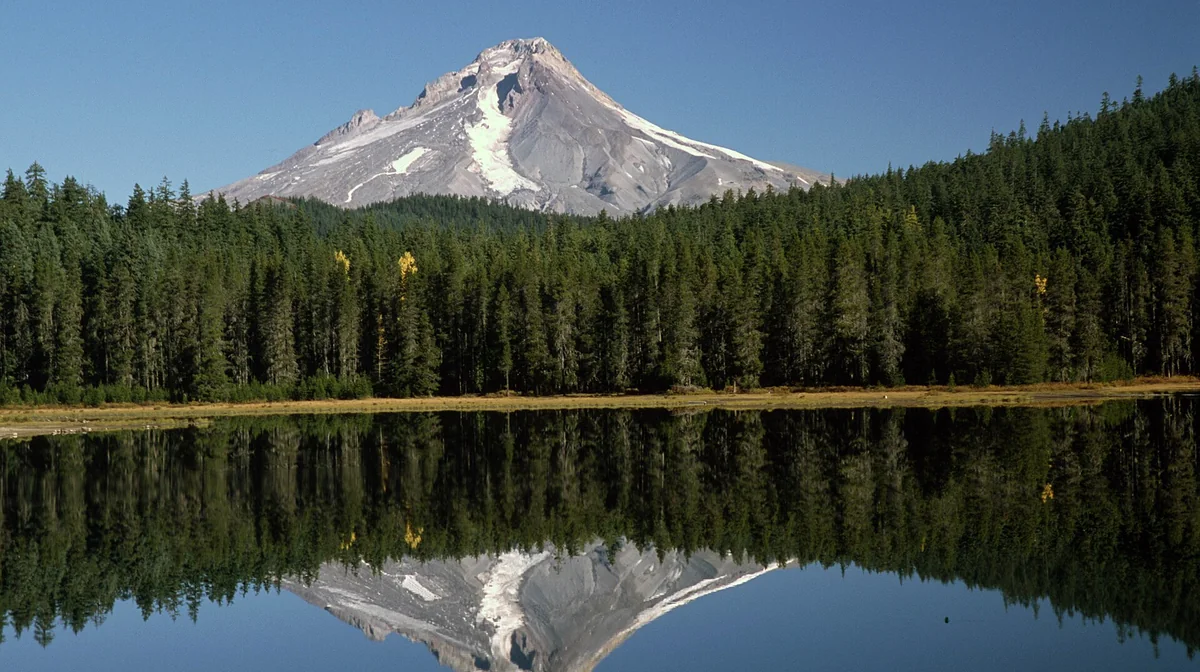
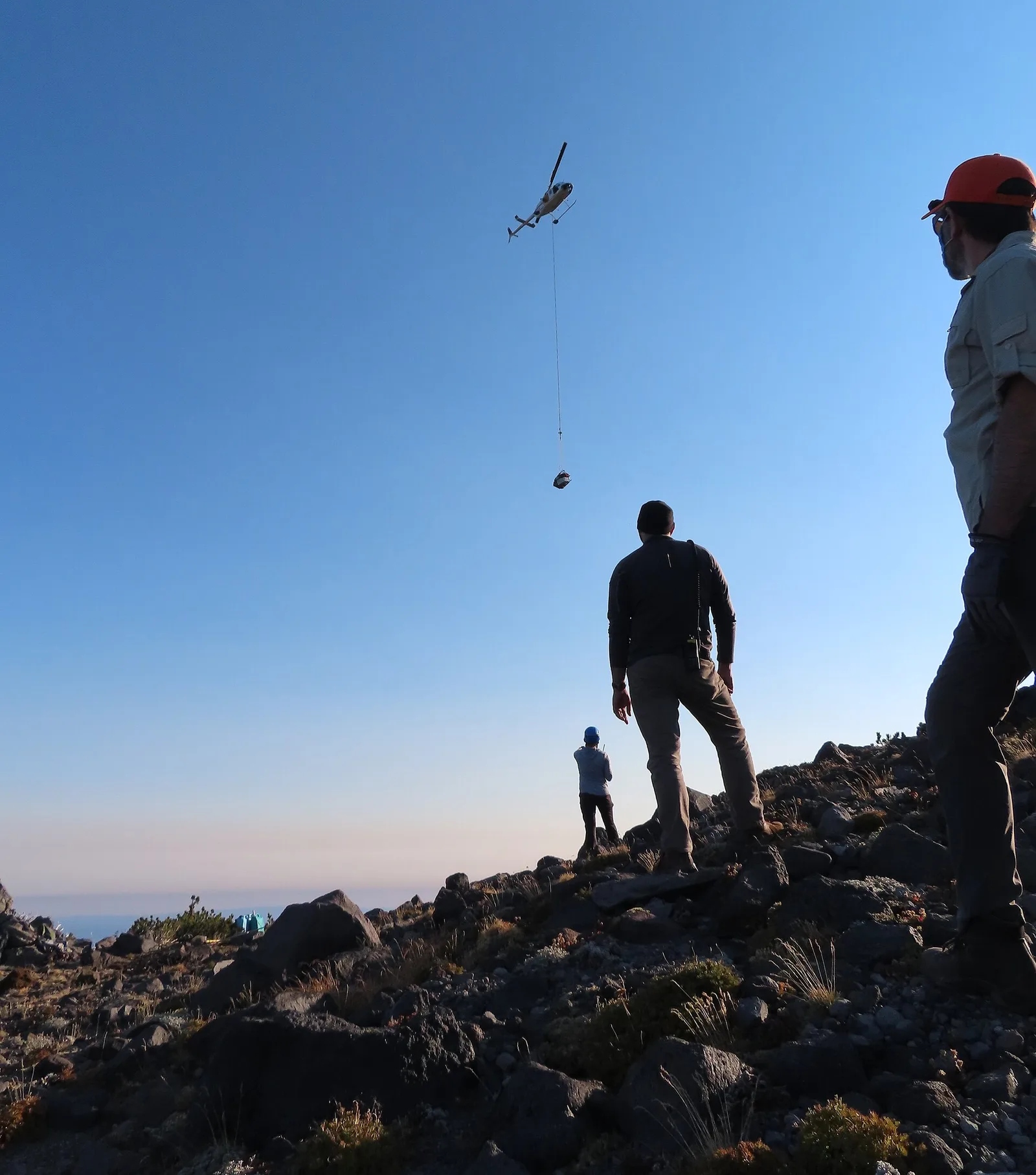
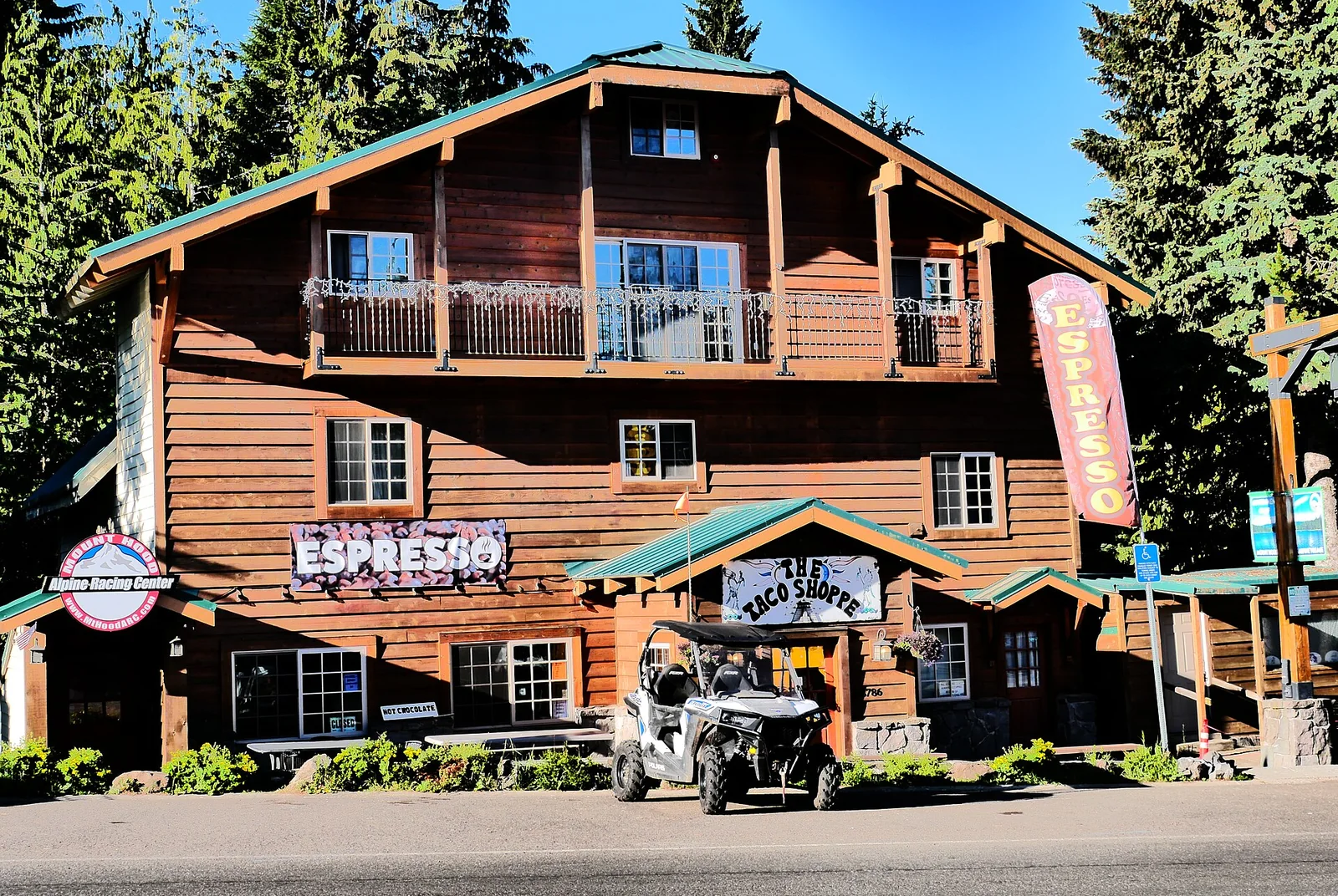
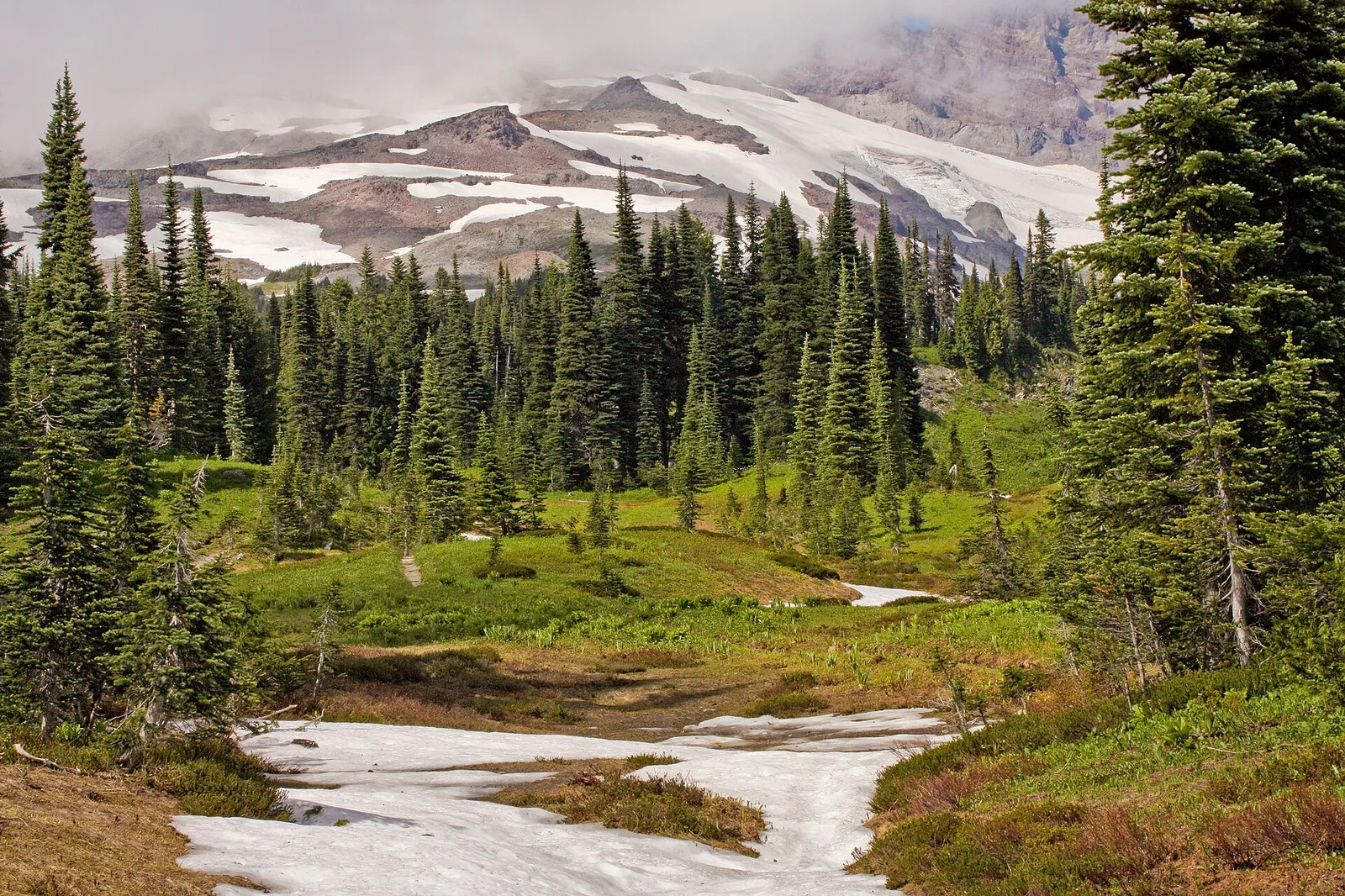
A few of the visual fingerprints we lean into when we shoot, brand and market a Mount Hood property — courtesy of the open Wikimedia Commons archive.
Cavmir markets Mount Hood cabins as a year-round property rather than a ski rental with a long gap in it. We photograph the cabin in the light this corridor actually has — filtered forest light, snow, and the summer evenings that make a deck look like the reason you booked — and we build the image order around what closes a booking here: the hot tub, the wood stove, the drying and boot space, the deck, the drive from Portland. We write the listing and the site for both seasons, with real detail about which ski area suits which guest, what the night skiing is, where the summer trailheads are and how long the drive genuinely takes in Friday traffic. We build your direct-booking site and rank it for the corridor searches that Portland travelers actually use, and we set up the email flow that turns a winter guest into a summer one. We will make sure your county registration and the registration number in your advertising are correct before we write a word. We help position and market your property. We never manage it or touch your keys.
The corridor up the south side of Mount Hood was a road before it was anything else, and it was a road because the Columbia River nearly finished the Oregon Trail. Emigrants who made it that far had to raft the gorge, which was expensive and regularly fatal. In 1846 Samuel Barlow cut a toll route around the south flank of the mountain instead — steep, brutal, and dry land the whole way — and the Barlow Road became the last overland leg of the trail. Highway 26 follows a good deal of it. The village at the top of the pass takes its name from an army detachment that abandoned wagons and equipment there in 1849, and Government Camp has been called that ever since.
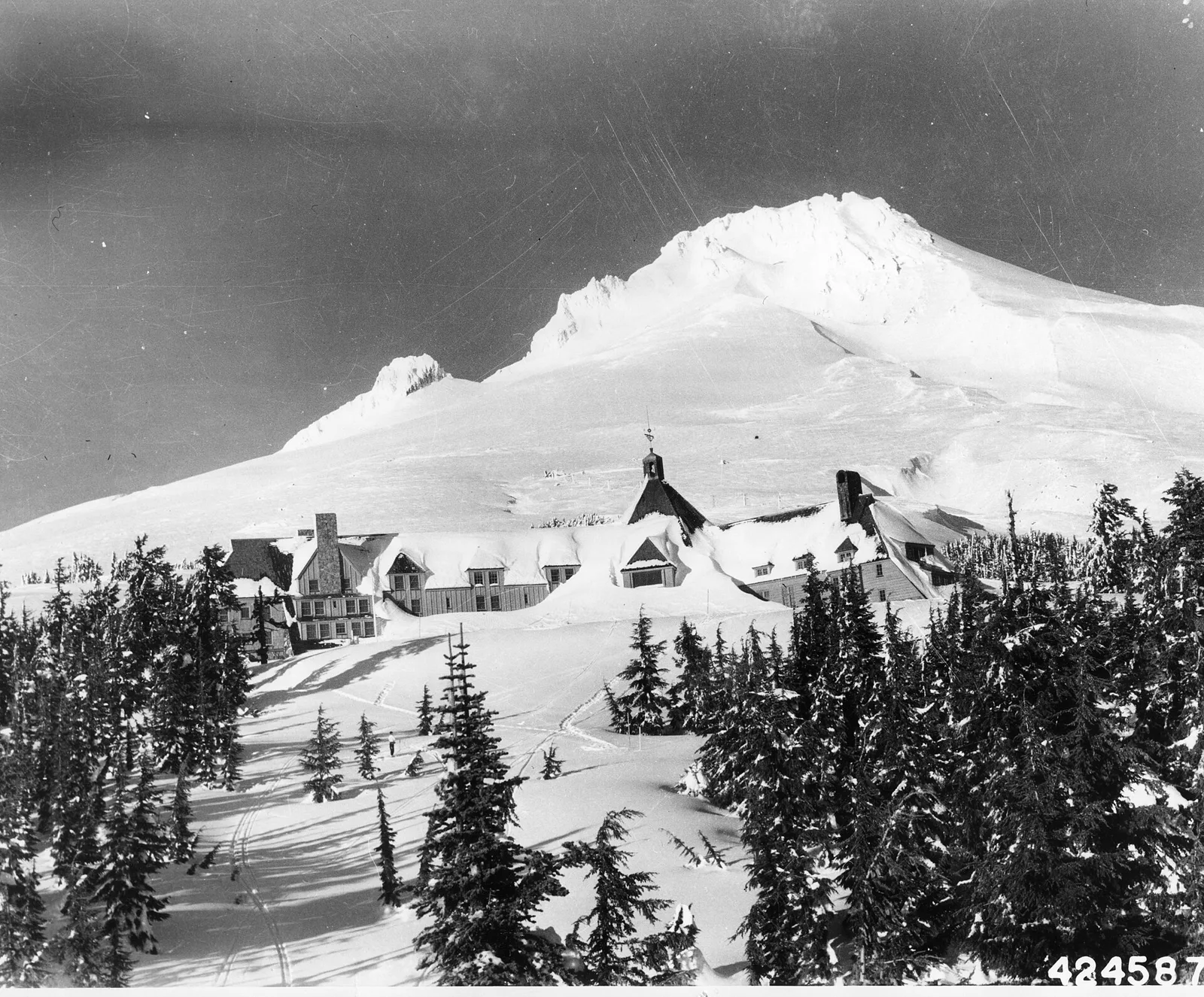
Skiing arrived in the 1920s and 1930s, and then the federal government built something remarkable. Timberline Lodge went up between 1936 and 1938 on the mountain's south shoulder, constructed by Works Progress Administration crews during the Depression using local stone, timber and enormous amounts of hand labour — the ironwork, the newel posts, the woven fabrics and the furniture were all made on site by workers who were paid to make them. Franklin Roosevelt came out and dedicated it on 28 September 1937. It is a National Historic Landmark, it is still an operating hotel and ski area, and in 1980 Stanley Kubrick used its exterior as the Overlook Hotel in The Shining, which is why a certain kind of guest arrives with a very specific photograph in mind.
The mountain itself is a stratovolcano, the highest point in Oregon at just over eleven thousand two hundred feet, and it is one of the most-climbed glaciated peaks in the world because the standard route from Timberline is short and accessible — which is also why it kills people. Three ski areas now operate on it. And the Palmer snowfield above the lodge holds enough snow that Timberline stays open for skiing in every month of the year, the only ski area in North America that does, with the Palmer lift running through spring into early fall. That single geographic accident is why the corridor has a summer economy at all.
Mount Hood is the rare mountain market with two real seasons, and the pricing mistake nearly everyone makes is treating it as one season with a long hole in it. Winter is straightforward: December through March, with the holidays, Presidents Day weekend and any big storm cycle at the top, and heavy Friday-to-Sunday weighting because Portland is an hour and a bit away. That proximity is worth understanding — this is a weekend market first, which means two-night minimums, a Friday check-in that works for people leaving the city after work, and rates that recognise Saturday is not Tuesday. Skibowl's night skiing adds midweek evening demand that most owners never think about. Summer is the underpriced half of the year: the Pacific Crest Trail, Trillium Lake, the rivers, mountain biking, and Timberline's summer ski and snowboard camps, which bring groups on long stays in June and July while the rest of the corridor is quiet. Price summer as a season, not as a discount. The genuine soft windows are April into May, when the snow is finished but the trails are not open, and late October into November. Those are the weeks to fill with longer stays, remote workers and locals, rather than by cutting the peak.
Winter runs December through March with the holidays, Presidents Day and storm weekends at the top, weighted heavily toward Friday and Saturday because of the Portland drive. Midweek evening demand exists through the night skiing season and is largely ignored. Spring skiing runs into April and May at Timberline. Summer is a genuine second season from late June through September — hiking, the Pacific Crest Trail, Trillium Lake, the rivers, mountain biking and Timberline's summer camps on the Palmer snowfield. September and early October are excellent and quiet. The two soft windows are April into May, when winter is done and summer has not started, and late October into November before the snow settles. A property marketed for one season on this mountain is working at roughly half capacity, which is the single largest opportunity in the corridor.
The Mount Hood corridor sits in unincorporated Clackamas County, and the county's short-term rental rules are the ones that apply. The Board of County Commissioners approved them on 7 September 2023 and they took effect on 7 December 2023, covering unincorporated areas only.
The core requirement is registration, and it is genuinely straightforward compared with most markets on this site: every short-term rental in unincorporated Clackamas County must register with the county, the registration is free, and it does not require an in-home inspection. What it does require is that you actually do it, because no short-term rental may be advertised for rent unless it is registered, and your registration identification number has to appear in any advertisement and on any rental platform listing. Contact information for a responsible party must be posted at the property at all times while paying guests are there. There are parking standards, with specific accommodations recognised for parts of the Mount Hood community where the older village lots simply cannot meet a generic requirement.
One point worth stating clearly, because it causes confusion: the county's owner-occupancy requirement applies to properties inside the Portland metropolitan urban growth boundary. The Mount Hood corridor is outside that boundary, so corridor rentals are not caught by that clause and can be operated as non-owner-occupied investment properties. Verify this against the current ordinance for your specific parcel rather than taking it on faith, because it is the single most consequential detail in the rules for an investor.
On tax, Oregon has no sales tax but does levy a state transient lodging tax, and Clackamas County levies its own county transient lodging tax on top, plus a separate short-term rental user fee on the total rental amount. Register with both the state and the county, understand which platform is remitting what, and get set up before you open a direct booking channel. Confirm current rates and registration mechanics with Clackamas County directly.
Market both seasons or you are running half a business. The most common failure on this mountain is a listing built entirely around skiing, which means the property is invisible for five months of the year to people searching for hiking, rivers, Trillium Lake and the Pacific Crest Trail. Build a summer photo set and a summer page. Second, name the village. Brightwood, Welches, Zigzag, Rhododendron and Government Camp are meaningfully different — elevation, snow, drive time to each ski area, what is walkable — and a guest who books the wrong one for their trip will say so. Third, be clear about the drive and the conditions. Say the real Friday-evening drive time from Portland, say whether your road is plowed and by whom, and say plainly whether chains or traction devices are likely to be needed, because Oregon's winter road requirements catch visitors out and a guest stuck at a chain-up area at nine at night is a bad review forming. Fourth, photograph the things that actually close a booking here: the hot tub, the wood stove, the drying and boot space, the deck, the trees. Fifth, sell the night skiing — it is the largest night ski operation in the country and it creates midweek demand nobody is bidding for. Sixth, put your county registration number in your listings, because you are required to and because it signals you know what you are doing.
The competitive set is large and much of it is older cabins, which keeps rate pressure on anything that does not present well. Snow is the demand driver and it varies year to year; a thin winter is felt across the whole corridor. Access is a genuine operational issue — plowing, chain requirements, and roads that a guest in a rental car may not be equipped for. Many properties sit on wells and septic systems with real capacity limits that constrain occupancy. Wildfire risk in the Cascades is a live seasonal factor affecting insurance, air quality and summer bookings, and it belongs in your planning rather than in your surprises. The corridor's older housing stock brings deferred maintenance, roof and snow-load questions. And because Portland is close, guest expectations are urban even when the infrastructure is not.
Insurance on Mount Hood is a mountain-property conversation with a wildfire chapter attached. A standard homeowner's policy will not follow you into short-term rental use, so you need a short-term rental or commercial policy with real liability limits, and hot tubs, wood stoves, decks, exterior stairs and any river or creek access should be named specifically. Wood heat deserves explicit discussion with your carrier, because installation, clearances and chimney maintenance affect both safety and coverage. Snow load, ice dams, frozen pipes and water damage are the routine claims in this corridor, and a property left empty midweek through winter has real freeze exposure that a full-time residence does not. Wildfire is the item that has changed most in the past few years: carriers have tightened underwriting across the Cascades, some have pulled back from high-risk areas, and defensible space, roofing material and vegetation clearance now affect both availability and price. Get quotes during diligence rather than after closing, ask directly whether the carrier is writing new business in your zone, and have guest injury, guest property damage, loss of rental income and business interruption written into the policy in terms you can read.
Oregon has no sales tax, which simplifies things, but lodging is taxed at two levels and there is a third item specific to short-term rentals. The state levies a transient lodging tax on short-term stays, currently one and a half percent, administered by the Oregon Department of Revenue. Clackamas County levies its own county transient lodging tax on top of that, currently six percent in the unincorporated areas, and the county also charges a separate short-term rental user fee calculated on the total rental amount, currently 0.85 percent, which was introduced alongside the 2023 registration rules. Register with both the state and the county before your first booking. Booking platforms collect and remit a good deal of the lodging tax on reservations they process, but that never covers direct bookings, and direct bookings are what effective marketing produces — so understand exactly what each channel remits, and keep platform and direct revenue separated from the first reservation rather than reconstructing a mixed year in April. Oregon does have a state income tax, which matters for out-of-state owners: rental income sourced here is generally reportable to Oregon, and how that interacts with your home state depends on your residency and structure. Get an accountant who files Oregon returns.
Financing in the Mount Hood corridor is conventional, with a few local questions that decide deals. The first is water and septic: a great many corridor properties are on wells and septic systems, and capacity, condition and permitted bedroom count all show up in underwriting and can cap what the property may legally sleep. Get the septic records during diligence. The second is insurability, which in the Cascades now means wildfire. Lenders will not close on a property that cannot be insured, and in higher-risk zones carriers have become selective — so get a quote early rather than treating it as a formality. The third is the age and condition of the housing stock: much of this corridor was built decades ago for seasonal use, and roof condition, snow load capacity, foundations, wood stove installations and older electrical service are all live underwriting items. Second-home and investment loans carry higher rates and larger down payments than owner-occupied loans; debt-service-coverage products underwritten on rental income are available in Oregon and are often the practical route for an investor, and those lenders will want the county registration and documented rental history. Model both seasons realistically, including the April-May and late-autumn soft windows, rather than a flat annual occupancy figure.
The regulatory picture here is unusually settled, which is worth something. Clackamas County adopted its framework in 2023 after a long public process, registration is free and light, and the corridor sits outside the urban growth boundary where the owner-occupancy requirement bites — that combination is investor-friendly by the standards of any western mountain market, and it is more likely to be refined than reversed. Watch for changes at the margins: parking standards, density in Government Camp, and any move to add caps. The medium-term question is snow. Cascade snowpack variability is a real business input, and the corridor's insulation against it is Timberline's high-elevation Palmer snowfield and the summer economy that the mountain now supports — which is precisely why marketing both seasons is a risk-management decision as much as a revenue one. The longer-term questions are wildfire and insurance cost, which affect this whole range and are trending in one direction, and Portland's own growth, which keeps a large, close, affluent weekend market pointed at this mountain. That last factor is the corridor's structural advantage: an hour and a quarter from a metropolitan area, three ski areas, and skiing available in every month of the year. Own the guest relationship and that position is durable.
The drive up Highway 26 out of Portland does something to people. You leave the city, the traffic thins around Sandy, and then the road climbs into a corridor of Douglas fir so dense and so tall that the light goes green — Brightwood, Welches, Zigzag, Rhododendron, each one a handful of buildings and a river crossing — and then you come over the pass at Government Camp and the mountain is simply there, eleven thousand feet of it, close enough to feel unreasonable. Up the road from the village sits a hotel the federal government built by hand during the Depression, where the ironwork was forged from railroad track and the rugs were woven from old uniforms, and where you can ski in July because the snowfield above it never quite goes. Down in the corridor there are rivers you can swim in, a lake that gives you the postcard reflection, and a trail that runs from Mexico to Canada straight across the flank of the peak. What we like about it commercially is the two-season problem, because it is really a two-season opportunity. Most owners on this mountain market a ski cabin and go quiet in May. The properties that treat summer as a genuine season with its own photography, its own copy and its own rate are competing against a much thinner field for five months of the year, in a corridor an hour from a city of two and a half million.
A great property in Mount Hood doesn't just want a listing — it wants a point of view, an audience, and a brand the city itself would recognise.
Eight answers to put in your guest guide. These are the questions guests ask anyway, and getting them right in advance is the cheapest review insurance there is.
The village wakes up early on a powder day and the parking fills fast. Tell guests where coffee starts, and which lot to aim for at which ski area.
There are not many seats in this corridor and on a Saturday in February they all go. Tell guests to book ahead or eat early, and give them one option that is open late.
The largest night ski operation in the country, lit across most of its terrain, an hour from Portland. It is the corridor's best-kept midweek secret and almost no listing mentions it.
Drive up, sit by the fireplace, look at ironwork forged from railroad track by WPA crews in 1937. You do not need to ski to go, and it is the best hour on the mountain in bad weather.
Trails open and dry, the summer crowds gone, the light turning, and rates well off both peaks. The best weeks on this mountain and the ones nobody markets.
Trillium gives you the reflection photograph everyone has seen; Mirror Lake is the short hike that pays off most per mile. Tell guests to go early — both lots fill by mid-morning in summer.
Flat water, full reflection, almost nobody there before eight. Give guests the drive time and tell them to bring coffee, because it is worth being early for.
Say the honest Friday-evening number, not the Google number. Then be specific about winter traction requirements and whether your own road is plowed and by whom. This is the single most useful thing you can tell a guest in this corridor.
Guests who find a Mount Hood rental on Airbnb search its name afterwards, and the page they should land on is the owner’s own site. Cavmir builds vacation rental websites of 40 to 125 pages in the owner’s brand. For a home that only lists on Airbnb, that is a website for your Airbnb: your name and domain, your photos, your area guides and your reviews, with a button that sends guests to the listing. For homes on Hostaway, Guesty or Hospitable it is a direct booking website: live availability and prices from the PMS, the whole stay priced before checkout, and the booking completed in the PMS. Both start from the same vacation rental website design, run the TrollBuster™ compliance scan before launch, and are yours at launch: domain, code, content and photos.
The guide pages of a Mount Hood site can start with the picks on this page: Government Camp before the lifts spin, Dinner in Welches or Government Camp and Night skiing at Skibowl. Each one is a search a guest makes before choosing a home, and each becomes a page that leads to the booking button.
Packages start at $1,475 for the Starter Website (40 pages, two to three weeks) and run to $3,732 for Full with Direct Booking (125 pages, booking synced with your PMS); the current prices are on the pricing page.
A few composite engagements, drawn from how Cavmir typically works with cabin owners in a two-season mountain corridor. Illustrative rather than any single client's file.
A property marketed entirely around skiing, with a photo set shot in snow, so it effectively disappeared from May to November in a corridor with a real summer economy.
Built a full summer identity — reshot the cabin and the deck in summer light, added river, trail and Trillium Lake content to the site, and created a separate summer landing page targeting hiking and swimming searches rather than ski ones.
The property started appearing in summer searches it had never been visible for, and the five-month dead stretch became a second season rather than a carrying cost.
A calendar that filled Friday and Saturday and sat empty midweek all winter, with no acknowledgment anywhere of the night skiing an easy drive from Portland.
Repositioned midweek explicitly around night skiing and short city escapes, adjusted minimum stays so a one- or two-night midweek booking was possible, and ran targeted campaigns into the Portland metro rather than nationally.
Midweek nights started filling from the nearby city rather than sitting empty, without discounting the weekend rate that was already working.
Repeated arrival-day friction from guests who underestimated Friday traffic, hit winter traction requirements without equipment, and could not tell whether the cabin's own road was plowed.
Put the honest drive time, the traction requirement explanation and the plowing arrangement into the listing, the confirmation email and a pre-arrival message timed for the day before, with a photograph of the road in winter.
Arrival-day problems dropped sharply because expectations were set before guests left the city, and reviews stopped being about the journey.
Demand in Mount Hood peaks around January, February and July and runs quietest around April, May and November. Here is how the year actually books — and what to do about each stretch of the calendar.
Two of them. Winter runs December through March with the holidays, Presidents Day and storm cycles at the top, weighted heavily toward Friday and Saturday because Portland is an hour and a quarter away. Summer runs late June through September on hiking, the rivers, mountain biking and Timberline's summer camps on the Palmer snowfield. Marketing only one of these is running half a business.
September and early October are the best weeks on this mountain and the least marketed — trails dry and open, summer crowds gone, the light turning. Late spring skiing at Timberline runs into May for a specific audience. Both should be priced as products rather than as leftovers.
April into May, once the main ski season closes and before the trails open, and late October into November before the snow settles. These are the genuine soft windows and are best filled with longer stays, remote workers and local traffic rather than by discounting the peaks.
Christmas, New Year and Presidents Day book earliest, often months ahead. Ordinary ski weekends book late and on the forecast, sometimes inside a week. Summer weeks fill through the spring. The practical implication is that visibility and flexible minimums matter as much as early pricing in this corridor.
Two-night weekends dominate the winter, with longer stays in summer and from camp families. Midweek is short and largely unclaimed outside the summer peak, which is where the easiest available growth sits.
Cabins with a hot tub, a wood stove and genuine boot and gear drying space outperform larger properties without them, because the winter guest is arriving wet and cold on a Friday night. In summer the deck and the trees do the selling. Properties on a plowed, maintained road command a real premium in winter and it should be stated explicitly rather than assumed.
Start with photography that shows what a guest actually gets here, then write the listing around a real itinerary rather than a feature list. Build a direct-booking site so returning guests can come back without going through a platform, and keep an email list segmented by season so you can reach last year's visitors before the calendar opens. Local search matters more than people expect in a market this size, because guests search the destination and the attraction rather than the word rental. A marketing agency layer handles the photography, the listing copy, the direct-booking site and the local SEO as one system instead of four disconnected jobs.
Two peaks. Winter runs December through March on three ski areas, weighted to Friday and Saturday because Portland is an hour and a quarter away, with the holidays and Presidents Day strongest. Summer runs late June through September on hiking, the rivers and Timberline's summer camps. September and early October are the best and least-marketed weeks of the year.
The holidays and Presidents Day book earliest, often months ahead. Ordinary ski weekends book late and on the forecast, sometimes inside a week, so being visible and flexible matters as much as pricing early. Summer weeks fill through the spring, and camp families book their June and July stays well in advance.
Overwhelmingly the Portland metro, plus Vancouver, Salem, Hood River and Eugene, and nearly all of them drive. A smaller destination layer flies into Portland from Seattle, California, Denver and Phoenix, mostly for the summer camps and for the novelty of skiing in July. Ad spend belongs in the Portland metro.
A hot tub, a wood stove and real boot and gear drying space carry the winter. A deck and the trees carry the summer. The one that owners most often leave out is road access: say plainly whether your road is plowed and by whom, and explain Oregon's winter traction requirements, because that is the detail guests most need and least often get.
Run your Airbnb, Vrbo, or website through Cavmir's free grader. It checks the things that decide whether guests book on Mount Hood — photos, listing copy, page speed, local search — and shows you where bookings leak. Takes about a minute, and there's no sales call attached.
If the report says your booking engine is the weak link, that's fixable: a direct-booking website of your own means repeat guests stop paying platform fees to come back to you. That's the work Cavmir does — see Airbnb website design on Mount Hood.
Send us the listing and we'll tell you what we'd change. Not a pitch deck — a straight read on your photos, your title, your rates against the Mount Hood comp set, and whether a direct-booking site would pay for itself.
You'll hear back from a person, usually inside one business day. If we don't think we can move your numbers, we'll say so. Cavmir is a short-term rental marketing agency — we position and market properties, we don't manage them.
Talk to Cavmir today. We'll show you exactly what your Mount Hood property is leaving on the table — and how fast we can change that.
Book a Free Strategy CallPhotography via Wikimedia Commons (images resized and cropped): The Taco Shoppe in Government Camp, Oregon by RickObst (CC BY 4.0) · Abies lasiocarpa 0775 by Walter Siegmund (CC BY-SA 3.0).
