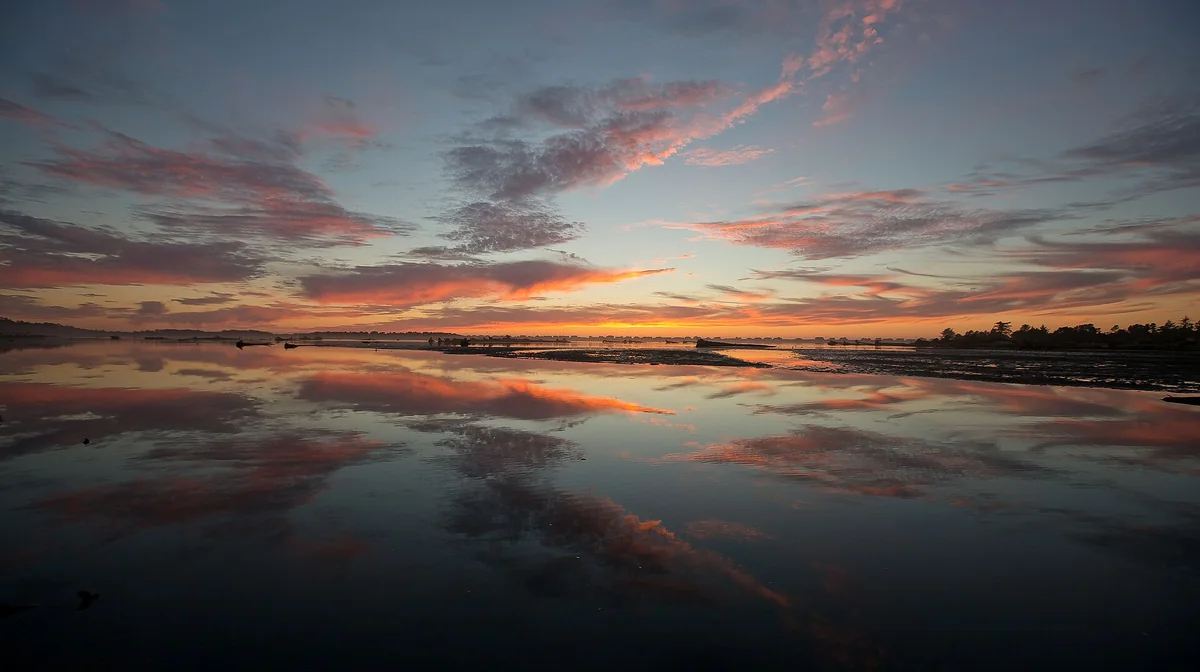
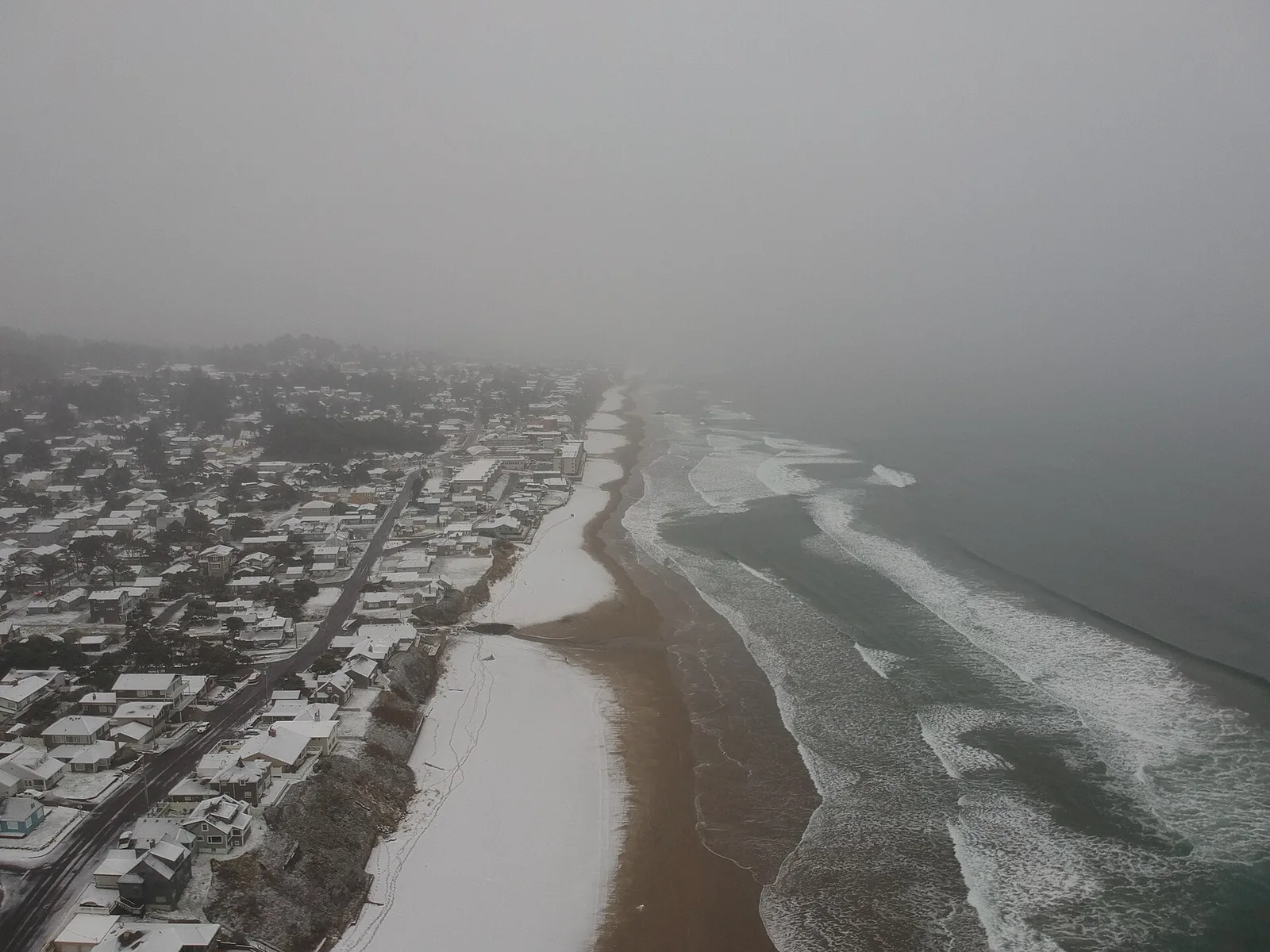
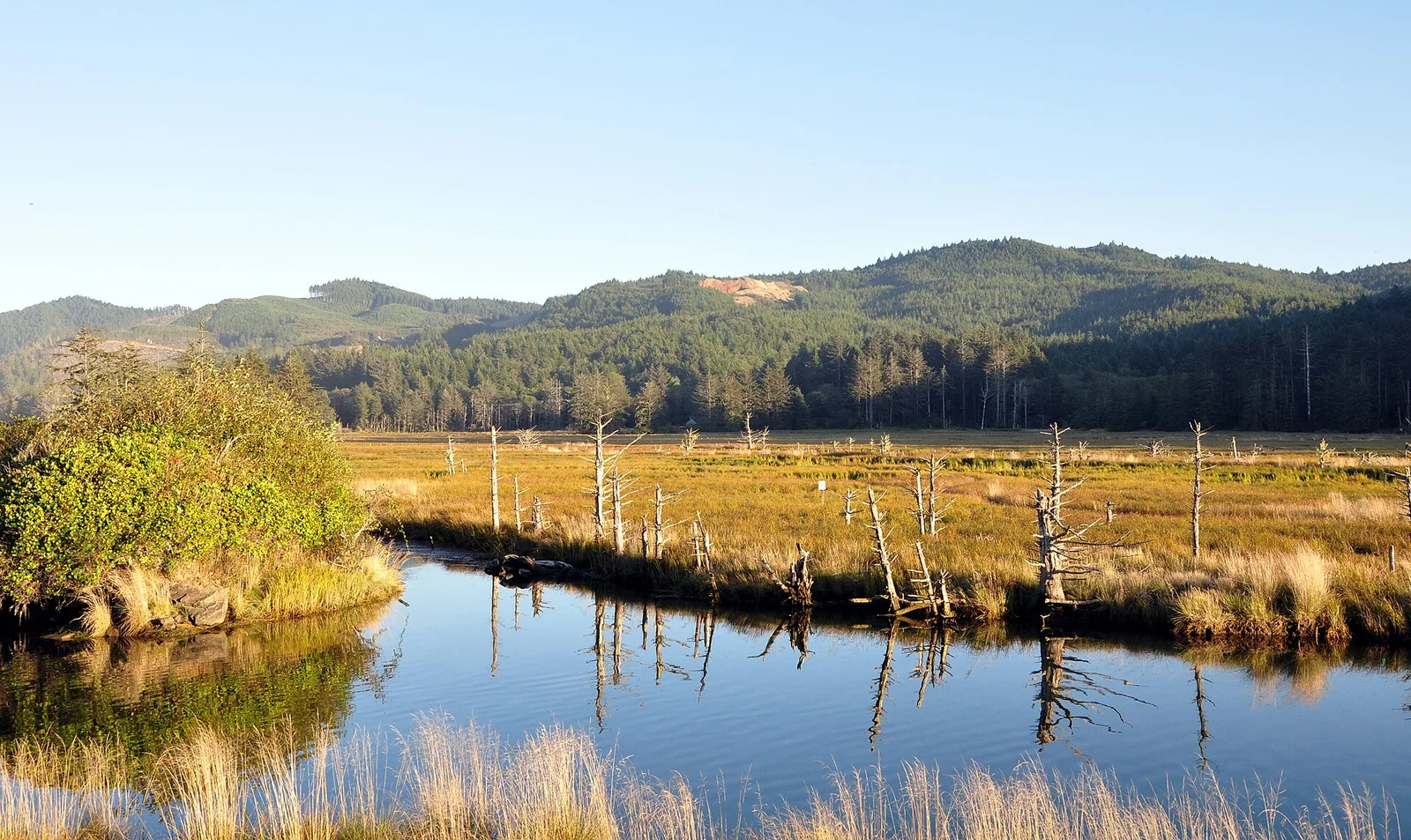
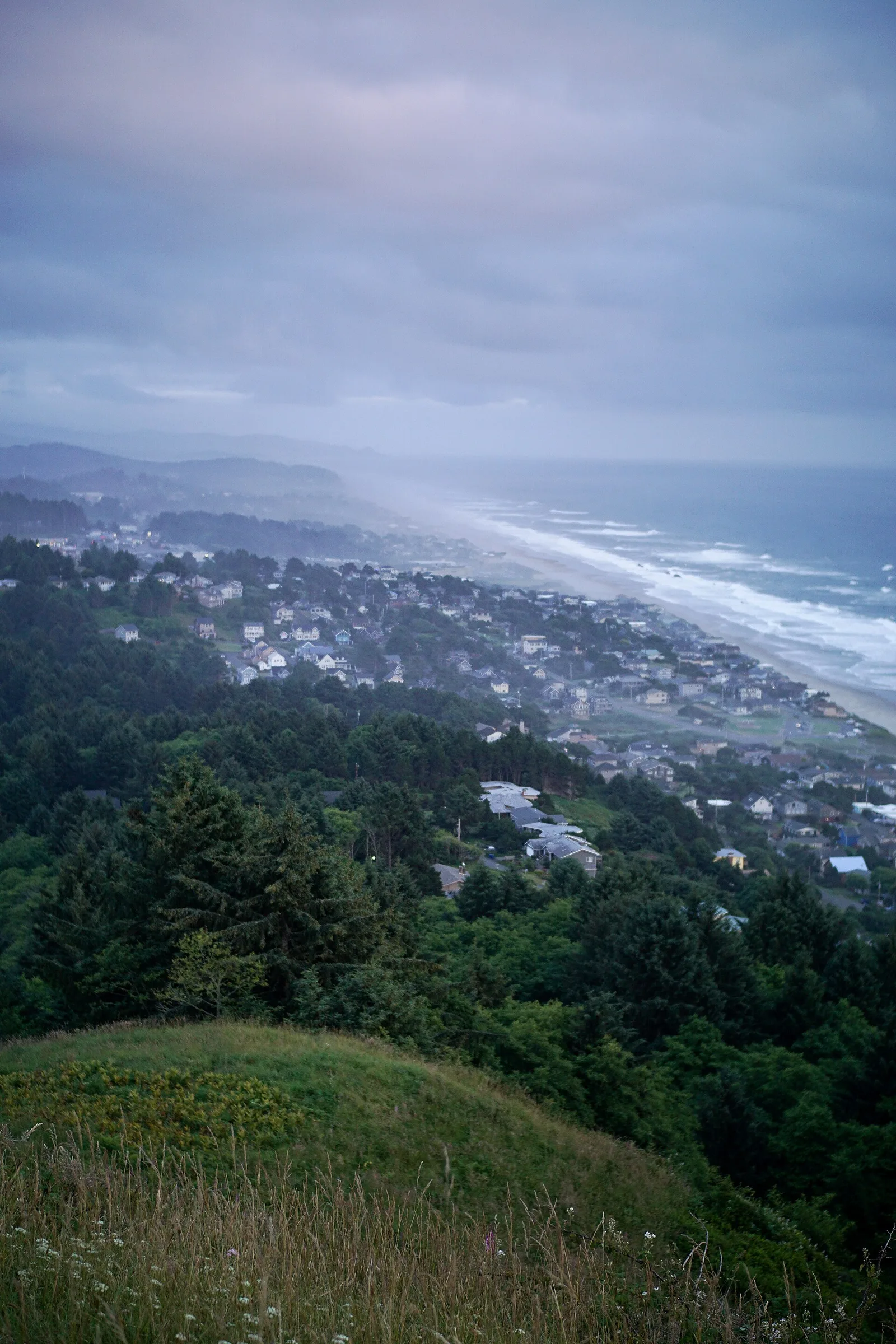
The beach before the wind gets up
Mornings are usually the calmest part of the day on this coast. Tell guests where coffee opens early and which beach access is closest, with the number of stairs, because that detail decides whether they go.
Expert short-term rental marketing to grow your bookings and nightly rate in Lincoln City, Oregon, USA.
* Market averages. Properties marketed by Cavmir typically exceed these figures by 25–45%. Data sourced from AirDNA, STR market reports, and Cavmir internal analytics.
Lincoln City runs seven and a half miles along the central Oregon coast, which is longer than most people realise, and it is closer to Portland than any other real beach town — about ninety minutes on a good day, which is why the weekend traffic is what it is. The beach here is wide, grey-sand, open to the Pacific and completely public, because Oregon made its entire coastline public in 1967 and nobody can build in front of you. Devils Lake sits behind the town, the D River runs from the lake to the ocean in a couple of hundred feet, and Cascade Head rises at the north end. The trade here is not sunbathing. It is storm watching in winter, whale watching in the migration weeks, kite flying, crabbing, glass floats hidden on the sand and the general business of standing on a cold beach in a coat feeling better afterwards. For an owner the defining fact is regulatory: Lincoln City licenses vacation rental dwellings and caps them by zone, several of those caps are full, and that changes what a licensed property is worth.
This is a licence market now, and understanding that is most of understanding Lincoln City. The city operates a vacation rental dwelling licence programme with numerical caps in its residential zones, and where the cap has been reached no new licences issue until the count falls below it. The practical effect is the same as in the Florida Keys: supply is fixed, your competitive set is knowable, and a licensed property is a different asset from an unlicensed one on the same street. Demand is driven overwhelmingly by the Portland metro, which produces a weekend-heavy calendar, a lot of two-night stays and a great deal of last-minute booking when the forecast turns. Winter is not a dead season here — Oregon coast storm watching is a genuine product with a real audience, and the whale migration weeks in late December and late March bring predictable traffic. The listing set is dated. A lot of the inventory is older beach houses photographed in flat grey light with no attempt to sell the thing people actually come for, which is the weather. That is an unusually large opening for anyone willing to present a property properly.
Nearby Markets: Cannon Beach | Portland | Bend
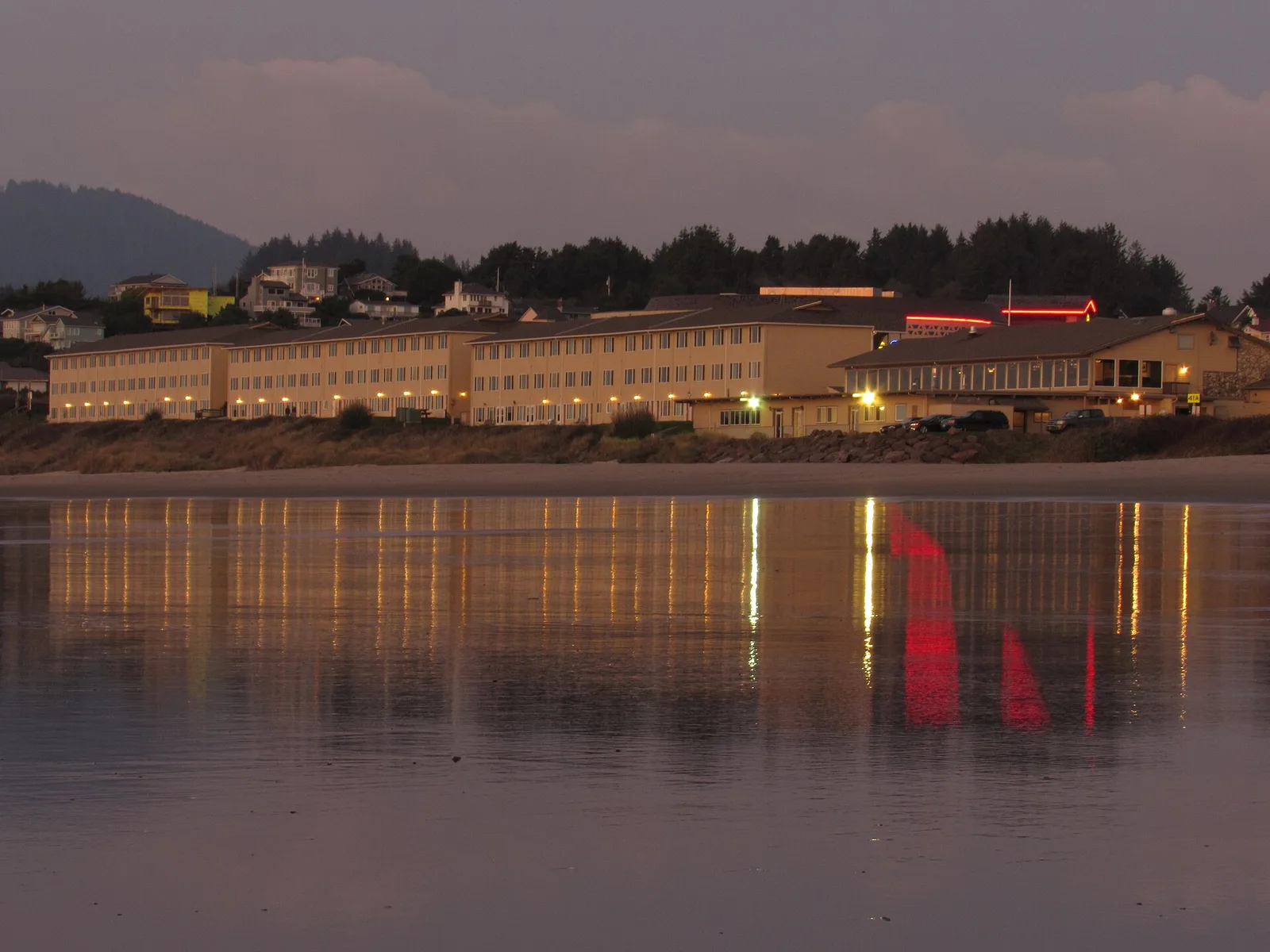
A few of the visual fingerprints we lean into when we shoot, brand and market a Lincoln City property — courtesy of the open Wikimedia Commons archive.
Cavmir markets licensed Lincoln City properties around the coast rather than around the furniture. We photograph the house in the light this shoreline actually gives — including the winter light, which is the best photographic asset on the Oregon coast and the one nobody uses — and we build the image order around the ocean view, the deck, the fireplace and the walk to the sand. We write the listing and the site for the trip people are really taking: the storm weekend, the whale weeks, the crabbing day, the kite festival, the drive from Portland with the stops worth making. We build your direct-booking site and rank it for the beach, storm-watching and Devils Lake searches that Portland travelers actually use, then set up the email flow that a weekend market with this much repeat traffic rewards heavily. We put your licence status in your marketing, because in a capped city that is a real signal. We help position and market your property. We never manage it or touch your keys.
Lincoln City is younger than most of the people living in it, because it did not exist until 1965. What existed instead was a seven-mile string of separate small beach towns along Highway 101 — Oceanlake, Delake, Nelscott, Taft and Cutler City — that had grown up independently through the early twentieth century as the automobile made the Oregon coast reachable from the Willamette Valley. Each had its own identity, its own business district and, increasingly, its own inability to pay for water, sewers and roads on its own.
After several failed attempts, the five voted in December 1964 to consolidate, and the new city was incorporated on 3 March 1965. Naming it was the hard part, because choosing any one of the five names would have been a fight. So the city ran a contest among local schoolchildren, and Lincoln City — after the county, which is after the president — was the answer. The old town names survive as neighbourhood names and as the reason the town has five distinct commercial districts strung along a highway rather than one downtown.
Two years later, Oregon did something that shaped every coastal property in the state. The 1967 Beach Bill, driven through by Governor Tom McCall after a motel owner in Cannon Beach tried to fence off the sand in front of his property, established public rights along the entire Oregon shoreline. No one can privatise a beach in this state, which means the view and the access in front of your property cannot be taken away or built on.
The Confederated Tribes of Siletz Indians, whose reservation once covered much of this coast before it was steadily reduced and then terminated altogether in 1954, were restored to federal recognition in 1977 and opened Chinook Winds on the beach in the 1990s, which remains one of the town's largest employers and a year-round demand driver. And since 1997 the city has been hiding handblown glass floats on the beach through the off-season for visitors to find and keep, which is the single cleverest piece of shoulder-season tourism marketing on this coast.
Lincoln City is a weekend market first and it should be priced like one. Portland is roughly ninety minutes away, which means Friday and Saturday nights carry the calendar and Tuesday does not, and a flat seven-day rate is leaving money on both ends. Peak is summer, June through early September, with July and August strongest, but the seasonal spread here is narrower than most people expect because winter is a genuine product: Oregon coast storm watching brings people out deliberately to sit behind glass and watch weather come in off the Pacific, and it is booked by adults with money and no children in tow. The whale migration weeks in late December and late March are fixed, predictable dates that move demand and are almost never priced against. The other structural pricing fact is the licence. In a city where several residential zones have hit their vacation rental caps, a licensed property is not competing against unlimited new supply, so pricing to undercut the field is usually the wrong instinct. Price the view honestly too — ocean front, ocean view and a block back are three different products in this town, and owners routinely blur the distinction in their listings, which costs them rate and earns them complaints.
Peak is July and August, with June and early September close behind. Spring break in late March is a reliably strong week. The winter storm-watching season from November through February is a real second product with an older, quieter, more deliberate guest, and rates hold up better than most owners assume if the property is marketed for it. The whale migration weeks in late December and late March bring predictable, datable demand. The soft windows are the deep midweek stretches year-round and the flat weeks in late January and early February. Because Portland is close, this market books late and reacts to the forecast — a clear weekend fills fast on a Wednesday — which argues for flexible minimum stays outside peak and against holding out for early bookings that this market does not really produce.
Lincoln City runs one of the more structured short-term rental regimes on the Oregon coast, and it is the single most important thing to understand before buying here. The city requires a vacation rental dwelling licence, administered under its own chapter of the municipal code, and — critically — it caps the number of licences available in its residential zones by zone.
Those caps are real numbers and several have been reached. Where a zone is at its cap, the city does not issue new licences until the count falls back below it, which means a would-be operator cannot simply buy a house, pay a fee and start renting. The licence is attached to the property and the practical effect is the same as in any capped market: supply is fixed, existing licensed properties are a defined and defensible set, and the licence itself carries value separate from the house. If you are buying with a short-term rental plan, verify with the city's planning and community development department, in writing, that the specific property holds a current licence, that the zone permits it, and on what terms the licence survives a sale. Do that before you make an offer, not during escrow.
Expect the licence to come with conditions rather than being a formality — occupancy limits tied to the property, parking requirements, quiet hours, trash and noise standards, a responsible local contact, and annual renewal with inspection are all standard features of this kind of programme. Complaints have consequences. Read the current code chapter rather than a summary.
On tax, Oregon has no sales tax but does levy a state transient lodging tax, and Lincoln City levies its own city transient room tax on top, which is one of the higher municipal lodging rates on the coast. Register with both the state and the city, understand what each booking platform is remitting, and get set up before you open a direct channel. Confirm the current caps, fees and tax rates with the City of Lincoln City directly — this is an actively managed programme and the numbers move.
Sell the weather, not the sunshine. The single biggest miss in Lincoln City marketing is a photo set that only shows blue sky, in a town whose best product is a January storm seen from inside a warm room with a fire going. Shoot the winter. Shoot the deck in the rain, the fireplace, the window with grey ocean behind it. Second, be exact about the view and the walk. Ocean front, ocean view and three blocks back are different properties, and a guest who books the wrong one will say so in writing — describe the walk to the sand in minutes and in stairs, because stairs matter to more guests than owners think. Third, market the fixed dates. Whale watch weeks, the kite festivals and spring break are known a year in advance and almost nobody prices or promotes against them. Fourth, explain the glass floats, the crabbing at Siletz Bay and the tide tables, because these are the things that make a Lincoln City trip feel like something rather than a night at the beach. Fifth, put your licence number where guests can see it — in a capped city, it signals you are the real thing. Sixth, build an email list around the winter guests, who are the most loyal and least price-sensitive segment on this coast and who almost nobody bothers to contact twice.
Acquisition is the hard part now, because in capped zones you are buying a licence as much as a house and that prices in. Weather is the operational reality — this coast is wet, windy and salty, and maintenance on exterior paint, decks, windows and roofs runs higher than inland owners expect. The weekend-heavy demand pattern leaves midweek gaps that are hard to fill outside summer. Licence conditions and complaint-driven enforcement mean the permission is ongoing rather than permanent. Tsunami zone designation applies to parts of the coastal strip and affects insurance conversations and guest questions. And the local politics around vacation rentals on the Oregon coast have been contentious for a decade, with caps tightening rather than loosening — an owner should assume the programme will get stricter, not looser.
Insurance on the Oregon coast is a weather-and-salt conversation before it is anything else. A standard homeowner's policy will not follow you into short-term rental use, so you need a short-term rental or commercial policy with real liability limits, and decks, exterior stairs, hot tubs and any beach access path should be named specifically — stairs down a bluff are a genuine liability item and carriers will ask. The claims that actually happen here are wind damage, water intrusion around windows and doors, roof failure and rot, all accelerated by salt air and near-constant winter moisture. Ask directly about wind and water coverage terms rather than assuming. Flood and tsunami exposure deserves an explicit conversation for properties in the coastal strip: flood is a separate policy, standard policies exclude earthquake, and this coastline sits on the Cascadia subduction zone, which is a real conversation to have with your carrier rather than a theoretical one. Get quotes during diligence, not after closing, and have guest injury, guest property damage, loss of rental income and business interruption written into the policy in terms you can read.
Oregon has no sales tax, which simplifies things, but lodging is taxed at two levels. The state levies a transient lodging tax on short-term stays, currently one and a half percent, administered by the Oregon Department of Revenue. Lincoln City levies its own city transient room tax on top of that, at a rate that is among the higher municipal lodging rates on the Oregon coast — confirm the current figure with the city rather than relying on this page. Register with both before your first booking. Booking platforms collect and remit a good deal of the lodging tax on reservations they process, but they do not do so on direct bookings, and direct bookings are exactly what effective marketing produces, so understand precisely what each channel remits and keep platform and direct revenue separated from the first reservation rather than reconstructing a mixed year in April. Oregon does have a state income tax, which matters for out-of-state owners: rental income sourced here is generally reportable to Oregon and the interaction with your home state depends on residency and structure. Your accountant should also look at how a weekend-weighted calendar, personal use days and the higher maintenance costs of coastal property interact for your situation.
Financing in Lincoln City is conventional with one large local wrinkle: the licence. If the property's value and your pro forma depend on a vacation rental dwelling licence, then the licence is part of what you are buying, and appraisers do not always account for that the way a buyer does — which can open a gap between contract price and appraised value. Verify the licence and its transferability before you go under contract, because a capped zone means you cannot simply apply for a replacement. Beyond that, expect underwriting to focus on the usual coastal items: roof age and condition, deck and stair condition, window and siding integrity, evidence of water intrusion or rot, and insurability. In flood or tsunami zones, expect flood insurance requirements and a longer diligence period. Second-home and investment loans carry higher rates and larger down payments; debt-service-coverage products underwritten on rental income are available in Oregon and are often the practical route for an investor, and those lenders will want to see the licence and documented rental history. Model a weekend-weighted calendar honestly rather than a flat occupancy figure, and build in coastal maintenance at a rate an inland pro forma would not.
The regulatory direction on this coast has been one way for a decade, and an owner should plan accordingly. Lincoln City moved from an open market to a licensed one to a capped one, and the pressure across Oregon coastal communities — driven by housing availability for the people who work in these towns — runs toward tighter rather than looser. For a licensed owner, that is protective: caps freeze your competitive set. For a buyer, it means the licence is the asset and it should be verified with the care that implies. The medium-term demand picture is stable and structurally good: the Portland metro keeps growing, this is the closest real beach town to it, and Oregon's public beach law means nobody can build in front of your view or fence off your sand. The longer-term questions are physical — coastal erosion, winter storm intensity, insurance cost and the Cascadia seismic risk that underlies this whole coastline. Those argue for buying carefully, insuring properly and maintaining ahead of failure rather than for staying away. Own the guest relationship, market both the summer and the storms, and a licensed Lincoln City property is a durable position.
The Oregon coast is not a beach in the way that word is usually meant. It is grey sand, cold water, wind, driftwood the size of cars, and weather coming in off two thousand miles of open Pacific. People do not come here to lie down. They come to walk a long way in a coat, look for glass floats the city hides on the sand, eat something fried, and stand at a window in January watching a storm arrive. Lincoln City is seven and a half miles of that, strung along a highway, stitched together in 1965 out of five separate little towns that could not afford their own sewers — which is why it still feels like five places rather than one and why the neighbourhood names are all different. There is a river in the middle of it that has been in a decades-long argument with Guinness World Records about whether it is the shortest in the world. There is a lake behind the town, a headland to the north, and crabbing docks to the south. What we like about it commercially is the winter. Storm watching is a genuine, bookable, adult product with real rates attached, and the overwhelming majority of listings in this town still show nothing but blue sky. Photographing the weather instead of apologising for it is the easiest rate increase on this coast.
A great property in Lincoln City doesn't just want a listing — it wants a point of view, an audience, and a brand the city itself would recognise.
Eight answers to put in your guest guide. These are the questions guests ask anyway, and getting them right in advance is the cheapest review insurance there is.
Mornings are usually the calmest part of the day on this coast. Tell guests where coffee opens early and which beach access is closest, with the number of stairs, because that detail decides whether they go.
Lincoln City has five distinct districts rather than one downtown, which confuses visitors. Name the two you would actually send someone to and tell them to book on a summer or holiday weekend.
The city has been hiding handblown glass floats on the beach for finders to keep since 1997, mostly through the off-season. Tell guests when the drops happen and where to walk. It turns a grey morning into a hunt.
It rains here and pretending otherwise helps nobody. Give guests two indoor options and one that works in the rain anyway, like a long beach walk with the right jacket.
The best weather on the Oregon coast is frequently after Labor Day — calmer, clearer and empty. Locals know it and visitors do not.
A headland trail north of town with one of the best views on the coast, plus an estuary that is worth an hour on its own. Tell guests about the seasonal trail closure so they do not drive up for nothing.
This is the product. Big weather off the Pacific, watched from a warm room. Tell guests when the storms usually come and to book a west-facing window and stay in.
Tide tables decide half of what is possible here — beach walking, tide pools, crabbing at Siletz Bay. Give guests the tide app, the crabbing spot, and where to rent the gear.
A few composite engagements, drawn from how Cavmir typically works with owners of licensed coastal property in a capped market. Illustrative rather than any single client's file.
A photo set shot entirely in July sunshine, so the property was invisible to the winter storm-watching audience that would have paid well for exactly the same west-facing windows.
Built a winter identity — reshot the property in weather, added a storm-watching page to the site with fireplace, window and deck imagery, and wrote copy aimed at adults booking a two-night weather weekend rather than a family beach week.
Winter weekends began filling at rates that no longer read as an off-season discount, and the calendar's dead stretch became a distinct second season.
Vague view language producing guests who arrived expecting sand outside the door, followed by reviews about the walk and the stairs rather than about the house.
Rewrote the listing to state the walk in minutes and the access in stairs, reshot the actual view honestly, and repositioned the property on price and quiet rather than on a view it did not have.
Expectation-driven complaints dropped and the property started attracting guests who chose it deliberately for what it was rather than being disappointed by what it was not.
A steady base of returning Portland weekenders rebooking through a platform search every time, in a capped market where the owner's licence was itself a selling point nobody could see.
Built a direct-booking site with the city licence number displayed, moved past guests onto an email list with early access to whale watch and storm weekends, and set premiums against the fixed dates twelve months out.
A growing share of repeat weekends were booked direct, and the fixed-date weeks stopped being sold early at ordinary rates.
Demand in Lincoln City peaks around July through August and runs quietest around January, February and April. Here is how the year actually books — and what to do about each stretch of the calendar.
July and August, with June and early September close behind, and a hard spring break week in late March. Because Portland is about ninety minutes away, the calendar is weekend-heavy and books late — a clear forecast on a Wednesday fills a Saturday. Flat seven-day pricing gives away both ends of that pattern.
Late September and early October are frequently the best weather of the year on this coast and are consistently under-booked. May is similarly good. Both suit couples and longer stays and respond well to email sent to last summer's guests before the general calendar opens.
Deep midweek year-round and the flat weeks in late January and early February. The honest answer is not to discount the peak to fill them but to put a longer-stay rate in the market and to sell the winter storm-watching product properly, which is a genuine season most owners ignore.
Summer weeks and spring break fill through the spring. Ordinary weekends book late — frequently inside two weeks and often on the forecast. Winter storm weekends can be booked either well ahead by regulars or at the last minute when a system is forecast, which rewards being visible rather than holding out.
Two and three-night weekend stays dominate, with week-long family stays in July and August and longer winter stays from storm watchers and remote workers. Midweek outside summer is the main gap.
Properties with a genuine ocean view and a short, low-stair walk to the sand outperform larger houses set back, and the price gap should be wider than most listings imply. A fireplace and a west-facing window are the entire winter product. Hot tubs perform well on this coast because the weather is cold for much of the year.
Start with photography that shows what a guest actually gets here, then write the listing around a real itinerary rather than a feature list. Build a direct-booking site so returning guests can come back without going through a platform, and keep an email list segmented by season so you can reach last year's visitors before the calendar opens. Local search matters more than people expect in a market this size, because guests search the destination and the attraction rather than the word rental. A marketing agency layer handles the photography, the listing copy, the direct-booking site and the local SEO as one system instead of four disconnected jobs.
July and August, with June and early September close behind and a hard spring break week in late March. What most owners miss is that winter is a real second season here — Oregon coast storm watching is a genuine, bookable product with an adult audience — and the whale watch weeks in late December and late March are fixed dates that move demand every year.
Summer weeks and spring break fill through the spring. Ordinary weekends book late, frequently inside two weeks and often on the weather forecast, because Portland is only ninety minutes away. That makes being visible and sensibly priced more valuable than holding out for an early booking.
Overwhelmingly the Willamette Valley — Portland, Salem, Vancouver, Eugene and Corvallis — and almost everyone drives. This is the closest real beach town to the Portland metro, which is why the calendar is weekend-shaped. Geo-targeted advertising into those metros beats anything national.
An ocean view and a short, low-stair walk to the sand carry the booking, and the stair count matters to more guests than owners think. A fireplace and a west-facing window are the whole winter product. A hot tub performs well on a coast that is cold for much of the year, and beach gear and towels are a cheap way to look prepared.
Run your Airbnb, Vrbo, or website through Cavmir's free grader. It checks the things that decide whether guests book in Lincoln City — photos, listing copy, page speed, local search — and shows you where bookings leak. Takes about a minute, and there's no sales call attached.
If the report says your booking engine is the weak link, that's fixable: a direct-booking website of your own means repeat guests stop paying platform fees to come back to you. That's the work Cavmir does — see Airbnb website design in Lincoln City.
Talk to Cavmir today. We'll show you exactly what your Lincoln City property is leaving on the table — and how fast we can change that.
Book a Free Strategy Call