

Coffee & First Light
Lowell Park before the boats wake up
The riverfront park at the bottom of Main Street, early, with the water flat and the bluffs across in Wisconsin still dark. Ten minutes and a coffee and the town makes sense.

Expert short-term rental marketing to grow your bookings and nightly rate in Stillwater, Minnesota, USA.
Sixteen services, one team. Everything below is built in-house and scoped to your property and market. Most owners start with the 12-Step System.
Every engagement is quoted to your portfolio. These are the ready-made scopes owners pick most — our Fall Special (55% off list or more) is already applied to the website, King Broker, Hotels and à la carte scopes. A clear proposal within 48 hours.
The work is public. Selected engagements and what changed — and reviews from the owners and managers behind them.
* Market averages from AirDNA and STR market reports. A single home's numbers depend on its size, its location and how it is marketed.
Cavmir is an Airbnb marketing agency. We build the brand, the direct-booking website and the marketing for short-term rentals in Stillwater.
Stillwater sits on the Minnesota bank of the St. Croix River, about thirty minutes east of downtown Saint Paul, and it calls itself the birthplace of Minnesota with reasonable justification — the convention that started the territory met here in 1848. It was a lumber town first, and the money from the pine that came down this river built the brick main street and the houses on the bluff above it. What it is now is the Twin Cities' closest weekend escape: a walkable downtown along the water, a historic lift bridge that no longer carries cars and instead anchors a river loop trail, boats on the St. Croix all summer, and a valley of wineries, breweries and orchards on both sides of the state line. The rental stock is bluff houses, downtown lofts and river cottages. The city licenses short-term rentals in three classes with hard caps on each, which makes a license here a scarce and valuable thing.
Stillwater is a short-drive market for three million people, and that produces a very particular pattern: strong weekends, soft weekdays, and a season that peaks hard in summer and autumn. Boating season from May through September fills the riverfront. Autumn is arguably the better season — the bluffs along the St. Croix turn, the orchards and wineries run their harvest weekends, and the town's October events draw heavily from the metro. December does real business on the strength of the downtown's holiday programming. January and February are quiet, though the valley has a genuine winter following for skiing, skating and the ice caves further up the river. Weddings are a significant and under-served driver: the valley is full of barn and estate venues and whole houses book for whole weekends around them. The defining feature of the supply side is the licensing structure. The city permits a limited number of hosted, owner-occupied and non-owner-occupied rentals, with the strictest cap on the pure investment category. That makes a licensed non-owner-occupied property in Stillwater a genuinely constrained asset and makes verifying license availability the first step of any purchase here.
Nearby Markets: Minneapolis | Duluth | Lake Geneva
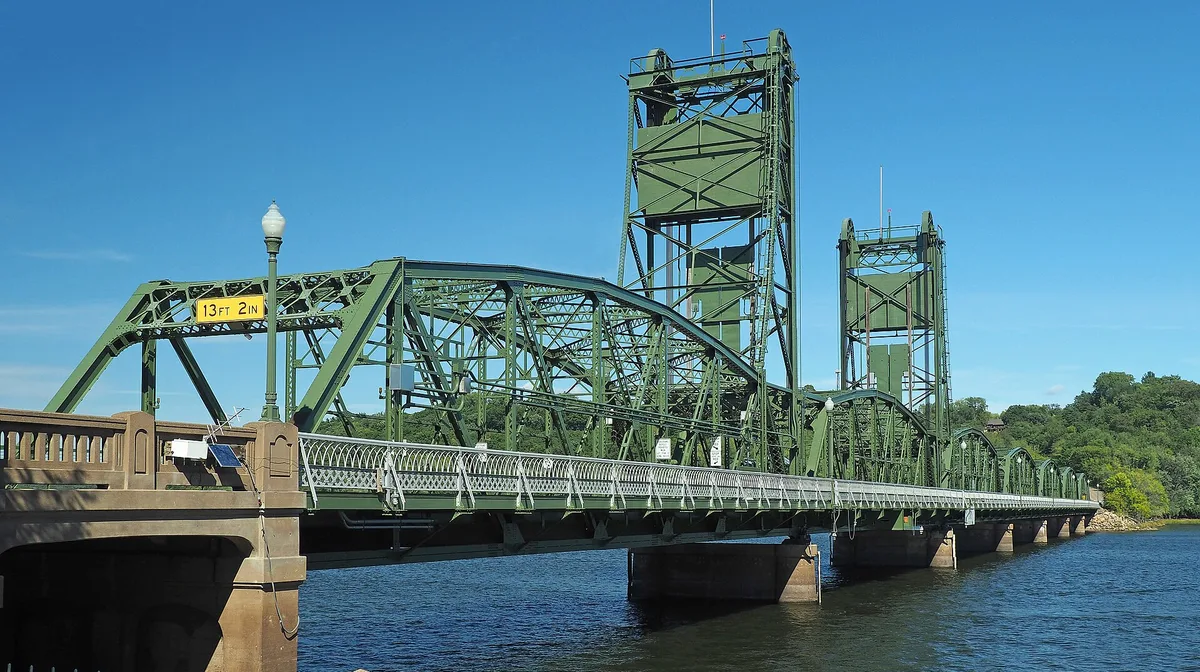
A few of the visual fingerprints we lean into when we shoot, brand and market a Stillwater property — courtesy of the open Wikimedia Commons archive.
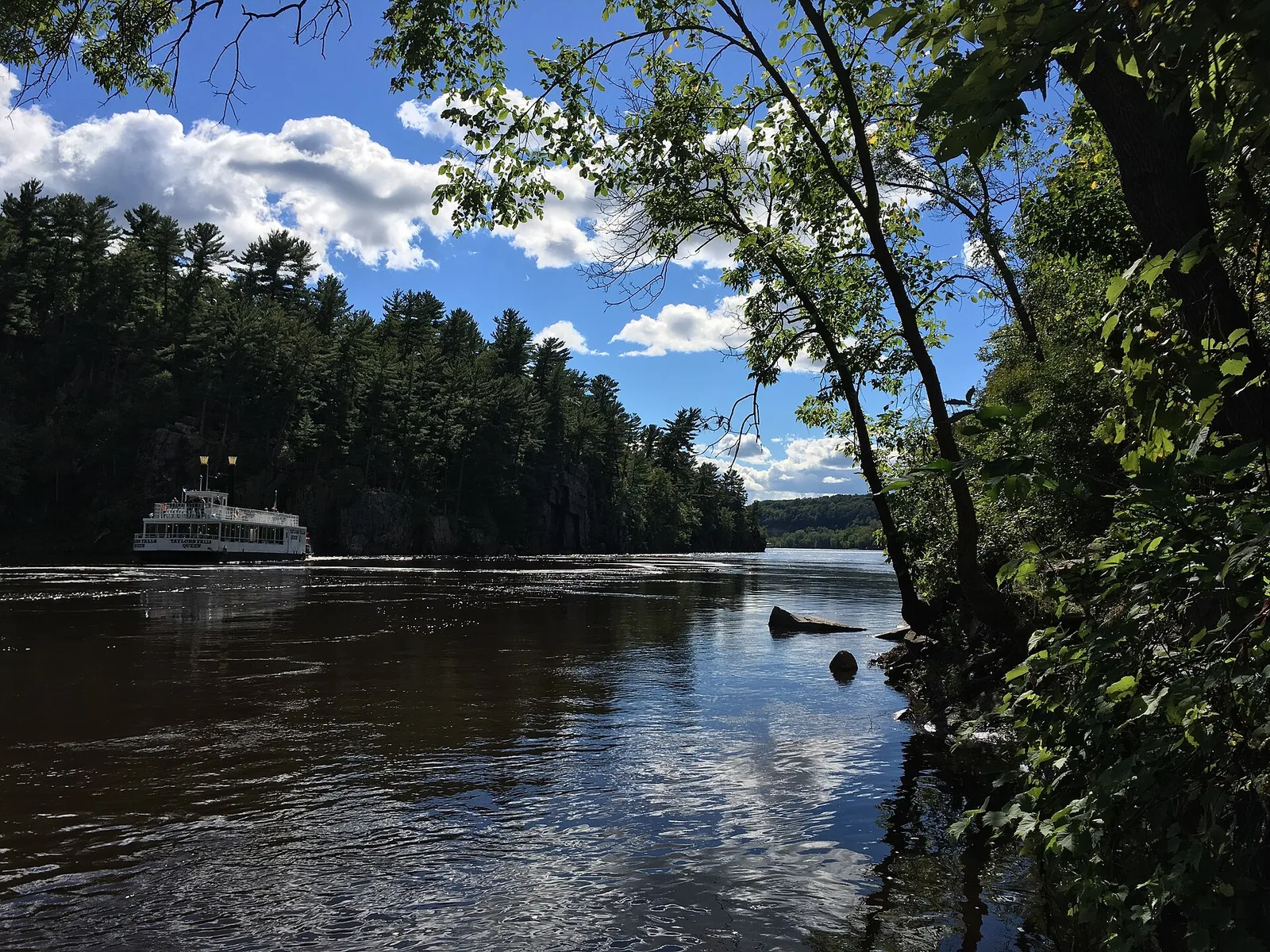
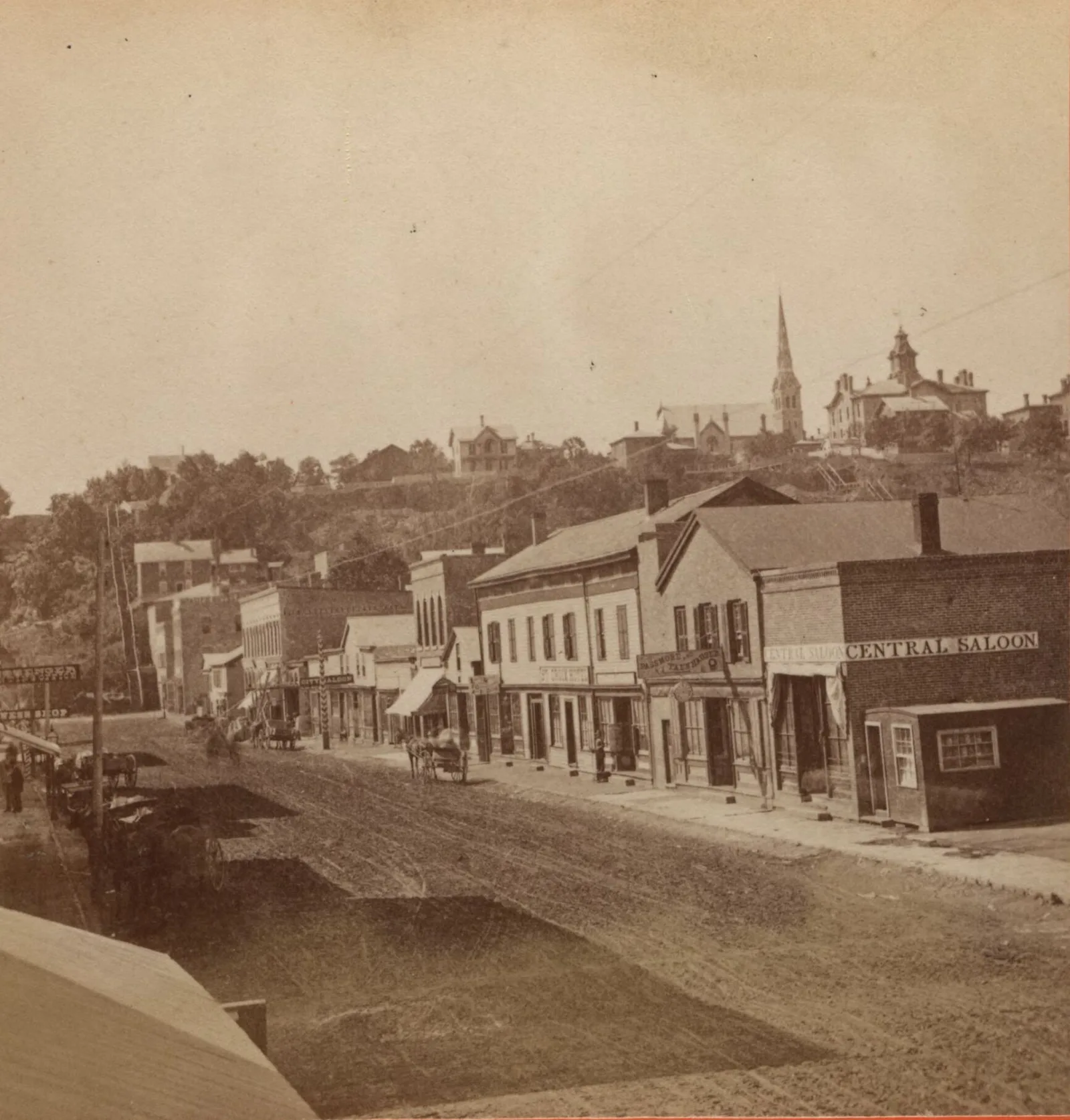
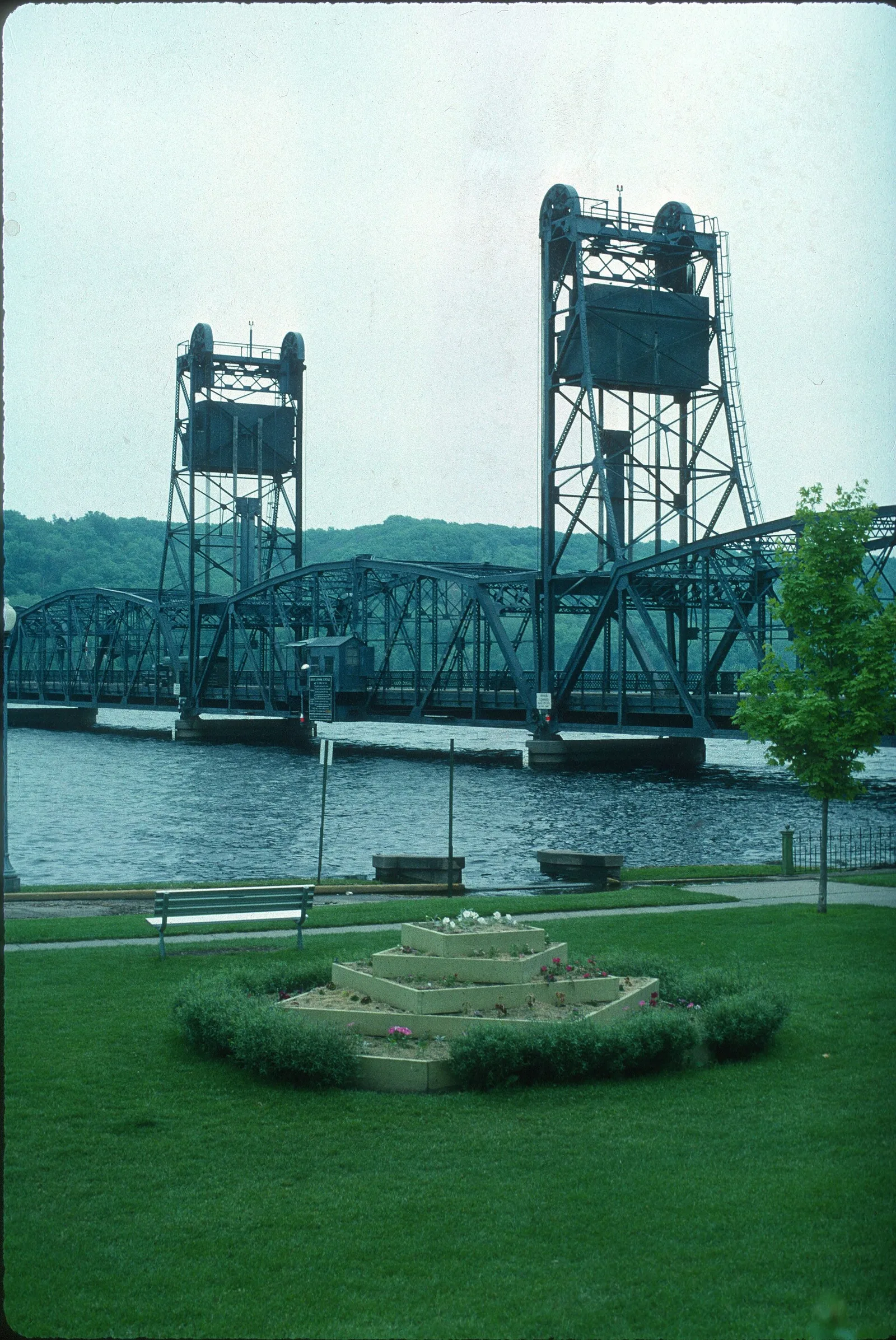
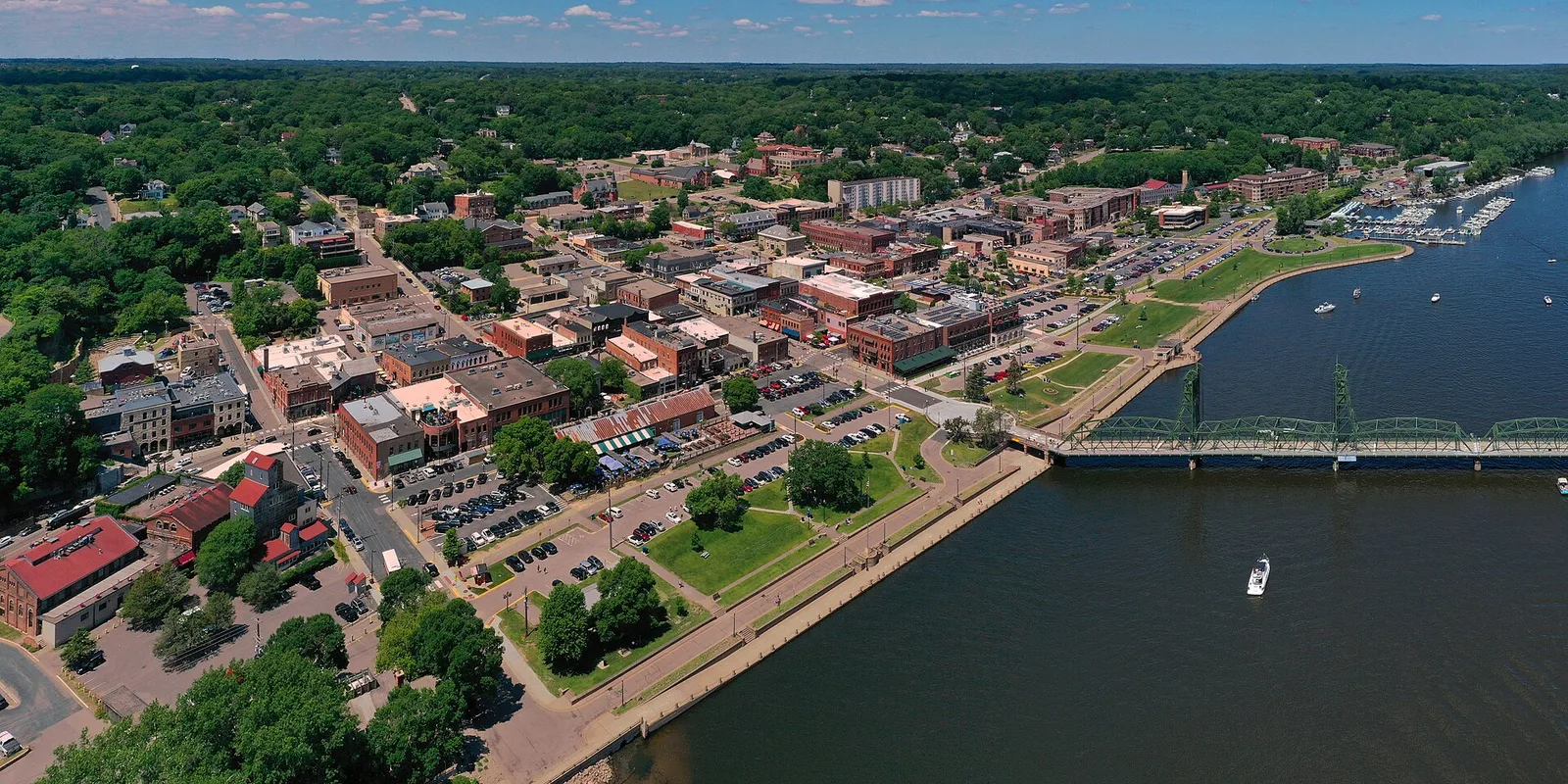
Cavmir markets Stillwater properties as the metro weekend they actually are. We photograph the house and the river and the walk into town, and we shoot in autumn as well as summer because the bluffs in October are the best sales asset this valley has. We write copy that names the specific things a Twin Cities couple is planning — the loop trail across the lift bridge, the wineries up the valley, a table downtown on a Saturday night — rather than generic river-town language. We build the direct-booking site, get it visible for the St. Croix Valley and Stillwater weekend searches, and build the email list that turns a summer guest into an October guest. We go after the wedding-weekend business deliberately, because it is real here and almost nobody markets to it. And we work with your license class from the start, because whether you are hosted, owner-occupied or a licensed investment property changes what you can offer and how you should be positioned. We help position and market your property. We never manage it or touch your keys.
Stillwater calls itself the birthplace of Minnesota and has a reasonable claim to it: the convention that petitioned for territorial status met here in 1848, a decade before statehood. What made the town matter was the river and the pine. The St. Croix drained an enormous white-pine forest, and Stillwater sat at the point where logs could be sorted, boomed and milled before heading down to the Mississippi. At its height the lumber industry here was one of the largest in the upper Midwest, and the money from it built the brick commercial buildings along Main Street and the elaborate houses on the bluff above them. When the pine ran out in the early twentieth century, the mills closed and the town settled into a long quiet period that, as it happens, preserved everything.
The modern chapter is about a bridge. The Stillwater Lift Bridge, built in 1931, carried traffic across the river into Wisconsin for eighty-six years and was a permanent bottleneck through the middle of downtown. When the new St. Croix Crossing opened in 2017, the lift bridge closed to vehicles, and rather than being demolished it was converted into the centrepiece of a loop trail — a walking and cycling circuit crossing the river on the historic bridge and returning on the new one. That single decision transformed the town's waterfront from a traffic corridor into a destination. Around the same period, the St. Croix Valley's wine, cider and brewery scene matured on both sides of the state line, boutique hotels opened in restored downtown buildings, and Stillwater became the Twin Cities' default weekend escape.
Short-term rentals arrived alongside that and the city moved early, adopting an ordinance in 2017 that licenses rentals in three distinct classes with a hard cap on each. That structure is unusual, it has held, and it is the defining feature of the market.
Stillwater is a weekend market for a metro of three million people, and that shape is the whole pricing problem. Friday and Saturday nights from May through October carry the year and can hold real rates, especially for properties within walking distance of Main Street. Sundays are soft. Weekdays are soft outside of summer. October is the strongest month on the calendar — the bluffs along the St. Croix turn, the orchards and wineries run harvest weekends, and the town's autumn events pull heavily from the metro — and it is frequently underpriced because owners think of Minnesota autumn as short rather than as peak. December does genuine business on the strength of downtown holiday programming. January and February are the true off-season. The two levers most owners here never pull are wedding weekends and midweek. The valley is full of barn and estate wedding venues, whole houses book for whole weekends around them, and those bookings are planned six to twelve months ahead by people who are not price-shopping. Midweek in summer and autumn is winnable with a real discount aimed at remote workers and retired couples from the metro. Set four tiers, carve out October separately, add weekend minimums in season, and price weddings as their own product.
Weekend-driven with a strong autumn. Summer from May through September is the volume season, powered by the river, the boats and the trail. October is the rate peak — leaf colour on the bluffs plus harvest weekends at the valley orchards and wineries. November quietens, then December picks up on holiday programming downtown. January and February are the softest months, though the valley has a genuine winter following for skiing, skating and the frozen river landscape, which is a product almost nobody markets. March and April are mud and thaw and are hard. The available upside in this market is October pricing, wedding weekends, and midweek, in that order.
Stillwater has one of the more clearly structured short-term rental regimes in the upper Midwest, and it is built around three licence classes with hard numerical caps on each. The city adopted its ordinance in 2017, permitting rentals of thirty days or fewer where the owner holds the appropriate licence. Type A is a hosted rental, where the homeowner is present for the whole of the guest's stay. Type B is unhosted but the property is still the owner's primary residence. Type C is the pure investment category — a property that is not the owner's residence and is used exclusively as a short-term rental. Recent city materials put the cap at 50 licences outside the downtown Central Business District, which has its own allowance, and there is no waiting list.
That cap is the number that matters most to an investor. An open slot is rare, and it is the thing most buyers assume they can simply obtain. Before you go under contract on anything in Stillwater intended as a non-owner-occupied rental, ask the city's community development department three questions in writing: how many Type C licences are currently issued, whether any are available, and whether an existing licence transfers with the property on sale. The answer determines whether your purchase is an investment or a house. Licence classes also carry their own operating conditions, so confirm what applies to yours rather than assuming they are the same.
On tax, short-term rental owners in Stillwater pay a three percent city lodging tax on lodging income, filed quarterly with the City of Stillwater. That obligation is separate from whatever a booking platform collects and remits, which is a distinction owners routinely get wrong. Minnesota state sales tax applies to short-term lodging as well, and local sales taxes may apply depending on the address. Because the city's lodging tax is filed by you rather than by the platform, get the quarterly calendar in place from the first booking. Outside the city limits, Washington County and the surrounding townships have their own rules, so a property in the valley but not in Stillwater proper is a different regulatory question entirely.
Sell October harder than summer. It is the best-looking month here by a distance, the demand from the metro is real, and it is routinely priced as a shoulder month. Shoot the bluffs and the river in mid-October and lead the listing with it from August onward. Second, name the walk. Downtown Stillwater is compact and the difference between a house four blocks up the bluff and one two blocks from Main Street is the entire product. Give the walk in minutes and mention the stairs, because the bluff is steep and guests do not expect that. Third, go after weddings on purpose. Build a page on your direct site for wedding-party and guest bookings, mention the valley venues by category, and set a two-night minimum on the weekends that fill. Almost nobody in this market markets to that guest and the bookings are large. Fourth, use the lift bridge and the loop trail. It is the single most distinctive thing about the town now and most listings do not mention it. Fifth, build a winter story rather than accepting two dead months — the frozen river, the holiday downtown, the fireplaces, the ski trails in the valley. Sixth, be explicit about parking. Downtown parking on an October Saturday is genuinely difficult, and telling guests exactly where to leave the car prevents the most common complaint in this market.
The licence caps are the structural constraint, and the Type C allocation in particular means a would-be investor may simply be unable to operate. Beyond that: the market is weekend-heavy and midweek is genuinely hard, winter is long and two months of it are close to dead, and the bluff geography means steep streets, difficult winter access and limited parking downtown. The town is also close enough to the Twin Cities that some potential guests simply drive home rather than staying over, which is an ongoing conversion problem rather than a demand problem.
A homeowner's policy will not carry paying-guest use, so start with a dedicated short-term rental policy with real liability limits, and make sure it matches your licence class — a hosted Type A arrangement and a whole-house Type C rental are different risks and a carrier will treat them differently. Minnesota-specific items dominate the rest. Winter is the big one: frozen pipes, ice dams and roof snow load are the classic upper-Midwest claims, and carriers will ask how heat is maintained and monitored when a property is empty in January. Steep bluff driveways and stairs are a genuine slip-and-fall exposure between November and March, and your guest guide and your policy should both acknowledge it. Riverfront and low-lying properties near the St. Croix need a flood conversation, since Minnesota's flooding is driven by spring melt and rain events. Older houses on the bluff bring wiring, chimney and foundation questions. Ask for guest injury, guest property damage and loss of rental income to be confirmed in the policy language.
Two separate obligations that owners here regularly conflate. First, the city: short-term home rental owners in Stillwater pay a three percent lodging tax on lodging income, filed quarterly with the City of Stillwater. That is your filing, not the platform's, and it is due regardless of how the booking was made. Second, the state: Minnesota sales tax applies to short-term lodging, and depending on your address local sales taxes may apply as well. Booking platforms collect and remit some state-level taxes on the reservations they process, which is exactly why owners assume the city lodging tax is handled too. It is not. Set the quarterly filing calendar from your first booking, keep platform and direct revenue in separate ledgers, and have your accountant confirm which state and local sales taxes apply at your specific address. Getting this right also matters for your licence, since compliance history is part of how a city with capped licences views a renewal.
Financing here turns on the licence more than on the building. If your purchase depends on being able to operate as a non-owner-occupied Type C rental and that licence class is fully allocated, the property is a house rather than an investment, and no lender or appraiser will flag that for you. Verify licence availability in writing before you commit. If you are buying to live in and rent as a Type A or Type B, that is a primary residence with rental income and should be financed and taxed accordingly, which is a different and generally cheaper conversation than an investment loan. The housing stock adds the usual old-building items: bluff-top Victorians bring foundation, roof and wiring questions, and downtown loft conversions in historic commercial buildings may need a portfolio or commercial product rather than residential financing. Debt-service-coverage lending is available for buyers scaling. Model a weekend-heavy calendar honestly — an annual average occupancy figure will badly overstate what a Tuesday in February actually earns.
The rule that decides most Stillwater purchases is the one buyers hear last. A short-term rental license here is issued to the owner, and it doesn't transfer when the house sells, so the buyer files a new application against the same cap as everyone else. Recent city materials put that cap at 50 licenses outside the downtown Central Business District, and there's no waiting list, so a listing that says “licensed rental” describes the seller's permission, which ends at closing. The rules sit in Ordinance 1093, adopted in 2017 and last updated in 2024, and they cover any stay of 30 days or less. Budget two to three months from application to license, because the process ends with a City Council approval, and set your closing date and your opening weekend around that gap.
Outside the Central Business District, every license comes out of the same pool of 50. When the city's count of open slots reads zero, there's no line to join; you watch for a slot to open and apply when it does. Downtown parcels run under a separate allowance, so a loft above a Main Street storefront and a house up the bluff are different questions, and you should ask the city for each count in writing. The paperwork then turns on who lives in the house. An owner's primary residence stays an R-3 dwelling under the building code. A property with nobody living there year-round is treated as R-1 transient lodging, and that application needs certified architectural plans, a Minnesota Department of Labor and Industry building-code summary and accessibility documentation. On a lumber-era house with steep stairs and narrow halls, that's real money and real lead time, so get an architect's quote before your inspection contingency runs out.
Every home gets fire and building inspections before the license issues. Recent city materials put a reinspection at about $150 each time the inspector has to come back, so walk the house with a contractor before the first visit. Each owner or operator who holds keys needs a Minnesota Bureau of Criminal Apprehension background check at about $15 apiece, and the application fee is nonrefundable. The license runs three years, and tracking the renewal date is your job. The operating rules are short and strict. Guests park on your property, never on the street. Events and parties aren't allowed. The owner or operator has to be within 60 minutes of the house whenever it's rented, which rules out running it from a cabin up north without a local operator. Enforcement escalates quickly. Operating without a license brings a compliance notice, then administrative citations starting at $250 that double with each violation, and a third substantiated complaint within 12 months can mean suspension, revocation or a downgrade to a provisional license. Confirm the current figures with the city before you budget.
Airbnb's Minnesota tax page says it collects the state's 6.875% sales tax on stays of 29 nights or fewer, cleaning fees included, plus local sales and special taxes in the 0.5% to 3.0% range. Stillwater's lodging tax isn't on that list, which is why the city's quarterly return stays with you. Vrbo also collects state taxes on its bookings, and both platforms may skip taxes a city administers itself. Direct bookings change the job. The day your own website takes a reservation, you need a Minnesota sales tax account, and you collect and remit everything on those stays yourself. The state sets your filing schedule by volume: monthly if you average more than $500 of tax a month, due the 20th of the following month; quarterly between $100 and $500; and annually under $100, due February 5. You file even for a period with no stays. A stay of 30 days or more is still taxed unless a written lease requires notice to end it. At the Capitol, HF 150, a bill on how local governments impose and collect lodging taxes, was introduced and sent to the House Taxes committee on February 10, 2025, with no later action listed, so treat it as pending until it passes. None of this is tax advice for your situation, so have an accountant who already files Minnesota lodging returns set up your calendar before you launch.
In the St. Croix Valley, the jurisdiction line matters as much as the view. A house inside Stillwater's city limits competes for the city's capped licenses. A house just past the city line may sit in Stillwater Township, with its own ordinance and a much smaller cap. The river towns north and south each write their own code, and the river itself is a state line, so a cottage in Hudson runs under Wisconsin's rules and taxes. Pick the guest first, then the jurisdiction, then the house. It's the read Cavmir starts from when we market a home here, because the address decides both the story you can tell and whether the rules let you rent the house at all.
Downtown wins the couples: anniversary weekends, dinner on Main Street, a morning walk through Lowell Park to the lift bridge, and wedding guests who'd sooner walk to the reception than drive. The product is the upper-floor apartment or loft in an old commercial building, sold on exposed brick, a glimpse of the river and a weekend without the car. It's also the part of the city with its own licensing allowance, so the cap math differs from the residential streets; get the downtown count before you write an offer. Then check the building. Ask whether the association or the commercial owner downstairs permits short stays at all, and how the on-site parking rule applies to a unit with no lot of its own. Older buildings often have no elevator, which matters for the accessibility paperwork a non-owner-occupied unit needs, and for the guest hauling a suitcase up the stairs.
Climb the bluff and you're in the big-house market. North Hill and South Hill hold the lumber-era Victorians, the homes that sleep a wedding party, a family reunion or a few couples splitting a weekend, and a river view earns its premium in October. They draw on the same pool of 50 licenses as every other residential street, so a licensed house on the hill is scarce, and an unlicensed one stays a home until the city has a slot for you. Check the stairs, the driveway pitch in January and the off-street spaces, because a group arrives in several cars and the street isn't an option. West of downtown, Croixwood and the streets around Lily Lake and McKusick Lake are newer, flatter family neighborhoods. They suit guests visiting relatives and riders heading out on the Brown's Creek State Trail, at lower prices and with easier parking. Put the drive time to Main Street in the listing, and leave out any walking claim.
Step outside the city and the rules tighten again. Stillwater Township writes its own ordinance, and recent summaries of it put the cap at 10 licenses with a waiting list, limit rentals to 75 days a year and two weekends a month (with an exemption for parcels of 20 acres or more), and require at least two off-street parking spaces, notice to properties within 1,320 feet or the 10 nearest, and no events of any kind. Renting without a license carries a $1,000 civil penalty. That makes the township a part-time product for owners who use the house themselves, and no place to host a wedding. South along the river, Afton sells hiking in Afton State Park and skiing at nearby Afton Alps under its own city code, so read it before you fall for a view. To the north, Marine on St. Croix is a quiet village beside William O'Brien State Park with rules of its own. Across the river, Hudson and the Wisconsin towns answer to a different state's sales tax, county tax and room-tax rules, though the guest is the same Twin Cities couple. Confirm the current figures with the township or town hall before you buy anywhere outside the city.
The licence structure is the thing to watch and the thing least likely to loosen. A city that set hard caps in 2017 and has held them is signalling a settled position, which steadily increases the value of an existing licensed property and keeps new supply out. If you hold a licence, protect it: file the lodging tax on time, keep the neighbours content, and renew without gaps. The second thread is the trail and the riverfront. The loop trail across the lift bridge has changed how the town uses its waterfront and continued investment in trail connections up the valley would extend the season further into spring and autumn. The third is the metro itself. The Twin Cities keep growing, remote and hybrid work have made a Wednesday night thirty minutes from Saint Paul a realistic product, and the valley's wine, cider and wedding economy keeps adding reasons to come. None of that helps an owner who is only marketing summer weekends. The growth here is in October, in weddings, in midweek and in winter — the four parts of the calendar almost nobody in this market is working.
Stillwater is a lumber town that got rich, stopped, and never got knocked down. Main Street is a row of brick buildings from the 1880s and 1890s with the St. Croix River right behind them, and above it the bluff climbs steeply into streets of enormous Victorian houses built by people who owned sawmills. The river is the point. In summer it is full of boats, in October the bluffs on both sides turn and the whole valley goes gold and red, and in winter it freezes and the town gets very quiet and very pretty. The best thing here is free: the 1931 lift bridge no longer carries cars, and it now anchors a five-mile loop trail that crosses the river on the old bridge and comes back on the new one. The bridge still lifts for tall boats in summer and everyone stops to watch. Thirty minutes away is downtown Saint Paul, which means this is the closest real escape for three million people. What we like about marketing here is the mismatch. This is a genuinely charming river town with a strong autumn, a serious wedding economy in the valley, a boating season and a walkable historic downtown — and most of its rental listings sell it as a place to sleep near Minneapolis. The licences are capped, so the owners who hold one have something scarce. Very few of them are marketing it that way.
A great property in Stillwater doesn't just want a listing — it wants a point of view, an audience, and a brand the city itself would recognise.
Eight things for the guest guide. Real names and real distances, because the difference between a good weekend here and an average one is knowing where to go.
The riverfront park at the bottom of Main Street, early, with the water flat and the bluffs across in Wisconsin still dark. Ten minutes and a coffee and the town makes sense.
Autumn weekends fill every restaurant on Main Street. Tell guests to reserve when they book the stay, not when they get hungry.
About five miles, crossing the river on the 1931 lift bridge and returning on the new crossing. Walk it or bike it. The bridge still lifts for tall boats in summer and it is worth timing.
Stillwater has a long-standing reputation as a book town and the downtown absorbs a wet afternoon easily. Antiques, bookshops and a couple of good bars in old buildings.
The valley turns colour later than the metro and the drive up the river road on either side is the best hour of the year here. Go on a weekday and you will have it.
Both sides of the state line, fifteen to thirty minutes out, with cider houses and orchards running harvest weekends through the autumn. Give guests three stops, not a list of ten.
Walk up the stairs from the riverfront and look back down over the rooftops to the river. It is steep, it is worth it, and it is the photograph people take home.
Autumn Saturdays fill every downtown lot. Give your exact arrangement in writing with a photograph, and note the stairs if your property is up the bluff.
Guests who find a Stillwater rental on Airbnb search its name afterwards, and the page they should land on is the owner’s own site. Cavmir builds vacation rental websites of 40 to 125 pages in the owner’s brand. For a home that only lists on Airbnb, that is a website for your Airbnb: your name and domain, your photos, your area guides and your reviews, with a button that sends guests to the listing. For homes on Hostaway, Guesty or Hospitable it is a direct booking website: live availability and prices from the PMS, the whole stay priced before checkout, and the booking completed in the PMS. Both start from the same vacation rental website design, run the TrollBuster™ compliance scan before launch, and are yours at launch: domain, code, content and photos.
The guide pages of a Stillwater site can start with the picks on this page: Lowell Park before the boats wake up, A Saturday table downtown in October and The loop trail over the lift bridge. Each one is a search a guest makes before choosing a home, and each becomes a page that leads to the booking button.
Packages start at $1,475 for the Starter Website (40 pages, two to three weeks) and run to $3,732 for Full with Direct Booking (125 pages, booking synced with your PMS); the current prices are on the pricing page.
A few composite engagements, drawn from how Cavmir typically works with owners in a licensed, capped weekend market. Illustrative rather than any one client's file.
Strong summer weekends, an October priced as shoulder season, and no midweek business at all across the whole year.
Reshot in mid-October with the bluffs and the river as the hero, moved autumn into its own rate tier marketed from August, and built a direct-booking site with a midweek offer aimed at remote workers from the metro.
October moved from shoulder pricing to the strongest month of the year, and midweek nights began filling in summer and autumn rather than sitting empty around the weekends.
Booking as an ordinary family rental while a large, planned-far-ahead wedding-party market went entirely unaddressed.
Built a wedding-guest page on the owner's direct site, positioned the house for parties and multi-room groups with the right photography, and set two-night minimums on the weekends the valley venues fill.
Wedding-weekend bookings became a distinct revenue line, arriving six to twelve months ahead and at higher rates than the general weekend business.
A distinctive property in a restored nineteenth-century building marketed with generic interior photographs that could have been anywhere in the Midwest.
Rebuilt the position around the building's history and the walkable downtown, shot the exposed brick and the street view properly, and targeted couples and anniversary weekends rather than families.
The listing stopped competing on bed count with suburban houses and began attracting the couples who specifically wanted a downtown historic stay, holding higher weekend rates.
Demand in Stillwater peaks around June, July and August and runs quietest around January through March. Here is how the year actually books — and what to do about each stretch of the calendar.
Summer from May through September is the volume peak on the river and the boats, but October is the rate peak — the bluffs along the St. Croix turn, the valley orchards run harvest weekends and the metro comes out. Most owners price October as a shoulder month and lose real money doing it. Set it as its own tier and market it from August.
May and September are strong and under-priced. December does genuine business on the downtown holiday programme. Wedding weekends run right through spring and autumn and are the single most under-served demand in the valley. Midweek converts with a real discount aimed at the Twin Cities remote-work market thirty minutes away.
January through April is the quiet stretch, with March and early April the hardest as the thaw comes through. Build a winter product around the frozen river, the downtown and a fireplace, offer longer stays, and use the window for maintenance and an autumn reshoot.
Wedding weekends book six to twelve months ahead. October weekends fill through late summer. Ordinary summer weekends run on a two to five week window and midweek is last minute.
Overwhelmingly two-night weekends. Wedding and holiday weekends run three nights. Midweek is the structural weakness and the largest available growth, given how close the metro is.
Licensed properties within walking distance of Main Street and the riverfront are the strongest product, and the city's licence classes make them genuinely scarce. Bluff-top houses with a river view carry a real premium in autumn if the view is in the photographs. Larger valley houses near the wedding venues are the most under-served product in the market.
Start with photography that shows what a guest actually gets here, then write the listing around a real itinerary rather than a feature list. Build a direct-booking site so returning guests can come back without going through a platform, and keep an email list segmented by season so you can reach last year's visitors before the calendar opens. Local search matters more than people expect in a market this size, because guests search the destination and the attraction rather than the word rental. A marketing agency layer handles the photography, the listing copy, the direct-booking site and the local SEO as one system instead of four disconnected jobs.
Summer from May through September carries the volume on the river and the boats, but October is the strongest month for rates, when the bluffs along the St. Croix turn and the valley orchards run harvest weekends. December does real business on the downtown holiday programme, and January through April is the quiet stretch.
Wedding weekends book six to twelve months ahead and are the furthest-out demand in the valley. October weekends fill through late summer. Ordinary summer weekends run on a two to five week window, and midweek is largely last minute — which is why it needs its own pricing and marketing rather than being left alone.
The Twin Cities supply the overwhelming majority — Saint Paul is about thirty minutes away — with Hudson, Eau Claire, Rochester and Duluth behind. Almost everyone drives. Because the trip is so short, some potential guests simply drive home, so converting a day-trip into an overnight stay is the real marketing job here.
Walkability to Main Street and the riverfront first, because that is what separates a Stillwater stay from a hotel by the interstate. A river or bluff view supports a genuine premium in autumn. A fireplace and a good kitchen carry the winter, and off-street parking matters a great deal on an October Saturday when every downtown lot is full.
Run your Airbnb, Vrbo, or website through Cavmir's free grader. It checks the things that decide whether guests book in Stillwater — photos, listing copy, page speed, local search — and shows you where bookings leak. Takes about a minute, and there's no sales call attached.
If the report says your booking engine is the weak link, that's fixable: a direct-booking website of your own means repeat guests stop paying platform fees to come back to you. That's the work Cavmir does — see Airbnb website design in Stillwater.
Send us the listing and we'll tell you what we'd change. Not a pitch deck — a straight read on your photos, your title, your rates against the Stillwater comp set, and whether a direct-booking site would pay for itself.
You'll hear back from a person, usually inside one business day. If we don't think we can move your numbers, we'll say so. Cavmir is a short-term rental marketing agency — we position and market properties, we don't manage them.
Talk to Cavmir today. We'll show you exactly what your Stillwater property is leaving on the table — and how fast we can change that.
Book a Free Strategy CallPhotography via Wikimedia Commons (images resized and cropped): Stillwater Bridge 2021 by McGhiever (CC BY-SA 4.0) · St Croix River, MN by Kristinhovden (CC BY-SA 4.0) · Fountain in Lowell Park near the Stillwater Lift Bridge, Stillwater, Minnesota - DPLA - 350de7bb19cd41a119d5ee00bb5bc34f (cropped) by Stillwater Planning Department (CC BY-SA 4.0) · Downtown Stillwater 2020-06-27 by August Schwerdfeger (CC BY 4.0).
