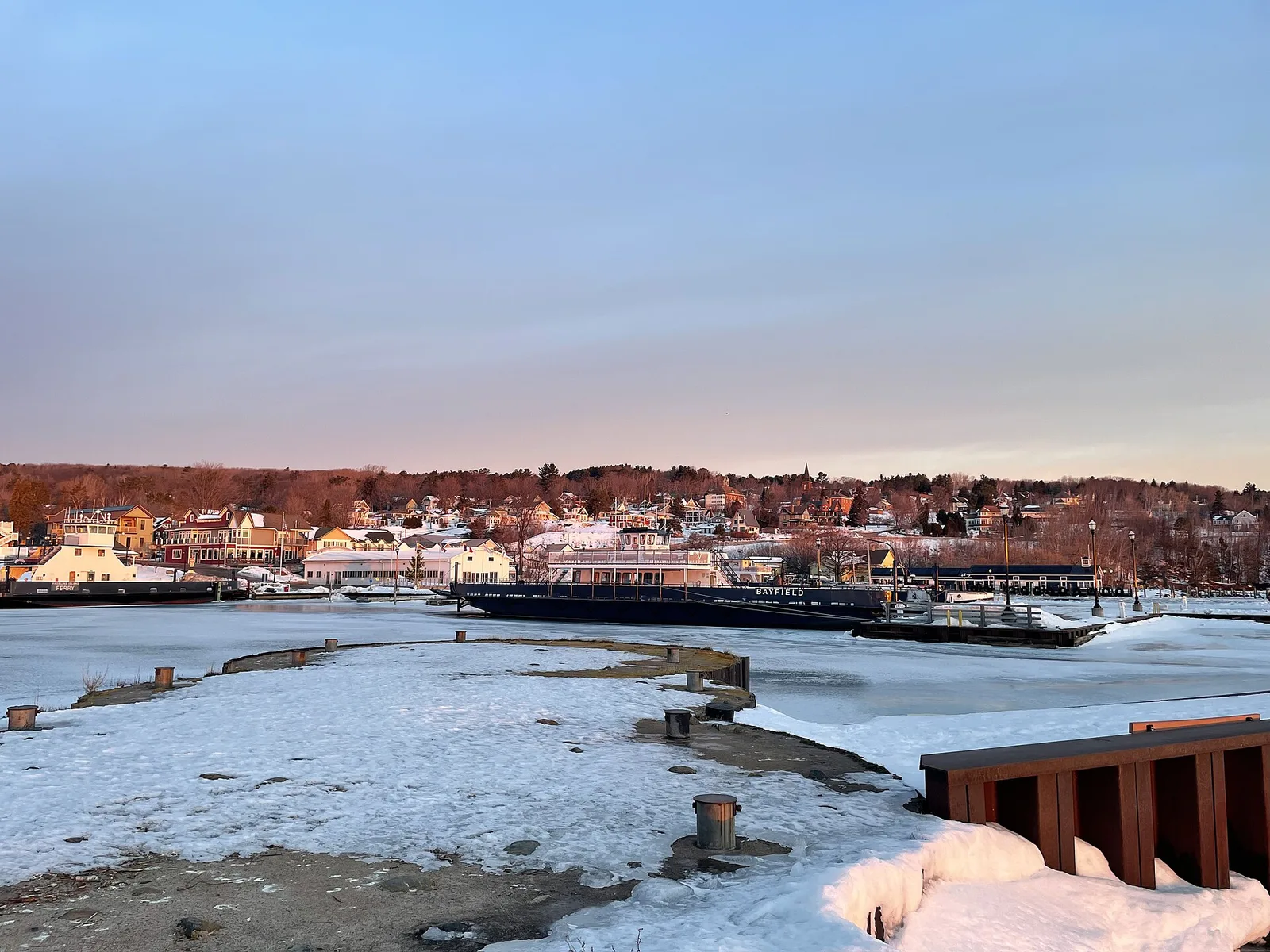
The marina before the first ferry
Walk down to the water around six and the lake is usually flat with the islands laid out in front of you. The ferry starts moving shortly after and the town wakes up. Best ten minutes here.
Expert short-term rental marketing to grow your bookings and nightly rate in Bayfield, Wisconsin, USA.
* Market averages. Properties marketed by Cavmir typically exceed these figures by 25–45%. Data sourced from AirDNA, STR market reports, and Cavmir internal analytics.
Bayfield is a town of a few hundred people on the tip of a peninsula in far northern Wisconsin, facing out at the Apostle Islands across some of the coldest, clearest water in North America. It is small enough to walk in ten minutes and it has a ferry dock, a couple of good restaurants, orchards on the hill behind it and a national lakeshore of twenty-one islands offshore. People come for the sea caves and the kayaking, for the sailing, for the apple orchards in autumn, and in the rare hard winters when the ice is declared safe, for ice caves that make the national news and bring more visitors in a fortnight than the town sees in a normal month. Madeline Island is twenty minutes across on the ferry. This is a genuinely remote market — five hours from Minneapolis, four from Duluth's airport by way of nothing — and the rental stock is cottages, lake houses, orchard properties and town homes, almost all owner-held and lightly marketed.
The defining fact about Bayfield is the length of the season. The real money arrives between late June and mid-October, and within that the Apple Festival weekend at the start of October is the single busiest thing that happens here all year. Summer runs on the islands: kayak tours to the sea caves, sailing charters, the ferry to Madeline, and the Big Top Chautauqua tent shows in the evening. September is excellent, warm enough on the water and empty. October is orchard season and the peninsula fills. Then the shoulder collapses. November through April is quiet, with an occasional exception in an exceptionally cold winter when the mainland ice caves become accessible and demand spikes almost overnight — which is a lottery, not a business plan. That compressed season means an owner here has two jobs: capture the summer completely, at rates that respect how constrained supply is, and build a real autumn and winter product so the calendar does not simply end in October. Very few owners do the second. The stock is also unusually charming and unusually badly photographed, which is a good combination if you are the one who fixes it.
Nearby Markets: Duluth | Grand Marais | Door County

A few of the visual fingerprints we lean into when we shoot, brand and market a Bayfield property — courtesy of the open Wikimedia Commons archive.
Cavmir markets Bayfield properties to a guest who is choosing to drive a long way, which means the copy has to be worth the drive. We photograph the property and the water and the light on Lake Superior, and we shoot in autumn as well as summer because the orchards and the islands in late September are this market's best sales asset. We write with real names — the ferry, the sea caves at Meyers Beach, the orchards on the hill, the Chautauqua tent — because a guest planning a five-hour drive wants specifics. We build the direct-booking site, get it visible for the Apostle Islands and Madeline Island searches that already carry the volume, and set up the email list that turns a summer kayaking family into an October apple weekend. We push hard on the shoulder months, since that is where the growth is in a market whose peak weeks are already full. And we sort your Tourist Rooming House licence, your county permit position and your room tax obligations as part of setup. We help position and market your property. We never manage it or touch your keys.
The Apostle Islands were Ojibwe country long before anyone else arrived, and Madeline Island — the largest of them and the only one still inhabited — was the spiritual and political centre of the Lake Superior Ojibwe. The French came for fur in the seventeenth century and La Pointe on Madeline became one of the oldest continuously occupied European settlements in the interior of the continent. The town of Bayfield itself was laid out in 1856 by speculators who expected the railroad and a great lake port, and for a while brownstone quarrying, commercial fishing and lumber made a reasonable case for it. The brownstone from these islands went into buildings across the Midwest.
None of those industries lasted. The lumber was cut, the quarries closed as construction fashions changed, and the commercial fishery collapsed under the sea lamprey invasion in the mid-twentieth century. What was left was a very small town in a very beautiful place. Two things converted that into a visitor economy. The first was the creation of the Apostle Islands National Lakeshore in 1970, which protected twenty-one islands and a stretch of mainland shore including the sea caves at Meyers Beach. The second was agriculture of a very specific kind: the Bayfield peninsula's microclimate, moderated by the lake, turned out to suit apples and berries, and the orchards on the hills behind town became a destination in their own right. The Apple Festival has run since the early 1960s and is now the biggest weekend of the year by a wide margin.
The town today has a few hundred permanent residents and a rental economy that runs at capacity for about twelve weeks and then goes very quiet. In the rare winters when the ice on the lake is thick enough for the state to declare the mainland ice caves accessible, that quiet is interrupted by a national news cycle and a flood of visitors, which is exhilarating and completely unplannable.
Bayfield's peak is short and supply is genuinely limited, which means summer rates can and should be firm. From late June through Labor Day the town runs near capacity and there is little reason to discount. September is the best value week for a guest and the most commonly underpriced week for an owner — the water is still warm enough for kayaking, the light is better, and the crowds are gone. The Apple Festival weekend in early October is the single highest-demand date of the year and deserves its own rate and a minimum stay, set months ahead; the whole peninsula sells out. From late October the calendar drops off and stays down. The two things worth building rather than surrendering are a proper autumn push through the end of October and a winter product aimed at the people who do come north in the cold — skiers on the peninsula trails, ice fishing, and the Madeline Island crossing in winter, which is an experience in itself. Do not build a business plan around the ice caves; they are a rare event, not a season. A four-tier calendar with the festival weekend carved out separately, weekly minimums in high summer and honest winter discounting is the right shape.
One short, intense season. Late June through Labor Day is the core, running near capacity in July and August. September is excellent and quieter. The first weekend of October brings the Apple Festival and the busiest few days of the year, and the rest of October holds up on orchard and colour traffic. November through April is genuinely quiet, with occasional winter interest around ice fishing, the peninsula ski trails and the Madeline Island winter crossing. Spring is the hardest stretch — the lake stays cold well into June and there is little to sell before the season starts. This is the most compressed calendar of any market in this wave, which makes shoulder-season work more valuable here than almost anywhere.
Wisconsin sets the frame and it is comparatively favourable to owners. State law adopted in 2017 restricts how far local governments may go: a municipality generally may not prohibit the rental of a residential dwelling for seven consecutive days or longer, though it may limit the total number of days per year a property is rented and may impose reasonable health and safety regulation. That statutory framework is what every local ordinance in this county is built on top of.
Then there are the licences, and there are two separate ones people confuse. The first is the state Tourist Rooming House licence, issued under the Wisconsin Department of Agriculture, Trade and Consumer Protection; in this county the Bayfield County Health Department acts as the state's agent for that programme, so that is who you deal with. Every short-term rental needs one. The second is the local permit, and it depends on exactly where the property sits. Bayfield County Planning and Zoning issues short-term rental permits for properties outside the City of Bayfield, the City of Washburn and the Town of Pilsen. The Town of Bayfield — which is a separate jurisdiction from the City of Bayfield, and this trips up buyers constantly — repealed its own short-term rental ordinance in March 2025, so town-level licensing there is no longer required, while room tax licensing and reporting continued unchanged.
On tax, the City of Bayfield levies a room tax on gross receipts from room rentals, and the area also carries a Premier Resort Area Tax on top of the ordinary state and county sales taxes — a small additional levy that applies in designated tourism municipalities. Confirm the current rates and your filing schedule with the city or town clerk directly, because they differ across the peninsula. And confirm which jurisdiction your parcel is actually in before anything else; on this peninsula, city, town and county lines matter more than they do almost anywhere.
Photograph the water and the light. Lake Superior off this peninsula is a colour most people have not seen, and a listing that shows a beige living room instead is throwing away the entire reason someone drives five hours. Second, sell September aggressively. It is the best week here and it is priced as if the season ended in August. Start marketing it in July, to the guests who just left. Third, treat the Apple Festival as a product. It is the biggest weekend of the year, it recurs on a known date, and the whole peninsula sells out — set the rate and the minimum stay a year ahead, not a month. Fourth, be exact about which island trip you are near. The ferry to Madeline, the kayak launches for the sea caves at Meyers Beach and the cruise dock are all different places at different distances, and a guest planning a day on the water needs the real numbers. Fifth, be honest about the cold. The lake does not warm up. Guests who arrive expecting a swimming holiday in June are disappointed; guests who were told plainly and brought a jacket are delighted. Sixth, build the winter story rather than accepting six dead months. Ice fishing, the ski trails, the Madeline crossing and a woodstove are a genuine product for a small, loyal audience nobody else here is speaking to.
The season is the fundamental problem: roughly twelve strong weeks and a very long quiet stretch either side. The town is remote, five hours from the nearest large metro, which limits spontaneous and short-notice bookings. Weather governs everything on the water, so kayak tours, ferries and cruises cancel and guests are disappointed by things you do not control. The multi-jurisdiction licensing — city, town, county and state — genuinely confuses buyers. And the ice-cave phenomenon creates a boom that owners then expect to repeat and which frequently does not for years at a time.
Start with a dedicated short-term rental policy — a homeowner's policy will not respond to a paying-guest claim — and then work through the northern Wisconsin specifics. Winter is the leading risk: an empty house through a Lake Superior January can lose pipes quickly, and carriers will ask how heat is maintained and monitored. Ice dams and snow load are ordinary claims here. If your property has a wood stove or fireplace, which many do, disclose it and keep your chimney maintenance documented. Water access changes the conversation: docks, boats, kayaks and any shoreline structure should be explicitly addressed, along with how guest use of them is treated, because on this lake a guest getting into trouble on the water is a real scenario rather than a theoretical one. Long unpaved driveways affect both winter access and claim response. If you are on well and septic, know your system's capacity relative to your advertised occupancy. Ask for guest injury, guest property damage and loss of rental income to be confirmed in writing.
Several layers, and they vary by jurisdiction on this peninsula. The City of Bayfield levies a room tax on gross receipts from room rentals. The area also carries a Premier Resort Area Tax, a small additional levy applied in designated tourism municipalities, on top of state and county sales taxes. Room tax licensing and reporting requirements applied in the Town of Bayfield even after the town repealed its separate short-term rental ordinance in 2025, so do not assume that repeal removed your tax obligations. Booking platforms remit some taxes on the reservations they process, but local room tax reporting is frequently the owner's responsibility and the schedules are set locally. Confirm the current rates and filing calendar with the clerk of the jurisdiction your parcel actually sits in — city, town or county — rather than relying on a general Wisconsin guide, because the answers differ across a few miles here. Your accountant should also confirm how personal use and rental days interact for your situation.
Financing on this peninsula is ordinary in structure and awkward in practice. The market is small and comparable sales are thin, which can make appraisals slow and occasionally unpredictable, particularly for unusual properties — orchard parcels, waterfront cabins, converted structures. Seasonal properties without year-round heat, water or road access may not qualify for standard conventional financing at all and can need a portfolio lender. Well and septic inspections need scheduling early because the local pool of inspectors is small and busy in season. Waterfront brings shoreline setback and zoning questions that a lender may want resolved. Second-home financing is cheaper than investment lending and the intended-use question matters. Debt-service-coverage products exist but underwriters unfamiliar with the region will misread a twelve-week season if you give them an annual average — model the actual monthly calendar. Have your accountant look at the numbers with the compressed season in front of them.
Two forces will shape this market. The first is climate, and it cuts in an unexpected direction: warming winters make the ice road, the ice caves and the reliable winter product less dependable, while making the summer and autumn season slightly longer and more comfortable. Net, the calendar is likely to shift rather than expand, with more September and October value and less winter certainty. The second is capacity. The Apostle Islands, the sea caves and the ferry are all constrained systems, and visitation growth eventually meets the limits of parking, permits and boats. Any move toward timed entry or permit systems would change how guests plan a trip here and therefore how you should be advising them. Beyond those, the fundamentals are stable: the national lakeshore is permanent, the orchards are not going anywhere, and the town is too small to be overbuilt. The available growth for an owner is not in July, which is already full, but in extending the shoulders and in building a direct relationship with guests who will come back for a decade if you give them a reason.
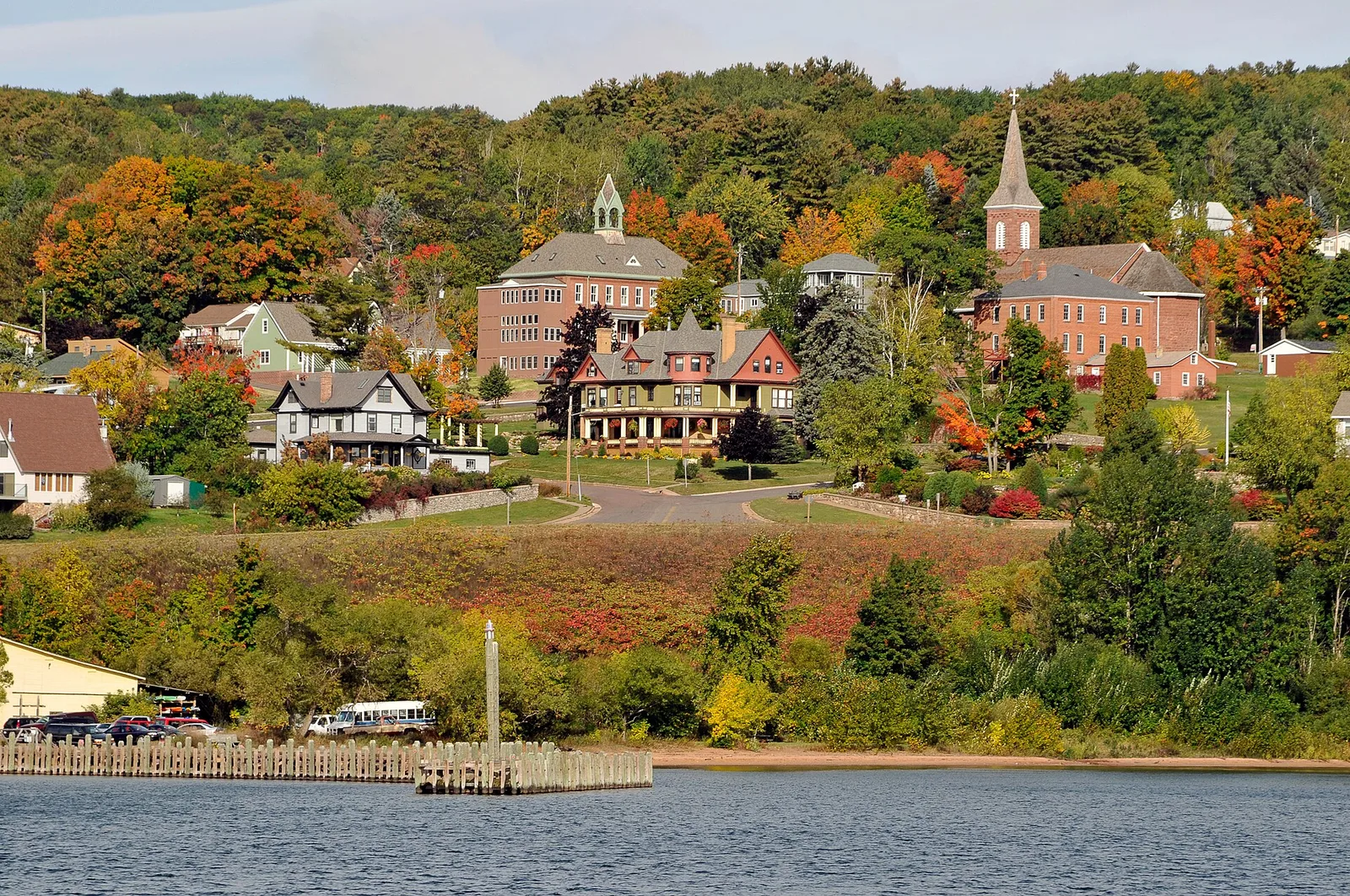
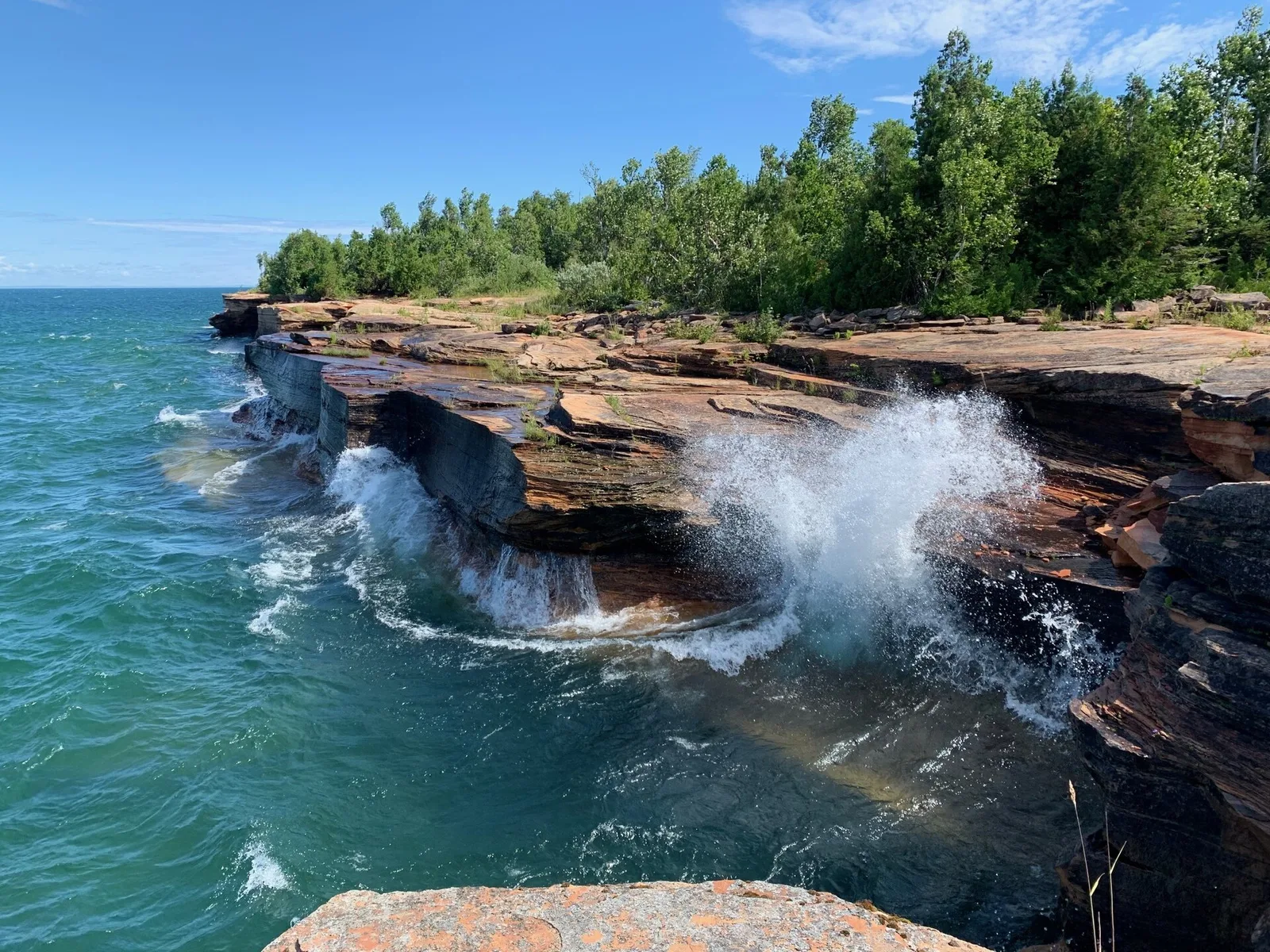
Bayfield is a very small town at the end of a long drive, facing an inland sea. That is the entire pitch and it is a good one. The town itself is a few streets of clapboard houses running up a hill from a ferry dock, with orchards above it and Lake Superior in front. The water is genuinely startling — clear, cold and a colour that reads as tropical in photographs and is about four degrees above freezing in reality. Twenty-one islands sit offshore, protected as a national lakeshore, with old light stations on some of them and sea caves carved into the sandstone on the mainland shore. In summer you kayak or sail out to them. In autumn the orchards bring the whole region up for apples and the town has one weekend a year when it is genuinely full. And in a hard winter the lake freezes far enough out that the ice caves open and the national news arrives. What we like about marketing here is that the town is charming, the season is short, and almost nobody is fighting for the shoulder weeks. The peak is already full — you cannot sell more July than exists. But September is the best week of the year here and it is priced like an afterthought, and winter is a real if small product that essentially nobody is speaking to. That is where the work is, and it is work that pays.
A great property in Bayfield doesn't just want a listing — it wants a point of view, an audience, and a brand the city itself would recognise.
Eight things for the guest guide. Names, distances and the honest version — this is a market where guests have driven a long way and deserve specifics.
Walk down to the water around six and the lake is usually flat with the islands laid out in front of you. The ferry starts moving shortly after and the town wakes up. Best ten minutes here.
The restaurant count in a town this size is very small and July fills all of it. Tell guests to reserve on arrival for the whole stay, and give them a Washburn option as a fallback.
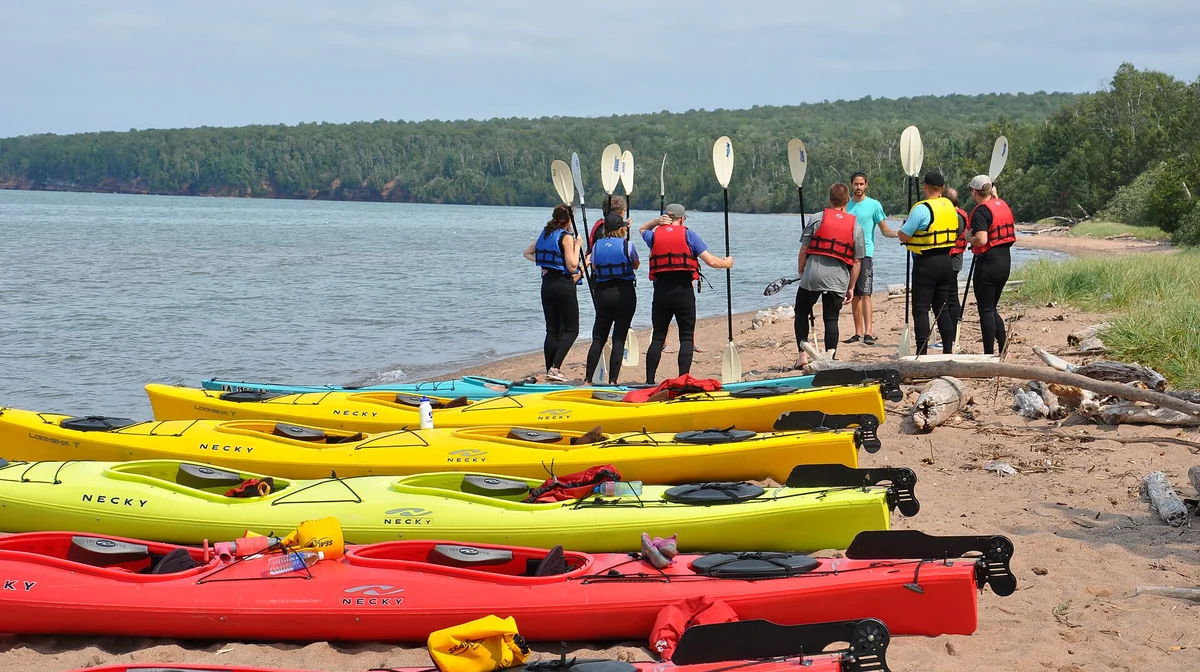
Launch from Meyers Beach with an outfitter and paddle into the sandstone caves along the shore. It is the signature experience here and it is weather-dependent, so tell guests to book early in the stay and keep a backup day.
Twenty minutes across to La Pointe, which has a museum, a couple of good places to eat and a completely different feel from the mainland. The crossing works in most weather.
Warm enough to be on the water, cool enough to sleep, no crowds, and the light on the lake at its best. It is the finest week of the year in Bayfield and almost nobody books it.
Apples, berries and cider on the ridge behind town, running from midsummer through October. Give guests two or three by name rather than a list, and warn them that Apple Festival weekend is genuinely packed.
Walk up out of town and look back over the roofs to the islands. Late afternoon, with the light coming across the water, is when it is worth the climb.
It is not, most of the time, and saying so plainly is better than letting them find out. Point them at the sheltered bays and the sandy spots that do warm up, and tell them to bring a jacket for the boat.
A few composite engagements, drawn from how Cavmir typically works with owners in a short-season northern lake market. Illustrative rather than any one client's file.
A full July and August, an empty September and October, and a rate calendar that dropped after Labor Day as if the season were over.
Reshot the property in September light with the lake and the orchards, moved autumn into its own tier marketed from July to departing summer guests, and set the Apple Festival weekend as a separate rate with a minimum stay twelve months ahead.
September and early October began filling at rates close to summer, and the festival weekend booked out far earlier than in previous years.
Confusion over which jurisdiction the property sat in, with the owner unsure whether county, town or state licensing applied and marketing paused as a result.
Established the licensing position — state Tourist Rooming House licence through the county health department plus the county permit — then built the listing, the direct site and the room-tax filing calendar around a confirmed compliant position.
The property moved from stalled to operating with its paperwork settled, and marketing could proceed against a clear and defensible set of claims.
Two very different stays sharing one set of copy, with guests regularly booking the island house without understanding the ferry schedule.
Split the positioning, wrote the ferry and winter-crossing realities plainly into the island property's listing and guide, and built one owner-branded site with cross-referral between the two.
Guests arrived understanding what they had booked, complaints about access dropped away, and blocked dates on one property were more often retained by the other.
Demand in Bayfield peaks around July through October and runs quietest around January, February and March. Here is how the year actually books — and what to do about each stretch of the calendar.
Late June through Labor Day runs near capacity and there is very little reason to discount into it. The Apple Festival weekend in early October is the busiest few days of the year and sells out the whole peninsula, so set that rate and minimum stay a year ahead. September is genuinely part of the peak and should be priced accordingly rather than treated as a tail.
The second week of September through the end of October is the most under-priced good weather in this market — the water is still workable, the orchards are running and the crowds have gone. Market it in July to the guests who just left. Late spring is thin until the lake warms and the tours start.
November through April is genuinely quiet. Build a small winter product around ice fishing, the peninsula ski trails and the Madeline Island crossing, offer longer stays, and use the window for maintenance and an autumn reshoot. Do not build a plan around the ice caves; they are a rare event, not a season.
The Apple Festival weekend books a year ahead and repeat guests rebook on departure. Summer weeks fill through the spring. September and October run on a four to eight week window. Winter is last minute apart from returning long-stay guests.
Longer stays than most short-season markets, because the drive is long enough that nobody comes for one night. Three to seven nights in summer, two and three in the shoulder, and genuine multi-week potential in winter for the right property.
Houses and cottages with a genuine view of the lake or the islands, sleeping four to eight, are the core product, and walkability into Bayfield itself is worth a premium in a town this small. Orchard and hillside properties above town do well if the view is real. Winterised properties with a woodstove are a distinct and under-supplied product for the cold months.
Start with photography that shows what a guest actually gets here, then write the listing around a real itinerary rather than a feature list. Build a direct-booking site so returning guests can come back without going through a platform, and keep an email list segmented by season so you can reach last year's visitors before the calendar opens. Local search matters more than people expect in a market this size, because guests search the destination and the attraction rather than the word rental. A marketing agency layer handles the photography, the listing copy, the direct-booking site and the local SEO as one system instead of four disconnected jobs.
Late June through Labor Day is the core season and runs near capacity. September is genuinely part of the peak and is the best week of the year for weather and quiet. The Apple Festival weekend in early October is the busiest few days of all and sells out the peninsula. November through April is very quiet.
The Apple Festival weekend books a year ahead, and returning guests often rebook as they leave. Summer weeks fill through spring. September and October run on a four to eight week window. Winter is largely last minute apart from long-stay guests who arrange months ahead.
Minneapolis and Duluth supply the largest share, with Madison, Milwaukee, Eau Claire and Chicago behind them. Nearly everyone drives, and it is a long enough drive that this is a committed trip rather than a spontaneous one. That produces unusually loyal repeat guests, which makes direct booking and an email list worth real money here.
A genuine view of the lake or the islands, first and above everything. A wood stove or fireplace, a proper kitchen for a longer stay, and somewhere to store kayaks and wet gear. Walkability into town matters in a place this small. Be honest about the water temperature in your listing — Lake Superior does not warm up, and guests who were told are delighted rather than disappointed.
Run your Airbnb, Vrbo, or website through Cavmir's free grader. It checks the things that decide whether guests book in Bayfield — photos, listing copy, page speed, local search — and shows you where bookings leak. Takes about a minute, and there's no sales call attached.
If the report says your booking engine is the weak link, that's fixable: a direct-booking website of your own means repeat guests stop paying platform fees to come back to you. That's the work Cavmir does — see Airbnb website design in Bayfield.
Counted from the Wisconsin DATCP lodging license file, deduplicated by permit number — real registry data, not an estimate. See the full Wisconsin permit data →
As of July 2026, the Wisconsin DATCP lodging license file shows 116 current licenses on file in Bayfield. A license is not always one listing — some licenses cover multiple units — so treat this as a verified floor for the size of the legal market.
Bayfield ranks number 16 of Wisconsin's tracked markets by records on file, holding about 1% of the 12,015 records we compiled for Wisconsin. Every one of those operators shows up in the same searches your guests use — which is why presentation, photography, and a direct-booking path decide who gets seen.
The number above comes from the Wisconsin DATCP lodging license file, an official public source, pulled and deduplicated in July 2026. Rules and requirements change — always confirm current licensing requirements with the program directly before you buy or list.
Talk to Cavmir today. We'll show you exactly what your Bayfield property is leaving on the table — and how fast we can change that.
Book a Free Strategy Call