Four hours from Denver, and the pass matters
Most guests fly to Denver and drive. Give them the realistic winter drive time rather than the map's, mention Monarch Pass and Cottonwood, and tell them to check conditions the morning they leave.
Expert short-term rental marketing to grow your bookings and nightly rate in Crested Butte, Colorado, USA.
* Market averages. Properties marketed by Cavmir typically exceed these figures by 25–45%. Data sourced from AirDNA, STR market reports, and Cavmir internal analytics.
Crested Butte is at the end of the road. There is no pass over the mountains to the north in winter, no connector to Aspen except a rough summer track over Schofield, and the drive in from Gunnison is thirty miles of valley with the peak standing at the end of it. That geography is the whole product. The town below the ski area kept its Victorian mining street rather than replacing it, so Elk Avenue is a row of nineteenth-century false-front buildings painted in colours nobody would approve today, and the mountain resort three miles up the road at Mt. Crested Butte holds most of the ski-in inventory. The summer is not a consolation season here. The wildflowers on Kebler Pass and in the Slate River valley are genuinely the reason a large share of visitors come, and July fills as hard as February does. What owners need to understand before anything else is that the town has capped how many houses can do what yours does, and that cap has been full. Crested Butte is not a market you enter by buying a house and applying for a licence.
The licensing structure is the market. Vacation rentals in the relevant zone districts are limited to 30% of the total free-market residential units in those districts, cumulatively, and that ceiling applies to what the town calls Unlimited licences — the ones that do not require the owner to live in the house. That cap has been reached, and no new Unlimited licences have been issued as a result. Primary Residence licences, where the property is genuinely the owner's home, are still issued beyond the 30% figure. There is also a rule that no more than two Unlimited licences may sit on any single town block face, which shapes where the existing ones are. The practical effect is that an existing licensed property is not a house with a permission attached; it is a house whose permission cannot be replicated, and the marketing should reflect that scarcity rather than compete on price with unlicensed inventory elsewhere in the valley. The tax stack is the other thing owners underestimate. Inside the Town of Crested Butte the total collected on a vacation rental stay is 20.9%, which is among the highest in Colorado, and Mt. Crested Butte sits at 18.8%. Guests see that number at checkout, and how you present it matters.
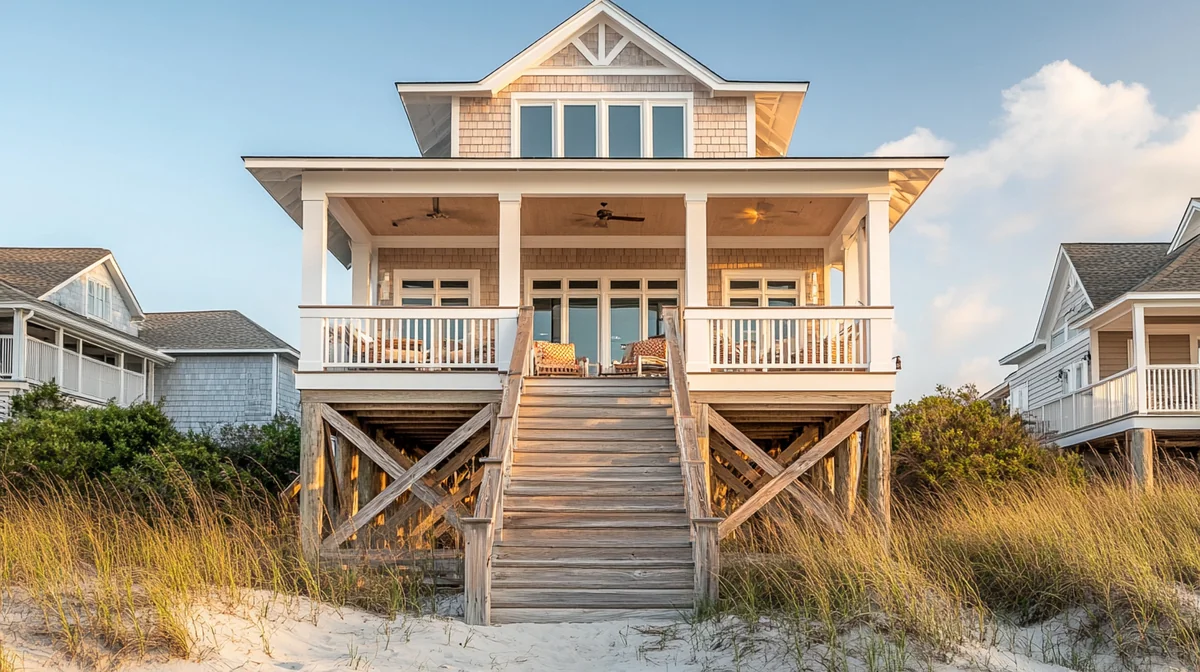
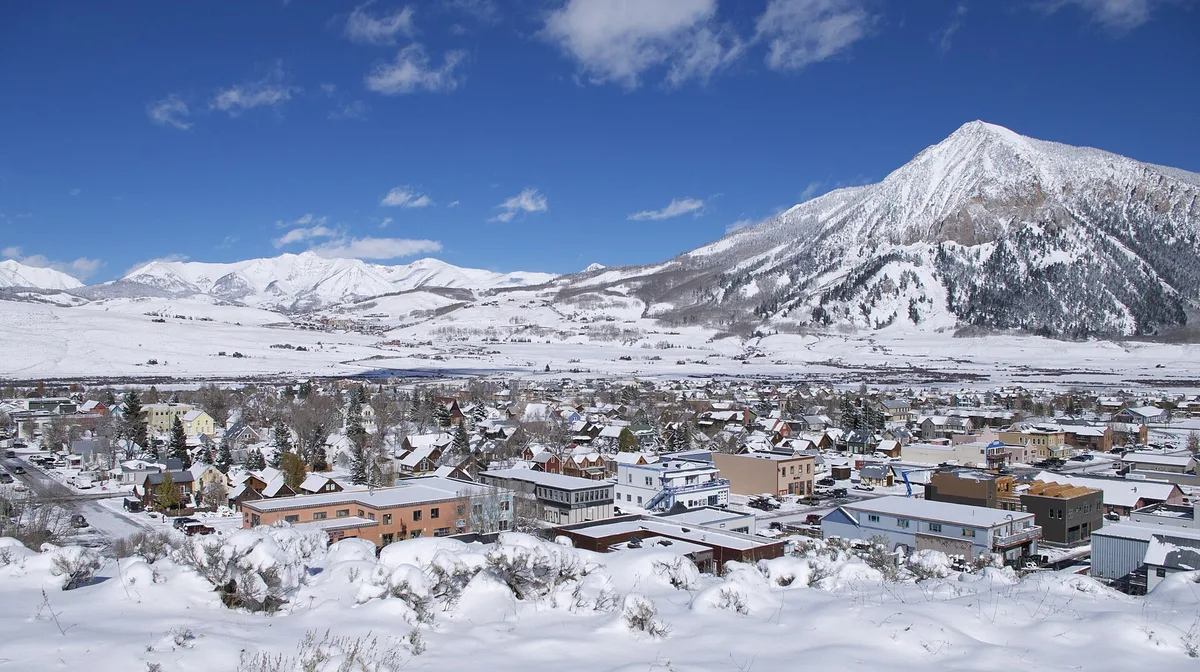
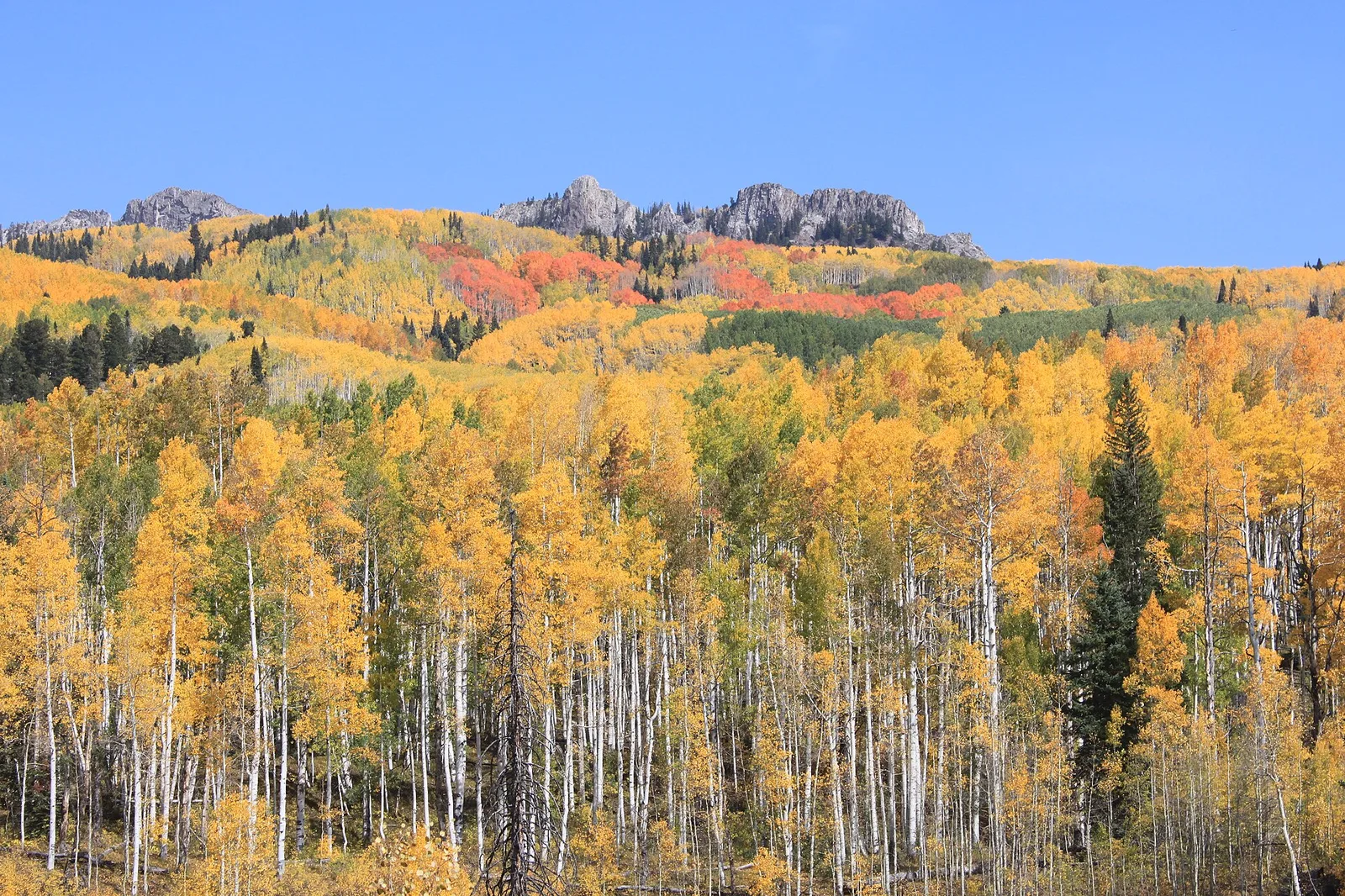
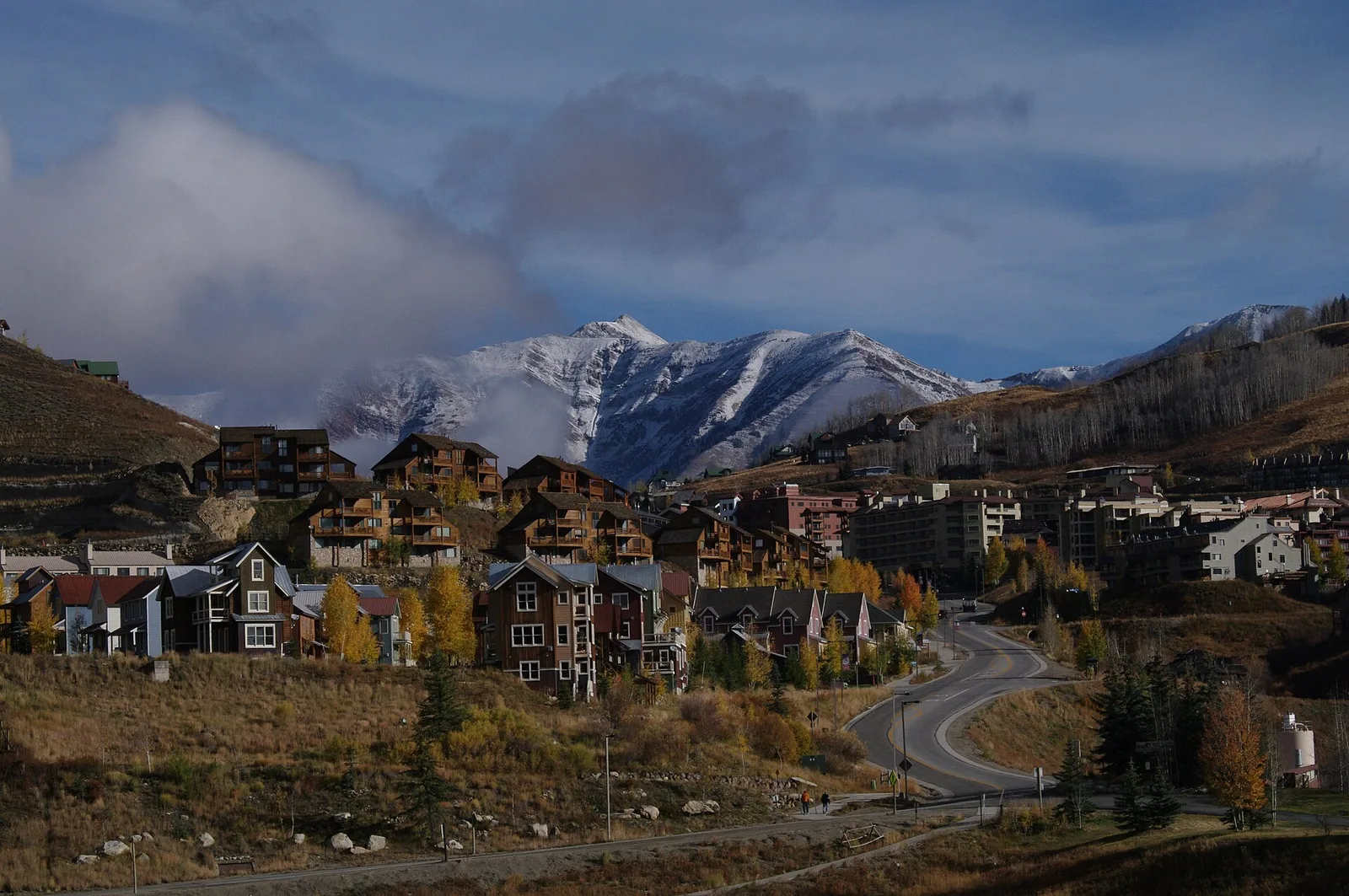
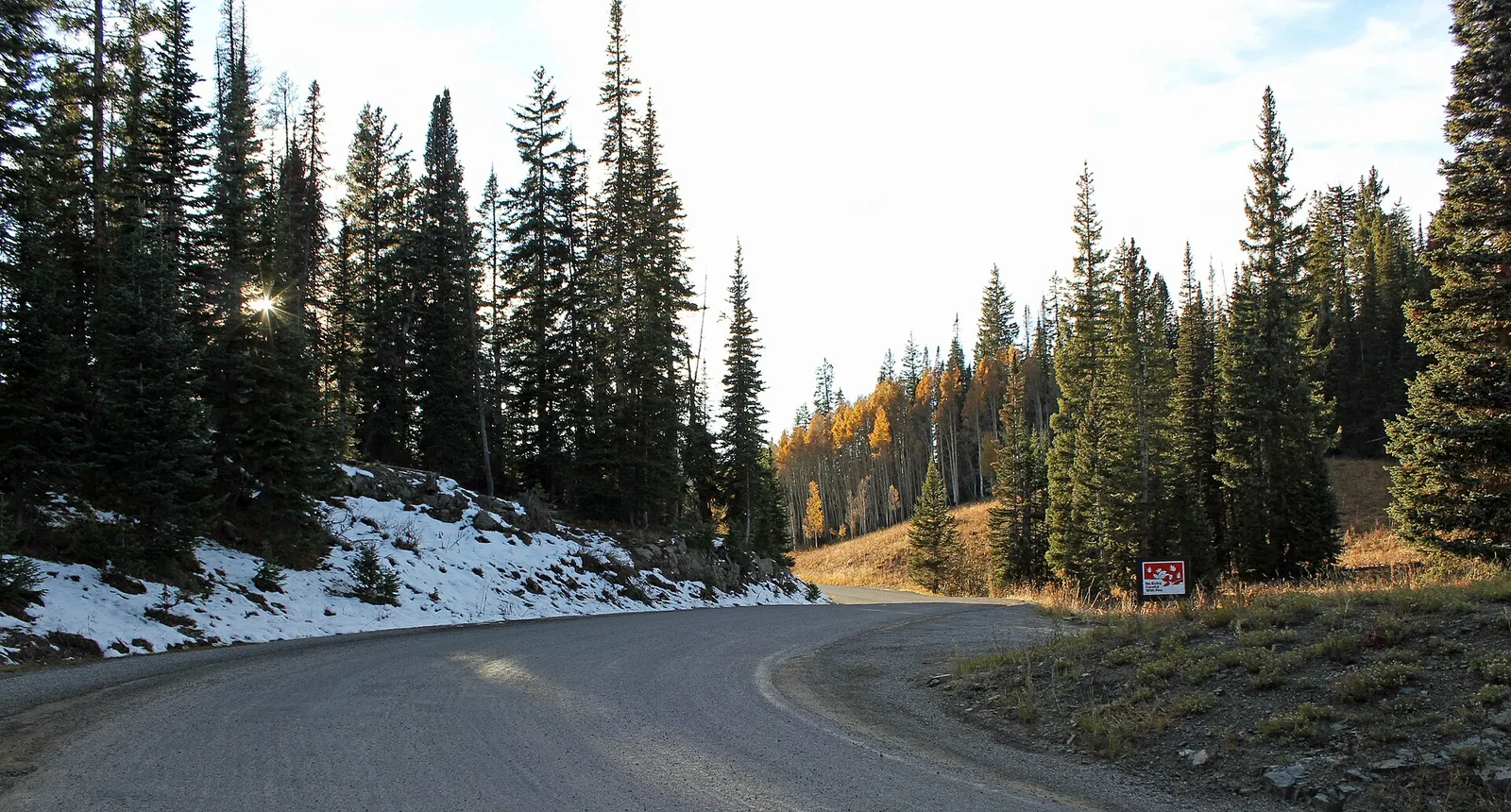
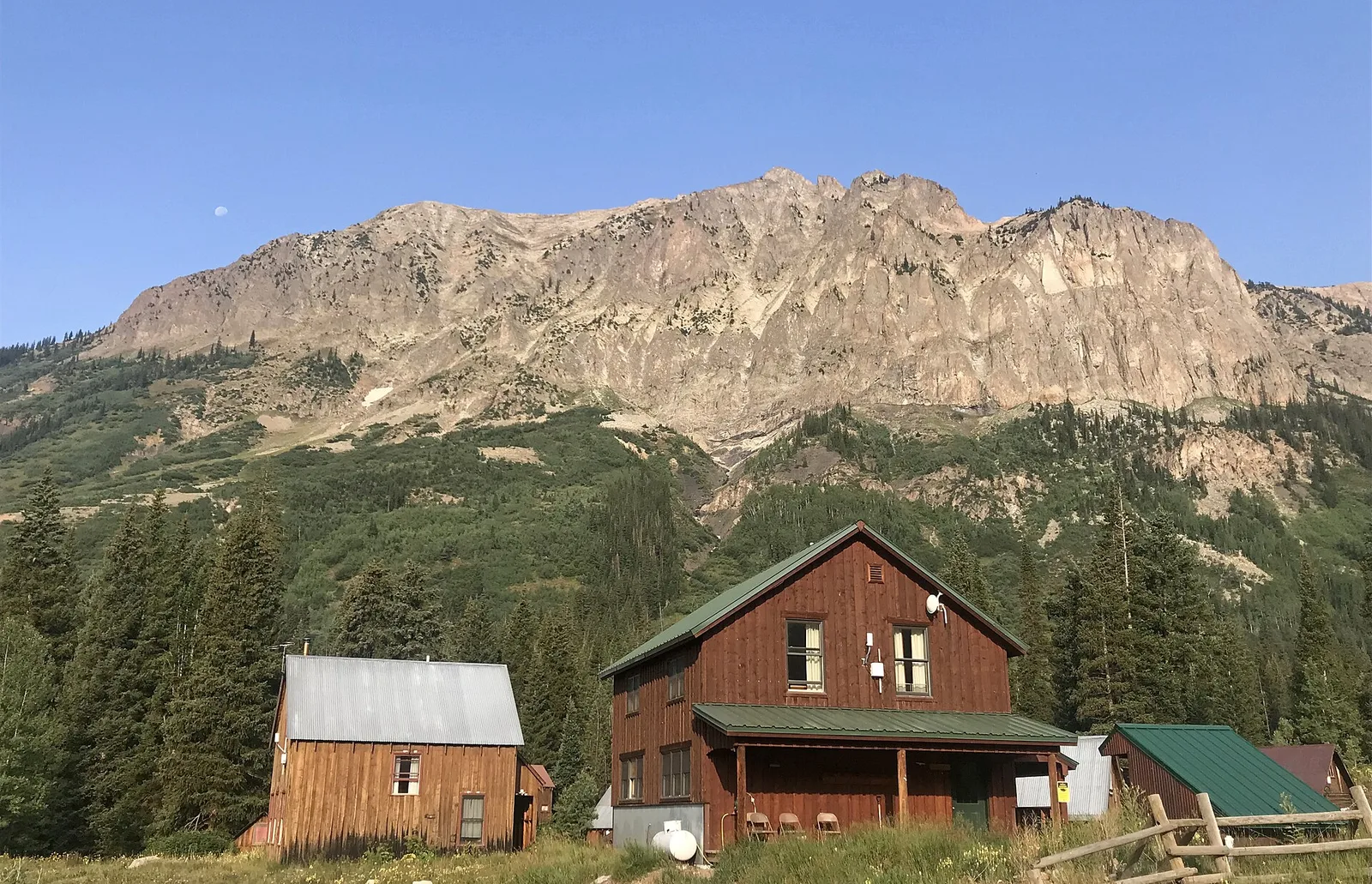
A few of the visual fingerprints we lean into when we shoot, brand and market a Crested Butte property — courtesy of the open Wikimedia Commons archive.
Cavmir markets Crested Butte properties as what they are: a limited set of legal rentals in a town that has decided not to make more of them. That is a positioning advantage, and almost nobody uses it. We photograph the property in both of its real seasons, because a house that only shows snow is invisible to the July wildflower guest and a house that only shows summer looks like a rental with no ski story. We write the listing so the difference between the town and the mountain is clear — three miles, a free shuttle, two completely different mornings — instead of leaving guests to work it out from a map pin. We build a direct booking site that can hold the whole thing, carry your licence status plainly, and take reservations without a platform in the middle. Then we run local SEO against the searches that actually convert here, put ads in front of the right guest at the right lead time, and keep in touch with the people who already came, because in a market this seasonal the repeat guest is the difference between a good year and a great one. We help position and market your property. We never manage it or touch your keys.
Crested Butte began as a coal town, not a silver one, and that distinction shaped everything that followed. While Aspen and Telluride were chasing hard-rock ore, the Elk Mountain Coal and Iron Company was sinking shafts here in the 1880s to feed the smelters and railroads, and the Denver and Rio Grande brought a narrow-gauge line up the valley. Coal is a longer, duller, more stable business than silver, and it kept the town alive through the collapses that emptied the mining camps around it.
The Big Mine closed in 1952, and for about a decade Crested Butte was a town with no reason to exist. Houses sold for very little. Some were abandoned. That decade is why the town looks the way it does now: nobody had the money to knock the Victorian buildings down and replace them with anything modern, so the false-front commercial street and the miners' cottages simply stayed.
The ski area opened in 1961 on the mountain three miles above town, and the two settlements developed separately — Mt. Crested Butte at the base, purpose-built and largely condominium, and the old town below, still a grid of nineteenth-century houses. Crested Butte was designated a National Historic District in 1974, which locked in the character deliberately rather than by accident.
The other strand of the town's identity is mountain biking. The claim that the sport was substantially invented here is contested by Marin County and always will be, but the Pearl Pass tour from Crested Butte to Aspen in the 1970s is a real and documented piece of that history, and the town has leaned into it ever since. Add the wildflowers — Colorado's state legislature designated Crested Butte the Wildflower Capital of Colorado — and you have a town with two genuine seasons rather than one and a half.
Crested Butte prices in two peaks with two very different guests. Winter runs roughly from the week before Christmas through to closing day in early April, with the Christmas-New Year block, Presidents' weekend and spring break as the strongest stretches. Summer runs from late June through mid-September, and its peak is the Wildflower Festival in July, which is a genuine sell-out event and not a soft-season promotion.
The two mud seasons are severe and worth planning for honestly. Mid-April through mid-June and mid-October through late November are not slow — they are close to empty, and a large share of the town's restaurants close. No pricing strategy fixes that. What it means practically is that the year's revenue has to be made in about six months, and that pricing discipline during those six months matters far more than squeezing the empty ones.
The town-versus-mountain distinction runs through everything. A property on Elk Avenue or in the old town sells walkability, restaurants and the historic street; a property at Mt. Crested Butte sells ski access. Guests choosing between them are choosing between two different holidays, and the free shuttle that connects them is a fact worth stating explicitly because it changes the calculation for people who assumed they needed to be at the base.
The tax stack is a pricing issue whether you like it or not. At 20.9% inside the town, the number a guest sees at checkout is substantial, and properties that surprise people with it at the last step of the funnel lose bookings. Presenting the all-in figure earlier converts better than hiding it.
Winter runs from the pre-Christmas week to early April, peaking over the holidays, Presidents' weekend and spring break. April to mid-June is mud season and is genuinely quiet. Late June through mid-September is the summer peak, with July the strongest month and the Wildflower Festival its high point. Late September brings the aspens on Kebler Pass, which is a real and underpriced week. Mid-October through late November is the second mud season, when much of the town closes. Two peaks, two dead zones, and almost no gradual transitions — Crested Butte turns on and off rather than fading.
Crested Butte regulates vacation rentals through a town licensing system, and the structure of that system is the single most important commercial fact about this market.
Vacation rentals in the relevant zone districts are limited to 30% of the total free-market residential units in those districts, counted cumulatively. That percentage cap governs the licence category the town calls Unlimited — a licence that does not require the property to be the owner's home. That 30% cap has been reached, and as a result no new Unlimited licences have been issued. Owners who hold one are holding something the town is not currently making more of.
The town continues to issue Primary Residence vacation rental licences beyond the 30% limit, where the property also serves as the primary residence of the owner. That is the door that remains open, and it is a genuinely different business — a home you let when you are not in it, rather than a dedicated rental.
There is also a distribution rule: no more than two Unlimited vacation rental licences may sit on any single town block face. This prevents whole blocks converting and explains some of the pattern of where existing licences are located.
Mt. Crested Butte is a separate municipality with its own rules and its own tax rate, and the unincorporated parts of Gunnison County are different again. A property three miles apart from another in this valley can be governed by an entirely different authority, so confirm which jurisdiction you are actually in before drawing any conclusion.
Because this is a licence-constrained market, verification matters more than usual. Confirm the licence type attached to a specific property, its current status, and whether it survives a change of ownership, directly with the Town of Crested Butte before relying on any of it. Do not rely on a listing description or a seller's summary. The rules described here reflect the position as published at the time of writing and licensing regimes in Colorado resort towns have been revised repeatedly.
Lead with the licence. In a market where the non-primary cap is full, being a legal, licensed rental is the strongest differentiator you have, and most listings bury it or omit it entirely. It reassures guests, it matters enormously to a future buyer, and it separates you from anyone operating in the grey.
Shoot both seasons and show both. This is the most common failure in Crested Butte marketing. A gallery full of snow is invisible to the July guest who is coming for wildflowers, and a gallery full of green is invisible to the skier. Two proper shoots, six months apart, is the single highest-return piece of work on most properties here.
Explain town versus mountain like a local would. If you are in the old town, say how long the free shuttle takes to the base, how often it runs in season, and what walking to dinner on Elk Avenue is actually like. If you are at Mt. Crested Butte, say how far the lift is in boots. Guests are trying to picture a morning; give them the morning.
Put the all-in price where people can see it. At 20.9% in town, a guest who reaches the final screen and discovers the total for the first time is a guest you may lose. Being upfront about the tax stack reads as honest rather than expensive.
Write the wildflower season properly and specifically. Name Kebler Pass, the Slate River valley, Gothic and the Rocky Mountain Biological Laboratory. Give a rough window and be honest that it moves with snowmelt each year. This is a segment with long lead times and real willingness to pay, and generic 'summer in the mountains' copy does not reach it.
Do not fight mud season. Close it, use it for maintenance and photography, or price it as the deep discount it is and be relaxed about the result. Owners who try to hold peak-adjacent rates through late April spend the month watching an empty calendar.
The first challenge is the ceiling itself. If you do not already hold an Unlimited licence, you cannot simply buy your way into this market as a non-resident owner, and any purchase thesis that assumes otherwise needs checking with the town before it goes further.
The second is the length of the earning year. Two mud seasons that together run close to four months means the revenue has to come from a compressed window, and a bad snow year or a late wildflower bloom compresses it further.
The third is access. Crested Butte is at the end of the road. Gunnison-Crested Butte Regional Airport has limited seasonal service, most guests connect through Denver and drive four hours, and winter storms close passes. That reality lengthens booking windows and makes clear arrival instructions genuinely important rather than a nicety.
High-altitude mountain property has a specific risk profile, and Crested Butte sits near the top of it. Snow load is a genuine structural consideration here in a way it is not in most markets, and roofs, decks and outbuildings are underwritten with that in mind. Ice dams and the water damage that follows them are among the most common claims in the valley.
Freeze exposure during the shoulder months is the other recurring problem. A house sitting empty through a cold snap in late October or mid-April, between bookings, with the heat set low, is the classic burst-pipe scenario. Ask your carrier whether low-temperature monitoring or an automatic water shutoff changes your terms, because it often does.
Liability needs to reflect winter conditions: icy walkways, steep stairs, hot tubs in freezing weather, and guests who may be less accustomed to altitude and snow than they think. Altitude itself is worth a mention in your house information.
Make sure the policy is written for short-term rental use rather than adapted from a second-home form, and confirm how it treats periods when the property is closed for mud season. Work with a broker who writes in Colorado resort towns specifically.
Crested Butte has one of the higher lodging tax stacks in Colorado, and owners should know the composition rather than just the total.
Inside the Town of Crested Butte, the total collected on a vacation rental stay is 20.9%. That is made up of 2.9% Colorado state sales tax, 1.0% Gunnison County sales tax, 1.0% Rural Transportation Authority sales tax, 4.0% Local Marketing District sales tax, 4.5% Town of Crested Butte sales tax and 7.5% Town of Crested Butte excise tax.
In the Town of Mt. Crested Butte the total is 18.8%, composed of 2.9% state, 1.0% Gunnison County, 1.0% RTA, 4.0% Gunnison County Local Marketing District, 5.0% Town of Mt. Crested Butte sales tax and 4.9% Town of Mt. Crested Butte excise tax.
Booking platforms collect and remit some of these components in Colorado, but not necessarily all of them, and the excise components in particular are often the owner's responsibility. Direct bookings are generally yours to handle end to end. Rates are set by ordinance and change; confirm the current figures with the Town of Crested Butte, the Town of Mt. Crested Butte and Gunnison County before you publish a number to a guest, and ask your accountant how the collection and remittance obligations apply to your specific booking channels.
Financing in Crested Butte carries a licence question that most markets do not have. If your purchase model depends on short-term rental income, the licence attached to that specific property — its type, its status, and whether it survives the sale — is a material fact for both you and your lender. An appraisal that leans on rental comparables assumes a legal right to rent, and in a market where the non-primary cap is full, that assumption cannot be made generically.
Second-home and investment-property loans price differently and carry different occupancy expectations, and in a town where a Primary Residence licence is the open door and an Unlimited licence is the closed one, the loan product and the licence category need to describe the same plan.
Beyond that, the usual mountain-market considerations apply: appraisal comparables can be thin in a small town with few transactions, condominium financing at Mt. Crested Butte depends on the association's own financial position and rental mix, and insurability at closing is a real gate given snow load and wildfire underwriting.
Use a lender with actual Gunnison Valley closings behind them. This is general information rather than financial advice; confirm the specifics with your mortgage broker, your accountant and the town.
The structural story in Crested Butte is scarcity, and it is not softening. A cap that is full, a distribution rule that limits clustering, and a town that has been explicit about protecting housing all point the same direction. Barring a policy reversal, the number of non-primary vacation rentals in the town is not going to grow, and the value of holding one of them rises accordingly. That is the single most important thing an owner here should be building their marketing around.
The second trend is the maturing of the summer season. Wildflowers, mountain biking and the aspen weeks in late September have moved Crested Butte a long way from being a ski town with a quiet summer, and the July peak now rivals the winter one. Properties still marketed as ski rentals with a few green photographs attached are leaving that season on the table.
Access remains the swing factor. Air service into Gunnison-Crested Butte is seasonal and limited, and any expansion or contraction of it moves demand measurably in a market where most guests otherwise drive four hours from Denver. Owners should watch the airline schedule the way owners in other markets watch the snow report.
Finally, the tax rate is now high enough to be part of the guest's decision. As total costs rise, the properties that do well are the ones where the guest feels the price was clear from the start and the stay matched the description. Presentation and honesty are commercial strategy in a 20.9% market, not just good manners.
Crested Butte is the last real one. That gets said about a lot of mountain towns and it is mostly nonsense, but here the evidence is on the street: a nineteenth-century commercial row that survived because nobody could afford to replace it, a ski area three miles away rather than on top of the town, and a community that has repeatedly chosen character over growth when the two were in conflict.
We love it most in July, which is not the season it is famous for. The wildflowers in the Slate River valley and over Kebler Pass are genuinely extraordinary, not a marketing line, and there is a research station at Gothic — the Rocky Mountain Biological Laboratory — where scientists have been studying that ecosystem for decades. A guest who understands they are in one of the most studied alpine meadows in North America has a different holiday than one who thinks they are looking at nice flowers.
Late September is the other quiet triumph. The aspens over Kebler turn all at once, the light gets long, the town is calm between seasons, and almost nobody prices for it.
We also like what the geography does to the guest. There is no passing traffic in Crested Butte. Nobody ends up here on the way to somewhere else, because there is no somewhere else. Everyone in town chose to make a four-hour drive to be exactly here. That produces a visitor who is invested in the place, stays longer, comes back, and responds to marketing that treats them as someone with an actual interest rather than a generic booker. It is a good market to write honestly for.
A great property in Crested Butte doesn't just want a listing — it wants a point of view, an audience, and a brand the city itself would recognise.
Eight things to put in front of a Crested Butte guest — the shuttle, the flowers, the pass, and the practical details that decide whether they come back next July.
Most guests fly to Denver and drive. Give them the realistic winter drive time rather than the map's, mention Monarch Pass and Cottonwood, and tell them to check conditions the morning they leave.
The old town and the base area are separate places with separate atmospheres. Say which one you are in, how long the shuttle takes, and how often it runs in season. Guests consistently get this wrong on their own.
Kebler Pass, the Slate River valley, and the meadows around Gothic. The bloom window moves each year with snowmelt, so give a range and be honest about it. This is the strongest summer demand driver in the valley.
The restaurants on Elk Avenue are the reason to stay in the old town, and they fill in season. Give guests two or three specific names and tell them to reserve, particularly over the holidays and Wildflower Festival week.
Crested Butte's mountain-bike history is genuine, from the Pearl Pass rides of the 1970s onward. The Lower Loop is the accessible ride from town; point beginners there and stronger riders further up.
The aspen groves on Kebler are among the largest in the country and they turn all at once. It is a short window, it is spectacular, and it is the most underpriced week on most calendars here.
The town sits near 8,900 feet and the mountain goes well above that. A short note about hydration, taking the first day easy, and where the nearest clinic is does more good than it sounds like it should.
Much of the town closes. Be straightforward with anyone booking in those windows about what will and will not be open, rather than letting them find out on arrival.
The following are composite, illustrative examples based on patterns common to licence-constrained resort markets. They do not describe specific clients or properties.
A legally licensed non-primary rental competing on nightly rate against inventory elsewhere in the valley, with no mention anywhere in its marketing that the town had stopped issuing licences like it.
Rebuilt the positioning around licensed status and old-town walkability, reshot the property in both seasons, and launched a direct booking site that carried the full story and the licence detail plainly.
The property moved out of a price comparison it could not win and into one where it was one of a limited number of options, with less discounting through the shoulder weeks.
A ski-in unit whose entire photo set was taken in February, effectively invisible to the July wildflower guest who now represents a large share of the town's demand.
Commissioned a summer shoot, rewrote the listing to give the wildflower and mountain-bike seasons equal weight, and named specific places — Kebler, the Slate River, the Lower Loop — instead of describing generic summer activity.
July and August moved from filler weeks to a second peak, and the property stopped depending entirely on the length of the ski season.
Strong enquiry volume and weak conversion, with guests dropping at the final step when a 20.9% tax stack appeared for the first time.
Restructured how the total cost was presented so the all-in figure appeared early and plainly, and rewrote the enquiry response to set expectations before guests reached the booking screen.
Conversion from enquiry to booking improved without changing the nightly rate, and the property received fewer complaints about pricing after arrival.
Demand in Crested Butte peaks around January, February and July and runs quietest around May and November. Here is how the year actually books — and what to do about each stretch of the calendar.
Two genuine peaks. Winter runs from the week before Christmas to early April, with the holidays, Presidents' weekend and spring break the strongest stretches. July is the summer peak and the Wildflower Festival is a real sell-out rather than a soft-season promotion. Both should carry firm minimum stays and rates set far in advance.
Late September is the underrated week here, when the aspens on Kebler Pass turn all at once and almost nobody prices for it. Early June and mid-September also hold up. These weeks reward email to past guests and copy that treats them as their own product rather than a discount on peak.
Mid-April to mid-June and mid-October to late November are close to empty, and a large share of the town closes. Do not fight it. Take the maintenance window, reshoot the property in the other season, and be relaxed about the calendar.
The holidays and the Wildflower Festival book the furthest out, often close to a year for returning guests. General winter and summer weeks fill a few months ahead. The autumn colour window is the exception and moves late, because the bloom and the turn depend on the season, which is exactly why it is under-priced.
Winter skews to week-long stays over holidays and shorter trips otherwise. Summer is a mix of long weekends and full weeks, with the Wildflower Festival pulling longer bookings. Firm minimums work in both peaks and cost you nothing because there is no short-stay market to lose in mud season.
Two different winners. In the old town, walkability to Elk Avenue is the product and character counts more than square footage. At Mt. Crested Butte, ski access in boots is the product. Trying to sell one as the other is the most common mistake here.
Start with photography that shows what a guest actually gets here, then write the listing around a real itinerary rather than a feature list. Build a direct-booking site so returning guests can come back without going through a platform, and keep an email list segmented by season so you can reach last year's visitors before the calendar opens. Local search matters more than people expect in a market this size, because guests search the destination and the attraction rather than the word rental. A marketing agency layer handles the photography, the listing copy, the direct-booking site and the local SEO as one system instead of four disconnected jobs.
Winter from just before Christmas to early April, peaking over the holidays, Presidents' weekend and spring break. July is the summer peak and the Wildflower Festival sells out. Late September brings the aspen turn on Kebler Pass, which is short, spectacular and usually under-priced. Both mud seasons are close to empty.
The holidays and Wildflower Festival week book furthest ahead, often close to a year out for returning guests. General peak weeks fill a few months in advance. The autumn colour window moves late because the turn depends on the season, which is part of why it stays cheap.
Most visitors fly into Denver and drive several hours, so Denver, Colorado Springs and Albuquerque behave as drive feeders while Dallas, Houston and Chicago come by air. Seasonal service into Gunnison-Crested Butte matters a great deal, and owners should watch the airline schedule the way others watch the snow report.
A hot tub, real ski and boot storage and parking you do not have to shovel all convert in winter. In summer, bike storage and outdoor space do the work. Fast wifi matters more than owners expect because shoulder-season guests are often working. Above all, be clear whether you are in the old town or at the mountain.
Run your Airbnb, Vrbo, or website through Cavmir's free grader. It checks the things that decide whether guests book in Crested Butte — photos, listing copy, page speed, local search — and shows you where bookings leak. Takes about a minute, and there's no sales call attached.
If the report says your booking engine is the weak link, that's fixable: a direct-booking website of your own means repeat guests stop paying platform fees to come back to you. That's the work Cavmir does — see Airbnb website design in Crested Butte.
Talk to Cavmir today. We'll show you exactly what your Crested Butte property is leaving on the table — and how fast we can change that.
Book a Free Strategy Call